Source Rail Sleeper Spacing Robot for Track Marking and Maintenance
Explore 30 listings for the Rail Sleeper Spacing Robot, designed for precise marking on 50kg and 60kg rails. Compare features like dual-rail printing, adjustable speed, and lithium battery operation to find suitable solutions for railway infrastructure projects.
Key considerations
Products List


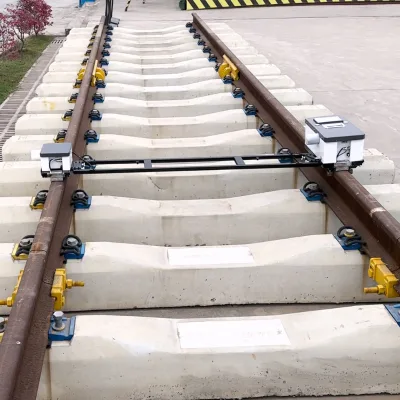
Intelligent Track Sleeper Spacing Robot for Efficient Railway Alignment
$899.00 - $1100.00
MOQ: 1 Pieces


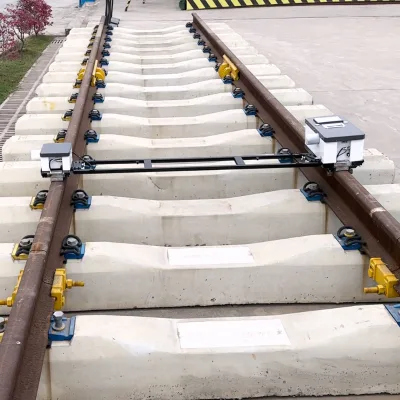
Continuous Adjustable Rail Sleeper Marking Robot for Optimal Alignment
$899.00 - $1100.00
MOQ: 1 Pieces

Automatic Sleeper Spacing Marking Robot for Optimal Track Configuration
$899.00 - $1100.00
MOQ: 1 Pieces

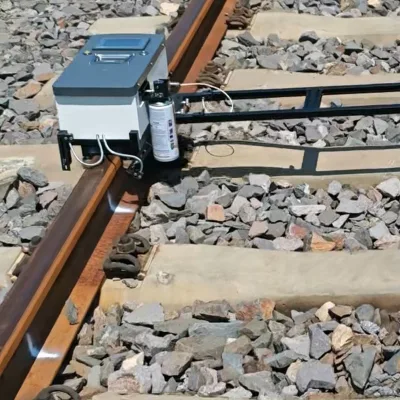
Automatic Rail Sleeper Spacing Robot with High-Precision Marking System
$899.00 - $1100.00
MOQ: 1 Pieces

Railway Sleeper Spacing Robot with Lithium Battery and Efficient Marking
$899.00 - $1100.00
MOQ: 1 Pieces




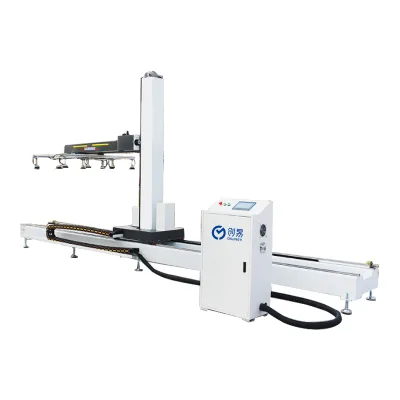
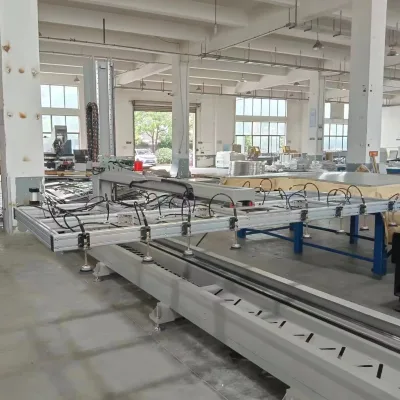


Railway Boxcar Unloading and Loading Multi-Degree-of-Freedom Robotic Arm Loading Robot
$9000.00 - $100000.00
MOQ: 1 Pieces

Fanuc Rail, Robot Track, Efficient Intelligent Robot Rail- Precise Positioning, Seamless Connection
$9999.00 - $15999.00
MOQ: 1 Pieces

Comprehensive Sourcing Guide
Railway Sleeper Spacing Robot Sourcing Guide
Procuring a railway sleeper spacing robot requires a precise understanding of the equipment's dual role in marking and maintenance operations. These automated units are designed to move along dual rails, utilizing advanced positioning systems to calculate and execute printing tasks with high accuracy. Buyers must recognize that the core function involves marking spacing lines on sleepers, a critical step for ensuring track geometry compliance and safety standards. The equipment operates in diverse environments, including daytime, nighttime, and complex conditions, making reliability a primary selection criterion.
The market offers variations in mobility and power systems, ranging from crawler-based designs to units powered by lithium batteries with continuous operation capabilities. When evaluating listings, procurement teams should note that some models feature adjustable speeds from 0 to 5 km/h, allowing for fine-tuned control during the marking process. It is essential to distinguish between robots designed for specific rail weights, such as 50kg and 60kg rails, and those with broader applicability. Understanding these operational nuances ensures the selected machinery aligns with the specific infrastructure requirements of the railway network.
Product Scope and Observed Listing Signals
The observed product listings reveal a distinct range of specifications, including dimensions that can reach up to 1800×400×250mm and weights varying from 18kg to 25kg. Buyers should verify the physical footprint of the unit against their storage and transport constraints, as some models are packaged in wooden cases while others utilize standard wooden boxes. The listing signals indicate that the equipment is often marketed as "New" with a condition that suggests immediate readiness for deployment. However, the diversity in dimensions and weights implies that different models serve varying operational scales, from lightweight portable units to heavier, more robust systems.
Listing data also highlights specific functional attributes, such as the ability to print Chinese characters, numbers, symbols, and letters with a printing time of five seconds or less. The printing spacing can be preset during operation, offering flexibility for different track configurations. Some products are identified as part of the ZM Series, while others are categorized simply as railway sleeper spacing marking robots. Procurement teams must carefully cross-reference these model identifiers with their technical requirements, as the scope of functionality, such as dual-rail multi-side printing, varies significantly between different product entries.
Technical Specifications to Verify
Verification of the power supply system is critical, as observed listings mention lithium batteries with capacities of 24V 6Ah or 24V 12Ah, directly impacting continuous operation time. Buyers must confirm the battery capacity against the expected duration of their marking shifts to avoid mid-operation failures. Additionally, the mobility mechanism, described as automatic movement along dual rails, requires validation to ensure compatibility with the specific rail gauge and condition of the target track. The speed control, which is continuously adjustable from 0 to 5 km/h, must be tested to ensure smooth transitions and precise positioning during the marking process.
The printing mechanism's capabilities, including a maximum marking width of 75mm and the ability to handle complex environments, should be rigorously tested. Buyers need to verify the operation mode, which may involve main unit screen control or mobile app integration on Android 9.0 and above. The core components, such as motors, engines, gears, and bearings, are listed as customizable in some contexts, necessitating a detailed review of the supply chain for these parts. Ensuring that the engine and hydraulic systems, if present, meet the specific load requirements of the rail type is essential for long-term operational stability.
Compliance and Safety Documentation
Certification status in the market is mixed, with listings showing both ISO-customized and non-customized options, alongside references to ISO14001 and ISO9001 in background data. Procurement teams must request explicit, current certification documents from the supplier rather than relying on generic claims found in product descriptions. The presence of a "Video outgoing-inspection" feature is a positive indicator, allowing buyers to verify the manufacturing quality and final assembly before shipment. However, this should be treated as a supplementary verification tool rather than a substitute for formal compliance documentation.
Safety documentation must address the working environment, which includes nighttime and complex conditions. Buyers should ensure that the equipment includes necessary safety interlocks and emergency stop mechanisms, particularly given the automatic movement along rails. The warranty period, observed as one year in some listings, should be clearly defined in the contract to cover potential failures in core components like the motor or gearbox. It is vital to confirm that the supplier provides a comprehensive manual detailing safety protocols for operation, maintenance, and troubleshooting in various weather conditions.
Cost Drivers and Commercial Terms
The price range observed in the market spans from $200 to $999,999, indicating a significant variance based on customization, complexity, and included features. This wide spectrum suggests that cost is heavily driven by the level of customization, such as engine specifications or hydraulic system integration, rather than a standard base price. Buyers must analyze the total cost of ownership, including the cost of spare parts for core components like gears and bearings, which are listed as customizable and potentially expensive to replace. The selling units are typically single items, meaning bulk discounts may not be standard unless negotiated for large-scale infrastructure projects.
Commercial terms should explicitly address the Minimum Order Quantity (MOQ), which appears to be 1 unit in the observed data, offering flexibility for pilot deployments. However, the lead time and shipping logistics, particularly for heavy equipment packaged in wooden cases, require careful planning. The origin of the products is consistently listed as China, specifically Shandong, Jining, which impacts shipping costs and import duties. Buyers should negotiate clear terms regarding the delivery of the wooden case packaging and ensure that the Incoterms define responsibility for loading and unloading at the destination port.
Supplier Qualification and Quality Control
Supplier qualification should focus on the ability to provide detailed technical support and after-sales service, given the complex nature of the machinery. The presence of core components like motors and gearboxes implies a need for suppliers with strong engineering capabilities and access to high-quality parts. Buyers should verify the supplier's history of providing video outgoing-inspections and request references from previous clients who have deployed similar railway marking robots. The "zhong mei" brand name appears in listings, but buyers should not rely on brand recognition alone and must conduct due diligence on the specific manufacturing entity.
Quality control processes must be validated through on-site audits or third-party inspections, especially for the hydraulic systems and electronic controls. The listing mentions a "Fully hydraulic system" as a unique selling point for some models, which requires rigorous testing for leaks and pressure stability. Buyers should insist on a pre-shipment inspection protocol that covers the printing accuracy, speed adjustment mechanisms, and battery performance. Ensuring that the supplier adheres to the stated standards, such as the 22.3kgs/m or 430017501850mm specifications where applicable, is crucial for maintaining operational consistency.
Long-Term Procurement Checks
Long-term procurement success depends on the availability of spare parts and the supplier's commitment to product updates. Since core components like motors and engines are customizable, buyers must secure a supply chain agreement that guarantees the availability of replacement parts for at least five years. The warranty period of one year should be extended through service contracts that cover routine maintenance and software updates for the mobile app and control systems. Buyers should also monitor the supplier's ability to adapt the equipment to new rail standards or changing operational requirements.
Regular performance reviews are necessary to ensure the robot continues to meet the required marking precision and speed adjustments. The ability to operate in complex environments suggests that the equipment may face wear and tear from dust, moisture, and vibration, necessitating a robust maintenance schedule. Buyers should establish a feedback loop with the supplier to report any issues with the printing spacing or automatic calculation features. By maintaining a proactive relationship with the supplier, organizations can ensure the longevity and reliability of their railway sleeper spacing robots in demanding operational settings.
FAQs
What is the printing speed of the railway sleeper spacing marking robot?
The printing speed is continuously adjustable from 0 to 5 km/h. This allows operators to control the marking process precisely according to track conditions. The system ensures accurate spacing by automatically calculating the printing position during operation. This feature supports efficient marking for both 50kg and 60kg rails.
Can the robot operate in complex environments or at night?
Yes, the equipment is designed for daytime, nighttime, and complex environments. It features automatic calculation of printing positions to maintain accuracy regardless of lighting conditions. The dual-rail multi-side printing method ensures consistent marking. This versatility makes it suitable for various railway maintenance scenarios without requiring additional lighting infrastructure.
What is the battery capacity and operation time for the robot?
The robot uses a lithium battery with capacities of 24V 6Ah or 24V 12Ah depending on the model. Continuous operation time exceeds standard requirements for typical shifts. The power supply supports automatic movement along dual rails. This ensures uninterrupted marking processes without frequent recharging during standard operational periods.
What printing content can the robot mark on sleepers?
The robot can print Chinese characters, numbers, symbols, and letters. Printing time is typically less than five seconds per mark. The printing point spacing can be preset during operation to meet specific railway standards. This flexibility allows for customized marking requirements for different rail types and maintenance protocols.
Is customization available for the railway sleeper spacing robot?
Customization is available for various components and specifications. Buyers can select customized or non-customized certification options. The engine and other core components like motors and gearboxes can be tailored. This allows for specific adaptations to different rail systems and operational needs while maintaining the core functionality of the marking robot.
What are the dimensions and weight of the marking robot?
The dimensions vary by model, with some measuring up to 1800x400x250mm for lighter units. Other models may have dimensions of 4300x1750x1850mm. Weight ranges from approximately 18kg to 25kg for specific components. The equipment is packed in wooden boxes or cases for safe transport. These specifications ensure manageable handling and installation on railway tracks.