Source Raffia Straw Drop Earrings for decoration, gifts, and fashion
Explore 30 listings for Raffia Straw Drop Earrings suitable for decoration, gifts, and fashion. Buyers can compare customization options, materials like alloy and stainless steel, and pricing from suppliers in China.
Key considerations
Products List


Crystal Pearl Earrings Set for Women Crystal Gold Silver Color Small Earrings
$1.55 - $1.95
MOQ: 12 Pieces

Creative Colorful Flower Pendant Earrings Crystal Love Women Gold Earrings
$1.39 - $1.59
MOQ: 12 Pieces

Fashion Accessories Christmas Tree Earrings for Girls Woman Holiday Gift
$0.48 - $0.63
MOQ: 1000 Pieces

Wholesale Festive Gifts Christmas Tree Earrings for Girls Holiday Accessory
$1.08 - $1.22
MOQ: 1000 Pieces


Leaf Shape Earings Small Ear Hanging Dangle Drop Earrings Jewelry for Women
$0.58 - $0.88
MOQ: 20 Pieces


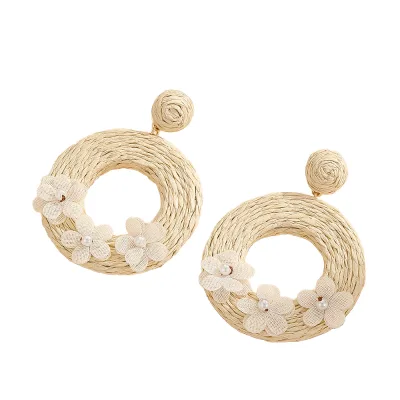
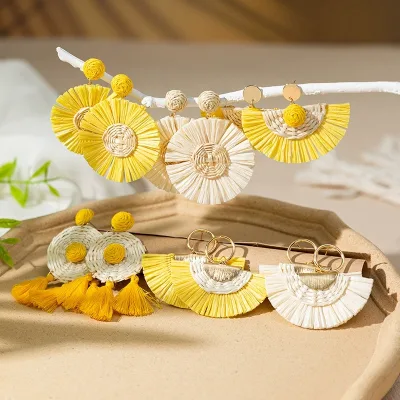


Comprehensive Sourcing Guide
Strategic Sourcing Guide for Raffia Straw Drop Earrings
The global market for artisanal and handcrafted jewelry continues to expand, with Raffia Straw Drop Earrings emerging as a significant category within the sustainable accessories sector. These items blend natural materials with contemporary fashion trends, appealing to consumers seeking eco-friendly alternatives to synthetic jewelry. For B2B procurement professionals, sourcing this specific product type requires a nuanced understanding of material properties, manufacturing processes, and supply chain dynamics. This guide provides a structured approach to evaluating potential suppliers and ensuring product quality, focusing on the technical and commercial realities of the raffia straw drop earring market.
Material Composition and Structural Integrity
The foundation of any high-quality raffia straw drop earring lies in the raw material selection. Raffia is a natural fiber derived from the Raffia palm, known for its durability, flexibility, and resistance to moisture. When sourcing these earrings, buyers must verify the specific grade of raffia used. High-grade raffia should exhibit a consistent texture, free from excessive brittleness or discoloration that might indicate age or poor storage conditions. The structural integrity of the drop design depends heavily on how the straw is woven or braided. Unlike metal components, which may have standardized tensile strengths, natural fibers vary based on the harvest season and processing methods.
In addition to the primary raffia material, the assembly often involves metal components for the earring posts, hooks, or decorative accents. The supplied data indicates that stainless steel and alloy materials are common in this category. Stainless steel offers superior corrosion resistance, which is critical for jewelry that may be exposed to humidity or skin oils. Alloy components, while often more cost-effective, require verification of plating quality to prevent tarnishing. The combination of natural straw and metal hardware must be secure; the connection points are frequent failure sites in drop-style earrings. Buyers should request samples to test the tensile strength of the attachment points and ensure that the metal components do not react negatively with the natural fibers over time.
Design Specifications and Customization Capabilities
The aesthetic appeal of Raffia Straw Drop Earrings is driven by their design versatility. The market offers a wide range of styles, from minimalist geometric shapes to intricate, nature-inspired patterns. The supplied context highlights specific design attributes such as "Star Fashion," "Christmas Tree," and "Heart" shapes, alongside "Natural" and "Round" forms. This diversity allows suppliers to cater to various market segments, including seasonal promotions and everyday wear. Customization is a critical factor in this sector. The data confirms that customization is available, with options for "Customized Card" packaging and "Customized" standard dimensions.
Buyers should evaluate the supplier's capacity for design iteration. The ability to produce "Customized" designs implies that the manufacturer can adapt weaving patterns, sizes, and hardware configurations to meet specific brand requirements. However, the extent of customization varies. Some suppliers may offer standard molds with minor adjustments, while others may support full ODM (Original Design Manufacturing) services. The "OEM Acceptable" and "OEM/ODM: Accept" attributes suggest that many manufacturers are willing to produce under a buyer's brand name or design specifications. It is essential to clarify the scope of these services, including whether the supplier can modify the weaving technique or if they only adjust the final assembly and packaging.
Compliance, Certification, and Safety Standards
In the jewelry industry, compliance with safety and quality standards is non-negotiable. The supplied facts mention "SGS" as a certification and standard, indicating that some suppliers adhere to third-party verification processes. SGS is a recognized inspection, verification, testing, and certification company, and its presence suggests a commitment to quality control. Buyers should verify if the certification covers specific aspects relevant to raffia earrings, such as the safety of the metal components (e.g., nickel-free compliance) or the treatment of the natural fibers.
Furthermore, the "Purity: 92.5%" attribute in the data points to the use of sterling silver in some product lines. If a buyer specifies silver components, they must ensure that the supplier provides documentation verifying the silver content. For stainless steel or alloy components, buyers should request material safety data sheets (MSDS) to confirm the absence of harmful substances like lead or cadmium. The "Certificate: SGS" reference serves as a benchmark, but buyers should not assume all products from a supplier carry this certification. Instead, they should explicitly request proof of compliance for each batch, especially for products intended for markets with strict regulations, such as the European Union or North America.
Cost Drivers and Pricing Dynamics
The pricing of Raffia Straw Drop Earrings is influenced by several factors, including material costs, labor intensity, and order volume. The observed price range of 0.48 to 45.9 USD reflects the vast spectrum of product complexity. Lower-priced items likely utilize standard weaving techniques and basic hardware, while higher-priced items may involve intricate hand-weaving, premium plating, or custom design work. The "MOQ: 30PCS" and "MOQ: 1-1000" ranges indicate flexibility in order quantities, but buyers must understand the cost implications of small versus large orders.
Labor is a significant cost driver in this category. Hand-woven raffia requires skilled artisans, and the time investment per unit can be substantial. Suppliers in regions with lower labor costs may offer more competitive pricing, but this must be balanced against quality consistency. The "Delivery Time: 20-30days" suggests a moderate lead time, which can impact inventory planning. Buyers should factor in the potential for delays due to the seasonal nature of raw material harvesting. Additionally, the "Payment Way" options, including Bank Transfer, Paypal, Moneygram, and Western Union, offer flexibility but may carry different transaction fees and security implications. Understanding these cost drivers helps buyers negotiate effectively and manage their budget constraints.
Supplier Evaluation and Operational Capabilities
Selecting the right supplier requires a thorough evaluation of their operational capabilities and business practices. The data indicates that suppliers are located in "China" and specifically "Guangzhou, China," a major hub for jewelry manufacturing. This concentration of expertise suggests a robust supply chain, but buyers should still conduct due diligence. Key evaluation criteria include the supplier's experience with natural fibers, their quality control processes, and their ability to handle custom orders.
The "Service: OEM/ODM" attribute highlights the supplier's willingness to collaborate on product development. Buyers should assess the supplier's communication efficiency and their responsiveness to design changes. The "Other: Sourcing Agent" note suggests that some entities may act as intermediaries, which can be beneficial for buyers seeking a broader range of products but may add a layer of complexity to the supply chain. It is crucial to verify the direct relationship between the buyer and the manufacturer to ensure transparency and accountability. Additionally, the "Suitable Business" categories, such as "Jewelry Wholesaler, Distributor, Jewelry Maker," indicate the target market for the supplier's products. Buyers should ensure their business model aligns with the supplier's primary clientele to foster a productive partnership.
Quality Control and Long-Term Procurement Strategy
Maintaining consistent quality in Raffia Straw Drop Earrings requires a proactive quality control (QC) strategy. Given the natural variability of the material, buyers should establish clear acceptance criteria for color, texture, and structural integrity. The "Shape: Round," "Oval," and "Heart" variations must be produced within tight tolerances to ensure uniformity across batches. Regular inspections during production and pre-shipment checks are essential to identify defects early. The "Standard: 821cm" and "Standard: customized" attributes highlight the importance of dimensional accuracy, which affects both aesthetics and functionality.
For long-term procurement, buyers should focus on building a sustainable relationship with their suppliers. This involves regular communication, joint planning for seasonal collections, and mutual investment in quality improvement. The "Application: Indoor,Outdoor" attribute suggests that the products are versatile, but buyers should test the durability of the earrings in various environments to ensure they meet customer expectations. The "Usage: Decoration, Gift, Health, Collection" indicates multiple market segments, and buyers should tailor their procurement strategy to meet the specific demands of each segment. By prioritizing quality, compliance, and supplier reliability, buyers can secure a steady supply of high-quality Raffia Straw Drop Earrings that enhance their brand reputation and drive sales.
Summary of Key Product Attributes
To assist buyers in their evaluation process, the following table summarizes the key attributes observed in the supplied product data. This overview serves as a checklist for verifying product specifications and supplier capabilities.
| Attribute Category | Specific Details Observed | Procurement Consideration |
|---|---|---|
| Material | Alloy, Stainless Steel, Copper, Raffia (implied) | Verify metal purity and fiber grade; check for plating quality. |
| Design | Star Fashion, Christmas Tree, Heart, Round, Oval | Assess customization options and design flexibility. |
| Customization | Available, Non-Customized, Customized Card | Clarify the extent of OEM/ODM services and packaging options. |
| Certification | SGS | Request specific test reports for safety and material compliance. |
| MOQ | 1-1000, 30PCS | Negotiate based on order volume and budget constraints. |
| Lead Time | 20-30 days | Plan inventory accordingly to avoid stockouts. |
| Origin | China, Guangzhou | Verify logistics costs and potential import duties. |
| Usage | Decoration, Gift, Health, Collection | Align product selection with target market needs. |
By adhering to these guidelines and leveraging the provided data, buyers can navigate the complexities of sourcing Raffia Straw Drop Earrings with confidence. The focus on material quality, design customization, and supplier reliability ensures that the final products meet the high standards expected in the global jewelry market.
FAQs
Can I get customized packaging for these earrings?
Yes, customized packaging is available for these earrings. Suppliers offer options like customized cards and OPP bags to meet specific branding needs.
What materials are used to make these drop earrings?
These earrings are commonly made from alloy, stainless steel, and copper. Some products also feature plating options like rhodium, rose gold, and yellow gold.
Which certifications do the suppliers typically hold?
Suppliers often hold SGS certification to verify product quality and safety. This standard ensures the metal components meet specific purity and safety requirements.
How long does delivery take for these products?
The typical delivery time ranges from 20 to 30 days. This lead time accounts for production and shipping from the Guangzhou, China manufacturing hub.
What is the minimum order quantity for these earrings?
The minimum order quantity varies from 1 to 1000 pieces depending on the supplier. Some specific listings require a minimum of 30 pieces for purchase.
Can manufacturers produce designs under my brand name?
Yes, OEM and ODM services are acceptable for these products. Manufacturers can customize designs and apply your brand name to the jewelry items.