Source Realistic Handmade Peony Bouquet for home, wedding, restaurant
Compare 30 listings of Realistic Handmade Peony Bouquet from Chinese manufacturers. Buyers can evaluate customization options, packaging types, and delivery times for home, wedding, and restaurant decoration needs.
Key considerations
Products List


DIY Handmade Home or Wedding Decor Artificial Flower Wooden Peony Flower
$1.60 - $1.90
MOQ: 10 Bunches


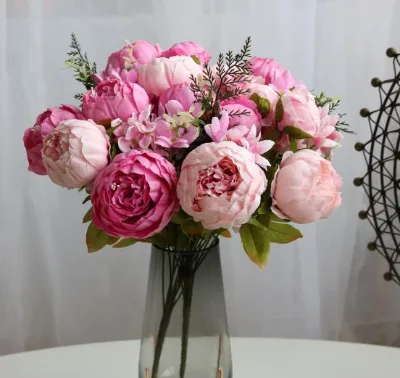


Factory Wholesale Simulation Peony Wedding Living Room Handmade Flower Decoration
$1.30 - $1.46
MOQ: 700 Pieces


Comprehensive Sourcing Guide
Strategic Sourcing Guide for Realistic Handmade Peony Bouquets
The global market for artificial floral arrangements has expanded significantly, driven by a demand for sustainable, low-maintenance, and aesthetically versatile decor solutions. Among these, the Realistic Handmade Peony Bouquet stands out as a premium category item. Peonies are renowned for their lush, layered petals and romantic appeal, making them a staple for weddings, hospitality, and residential styling. For B2B procurement professionals, sourcing these items requires a nuanced understanding of material composition, manufacturing standards, and supply chain logistics. This guide provides a comprehensive framework for evaluating suppliers and products, grounded in observed market data and technical specifications relevant to this specific product category.
Technical Specifications and Material Composition
When evaluating a Realistic Handmade Peony Bouquet, the primary focus must be on the fidelity of the materials to the natural flower. The core product attributes observed in the market indicate a strong emphasis on "Natural" and "Environmentally Friendly" features, alongside a "Vintage," "Rustic," "Boho," and "Fall/Autumn" style aesthetic. These stylistic descriptors suggest that the sourcing strategy should prioritize suppliers who utilize high-quality silk, latex, or specialized plastic blends that mimic the texture of real peony petals.
The product model data reveals specific variations in size and composition. For instance, certain listings specify a standard length of 60CM, while others indicate a 50cm size. Weight is another critical technical differentiator; observed data points to weights ranging from 10g to 40g per unit. A heavier bouquet often implies a denser arrangement of petals and a more substantial stem, which correlates with a higher degree of realism. Buyers must verify if the "Artificial Wooden Peony Flower" or "Pink Peony Grass Bouquet" variants align with their specific design requirements.
Surface treatment is another vital specification. The presence of "Plating" as a surface treatment attribute suggests that some stems or decorative elements may feature metallic finishes to enhance the vintage or rustic look. However, for a purely naturalistic appearance, buyers should confirm if the plating is applied to the wire stems or if it is a decorative element on the petals. The "Scented" attribute is also noted in several product listings. While this adds a sensory dimension, it introduces a chemical consideration; buyers must ensure that the fragrance is non-toxic and does not fade quickly, which could affect the longevity of the product's appeal.
Compliance, Certification, and Safety Standards
In the B2B sector, compliance is not merely a formality but a prerequisite for market entry, especially for products used in public spaces like hotels, restaurants, and wedding venues. The supplied data indicates that product standards are often "As Your Request," which implies a high degree of customization but also places the burden of specification on the buyer. This necessitates a rigorous verification process before placing large orders.
Buyers must verify that the materials used meet international safety standards for decorative items. Since the products are intended for "Home, Wedding, Restaurant, Supermarket, Hotel, etc," they must be non-flammable or meet specific fire retardancy ratings depending on the destination country. The "Environmentally Friendly" claim requires substantiation. Buyers should request documentation proving that the materials are free from harmful chemicals like phthalates or heavy metals, particularly if the bouquets are to be used in environments with children or pets.
Furthermore, the "OEM/ODM: Acceptable" attribute suggests that many suppliers offer private labeling and custom design services. This flexibility is advantageous for branding but requires clear contractual agreements regarding intellectual property and material safety. Buyers should ensure that any custom standards requested are explicitly written into the purchase order and that the supplier has the capacity to meet these specific compliance benchmarks. Without a standardized certification mentioned in the general product data, the onus is on the procurement team to define the necessary safety and environmental criteria.
Cost Drivers and Pricing Dynamics
The pricing landscape for realistic handmade peony bouquets is dynamic, with observed ranges spanning from $0.30 to $36.84 USD. This wide disparity is driven by several key factors, including the complexity of the "handmade" process, the quality of materials, and the scale of the order. The lower end of the price spectrum likely corresponds to mass-produced, simpler designs with fewer petals or synthetic materials, while the higher end reflects intricate, multi-layered arrangements with premium finishes and custom scents.
The Minimum Order Quantity (MOQ) is a significant cost driver. The data shows an MOQ range from 10 units to 2400 units, with specific instances of 10 bags, 10 bunches, 10 pieces, and 80 pieces. Smaller MOQs allow for lower upfront capital expenditure but often result in a higher unit cost due to the lack of economies of scale. Conversely, larger orders, such as those exceeding 1000 units, typically unlock significant price reductions. Buyers must balance their inventory needs with cash flow constraints to determine the optimal order size.
Additionally, the "Customized" nature of the product adds a variable cost component. Customization involves design time, mold creation, and specialized labor, all of which increase the base price. The "Packaging" method, whether "Bulk" or "OPP Bag+Carton," also impacts the final cost. Protective packaging is essential to prevent damage during transit, especially for delicate artificial flowers, and the choice of packaging material can influence the total landed cost.
Typical Applications and Market Segmentation
The versatility of the Realistic Handmade Peony Bouquet allows it to serve a diverse range of applications. The "Suitable for" attributes explicitly list Home, Wedding, Restaurant, Supermarket, and Hotel, indicating a broad market reach. In the wedding sector, these bouquets are favored for their ability to provide a consistent, long-lasting aesthetic without the wilting associated with fresh flowers. The "Outdoor and Indoor Decoration" capability further expands their utility to event planning and permanent installations.
The "Decoration" function is central to the product's value proposition. Whether used as a centerpiece in a restaurant or as a focal point in a hotel lobby, the bouquet must maintain its visual integrity over time. The "Lifetime" attribute of 3-5 years suggests that these products are designed for semi-permanent or long-term use, making them a cost-effective alternative to fresh floral arrangements that require weekly replacement.
The "Style" attributes, including Vintage, Rustic, Boho, and Fall/Autumn, indicate that these products are particularly well-suited for themed events and seasonal decor. The "New Variety Dried Flower Rose" and "Artificial Hand Bouquet" models suggest that buyers can source products that mimic the look of dried flowers, which are currently trending in interior design. This trend alignment is crucial for retailers and event planners looking to stay ahead of market demands.
Supplier Evaluation and Selection Criteria
Selecting the right supplier is critical for ensuring product quality and supply chain reliability. The data indicates that the primary origin for these products is China, with specific mentions of Yunnan, a region known for its floral industry. While the specific supplier names are not provided, buyers should evaluate potential partners based on their ability to meet the "As Your Request" standard and their capacity for OEM/ODM services.
Key evaluation metrics should include the supplier's response time, sample availability, and delivery performance. The "Sample: Availiable" and "sample: Avaliable" attributes highlight that most suppliers are willing to provide samples for quality verification. Buyers should utilize this opportunity to physically inspect the product for color accuracy, petal texture, and overall craftsmanship. The "Delivery Time" ranges from 5-7 days to 7-15 days, with some listings noting a 5-15 day window. These timelines are relatively short, suggesting efficient logistics, but buyers must confirm if these are production times or total lead times including shipping.
The "Customization" and "Logo Printing: Without Logo Printing" attributes present a slight contradiction in the general data, but they highlight the need for clear communication. Some suppliers may offer logo printing as an optional service, while others may not. Buyers must explicitly state their branding requirements during the negotiation phase to avoid misunderstandings. Additionally, the "Color" availability of "over 15 colors" provides significant flexibility for matching specific event themes or brand colors.
Quality Control and Long-Term Procurement
Maintaining consistent quality is essential for B2B relationships, particularly when dealing with handmade items where natural variations can occur. The "Durability: Long-Lasting" attribute is a key selling point, but it must be verified through rigorous quality control checks. Buyers should establish clear acceptance criteria regarding petal shedding, stem flexibility, and color fastness. The "Plating" surface treatment should be checked for peeling or discoloration, which can occur if the plating quality is poor.
For long-term procurement, establishing a relationship with a supplier who can consistently meet the "Standard" requirements is vital. The "Standard" of "60CM" or "50cm" must be maintained across all production batches. Any deviation in size or weight could disrupt the visual consistency of a large installation. Buyers should consider implementing a pre-shipment inspection protocol to ensure that the final products match the approved samples.
Furthermore, the "Lifetime" of 3-5 years implies that the product should withstand handling and environmental exposure without significant degradation. Buyers should inquire about the specific materials used to achieve this longevity and whether there are any maintenance instructions provided to end-users. For suppliers offering "OEM/ODM" services, it is important to establish a clear feedback loop for continuous improvement, ensuring that the product evolves with market trends and customer expectations.
Conclusion
Sourcing realistic handmade peony bouquets requires a strategic approach that balances aesthetic requirements with technical specifications and supply chain logistics. By focusing on material quality, compliance standards, and supplier reliability, buyers can secure high-value products that meet the diverse needs of the wedding, hospitality, and retail sectors. The observed data highlights a market rich in customization options, with flexible MOQs and competitive pricing structures. However, the variability in product attributes necessitates a diligent verification process to ensure that the final procurement aligns with the buyer's specific quality and branding goals. Through careful evaluation and clear communication, B2B buyers can effectively navigate this complex market to source premium artificial floral arrangements that deliver lasting value.
FAQs
What customization options are available for realistic handmade peony bouquets?
Customization is available for realistic handmade peony bouquets to meet specific buyer requests. Suppliers accept OEM and ODM services, allowing for tailored standards, colors, and packaging configurations like bulk or carton options.
How long does it take to receive Realistic Handmade Peony Bouquet orders?
Delivery times for realistic handmade peony bouquets typically range from 5 to 15 days depending on the supplier. Specific listings indicate lead times of 5-7 days or 7-15 days after order confirmation.
Which minimum order quantities apply to realistic handmade peony bouquets?
Minimum order quantities vary significantly, ranging from 10 units to 2400 units for realistic handmade peony bouquets. Specific examples include orders of 10 bags, 10 bunches, 10 pieces, or 80 pieces depending on the supplier.
Can realistic handmade peony bouquets be sourced with specific certifications?
Product standards are often set as requested rather than pre-certified, requiring buyers to define safety requirements. Buyers must verify that materials meet international safety standards for fire retardancy and environmental friendliness before large orders.
What are the typical weight and size specifications for realistic handmade peony bouquets?
Weights for realistic handmade peony bouquets range from 10g to 40g per unit with sizes like 50cm or 60cm. These dimensions and weights help determine the density and realism of the artificial flower arrangement.
How much do realistic handmade peony bouquets cost per unit?
Prices for realistic handmade peony bouquets range from 0.30 to 36.84 USD per unit based on complexity and materials. The cost varies due to factors like handmade processes, customization, and order volume.
Where are realistic handmade peony bouquets primarily manufactured?
Realistic handmade peony bouquets are primarily manufactured in China, with specific origins noted in Yunnan. This region is known for its floral industry and supports the production of these decorative items.