Source Rechargeable DMX Meteor Light for Stage, Dance, and Film
Find and compare 30 Rechargeable DMX Meteor Light options for stage, dance, and film applications. These fixtures feature DMX512 control, IP65/IP68 ratings, and various pixel configurations to suit diverse lighting needs.
Key considerations
Products List


360 Degree Colorful DMX RGB LED Meteor Tain Effect LED Meteor Tube Light
$10.00 - $20.00
MOQ: 10 Pieces


DMX Lighting String Outdoor LED Snow Fall Lights 100cm LED Meteor Light
$50.00 - $1000.00
MOQ: 10 Sets


DMX Control Outdoor Festival Lights Programmed Lighting Decoration Arch Light
$800.00 - $3000.00
MOQ: 100 Sets





Comprehensive Sourcing Guide
Rechargeable DMX Meteor Light Sourcing Guide
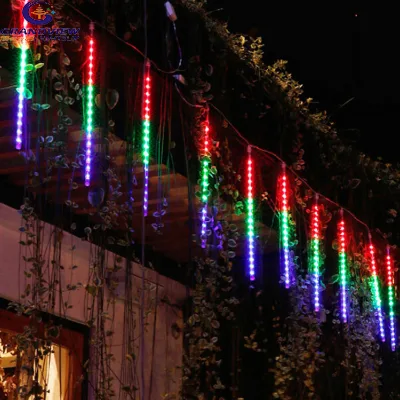
The Rechargeable DMX Meteor Light represents a specialized category of stage and dance effect lighting designed to simulate falling rain or snow through dynamic pixel control. These fixtures are engineered for high-impact visual storytelling in live performance environments, film sets, and theatrical productions where atmospheric depth is critical. The core functionality relies on synchronized DMX512, DVI, or Artnet protocols to manage individual LED pixels, creating fluid motion effects that respond instantly to control signals. Buyers must recognize that while the term "rechargeable" implies battery integration, the supplied product data indicates a primary reliance on DC 12V, 15V, or 24V input voltages, suggesting that true standalone battery operation may be a specific sub-feature or a misinterpretation of portable power requirements in the general market.
Procurement of these units requires a nuanced understanding of the distinction between standard wired installations and portable configurations. The observed product models, such as the LCL-3DVTM30 and LCL-3DVT30-D3208A, highlight a focus on modular tube designs with varying lengths and pixel densities. Sourcing decisions should prioritize verifying the actual power delivery method, as the majority of listed specifications point to external DC power supplies rather than internal rechargeable batteries. Buyers should explicitly confirm power autonomy capabilities during supplier negotiations to ensure the equipment meets the specific logistical needs of their event, whether that involves fixed rigging or mobile setups requiring independent power sources.
Product Scope and Observed Listing Signals
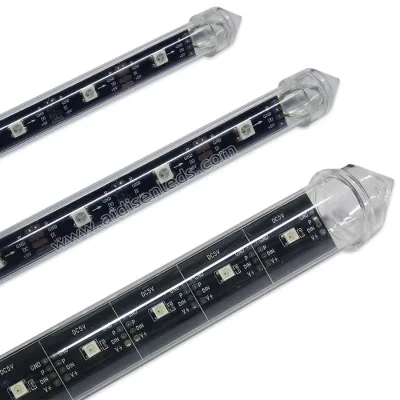
The market for meteor lights is characterized by a diverse range of tube dimensions and pixel configurations tailored to specific visual effects. Observed listings indicate standard tube diameters of 30mm with lengths available in 500mm, 1000mm, 1500mm, and 2000mm increments, alongside customizable options. The LED quantity varies significantly based on the tube length, with examples showing 32, 64, or 72 LEDs per unit, corresponding to pixel counts ranging from 8 to 32 pixels per tube. This variability allows buyers to select fixtures that balance resolution and brightness, ensuring the "meteor" effect appears smooth and continuous without visible gaps between light sources.
Application scope extends beyond simple stage lighting to include film and television production, where the ability to create realistic weather effects is paramount. The observed product attributes confirm suitability for stage, dance effect lighting, and film applications, supported by a 360-degree beam angle that ensures omnidirectional illumination. Buyers should note that the "Universe" capacity, defined as the number of tubes per control universe, varies between 10 and 14 tubes depending on the specific model and pixel density. This metric is critical for system planning, as it dictates the number of control channels required to manage a full array of meteor lights without signal latency or channel overflow.
Technical Specifications to Verify
Voltage compatibility and power consumption are the first technical parameters requiring rigorous verification to prevent equipment failure. The supplied data presents a mix of input voltage requirements, including DC 12V, 15V, and 24V, with lamp power ratings spanning from 12W to 48W. Buyers must match the fixture's voltage requirement with their available power distribution system, as mixing voltages can lead to immediate damage or inconsistent performance. Additionally, the LED light source is consistently identified as SMD RGB 5050, which offers a balance of color fidelity and brightness, but the specific power draw must be calculated to ensure the power supply unit can handle the total load of the installation.
Control protocol and pixel addressing mechanisms define the operational flexibility of the meteor light system. The observed products support DMX512, DVI, and Artnet control modes, with address settings available in both manual and automatic configurations. This dual-mode capability allows for quick setup in manual mode or precise, automated sequencing in professional environments. Buyers should verify the specific pixel count per tube, as models range from 8 to 32 pixels, directly influencing the smoothness of the falling effect. Furthermore, the working lifetime of 50,000 hours suggests long-term durability, but the actual lifespan depends heavily on thermal management and the quality of the driver components within the tube housing.
Compliance and Safety Documentation
Certification status is a non-negotiable aspect of procurement for stage and entertainment lighting, particularly when equipment is used in public venues. The observed product listings frequently cite CE and RoHS certifications, indicating compliance with European safety and environmental standards. Some models also include CCC certification, which is mandatory for products sold within the Chinese market. Buyers must request valid, up-to-date certification documents for every batch purchased, as these documents serve as proof that the electrical components and materials meet the necessary safety thresholds for international trade and local regulations.
Waterproof ratings are critical for determining the environmental suitability of the meteor lights, especially for outdoor events or venues with high humidity. The data indicates a range of IP ratings, with specific models achieving IP65 and IP68 standards, while others are listed with a generic "Dimming Lights" classification that requires further clarification. IP65 offers protection against water jets, suitable for covered outdoor stages, whereas IP68 provides submersion protection, ideal for wet environments or rain simulations. Procurement teams must verify the specific IP rating for the intended application, as the housing materials, often plastic, must be rated to withstand the specific environmental stressors of the venue.
Cost Drivers and Commercial Terms
Pricing in the meteor light market is heavily influenced by the complexity of the pixel configuration and the length of the tube. The observed price range spans from $1 to $3,000, reflecting the difference between single, short tubes and large, high-resolution arrays. Longer tubes with higher LED counts, such as the 2000mm models with 72 LEDs, command a premium due to the increased material and manufacturing costs. Buyers should analyze the cost per pixel and cost per watt to determine the true value of a fixture, rather than relying solely on the total unit price, as this ensures a fair comparison across different product models and manufacturers.
Minimum Order Quantities (MOQ) and lead times are significant commercial factors that affect procurement planning and budget allocation. The observed MOQ range extends from 1 to 1,000 units, offering flexibility for small-scale events while accommodating large-scale productions. Customization options are available, which can impact both the MOQ and the lead time, as bespoke lengths or specific pixel arrangements require dedicated production runs. Buyers should negotiate clear terms regarding customization fees and production schedules, ensuring that the supplier can meet the delivery deadline without compromising on quality or incurring unexpected costs for expedited shipping.
Supplier Qualification and Quality Control
Supplier origin and manufacturing capability are key indicators of product reliability and consistency. The observed products originate from Guangdong and Shenzhen, China, regions known for their robust lighting manufacturing ecosystems. Buyers should verify the supplier's production capacity and quality control processes, as the consistency of the LED binning and the uniformity of the pixel response are critical for professional visual effects. A qualified supplier will provide detailed test reports and sample units for evaluation before committing to a large order, ensuring that the color temperature and brightness are consistent across all tubes in the array.
Quality control extends to the physical construction and packaging of the meteor lights. The standard packaging is listed as cartons, which must be robust enough to protect the fragile LED tubes during transit. Buyers should inspect the housing materials, which are typically plastic, for durability and resistance to impact. Additionally, the weight of the units varies from 0.124kg to 0.41kg per piece, depending on the length and component density. This weight information is essential for rigging calculations, ensuring that the support structures can safely bear the load of the installed fixtures without risk of failure during operation.
Long-Term Procurement Checks
Maintenance and replacement strategies are vital for managing the lifecycle of meteor light installations. With a working lifetime of 50,000 hours, these fixtures are designed for long-term use, but individual LEDs may fail over time, affecting the overall visual effect. Buyers should establish a relationship with the supplier for spare parts availability, ensuring that replacement tubes or individual LED modules can be sourced quickly if a unit fails during a critical event. The availability of spare parts is often tied to the specific model number, so maintaining accurate records of the purchased models is essential for future maintenance.
Performance verification and system integration checks should be conducted regularly to ensure the lighting system continues to meet the required standards. Buyers should implement a routine testing protocol that includes checking the DMX signal integrity, verifying the pixel response, and inspecting the waterproof seals for any signs of degradation. The address setting mechanism, whether manual or automatic, should be tested to ensure that the control system can accurately map each pixel to its intended position. Regular maintenance and proactive checks will extend the operational life of the equipment and prevent costly disruptions during live performances or film shoots.
FAQs
What control protocols do these DMX meteor lights support?
These lights support DMX512, DVI, and Artnet control modes. This allows for flexible integration into various stage and dance lighting systems. Users can choose between manual or automatic address setting depending on the specific model. The system ensures precise synchronization for complex visual effects during performances.
Which IP ratings are available for waterproof performance?
Available IP ratings include IP65 and IP68 for waterproof performance. IP65 models are suitable for general stage use, while IP68 variants offer higher protection for outdoor or wet environments. The housing materials are typically plastic, ensuring durability. Buyers should select the rating that matches their specific installation conditions.
Can the length of the meteor light tubes be customized?
Yes, customization is available for the tube length. Standard options include 0.5m, 1m, 1.5m, and 2m, but custom lengths can be requested. This flexibility allows for tailored designs in stage and film applications. The LED quantity and pixel count adjust accordingly to maintain consistent lighting density across different lengths.
What is the working lifetime of the LED light source?
The working lifetime is rated at 50,000 hours. This longevity ensures reliable performance for frequent stage and dance effect lighting applications. The SMD RGB 5050 LED light source provides stable color output over time. This durability reduces maintenance frequency and operational costs for event organizers and venue managers.
What certifications do these stage lights typically hold?
These lights typically hold CE and RoHS certifications. Some models may also include CCC certification. These certifications indicate compliance with safety and environmental standards for electronic products. Buyers can verify specific certification documents for each model to ensure they meet local regulatory requirements for import and installation.
How many LEDs are included in a standard tube?
Standard tubes include 32 or 64 LEDs, depending on the model. Higher pixel counts, such as 16 pixels, are available for more detailed effects. The LED quantity directly impacts the resolution and visual quality of the meteor shower effect. Buyers should choose based on the desired visual density and control precision for their specific application.