Source Rechargeable Desktop Tattoo Machine for Salon, Home, Body Art
Find a Rechargeable Desktop Tattoo Machine among 26 available options for salon, home, and body art applications. Buyers can compare specifications like voltage, weight, and material to select the right device for professional or personal use; compare the available evidence and request quotations based on your requirements.
Key considerations
Products List


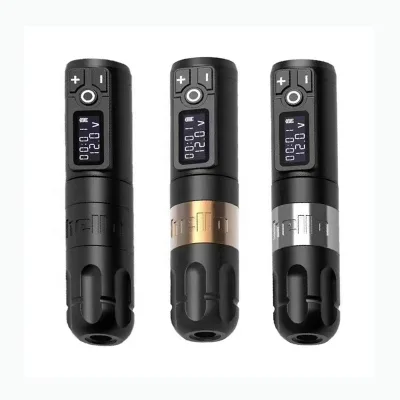
Professional Wireless Tattoo Machine Adjustable Pen Custom Tattoo Machine
$54.80 - $59.80
MOQ: 20 Pieces


Comprehensive Sourcing Guide
Rechargeable Desktop Tattoo Machine Sourcing Guide
The market for rechargeable desktop tattoo machines presents a distinct category where portability is often secondary to stable, high-torque performance for studio environments. While many listings highlight "Non-Portable" attributes, the core requirement for a desktop unit is a robust power system capable of sustained operation without battery degradation. Buyers must distinguish between handheld rotary pens and stationary desktop units, as the latter often prioritize consistent voltage delivery over lightweight design. The observed product data indicates a mix of battery-operated devices and larger systems, requiring careful filtering to isolate true desktop solutions that offer the stability needed for professional body art applications.
Procurement decisions should focus on the specific power architecture, as the observed voltage range of 5V to 12V suggests compatibility with various power adapters or internal battery packs. A desktop machine typically requires a stable power source to maintain needle speed consistency during long sessions, which is critical for precision work. Buyers should verify whether the "rechargeable" feature refers to an internal battery for cordless mobility or a backup system for a primarily corded desktop unit. Understanding this distinction ensures the selected equipment meets the operational demands of a salon or studio setting without unexpected power interruptions.
Product Scope and Observed Listing Signals
Current market listings reveal a fragmented scope where "Tattoo Gun" and "Tattoo Machine" are often used interchangeably, yet the physical form factors vary significantly. Some products are explicitly labeled as "Non-Portable" with dimensions like 17.5cm, suggesting compact desktop units, while others are described as "Portable" or "Non Portable" in conflicting ways. The presence of "Set" and "Not set" attributes indicates that some units are sold as complete kits with accessories, while others are bare machines. Buyers must scrutinize the "Product Name" and "Type" fields to confirm the device is a machine rather than a needle or a cosmetic tool, as the data includes entries for "Tattoo Needle" and "Laser" devices that do not fit the desktop machine criteria.
The functional scope extends beyond simple tattooing, with some listings claiming applications for "Cosmetic," "Skin Care," and "Hair" removal, which may indicate multi-purpose devices or mislabeled products. The observed "Function" attributes include "Anti-Aging" and "Whitening," which are atypical for standard tattoo machines and suggest the presence of laser or light-based technologies in the same search results. This overlap necessitates a rigorous verification of the "Theory" attribute, ensuring the device relies on mechanical needle movement rather than laser energy. Buyers should prioritize listings that clearly define the primary usage as "Body Art" to avoid purchasing cosmetic devices that lack the necessary durability for tattooing.
Technical Specifications to Verify
Voltage stability and operating time are critical technical parameters that define the reliability of a rechargeable desktop unit. The observed data specifies a working time of 3-4 hours per battery charge, which is a key benchmark for session longevity. However, the voltage range of 5V to 12V requires verification to ensure the machine can handle the specific power requirements of the motor without overheating or stalling. Buyers should confirm the input voltage compatibility with their local power standards and check if the device includes a dedicated power adapter or relies solely on internal battery capacity. Consistent power delivery is essential for maintaining needle speed, which directly impacts the quality of the tattoo and the safety of the procedure.
Physical dimensions and material composition are equally important for desktop integration and long-term durability. The observed standard dimensions of 17.51416cm and 20*3.5CM provide a baseline for space planning, but buyers must verify the actual footprint of the specific model. The materials listed, such as "Aluminium" and "Stainless Steel," indicate a focus on robust construction, which is vital for a device that may be subjected to frequent cleaning and sterilization. The weight of 860g suggests a substantial build, which can be advantageous for stability but may require a sturdy mounting solution. Ensuring the material quality matches the intended heavy-duty usage will prevent premature wear and mechanical failure.
Compliance and Safety Documentation
Safety compliance is paramount when sourcing tattoo equipment, particularly for devices that interact directly with human skin. The observed data includes certifications such as "Medical Ce," "ISO13485," "TUV," and "Sfda," which are strong indicators of regulatory adherence. Buyers must request valid certificates for the specific model they intend to purchase, as these certifications are not automatically applied to all products in a supplier's catalog. The presence of "Medical Ce" suggests the device may be classified as a medical instrument in certain jurisdictions, requiring stricter adherence to safety standards than standard cosmetic tools. Verifying these documents ensures the equipment meets the legal requirements for operation in professional salons and clinics.
Beyond certifications, the safety of the device depends on its electrical design and the quality of its components. The "Operation Voltage" of 5V to 12V must be managed through proper insulation and circuit protection to prevent electrical hazards. Buyers should verify that the device includes safety features such as overheat protection or short-circuit prevention, especially given the "Working Time" of 3-4 hours which implies extended usage. The "Standard" attributes listed, such as specific needle configurations, also imply a need for compliance with hygiene standards. Ensuring the device meets these safety protocols protects both the practitioner and the client from potential electrical or biological risks.
Cost Drivers and Commercial Terms
The pricing landscape for rechargeable desktop tattoo machines is influenced by the complexity of the power system and the materials used in construction. The observed price range of 12.9 to 3000 USD reflects a wide spectrum of quality, from basic entry-level units to high-end professional systems. The higher price points likely correlate with advanced features such as longer battery life, superior motor efficiency, and comprehensive certification packages. Buyers should analyze the cost per unit against the expected lifespan and performance capabilities, as a lower initial cost may result in higher long-term expenses due to frequent replacements or repairs. Understanding these cost drivers helps in budgeting for equipment that offers the best value for professional use.
Commercial terms, including Minimum Order Quantity (MOQ) and customization options, play a significant role in the procurement strategy. The observed MOQ range of 1 to 1000 units allows for flexibility, enabling buyers to start with small orders for testing or scale up for bulk purchasing. The availability of "OEM&ODM" services and "Accept" for OEM indicates that suppliers are willing to customize branding and specifications, which can be a key differentiator for businesses looking to establish a unique product line. Buyers should negotiate terms that align with their inventory needs, ensuring that the supplier can accommodate both small batch orders and larger production runs without compromising on quality or lead times.
Supplier Qualification and Quality Control
Supplier qualification is a critical step in ensuring the reliability of the rechargeable desktop tattoo machines. The observed "Brand Awareness" of "Far-Reaching" suggests that some suppliers have established reputations, but buyers must verify this through independent channels. It is essential to assess the supplier's production capacity, quality control processes, and after-sales support capabilities. A qualified supplier should provide detailed product specifications, including material composition and electrical safety data, to demonstrate their commitment to quality. Buyers should also check for any history of product recalls or customer complaints to mitigate the risk of sourcing defective equipment.
Quality control measures must be rigorous to ensure that every unit meets the specified performance standards. The "Service" attribute of "Okey" indicates a baseline level of support, but buyers should seek suppliers with more comprehensive quality assurance protocols. This includes regular testing of battery life, motor performance, and electrical safety to ensure consistency across production batches. The "Product Name" and "Model" variations, such as "AG-J-0593" and "FS-PM04," highlight the need for precise identification to avoid receiving incorrect or substandard items. Implementing a strict quality control process, including pre-shipment inspections, helps maintain the integrity of the product and protects the buyer's reputation.
Long-Term Procurement Checks
Sustainable procurement requires ongoing monitoring of product performance and supplier reliability over time. Buyers should establish a system for tracking the durability of the rechargeable desktop machines, focusing on battery degradation and motor wear after extended use. The "Working Time" of 3-4 hours is a starting point, but real-world performance may vary based on usage patterns and maintenance practices. Regularly reviewing the condition of the equipment and comparing it against the initial specifications helps identify any trends in product failure or performance decline. This proactive approach ensures that the equipment remains fit for purpose and reduces the risk of unexpected downtime in the studio.
Supplier relationship management is equally important for long-term success in the tattoo equipment market. Buyers should maintain open communication with suppliers to stay informed about product updates, new models, and potential supply chain disruptions. The "Shipping" options of "Express, Air, Sea" offer flexibility, but buyers should evaluate the reliability and cost-effectiveness of these methods for their specific needs. Building a strong partnership with a supplier can lead to better pricing, priority support, and access to exclusive products. By fostering a collaborative relationship, buyers can ensure a steady supply of high-quality equipment that meets the evolving demands of the tattoo industry.
FAQs
What is the working time for the Rechargeable Desktop Tattoo Machine?
The device provides 3-4 hours of continuous operation on a single battery charge. This duration supports extended studio sessions without frequent recharging. The machine operates on an input voltage of 5V-12V, ensuring stable performance for professional body art applications.
Can the tattoo machine be customized for specific brand requirements?
Yes, customization is available for this equipment. Manufacturers offer OEM and ODM services to tailor the product to specific brand needs. Buyers can request custom packaging options, including boxes or cartons, to align with their distribution and marketing strategies.
What certifications does the tattoo machine hold for safety?
The product holds Medical CE, ISO13485, TUV, and Sfda certifications. These credentials verify compliance with international safety and quality standards. Such certifications are essential for professional use in salons and ensure the device meets rigorous regulatory requirements for body art equipment.
What materials are used in the construction of the tattoo machine?
The machine is constructed from durable aluminium and stainless steel materials. These materials ensure longevity and resistance to corrosion during frequent use. The sturdy build supports the device's weight of 860g, providing a stable and reliable tool for professional tattoo artists.
What is the minimum order quantity for purchasing this machine?
The minimum order quantity ranges from 1 to 1000 units. This flexible MOQ allows buyers to place small trial orders or large bulk purchases. The pricing for these units varies between 12.9 and 3000 USD, depending on the specific configuration and order volume.
Which shipping methods are available for international delivery?
Express, air, and sea shipping methods are available for international delivery. Buyers can choose the most suitable logistics option based on urgency and cost. These flexible shipping solutions ensure timely delivery of the tattoo machines to various global destinations for professional use.