Source rechargeable eco-friendly mosquito repeller plug for homes, offices, and hotels
Compare 30 listings for the rechargeable eco-friendly mosquito repeller plug designed for indoor pest control. Buyers can evaluate features like effective time, power source, and customization options from verified manufacturers in China.
Key considerations
Products List

Hot Sale Electric Mosquito Repellent Rotatable Plug Heater Mosquito Repellant
$0.50 - $0.60
MOQ: 20000 Pieces


Mosquito Repellent Plug in Indoor Liquid Mosquito Repellent Liquid Refill
$0.50 - $0.70
MOQ: 20000 Pieces


Mosquito Repellent Plug in Indoor Liquid Mosquito Repellent with Liquid
$49.00 - $50.00
MOQ: 300 Boxes


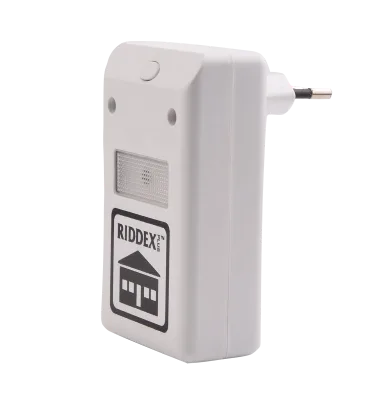

Hot Sale Rechargeable Portable Mosquito Repellent Electric Mosquito Killer Lamp
$12.50 - $14.60
MOQ: 1000 boxes


Eco Friendly Insect Control Anti Mosquito Killer Electronic Mosquito Killer Lamp
$12.50 - $14.60
MOQ: 1000 boxes

Comprehensive Sourcing Guide
Strategic Sourcing Guide for Rechargeable Eco-Friendly Mosquito Repeller Plugs
The global demand for sustainable pest control solutions has driven significant innovation in the electric mosquito repeller market. Buyers seeking rechargeable, eco-friendly units must navigate a complex landscape of technical specifications, regulatory compliance, and supply chain logistics. This guide synthesizes observed market data to provide a disciplined framework for procurement professionals. The focus remains on verifying product attributes against actual supply chain realities rather than relying on marketing claims. Understanding the distinction between liquid and solid formulations, power source requirements, and certification standards is essential for selecting the right supplier for B2B needs.
Technical Architecture and Power System Verification
The core functionality of a mosquito repeller plug relies on the interaction between the heating element, the power source, and the active ingredient delivery system. In the current market, two primary power architectures exist: non-rechargeable units that rely on direct electrical conversion and rechargeable models designed for portability or backup power scenarios. Observed product data indicates a clear divergence in the "Rechargeable" attribute, with listings explicitly stating both "Non-Rechargeable" and "Rechargeable" options. When sourcing a rechargeable unit, buyers must verify the battery capacity and the specific charging mechanism, as these are not standardized across all listings.
The delivery mechanism for the repellent is equally critical. The market features both liquid and solid physical forms. Liquid formulations, often contained in bottles ranging from 24ml to 45ml, are typically paired with electric heaters that vaporize the solution. The observed "Effective Time" for these liquid units varies significantly, with data points showing 300 hours for standard models and up to 480 hours for extended-life variants. Solid forms, while less common in the rechargeable segment, are also present and may offer different diffusion rates. The "Power Supply" is consistently listed as "Electric" or "Electrical," but the specific voltage requirements and plug types must be confirmed against the destination market's grid standards.
A critical technical consideration is the "Mode" of action. Some products utilize a "Systemic Insecticide" approach, which implies a specific chemical mechanism distinct from simple vaporization. Buyers must ensure that the technical datasheet explicitly defines the mode of action to avoid regulatory conflicts in target markets. The "Applying Space" is another vital specification, with observed data suggesting suitability for areas under 50 square meters. Exceeding this coverage area may result in ineffective pest control, making room size a primary factor in unit selection.
Compliance Framework and Certification Requirements
Navigating the regulatory landscape is a non-negotiable aspect of sourcing mosquito repellents. The product category is heavily regulated due to its classification as a pesticide. Observed high-confidence facts confirm that compliant products in the current supply pool carry specific certifications: CE, RoHS, and CCC. These certifications indicate compliance with European safety standards (CE), restrictions on hazardous substances (RoHS), and Chinese compulsory certification (CCC). However, the presence of these marks on a product listing does not guarantee universal acceptance; buyers must verify that the specific batch of goods carries valid, traceable certification documents.
The "Standard" attribute for these products varies, with observed specifications including volume standards like 30-60ml, 45ml, and 152mm, 130mm, 140mm for physical dimensions. These standards are not universal but rather reflect specific product lines. When evaluating a supplier, procurement teams must demand evidence that the product meets the pesticide registration standards of the destination country. For instance, the "Type" is listed as "Pesticides" or "Pesticide," which triggers specific import regulations regarding active ingredients and toxicity levels.
Furthermore, the "Feature" of being "Eco-Friendly" requires careful scrutiny. While this is a common marketing claim, it must be substantiated by the absence of banned substances and adherence to environmental safety standards. The "Physical Form" and "Fragrance" (e.g., Jasmine) also play a role in compliance, as certain scents or chemical compositions may be restricted in specific jurisdictions. Buyers should not assume that a product labeled "Eco-Friendly" automatically meets all local environmental regulations without independent verification of the chemical composition and safety data sheets.
Cost Drivers and Pricing Dynamics
The pricing structure for rechargeable eco-friendly mosquito repellers is influenced by several dynamic factors, including the complexity of the rechargeable battery system, the volume of the liquid refill, and the level of customization required. The observed listed price range in the market spans from 0.1 to 50 USD. This wide variance suggests that the lower end of the spectrum likely represents basic, non-rechargeable, or bulk liquid refills, while the higher end encompasses fully featured rechargeable units with advanced safety mechanisms and premium packaging.
The Minimum Order Quantity (MOQ) is a significant cost driver, with observed ranges extending from 100 to 24,000 units. High MOQs are often necessary to achieve economies of scale, particularly for custom branding and specialized rechargeable components. Buyers must balance the unit cost against the total inventory investment. The "prod_packing" attribute, such as "120 Bottles Per Carton," directly impacts logistics costs and storage requirements. Larger cartons reduce per-unit shipping costs but increase the capital tied up in inventory.
Customization is a key variable in pricing. The "Customization" attribute is listed as "Available," and "OEM/ODM" services are explicitly "Accepted." Customizing the logo, fragrance, or packaging design will inevitably increase the unit cost and potentially extend the lead time. The "N.W" (Net Weight) of 45g for a 45ml unit is a standard metric that affects freight charges. Buyers should calculate the total landed cost, including duties and freight, rather than focusing solely on the ex-factory price. The "Effective Time" of the product also influences value; a unit lasting 480 hours may command a higher price than one lasting 300 hours, but the cost per hour of protection is a more accurate metric for comparison.
Supplier Evaluation and Operational Capabilities
Selecting the right supplier requires a deep dive into their operational capabilities and service offerings. The "Provide Services" attribute confirms that OEM/ODM is available, indicating that suppliers are equipped to handle private labeling and custom manufacturing. However, the "Place of Origin" data reveals a concentration in specific regions, such as Zhongguo, Shandong, and Guangdong, China. These regions are known for their manufacturing clusters, but buyers must verify the specific factory's capacity to handle the required order volume and quality standards.
The "Logo" attribute, noted as "Knock Down," suggests a specific branding approach, possibly related to the packaging or the unit itself. Buyers should clarify whether this refers to a knock-down assembly for shipping or a specific branding style. The "Usage" of the product is listed as "Refills," which implies a consumable business model. Suppliers who can offer a reliable supply chain for refills alongside the main unit create a more robust partnership.
When evaluating suppliers, buyers must assess their ability to maintain consistent quality across batches. The "Shelf Life" of 3 years is a critical metric for inventory management. A supplier with a robust quality control system will ensure that the product remains effective throughout this period. The "Mode" of "Systemic Insecticide" requires suppliers to have the technical expertise to formulate and test these specific chemical blends. Buyers should request samples to verify the "Fragrance" and "Color" (e.g., Orange) match the agreed specifications.
Quality Control and Performance Validation
Quality control in the mosquito repeller industry is paramount due to the health and safety implications of the product. The "Feature" of being "Disposable" or "Eco-Friendly" must be validated through performance testing. The "Effective Time" is a key performance indicator, with observed values of 300 hours and 480 hours. Buyers should demand test reports that verify these claims under controlled conditions. The "Time Used" attribute, listed as ">480 Hours" for some models, suggests a potential for extended performance, but this must be corroborated by independent testing data.
The "Physical Form" and "Content" must be consistent. For example, a product listed with "Content: 45ml" and "N.W: 45g" should be verified to ensure the density and volume match the specifications. The "Standard" of 45ML or 30-60ML indicates a range, and buyers must ensure the final product falls within the agreed tolerance. The "Pest Type" is consistently listed as "Mosquitoes" or "Mosquito," but some listings also include "Flies." Buyers must verify that the product is effective against the specific pests in their target market.
The "Indoor/Outdoor Use" attribute is listed as "Indoor," which is a critical safety constraint. Products designed for indoor use may not be suitable for outdoor environments due to weather resistance and ventilation requirements. Quality control checks should include testing for electrical safety, leak resistance, and the stability of the active ingredient over time. The "Rechargeable" status must be verified to ensure the battery holds a charge and does not degrade prematurely.
Long-Term Procurement and Supply Chain Resilience
Long-term procurement strategies for mosquito repellers must account for the cyclical nature of pest control demand and the evolving regulatory environment. The "Shelf Life" of 3 years allows for significant inventory planning, but buyers must manage stock rotation to ensure product freshness. The "Customized" attribute and "OEM/ODM" acceptance offer flexibility for brand building, but buyers should establish clear contracts regarding intellectual property and production timelines.
The "Location" of the supplier, specifically in China, offers access to a mature manufacturing ecosystem, but geopolitical factors and logistics costs can impact supply chain resilience. Buyers should diversify their supplier base to mitigate risks. The "prod_model" variations, such as i-20240315, i-20240321, LS-1011-8, N-20240620, and ARF2351-63, indicate a dynamic product portfolio. Buyers should monitor these model numbers for updates or discontinuations to ensure continuity of supply.
The "Feature" of being "Eco-Friendly" is likely to become a more stringent requirement in the future. Buyers should proactively engage with suppliers to ensure their products meet emerging environmental standards. The "Pest Control Type" of "Pesticide" will continue to attract regulatory scrutiny, and maintaining compliance will be an ongoing effort. By focusing on technical verification, certification validation, and supplier capability, buyers can build a resilient supply chain for rechargeable eco-friendly mosquito repeller plugs.
Comparative Analysis of Product Attributes
To assist in decision-making, the following table summarizes key observed attributes for comparison. This data is derived strictly from the provided product listings and should be used as a reference for initial screening.
| Attribute | Observed Value A | Observed Value B | Observed Value C |
|---|---|---|---|
| Rechargeable | Non-Rechargeable | Rechargeable | N/A |
| Physical Form | Liquid | Solid | Liquid |
| Effective Time | 300 Hours | 480 Hours | >480 Hours |
| Content | 24ml | 45ml | 45ml |
| Pest Type | Mosquitoes | Mosquito | Mosquito, Flies |
| Certification | CE, RoHS, CCC | CE, RoHS, CCC | CE, RoHS, CCC |
| Origin | China | Zhongguo, Shandong | Guangdong, China |
| Usage | Refills | Refills | Refills |
| Feature | Eco-Friendly | Eco-Friendly, Disposable | Eco-Friendly |
This comparison highlights the variability in the market. While certifications and origins are consistent, the technical specifications vary widely. Buyers must use this data to narrow down options based on their specific operational needs, such as the required effective time or the preferred physical form. The "Mode" of "Systemic Insecticide" is a unique attribute that may require special handling or regulatory approval, distinguishing it from standard vaporization models.
In conclusion, sourcing rechargeable eco-friendly mosquito repeller plugs requires a meticulous approach that prioritizes technical verification and regulatory compliance. By leveraging the observed data and maintaining a disciplined evaluation process, buyers can secure high-quality products that meet their operational and safety requirements. The market offers a diverse range of options, but success depends on the ability to distinguish between marketing claims and verified product facts.
FAQs
Can I find rechargeable eco-friendly mosquito repeller plugs with CE and RoHS certifications?
Yes, compliant products in the supply pool carry CE, RoHS, and CCC certifications. Buyers must verify that the specific batch of goods carries valid, traceable certification documents to ensure universal acceptance in target markets.
What is the effective usage time for liquid refill models?
Observed effective times vary significantly, with standard models lasting 300 hours and extended-life variants reaching up to 480 hours. Buyers should demand test reports that verify these claims under controlled conditions before placing orders.
Which physical forms are available for electric mosquito repellent units?
The market features both liquid and solid physical forms. Liquid formulations typically come in bottles ranging from 24ml to 45ml, while solid forms offer different diffusion rates and may be less common in the rechargeable segment.
How does the MOQ range affect the total procurement cost?
The observed MOQ range extends from 100 to 24,000 units, significantly influencing unit costs and inventory investment. High MOQs are often necessary to achieve economies of scale, particularly for custom branding and specialized rechargeable components.
Can suppliers provide OEM and ODM services for custom branding?
Yes, OEM and ODM services are explicitly accepted by suppliers in this category. Customizing the logo, fragrance, or packaging design will inevitably increase the unit cost and potentially extend the lead time for production.
What is the shelf life for these pesticide products?
The observed shelf life for these products is 3 years, allowing for significant inventory planning. Buyers must manage stock rotation to ensure product freshness and effectiveness throughout this period.
Which regions in China are the primary origins for these units?
Data reveals a concentration of suppliers in regions such as Zhongguo, Shandong, and Guangdong, China. Buyers should verify the specific factory's capacity to handle the required order volume and quality standards in these manufacturing clusters.