Source Wrist Support for Basketball, Tennis, and Football
Find 30 Wrist Support options from Chinese manufacturers. Compare materials like neoprene and rubber, check customization availability, and review specifications for sports protection and health care needs. Evaluate thickness, waterproof status, and packing details to select the right product for your specific requirements and budget constraints.
Key considerations
Products List


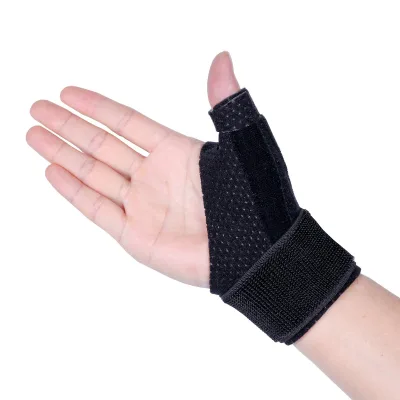


Factory Price Custom Adjustable Breathable Fitness Hand Wrist Band Protector Support
$0.60 - $0.71
MOQ: 1500 Pieces


Comprehensive Sourcing Guide
Wrist Support Sourcing Guide
The global market for Wrist Support products demonstrates a diverse range of configurations tailored to specific medical and athletic needs. Buyers observe listings featuring materials such as polyester, rubber, nylon, and neoprene, often combined with hook-and-loop fasteners for adjustable fit. These products are frequently marketed with features like breathability, portability, and precise stabilization, catering to users requiring health care solutions for conditions ranging from general strain to specific joint support.
Procurement strategies must account for the variability in product origins, with significant manufacturing activity reported in Jiangsu, Hebei, and Yangzhou regions of China. Sourcing teams should verify that the specific model numbers, such as SHS-AA-003 or GS-610, align with the intended application, whether for universal use or specialized sports protection. Understanding these distinct product attributes is essential before initiating contact with potential suppliers to ensure the selected inventory matches the required performance profile.
Product Scope and Observed Listing Signals
Buyers should analyze the observed price range of 0.35 to 200 USD to understand the spectrum of product complexity and material quality available in the current market. This wide variance often reflects differences in material composition, such as the distinction between simple polyester blends and advanced composites containing chloride butyl rubber. Procurement teams must correlate the unit price with the specific thickness and structural integrity required for their target demographic, ensuring that cost savings do not compromise the necessary support levels for adult users.
The minimum order quantity (MOQ) flexibility observed between 1 and 5000 units allows for varied procurement strategies depending on inventory turnover rates. Small buyers can test market demand with low-volume orders, while larger distributors may leverage higher quantities to secure better commercial terms. It is critical to confirm whether the supplier offers sample availability at any time, as this capability significantly reduces the risk associated with introducing new product lines or validating the fit of items like the thumb support or precision fit wrist stabilizers.
Technical Specifications to Verify
Technical due diligence requires a rigorous verification of material composition, as listings indicate specific blends such as 15% nylon with 85% rubber or 80% nylon with 20% polyester. Buyers must request detailed material data sheets to confirm that the stated percentages match the physical product, as these ratios directly influence durability, elasticity, and the overall comfort of the Wrist Support. The presence of composite cloth and elastic straps should be validated to ensure they provide the advertised adjustable and breathable characteristics without causing skin irritation during extended wear.
Thickness and model specifications are equally critical, with products ranging from medium to thick profiles to address different levels of joint instability. Procurement teams should cross-reference model numbers like 608214 or GS-410 against the intended use case, ensuring that the thickness aligns with the required protection for activities such as basketball, football, or tennis. Verifying that the product is non-waterproof, as indicated in some listings, is also necessary to determine if additional protective measures are needed for environments where moisture exposure is a concern.
Compliance and Safety Documentation
Safety compliance is a primary concern for medical and athletic support products, with some listings explicitly citing FDA and CE certifications as evidence of regulatory adherence. Buyers must request valid, up-to-date certification documents for each specific model number to confirm that the product meets the safety standards required for the target market. Relying on general claims without verified documentation can lead to regulatory penalties, especially when products are marketed for health care purposes or high-impact sports protection.
Beyond specific certifications, buyers should verify the standard manufacturing practices and quality control protocols employed by the supplier. While some background information suggests adherence to ISO standards, these should not be assumed without direct confirmation from the manufacturer. Procurement teams must ensure that the production process for items like the anti-seasick Wrist Support or precision fit stabilizers includes rigorous testing to guarantee that the final product performs safely under the stress conditions of its intended use.
Cost Drivers and Commercial Terms
The cost structure of Wrist Support products is heavily influenced by the complexity of the material blend and the customization options available. Products featuring specialized materials like neoprene or complex composite structures often command higher prices due to the increased manufacturing steps required to integrate hook-and-loop systems and elastic straps. Buyers should negotiate based on the specific material composition and the level of customization needed, as these factors directly impact the unit cost and the overall value proposition of the order.
Packaging and logistics represent another significant variable in the total cost of ownership, with observed packing standards ranging from individual boxes to corrugated cases containing 72 pieces. Understanding the carton specifications, such as the 72 boxes per outer carton configuration, is essential for calculating shipping efficiency and warehousing requirements. Procurement teams should clarify whether the supplier offers flexible packing options to optimize container utilization and reduce freight costs, ensuring that the commercial terms align with the buyer's logistical capabilities.
Supplier Qualification and Quality Control
Supplier qualification should prioritize manufacturers who explicitly identify as both a production facility and an exporter, as this dual capability often indicates a more robust supply chain and quality assurance infrastructure. Buyers must verify the specific place of origin, distinguishing between facilities in Jiangsu, Hebei, and Yangzhou, as regional differences can impact production consistency and lead times. Establishing a direct relationship with the manufacturing entity rather than a trading company can provide better visibility into the production process and facilitate more effective communication regarding technical specifications.
Quality control protocols must be clearly defined before placing orders, with a focus on the consistency of material blends and the accuracy of model specifications. Buyers should request evidence of in-process inspections to ensure that products like the Leica Support-Hand or the universal Wrist Support meet the stated standards for thickness and material composition. Implementing a pre-shipment inspection regime is advisable to catch any deviations in the final product, ensuring that the delivered goods match the approved samples and the agreed-upon technical requirements.
Long-Term Procurement Checks
Sustaining a successful procurement relationship requires regular audits of the supplier's ability to maintain consistent product quality over time. Buyers should establish a schedule for periodic re-verification of material compositions and certification statuses to ensure that the supplier continues to meet the required standards without degradation in product performance. This proactive approach helps mitigate the risk of supply chain disruptions and ensures that the Wrist Support products remain reliable for the end-users who depend on them for health care and sports protection.
Continuous monitoring of market trends and supplier performance is essential for adapting to changing demands and maintaining competitive advantage. Procurement teams should track changes in material availability, such as fluctuations in the supply of rubber or nylon, and adjust sourcing strategies accordingly to avoid production delays. By maintaining open communication channels and regularly reviewing the supplier's capacity to meet evolving order volumes, buyers can ensure a stable and efficient supply of high-quality Wrist Support products for the long term.
FAQs
What materials are commonly used for Wrist Support products?
Listed Wrist Support products commonly use polyester, nylon, rubber, or neoprene, sometimes in blends such as 15% nylon with 85% rubber or 80% nylon with 20% spandex. Some designs add chloride butyl rubber, hook and loop fasteners, elastic straps, and composite cloth. Material choice affects elasticity, breathability, and thickness, so buyers should match the composition to the intended sporting or health care use.
Can Wrist Support products be customized for my brand?
Yes, customization is available for the listed Wrist Support products. Typical options include branding, sizing adjustments, and packaging changes, though exact capabilities vary by supplier. Because these products come from manufacturers and exporters, buyers can usually request samples before committing to volume orders. Confirm customization scope, sample cost, and minimum order requirements with each supplier during initial discussions.
Which sports are Wrist Support products designed to protect during?
The listed wrist supports are designed for protection projects including basketball, football, tennis, badminton, and table tennis. Many models are also described as universal use, meaning they suit general daily activities and health care purposes beyond sports. When selecting a model, consider impact level, wrist movement range, and whether features like adjustability, portability, or breathability matter for your activity.
How is Wrist Support packaging typically handled for export orders?
Export packing for the listed Wrist Support products uses corrugated cases, with some models packed at 72 boxes per outer carton and others at 72 pieces per carton. Each wrist stabilizer or support is usually packaged as one piece per box. Carton-level packing protects goods during transit and simplifies warehouse handling, so confirm carton dimensions and total counts with the supplier before shipping.
What thickness options are available for Wrist Support products?
The listed Wrist Support products come in medium and thick thickness options depending on the model. Thickness affects compression level, warmth, and flexibility, so thicker supports generally suit heavier protection needs while medium supports balance comfort with support. Buyers should review each model specification, such as product standards listing nylon and rubber percentages, to match thickness and composition to end-user requirements.
Can I get samples of Wrist Support products before ordering?
Yes, samples are available anytime for the listed Wrist Support products according to the product information. Sampling lets you verify material quality, fit, adjustability, and breathability before placing volume orders. Sample costs and shipping fees are typically separate from bulk pricing and may vary by supplier. Request samples alongside your customization requirements so the sample reflects your intended final product.
Which certifications should I ask Wrist Support suppliers about?
Some listed Wrist Support products carry FDA and CE certification, which matters for buyers selling into regulated markets. Ask each supplier for current certification documents covering the specific models you intend to order, since certification can vary by model rather than by supplier. Also confirm whether certificates remain valid for customized versions, as material or design changes can affect compliance status.
How adjustable are the Wrist Support products for different users?
The listed wrist supports are designed as adjustable products for adult users, with features including hook and loop fasteners and elastic straps in some models. Adjustability lets one size accommodate different wrist circumferences and compression preferences. Since the products target adults, verify sizing ranges with the supplier if your end users have particular fit needs, and test adjustability through samples before ordering.