Source Recyclable Corrugated Food Display Box for Cosmetics, Electronics, and Apparel
Compare 30 listings for the Recyclable Corrugated Food Display Box suitable for cosmetics, electronics, and apparel. Buyers can evaluate materials, customization options, and pricing from verified Chinese manufacturers.
Key considerations
Products List


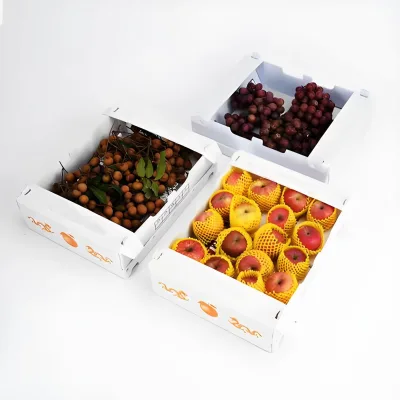
Disposable Food Packing Corrugated Food Tray Cardboard Brown Paper Box
$0.07 - $0.07
MOQ: 100000 Pieces


Comprehensive Sourcing Guide
Strategic Sourcing Guide for Recyclable Corrugated Food Display Boxes
Understanding Material Composition and Structural Integrity
When sourcing recyclable corrugated food display boxes, the primary focus must be on the specific material properties that ensure both sustainability and structural performance. The supply chain data indicates that the core material for these packaging solutions is predominantly Cardboard or Paper, with specific listings noting a weight range of 300 to 350 grams per square meter. This weight specification is critical for determining the rigidity and durability of the display box, particularly when it is intended to hold food items or other consumer goods. While some listings mention Metal as a material attribute, the primary focus for a "corrugated food display box" remains on the paper-based substrate, which aligns with the "Eco-friendly" and "Recyclable" features observed in the product attributes.
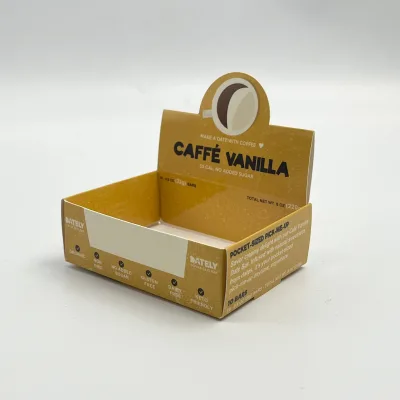
The structural design of these boxes often varies based on the intended application. Buyers should look for products described with a "Connect" build method and those that are "Folded," indicating a design that allows for efficient storage and shipping before assembly. The dimensions are rarely standardized; instead, the specification "as Your Requirement" or "Customized" suggests that the buyer must provide precise measurements to ensure the box fits the specific product being displayed. Whether the application is for food, electronics, apparel, or cosmetics, the cardboard material must be robust enough to maintain its shape under load. The "Two-Sided" printing capability is a common feature, allowing for comprehensive branding on all visible surfaces, which is essential for retail environments where the display box acts as a silent salesperson.
Compliance Standards and Certification Verification
In the food packaging sector, compliance is not merely a suggestion but a regulatory necessity. The observed product data highlights several critical certifications that buyers should verify, including SGS, BV, TUV, and ISO standards. These certifications are often listed as "Material Certification" or general product standards, indicating that the manufacturer has undergone third-party testing for quality and safety. For food applications specifically, the presence of SGS and ISO certifications is a strong indicator that the materials used are safe for contact with consumables. However, buyers must be cautious not to assume that every listed product automatically satisfies all food safety requirements without explicit confirmation.
The data also references "SGS BV ISO" and "SGS, ISO, BV" as combined standards, suggesting a multi-layered verification process. When evaluating a supplier, the procurement team should request specific documentation proving that the cardboard and any inks or adhesives used meet the relevant food-grade standards. The "Art File Accept" attributes listing PDF, CDR, and Ai formats indicate that the supplier is equipped to handle complex design files, but this does not inherently guarantee food safety compliance. Buyers must explicitly ask for the specific ISO standard number (e.g., ISO 9001 for quality management or specific food contact standards) and ensure the SGS or BV report covers the specific material batch intended for food use. Relying solely on the general mention of these certifications without verifying the scope of the test results can lead to compliance risks.
Cost Drivers and Minimum Order Quantity Analysis
The financial landscape of sourcing recyclable corrugated food display boxes is influenced by several variables, including material weight, customization levels, and order volume. The observed market data presents a price range of $0.04 to $15.99 USD, a wide spectrum that reflects the difference between simple, unbranded units and complex, custom-designed display structures. The lower end of this range likely corresponds to standard sizes with minimal customization, while the higher end suggests bespoke designs, premium paper weights (such as the 350g specification), or specialized finishes.
Minimum Order Quantity (MOQ) is another significant cost driver. The data indicates an MOQ range of 100 to 100,000 units, with specific listings showing an MOQ of 1,000 pieces. This variability allows buyers to scale their orders based on demand, but it also impacts the unit cost. Smaller orders, such as those starting at 100 units, may carry a higher per-unit price due to the setup costs associated with custom tooling and printing plates. Conversely, larger orders benefit from economies of scale. Buyers should also consider the "Small Orders: Accepted" attribute, which suggests flexibility for startups or those testing the market. However, for long-term procurement, negotiating a lower MOQ or a tiered pricing structure based on volume is essential to optimize the cost per unit. The "Customized" nature of the order means that design changes can significantly alter the final price, so early engagement with the supplier on design feasibility is crucial for budget accuracy.
Typical Applications and Functional Requirements
The versatility of recyclable corrugated food display boxes is evident in the diverse applications listed in the product data. These boxes are utilized for Food, Electronic, Apparel, Cosmetics, and Household products. For food applications, the primary functional requirement is the ability to protect the product while maintaining an attractive presentation. The "Hang Paper" type mentioned in the data suggests that some of these display solutions are designed for hanging retail environments, requiring specific structural reinforcements to support the weight of the product without tearing.
The "Application" attributes also highlight the use of these boxes in the Electronic and Apparel sectors, indicating that the same recyclable material can be adapted for different industries. In these contexts, the box serves as a premium packaging solution that enhances the perceived value of the item. The "Two-Sided" printing feature is particularly valuable for these applications, as it allows for branding on both the front and back of the display, maximizing visibility on retail shelves. For food products, the "Eco-friendly" and "Recyclable" features are not just marketing points but functional requirements that align with consumer demand for sustainable packaging. Buyers should ensure that the chosen box design accommodates the specific shape and weight of the food item, whether it is a solid product or a liquid container, to prevent damage during transport and display.
Supplier Evaluation and Geographic Considerations
When evaluating potential suppliers for recyclable corrugated food display boxes, geographic origin plays a significant role in logistics and lead times. The data indicates that the primary manufacturing hubs are located in China, with specific mentions of Zhejiang Province and Shanghai. These regions are known for their robust manufacturing infrastructure and expertise in paper-based packaging. The "prod_origin" and "prod_packing" attributes suggest that suppliers in these locations are accustomed to exporting, often utilizing Master Cartons, Kraft Paper, and Pallets for secure shipping.
Supplier evaluation should go beyond location and focus on their capability to handle customization. The "Service: OEM" and "Logo: Accept Customized" attributes indicate that suppliers are willing to tailor products to the buyer's brand requirements. Buyers should verify the supplier's ability to handle the "Art File Accept" formats (PDF, CDR, Ai) and their proficiency in executing complex designs. Additionally, the "Sample: Free" attribute is a valuable tool for quality assessment, allowing buyers to physically inspect the material weight, print quality, and structural integrity before committing to a large order. The "Sample Delivery Time" of 7 days is a standard benchmark that buyers can use to gauge the supplier's responsiveness. It is crucial to engage with suppliers who demonstrate transparency in their production processes and are willing to provide detailed specifications for the cardboard material and printing inks used.
Quality Control and Long-Term Procurement Strategy
Ensuring consistent quality in recyclable corrugated food display boxes requires a robust quality control (QC) strategy. The "Standard" attributes, including SGS, BV, and ISO, provide a baseline for quality, but buyers must implement their own QC protocols. This includes verifying the material weight (300g vs. 350g) to ensure it meets the structural requirements for the specific product being displayed. The "Folded" and "Connect" build methods should be tested for ease of assembly and durability under load.
For long-term procurement, establishing a partnership with a supplier who offers "Customized" solutions and "OEM" services is essential. This allows for continuous improvement of the packaging design to meet evolving sustainability goals and market trends. The "prod_packing" options, such as "Bundle, Master Carton, Pallet, or Customer Design," offer flexibility in logistics, which can reduce shipping costs and minimize damage during transit. Buyers should also consider the "Lead Time" for samples and bulk orders, ensuring that the supplier can meet demand fluctuations. The "Small Orders: Accepted" feature provides a safety net for testing new designs or responding to sudden market changes without the risk of overstocking. By maintaining a clear communication channel and setting strict quality benchmarks, buyers can ensure a steady supply of high-quality, recyclable corrugated food display boxes that meet both functional and sustainability requirements.
Comparative Analysis of Key Product Attributes
To facilitate a clearer understanding of the market offerings, the following table summarizes the key attributes observed in the product data, highlighting the variations in specifications and capabilities.
| Attribute Category | Observed Value / Range | Implication for Buyer |
|---|---|---|
| Material | Cardboard, Paper | Primary focus on eco-friendly, recyclable options. |
| Weight | 300g, 350g | Determines rigidity; 350g offers higher durability. |
| Certifications | SGS, BV, TUV, ISO | Essential for food safety and quality assurance. |
| MOQ | 100 - 100,000 (1000 common) | Flexible for startups; bulk discounts for large orders. |
| Price Range | $0.04 - $15.99 USD | Wide variance based on customization and size. |
| Printing | Single, Two-Sided | Two-sided preferred for maximum brand visibility. |
| Origin | Zhejiang, Shanghai, China | Major manufacturing hubs with established logistics. |
| Customization | Available, OEM | High flexibility for branding and design needs. |
| Sample Lead Time | 7 Days | Standard benchmark for evaluating product quality. |
This comparative analysis underscores the importance of aligning specific product attributes with the buyer's unique requirements. Whether the priority is cost, sustainability, or structural integrity, the data provides a clear framework for making informed sourcing decisions. By carefully evaluating these factors, buyers can secure a reliable supply chain for recyclable corrugated food display boxes that meets their operational and environmental goals.
FAQs
What certifications ensure food safety for these boxes?
SGS, BV, TUV, and ISO certifications verify material safety for food contact. Buyers must confirm the specific test scope covers food-grade requirements before use.
How can I customize the size and branding of the box?
Customization is available for size, logo, and printing pages. Suppliers accept PDF, CDR, and AI files to create tailored designs meeting your specific branding needs.
What is the minimum order quantity for these display boxes?
Minimum order quantities range from 100 to 100,000 units depending on the supplier. Some vendors accept small orders starting at 100 pieces for market testing.
Can I get a free sample before placing a bulk order?
Free samples are available from many suppliers to verify quality. The typical sample delivery time is seven days, allowing quick assessment of material weight and print quality.
Which materials are used for these recyclable display boxes?
The primary materials are cardboard and paper with weights of 300 or 350 grams. These paper-based substrates ensure the boxes are eco-friendly and recyclable for various uses.
Where are the manufacturers of these boxes located?
Manufacturers are primarily located in Zhejiang Province and Shanghai, China. These regions offer established logistics for exporting via master cartons and pallets.