Source refillable press-on glass soap dispenser for Bathroom, Kitchen, and Personal Care
Explore 30 options for the refillable press-on glass soap dispenser suitable for bathroom, kitchen, and personal care applications. Buyers can compare specifications like volume, material, and customization features to find the right supplier.
Key considerations
Products List
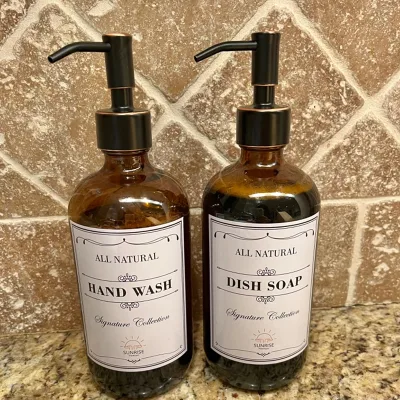


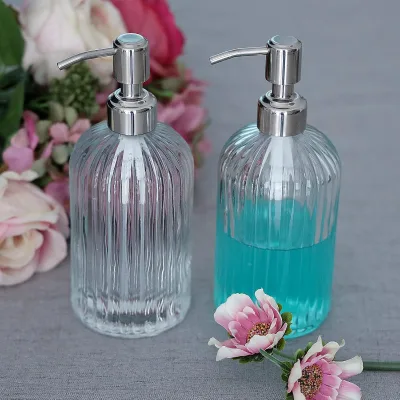
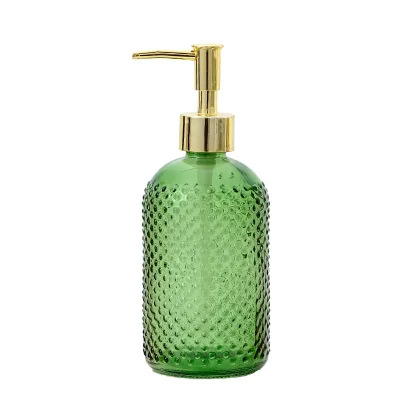


Comprehensive Sourcing Guide
Strategic Sourcing Guide for Refillable Press-On Glass Soap Dispensers
The global market for personal care packaging has seen a significant shift toward sustainable, refillable solutions, with glass emerging as a premium material choice for liquid soap dispensers. For procurement professionals seeking refillable press-on glass soap dispensers, the decision-making process requires a granular understanding of material properties, manufacturing capabilities, and supply chain logistics. This guide synthesizes available product attributes and industry standards to provide a structured approach to sourcing, ensuring that buyers can identify suppliers capable of meeting specific technical and operational requirements without relying on unverified market assumptions.
Understanding Material Composition and Structural Integrity
The foundation of any successful procurement strategy for glass dispensers lies in the verification of material composition. While the term "glass" is often used broadly, the specific type of glass and its interaction with the dispensing mechanism determine the product's longevity and safety. In the current supply landscape, product attributes indicate that glass is a primary material for the bottle body, often paired with specific sealing mechanisms. The observed data highlights a "Screw Cap" sealing type, which is critical for preventing leakage and ensuring the airtight nature required for refillable systems.
However, a critical distinction must be made regarding the structural components. Some product listings in the relevant category specify "Porcelain" or "Stainless Steel" as materials for specific models, such as those with model numbers like WBC0601A or WBS0816A. This suggests that a "glass soap dispenser" may not be constructed entirely of glass; rather, the glass component is often the reservoir, while the pump mechanism, collar, or base may utilize porcelain or stainless steel. Procurement teams must explicitly verify the material composition of each sub-component. For instance, a "Collar Material" of glass is noted in specific product profiles, indicating a seamless aesthetic, but other models may feature stainless steel collars for durability.
The thickness of the glass is another vital technical specification. Observed data points to a thickness of 0.2CM for certain items. While this provides a baseline, buyers should not assume this is a universal standard. Thinner glass may offer a lighter weight and lower shipping costs but could be more susceptible to breakage during transit or handling. Conversely, thicker glass offers superior durability but increases the unit weight and shipping volume. The "Flat" shape observed in some profiles suggests a specific design language that may influence the internal volume and the efficiency of the press-on mechanism. Buyers must request detailed dimensional drawings to confirm that the glass thickness and shape are compatible with the intended liquid viscosity and the mechanical force required for the press-on action.
Technical Specifications and Customization Capabilities
When evaluating potential suppliers, the technical specifications of the dispenser must align with the buyer's branding and functional needs. The "Model Number" serves as a unique identifier for these specifications, with examples such as YB-CD-22, WBP0812A, and WBP1760A appearing in the market. These codes often correspond to specific dimensions, such as sizes ranging from 8.3517.3 cm to 15.49.118.9 cm. The variation in dimensions directly impacts the "Volume" of the dispenser, with observed capacities reaching up to 500 mL. This range allows buyers to select dispensers suitable for various applications, from compact bathroom units to larger kitchen or commercial installations.
Customization is a significant driver in this sector. The data indicates that "Customization" is available, and "OEM/ODM" services are acceptable or allowed by suppliers. This flexibility extends to the "Color" of the product, which can be "Custom" or "Black," as well as "Cap color" options that allow for "Customized Colors." The "Design" aspect is also highly variable, with options ranging from "Black Classic" to "White Classic" and "Morden" styles. Furthermore, the "Printing Handling" process often involves "Decoration Firing," a technique that fuses the logo or design directly onto the glass surface, ensuring durability and resistance to wear.
The "Surface Handling" is another critical specification, with "Frost" being a noted treatment. This process not only enhances the aesthetic appeal but can also improve grip and reduce the visibility of fingerprints. Buyers should verify if the frost treatment is applied uniformly and if it affects the structural integrity of the glass. Additionally, the "Installation" requirement is listed as "No Installation Required," which simplifies the supply chain and reduces the cost of goods sold (COGS) for the end-user. The "Style" is typically "One Head," indicating a single dispensing nozzle, which is standard for most liquid soap applications.
Compliance, Certification, and Safety Standards
In the realm of personal care and bathroom sanitaryware, compliance with safety and quality standards is non-negotiable. The supply chain data mentions specific standards such as "FDA" and "LFGB," which are crucial for products intended for food or personal care contact. FDA compliance ensures that the materials do not leach harmful substances into the liquid soap, while LFGB (German Food and Feed Code) is a rigorous standard often required for products entering the European market. Buyers must explicitly request certification documents for these standards rather than relying on general claims of "High Quality" or "High-End" status.
While some background information suggests ISO 9001 certification, this should be treated as a general quality management indicator rather than a specific product certification. The primary focus for glass dispensers should remain on material safety standards like FDA and LFGB. The "Standard" for the product itself is often listed as "1 PCS," indicating that the unit is sold individually, but the packaging standard may vary. The "prod_packing" specification notes "1PC/ Poly Bag+Brown or White Box," which is essential for protecting the glass during shipping. However, for bulk orders, buyers should negotiate for reinforced packaging to minimize breakage rates, which can be a significant hidden cost.
It is important to note that "test results" or specific performance claims regarding the dispensing mechanism's durability are not universally provided in the observed data. Therefore, buyers should request sample testing reports that verify the seal integrity, the pressure required for the press-on action, and the resistance of the glass to thermal shock. The "Feature" of "High Qiality" (noted as "High Quality" in other entries) is a subjective claim that must be substantiated through objective testing.
Cost Drivers and Economic Considerations
The pricing of refillable press-on glass soap dispensers is influenced by a complex interplay of factors, including material costs, customization levels, and order volume. The observed price range in the market spans from 0.2 to 80 USD, a wide variance that reflects differences in glass quality, design complexity, and branding. The "Selling Units" are typically "Single item," but the "MOQ" (Minimum Order Quantity) ranges significantly from 1 to 10,000 units. A specific high-confidence fact notes an MOQ of 3000 pcs for certain models, which is a critical threshold for cost-effective production.
For buyers operating with lower volumes, the unit cost will likely be higher due to the setup costs for customization and the inefficiencies of small-batch production. Conversely, orders exceeding the 3000-piece threshold may benefit from economies of scale, particularly if the design is standard. The "Thickness" of the glass and the "Surface Handling" processes like "Decoration Firing" add to the production cost. These processes require specialized equipment and additional labor, which are factored into the final price.
Logistics also play a significant role in the total cost of ownership. The "Place of Origin" is frequently listed as "Guangxi" or "Guangzhou" in China (Mainland), which are major manufacturing hubs. However, the "Lead Time" is not explicitly defined in the provided data, and buyers must clarify this with suppliers. Glass is heavy and fragile, meaning shipping costs can be substantial. The "Size" of the product, such as 15.49.118.9 cm, directly impacts the number of units that can be packed per container, influencing the freight cost per unit. Buyers should calculate the landed cost, including duties and insurance, rather than focusing solely on the ex-factory price.
Supplier Evaluation and Operational Verification
Selecting the right supplier requires a rigorous evaluation process that goes beyond the product listing. The "Brand Name" YB is observed in some profiles, but buyers should not limit their search to specific brands. Instead, they should evaluate suppliers based on their ability to meet the "OEM/ODM" requirements and their track record with "Customization." The "Advantage" of "High-End" or "High Quality" is a common claim, but it must be validated through site audits or third-party inspections.
The "Sample" availability is a key indicator of a supplier's readiness. The data confirms that samples are "Provided," which allows buyers to physically inspect the quality of the glass, the smoothness of the press-on mechanism, and the accuracy of the color matching. Buyers should request samples that match their specific customization requirements, including the desired "Logo" placement and "Cap color." The "Design" of the sample should be compared against the technical drawings to ensure that the "One Head" style and "Non Automation" nature of the dispenser meet the functional requirements.
Furthermore, the "Application Field" is typically "Bathroom or Kitchen," and the "Usage" is "Personal Care." Buyers should verify that the supplier has experience in these specific sectors, as the requirements for bathroom sanitaryware may differ from general personal care products. The "Installation" requirement of "No Installation Required" simplifies the process, but the supplier must ensure that the dispenser is stable and does not tip over easily, which is a common issue with glass products.
Quality Control and Long-Term Procurement Strategy
Quality control (QC) is paramount when dealing with glass products, as breakage can lead to significant financial losses and supply chain disruptions. Buyers should implement a multi-stage QC process that includes pre-production sample approval, in-line inspection during manufacturing, and final random inspection before shipment. The "Standard" of "1 PCS" implies that each unit is inspected individually, but buyers should confirm the acceptance criteria for defects such as bubbles, scratches, or uneven frosting.
For long-term procurement, establishing a robust relationship with the supplier is essential. The "Customization" capabilities should be locked in through a formal agreement that specifies the "Model Number," "Size," and "Material" requirements. The "Production Origin" in Guangxi or Guangzhou offers access to a mature supply chain, but buyers should monitor the supplier's capacity to handle volume fluctuations. The "MOQ" of 3000 pcs suggests that the supplier is geared towards medium-to-large orders, and buyers should plan their inventory accordingly to avoid stockouts or overstocking.
Finally, the "Feature" of "High Quality" should be maintained through regular performance reviews. Buyers should track the "Selling Units" and "Usage" patterns to ensure that the dispensers are performing as expected in the field. If the "Sealing Type" or "Surface Handling" shows signs of degradation, the supplier should be engaged immediately to address the issue. By maintaining a disciplined approach to specification, compliance, and quality control, buyers can secure a reliable supply of refillable press-on glass soap dispensers that meet their brand standards and operational needs.
FAQs
What is the typical volume capacity for these dispensers?
The typical volume capacity observed for these dispensers is 500 mL. This capacity supports various personal care applications in bathrooms or kitchens, though specific models may vary in size dimensions like 15.4*9.1*18.9 cm.
Can suppliers provide samples for quality verification?
Yes, suppliers can provide samples for quality verification. This allows buyers to inspect the glass material, seal integrity, and customization options like logo printing before committing to larger orders.
Which certifications ensure safety for personal care products?
FDA and LFGB certifications ensure safety for personal care products. These standards verify that the glass and materials do not leach harmful substances, which is critical for bathroom sanitaryware usage.
How does the MOQ affect production costs?
The MOQ affects production costs by setting a minimum threshold, often observed at 3000 pieces. Orders below this volume may incur higher unit costs due to setup inefficiencies and lower economies of scale.
What customization options are available for branding?
Customization options include logo printing, cap colors, and surface treatments like frosting. OEM and ODM services are acceptable, allowing for unique designs such as Black Classic or White Classic styles.
Where are these glass dispensers typically manufactured?
These glass dispensers are typically manufactured in Guangxi and Guangzhou, China. These locations are major hubs for glass packaging, offering access to skilled labor and established supply chains for export.