Source Refillable Recyclable Airless Pump Bottle for Cosmetics, Skin Care, Personal Care
Explore 30 options for the Refillable Recyclable Airless Pump Bottle designed for cosmetics, skin care, and personal care products. Compare specifications including sizes from 15ml to 200ml, neck sizes, and customization features offered by suppliers in China.
Key considerations
Products List


Multi Capacity Plastic Pump Bottle Cosmetic Cream Airless Bottles with Pump
$0.34 - $0.35
MOQ: 10000 Pieces


Clean Hygienic Convenient Travel Shock Resistant Durable Airless Pump Bottle
$0.80 - $1.00
MOQ: 10000 Pieces

Made of Thick Material Easy Clean Reusable Compact Size Airless Pump Bottle
$0.80 - $1.00
MOQ: 10000 Pieces


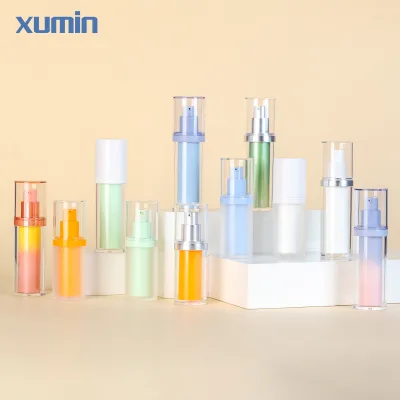


Comprehensive Sourcing Guide
Strategic Sourcing Guide for Refillable Recyclable Airless Pump Bottles
The global shift toward sustainable packaging has elevated the demand for refillable and recyclable airless pump bottles, particularly within the cosmetics and personal care sectors. These vessels are engineered to minimize product waste, extend shelf life by preventing oxidation, and reduce the environmental footprint associated with single-use plastic containers. For procurement professionals, navigating this specialized category requires a rigorous understanding of technical specifications, regulatory compliance, and supply chain logistics. This guide synthesizes verified market data to provide a structured approach for sourcing high-performance airless packaging that aligns with both operational efficiency and sustainability goals.
Technical Specifications and Functional Design
The core functionality of an airless pump bottle relies on a piston mechanism that elevates the product as it is dispensed, ensuring that zero product remains trapped at the bottom. When evaluating potential suppliers, buyers must scrutinize specific technical attributes that define the bottle's performance. The shape of the vessel is a primary differentiator; market observations indicate a prevalence of cylinder and round bottle designs, which offer ergonomic handling and efficient shelf stacking.
Capacity is a critical specification that dictates the bottle's application. Verified data points to a wide range of standard capacities, including 15 ml, 30 ml, 50 ml, 60 ml, 100 ml, 150 ml, 200 ml, and 250 ml. Specific model numbers often correlate with these volumes, such as models designated for 30 ml or 15 ml capacities, while other series support a broader range from 35 ml up to 150 ml. The neck size is another vital dimension; a standard 18 mm neck size is frequently observed, ensuring compatibility with various pump mechanisms.
Material composition is paramount for both safety and recyclability. The dominant material identified in the market is plastic, chosen for its durability and ability to be molded into complex airless structures. The sealing type is consistently observed as a pump sprayer or airless pump, which is essential for maintaining the integrity of sensitive formulations. Furthermore, the concept of refillability is a key differentiator. While some designs explicitly support a "Refill" attribute, others are single-use. Buyers must verify if the specific model, such as those in the SWC or SXMJ series, supports a refill mechanism or if the design is intended for complete replacement. The physical dimensions, such as a diameter of 39 mm and a height of 103 mm for specific 15 ml models, must be cross-referenced with the buyer's existing packaging lines to ensure compatibility.
Compliance and Certification Verification
In the cosmetics and personal care industry, regulatory compliance is non-negotiable. Sourcing airless bottles requires a thorough vetting of the supplier's certification portfolio to ensure the packaging meets international safety standards. Verified supplier data indicates that high-quality manufacturers often hold certifications such as ISO, Reach, California 65, and US FDA compliance. These certifications are not merely marketing claims but are essential indicators that the materials used do not leach harmful substances into the product.
Buyers should specifically verify the presence of these certifications for every batch of packaging ordered. The ISO certification suggests adherence to quality management systems, while Reach and California 65 compliance address chemical safety and restrictions on hazardous substances. The US FDA certification is particularly relevant for products intended for the American market, ensuring the packaging meets food and drug administration standards for cosmetic containers.
It is important to distinguish between general quality standards and specific material certifications. While ISO 9001 is a common background standard for manufacturing processes, buyers must ensure that the specific certifications listed above are current and applicable to the plastic materials used in the airless bottles. The absence of these specific certifications should be treated as a red flag, as the interaction between the plastic container and cosmetic formulations can lead to chemical migration if the materials are not properly tested and certified.
Cost Drivers and Economic Factors
Understanding the cost structure of airless pump bottles is essential for budgeting and negotiation. The observed price range in the market spans from $0.01 to $1.40 per unit, a significant variance that reflects differences in capacity, material quality, customization, and order volume. Several key factors drive these costs. First, the capacity of the bottle directly influences the amount of raw plastic required; a 250 ml bottle will inherently cost more than a 15 ml unit. Second, the complexity of the airless mechanism adds to the manufacturing cost compared to standard screw-cap bottles.
Customization is another major cost driver. The market data confirms that customization is available, including options for color customization and various printing methods such as silk screen printing, hot stamping, and labeling. These value-added services increase the unit price but are often necessary for brand differentiation. Additionally, the Minimum Order Quantity (MOQ) plays a crucial role in the final landed cost. Observed MOQs range from 3,000 to 30,000 units, with a specific high-confidence fact noting an MOQ of 10,000 pieces for certain models.
Buyers must calculate the total cost of ownership, which includes not just the unit price but also the impact of the MOQ on inventory holding costs. While smaller MOQs might seem attractive for testing, they often come with a higher per-unit price. Conversely, larger orders at the 30,000-unit level may offer better economies of scale but require significant storage capacity. The availability of free samples is a valuable resource for buyers to validate quality before committing to large orders, though this does not offset the initial MOQ requirements for production runs.
Typical Applications and Usage Scenarios
The versatility of airless pump bottles makes them suitable for a broad spectrum of applications, primarily within the cosmetics and personal care product sectors. The primary usage identified is for skin care packaging, where the preservation of active ingredients is critical. The airless mechanism prevents air from entering the container, thereby inhibiting oxidation and bacterial growth, which is vital for products containing vitamins, retinoids, or other unstable compounds.
The specific capacity of the bottle often dictates its application. Smaller volumes, such as 15 ml or 30 ml, are ideal for concentrated serums, eye creams, or travel-sized products. Larger capacities, ranging from 60 ml to 250 ml, are typically used for body lotions, facial cleansers, and moisturizers. The shape of the bottle, whether cylindrical or round, also influences its suitability for different product types; for instance, a round bottle might be preferred for hand creams due to its grip, while a cylinder might be chosen for sleek, high-end serums.
Furthermore, the refillable nature of certain models aligns with the growing consumer demand for sustainable beauty products. Brands that offer refillable systems can reduce packaging waste and foster customer loyalty. The printing capabilities, including silk screen and hot stamping, allow for sophisticated branding that appeals to premium market segments. Whether for a high-end skincare line or a mass-market personal care product, the airless bottle provides a functional and aesthetic solution that meets modern consumer expectations.
Supplier Evaluation and Selection Criteria
Selecting the right supplier is a critical step in the procurement process. Buyers should prioritize suppliers who demonstrate a clear capability for OEM and ODM services, as indicated by the "Acceptable" status for these services in the market data. This flexibility allows brands to customize the bottle design, color, and branding to match their specific identity. The origin of the products is another factor to consider; verified data points to China, and specifically Ningbo, as a primary manufacturing hub for these items.
When evaluating suppliers, buyers should look for evidence of a robust quality control process. The ability to provide free samples is a positive indicator of a supplier's confidence in their product quality. However, the sample process should be viewed as a preliminary step rather than a guarantee of bulk quality. Buyers must verify that the supplier can consistently meet the specified standards, such as the 30 ml or 15 ml volume tolerances, and that the printing quality remains consistent across large production runs.
The supplier's packaging method is also a consideration for logistics. Standard carton packaging and stack packing in PS trays are common methods observed. These methods ensure that the bottles arrive at the destination without damage, which is crucial for fragile airless mechanisms. Buyers should also inquire about the supplier's experience with the specific certifications required for their target markets, ensuring that the documentation is readily available and up to date.
Quality Control and Long-Term Procurement
Maintaining quality over the long term requires a proactive approach to quality control. Buyers should implement a rigorous inspection protocol that includes checking the sealing integrity of the pump, the smoothness of the piston movement, and the accuracy of the printed labels. The "Refill" attribute, whether present or absent, must be verified on every batch to ensure it matches the order specifications. Inconsistent refillability can lead to significant customer dissatisfaction and product waste.
For long-term procurement, establishing a strategic partnership with a reliable supplier is more beneficial than seeking the lowest short-term price. The ability to maintain consistent lead times and inventory levels is crucial for supply chain stability. Buyers should also consider the environmental impact of the packaging over its lifecycle. While the plastic material is the primary component, the recyclability of the bottle and the pump mechanism should be evaluated. Ensuring that the materials used are compatible with recycling streams can enhance the brand's sustainability profile.
In conclusion, sourcing refillable recyclable airless pump bottles requires a balanced approach that weighs technical performance, regulatory compliance, cost efficiency, and supplier reliability. By focusing on verified specifications, demanding appropriate certifications, and maintaining strict quality control, buyers can secure a supply chain that supports both their operational needs and their sustainability commitments. The market offers a diverse range of options, from 15 ml to 250 ml capacities, with various customization possibilities, allowing brands to find the perfect packaging solution for their unique product lines.
FAQs
What certifications do these airless bottles hold?
These bottles hold ISO, Reach, California 65, and US FDA certifications. Buyers should verify these specific documents to ensure chemical safety and regulatory compliance for their target markets before placing orders.
Which capacities are available for these refillable bottles?
Available capacities include 15 ml, 30 ml, 50 ml, 60 ml, 100 ml, 150 ml, 200 ml, and 250 ml. Specific models like SWC-JP60RM support 60 ml, while others cover ranges from 35 ml up to 150 ml depending on the series.
Can I customize the color and printing on these bottles?
Yes, customization is available including color options and printing methods like silk screen printing, hot stamping, and labeling. Buyers can request specific designs to match their brand identity while meeting minimum order quantity requirements.
What is the minimum order quantity for these plastic bottles?
The minimum order quantity ranges from 3,000 to 30,000 pieces, with specific models requiring 10,000 units. Smaller orders may not be feasible, so buyers must plan inventory levels accordingly to meet these volume thresholds.
Where are these refillable airless bottles manufactured?
These bottles originate from China, with specific manufacturing hubs located in Ningbo. Buyers should consider this location when calculating shipping costs and lead times for their international procurement needs.
How are these bottles packaged for shipping?
Bottles are typically packed in standard cartons or stacked in PS trays on pallets. This packaging method ensures the fragile airless mechanisms arrive safely without damage during transit to the buyer's facility.
What is the typical price range for these airless bottles?
The observed price range spans from 0.01 to 1.40 USD per unit. Costs vary based on capacity, customization level, and order volume, with larger quantities generally offering better economies of scale.