Source Reflective Aviation Warning Ball for Power Lines, Airports, and Towers
Find and compare 30 Reflective Aviation Warning Ball options from verified Chinese manufacturers. Evaluate specifications like diameter, material, and IP ratings to select the right solution for power line, airport, and tower visibility.
Key considerations
Products List


Aircraft Warning Spheres Transmission Lines Aviation Obstacle Warning Ball
$55.00 - $60.00
MOQ: 50 Pieces


Aircraft Warning Sphere 600mm Warning Marker Ball for Power Line Fiberglass Warning Ball
$55.00 - $60.00
MOQ: 50 Pieces


Warning Ball for Aircraft Obstruction Ball 400mm Fiberglass Aircraft Warning Sphere
$55.00 - $105.00
MOQ: 20 Pieces

Aircraft Warning Sphere Aviation Warning Marker High-Quality Aviation Ball
$58.00 - $108.00
MOQ: 20 Pieces

Warning Marker Ball for Power Line Warning Ball for Aircraft Obstruction Spheres
$50.00 - $120.00
MOQ: 20 Pieces


Obstruction Marker Power Line Aerial Marker Balls Aircraft Warning Markers
$30.00 - $50.00
MOQ: 10 Pieces
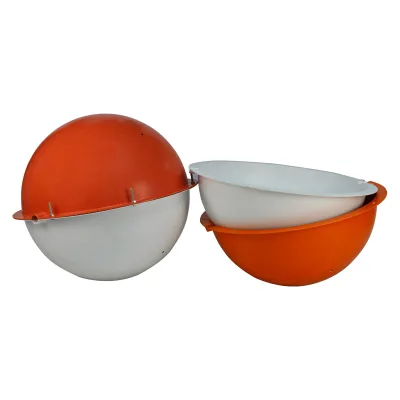
Power Line Fiberglass Warning Ballaircraft Warning Ballaviation Marking Ball
$60.00 - $80.00
MOQ: 10 pieces


Comprehensive Sourcing Guide
Reflective Aviation Warning Ball Sourcing Guide
Procuring reflective aviation warning balls requires a disciplined approach to balancing visibility standards with structural durability. These spherical markers are critical for mitigating collision risks on overhead power lines, telecommunications towers, and other elevated structures where wires are invisible to low-flying aircraft. Buyers must navigate a market where product specifications vary significantly based on the intensity of aviation obstruction required, ranging from medium to high-intensity applications. The sourcing process involves verifying material integrity, optical performance, and compliance with international aviation safety standards to ensure long-term reliability in harsh environmental conditions.
The following guide provides evidence-based procurement strategies for sourcing these components. It focuses on interpreting observed market data, verifying technical specifications, and establishing robust quality control protocols. By adhering to these guidelines, procurement teams can minimize supply chain risks, ensure regulatory compliance, and secure products that meet the rigorous demands of aviation safety. The guidance is structured to help buyers make informed decisions at every stage of the sourcing lifecycle, from initial supplier evaluation to long-term performance monitoring.
Product Scope and Observed Listing Signals
The market for aviation warning balls presents a diverse range of options, with observed listings indicating a price range of $15 to $153.82 USD and minimum order quantities (MOQs) spanning from 1 to 500 units. This wide variance suggests that buyers can access both small-scale replacement parts and large-scale infrastructure projects, depending on their specific volume requirements. The availability of customization options allows for tailored solutions, such as specific color combinations or mounting configurations, which can be crucial for projects with unique visual or structural constraints. Buyers should carefully evaluate whether the lower price points correspond to standard specifications or if they reflect compromises in material quality or certification status.
Observed product attributes highlight key differentiators, including materials like fiberglass and FRP (Fiberglass Reinforced Polyester), which are chosen for their strength-to-weight ratio and resistance to corrosion. Typical weights range from 6 to 10 kg per unit, with specific models weighing around 6.8 kg or 7 kg, indicating a substantial build designed to withstand wind loads. Colors are predominantly red, orange, and white, often in combination, to maximize contrast against various sky and terrain backgrounds. Some listings also mention accessories such as clips, bolts, and nuts, suggesting that complete installation kits are available, which can simplify procurement by reducing the need to source separate hardware components.
Technical Specifications to Verify
Thickness and diameter are critical dimensions that directly impact the visibility and structural integrity of the warning balls. Observed specifications indicate diameters of 400mm, 600mm, 800mm, and 900mm, with wall thicknesses ranging from 2.5mm to 3.0mm. Buyers must verify that the selected diameter aligns with local aviation regulations, as larger spheres provide greater visibility but may also increase wind load on the supporting structure. The thickness of the fiberglass shell is equally important, as it determines the ball's resistance to impact and environmental degradation. Procurement teams should request detailed engineering drawings or material test reports to confirm that the specified thickness is consistent across the entire surface of the sphere.
Optical and environmental performance metrics are equally vital for ensuring the effectiveness of the warning balls. Key attributes include an IP rating, with some products specified for medium or high-intensity aviation obstruction, and a visible distance of up to 3000 meters. The operating temperature range is typically cited as -50°C to +80°C, indicating suitability for extreme climates. Additionally, the lifespan of the product is often claimed to be over 20 years, which is a significant factor in total cost of ownership calculations. Buyers should verify these claims through independent testing or third-party certifications, as performance in real-world conditions can vary based on manufacturing quality and material purity.
Compliance and Safety Documentation
Certification is a non-negotiable aspect of sourcing aviation warning balls, as these products are subject to strict international safety standards. Observed listings mention ISO certification, which indicates adherence to quality management systems, but buyers must also verify compliance with specific aviation authorities such as the FAA (Federal Aviation Administration) or ICAO (International Civil Aviation Organization). CE certification is also noted in some listings, which is essential for products intended for the European market. Procurement teams should request copies of all relevant certificates and ensure that they are current and issued by recognized accreditation bodies.
Documentation should also include detailed product data sheets that outline the material composition, colorfastness, and reflectivity properties. For products claiming high visibility, buyers should ask for photometric data or reflectivity test results to confirm that the spheres meet the required luminance standards. Additionally, warranty information is a key indicator of supplier confidence, with observed warranties typically lasting two years. Buyers should review the terms of the warranty to understand what is covered, such as material defects or premature fading, and whether it includes replacement parts or labor costs.
Cost Drivers and Commercial Terms
The cost of aviation warning balls is influenced by several factors, including material quality, diameter, and certification status. Larger diameters and thicker walls generally command higher prices due to increased material usage and manufacturing complexity. Customization options, such as specific color combinations or branding, can also add to the cost. Buyers should analyze the price range of $15 to $153.82 USD to understand the value proposition of different suppliers, keeping in mind that the lowest price may not always offer the best long-term value if it compromises on quality or compliance.
Commercial terms, including MOQs and payment conditions, play a significant role in the overall procurement strategy. Observed MOQs range from 1 to 500 units, offering flexibility for both small and large projects. Buyers should negotiate terms that align with their inventory management strategies, considering factors such as storage capacity and project timelines. Additionally, shipping and packaging costs should be factored into the total cost analysis, as the bulky nature of the spheres can impact freight expenses. Clear communication regarding lead times and delivery schedules is essential to avoid project delays and ensure that the warning balls are installed in a timely manner.
Supplier Qualification and Quality Control
Supplier qualification is a critical step in ensuring the reliability of the supply chain. Buyers should conduct thorough due diligence on potential suppliers, verifying their manufacturing capabilities, quality control processes, and track record in the aviation safety industry. Suppliers located in regions known for fiberglass manufacturing, such as Hebei, China, may offer competitive pricing, but buyers must still verify their ability to maintain consistent quality standards. Requesting samples is a recommended practice, as it allows buyers to physically inspect the product for defects, check the accuracy of dimensions, and assess the overall build quality.
Quality control protocols should be established to monitor production consistency and final product performance. Buyers should implement incoming inspection procedures to verify that delivered goods match the agreed-upon specifications, including diameter, thickness, weight, and color. Random sampling and destructive testing can help identify potential issues early in the supply chain. Additionally, suppliers should be required to provide batch-specific test reports for key attributes such as impact resistance and UV stability. Establishing a clear feedback loop with suppliers ensures that any quality issues are addressed promptly and that continuous improvement is prioritized.
Long-Term Procurement Checks
Long-term procurement success depends on regular performance monitoring and supplier relationship management. Buyers should track the field performance of the installed warning balls, noting any issues related to fading, cracking, or detachment. This data can be used to evaluate the durability of the products and identify potential suppliers for future contracts. Regular audits of supplier quality systems can also help ensure that they continue to meet the required standards over time. Maintaining open communication with suppliers allows for collaborative problem-solving and fosters a partnership focused on mutual success.
As aviation regulations and technology evolve, buyers must stay informed about changes that may impact their procurement strategies. This includes updates to visibility standards, new material technologies, or changes in certification requirements. Periodic reviews of the supply base can help identify new suppliers offering innovative solutions or improved value propositions. By maintaining a proactive approach to procurement, buyers can ensure that their aviation warning ball installations remain compliant, effective, and cost-efficient over the long term. This continuous improvement mindset is essential for managing risk and optimizing the total cost of ownership.
FAQs
What materials are used for reflective aviation warning balls?
These balls are constructed from Fiberglass or FRP, which stands for Fiberglass Reinforced Polyester. This material ensures durability and resistance to environmental factors while maintaining the required structural integrity for aviation safety applications.
Which certifications do these warning balls typically hold?
The products generally carry ISO and CE certifications to ensure compliance with international safety standards. These certifications verify that the manufacturing processes and final products meet specific quality and safety requirements for aviation obstruction lighting.
How long is the warranty period for these aviation balls?
A standard warranty of 2 Years is provided for these products to cover manufacturing defects. This warranty period reflects the manufacturer's confidence in the longevity and reliability of the fiberglass construction and the integrated lighting systems.
Can I customize the color of the warning marker balls?
Yes, customization is available for the product colors, including options like Red, Orange, White, or combinations thereof. Buyers can request specific color schemes to meet local aviation regulations or visibility requirements for power lines and towers.
What is the typical weight of a single warning ball unit?
The weight of a single unit typically ranges between 6kg and 10kg, with specific models weighing around 6.8kg or 7kg. This weight ensures stability during installation while remaining manageable for transport and mounting on various structures.
What diameter sizes are available for these aviation spheres?
Available diameters include 400mm, 600mm, 800mm, and 900mm to suit different visibility and structural needs. These standardized sizes allow for consistent installation across various power line and tower configurations while meeting international aviation marking standards.
How is the product packaged for shipping?
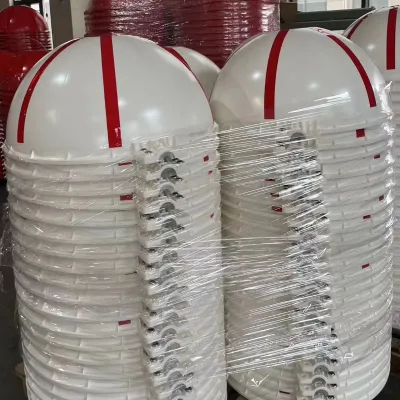
The items are packed in Cartons or Paper Cartons, with a standard configuration of 4 pieces per carton. This packaging method protects the spheres during transit and ensures they arrive in optimal condition for immediate installation at the destination site.