Source Reflective Glass Bead Wheel Stopper for Parking, Railway, and Tunnel
Explore 30 listings for the Reflective Glass Bead Wheel Stopper to compare specifications like rubber material, dimensions, and weight. Buyers can evaluate options for parking lots, railways, and tunnels based on available customization and ISO certifications.
Key considerations
Products List


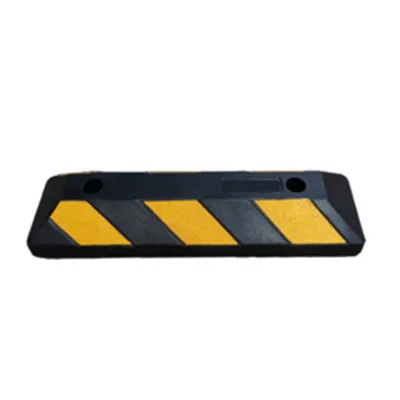
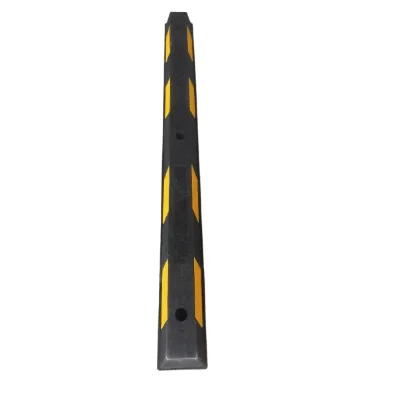


Factory Wholesale Excellent Quality Durable Reflective Rubber Wheel Stopper
$8.00 - $20.00
MOQ: 100 Pieces

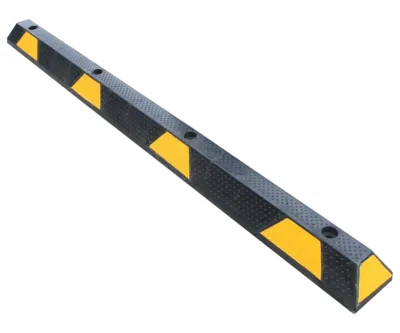

High Quality Aluminium Alloy Wheel Stoppers with Reflector Vehicle Wheel Stopper
$9.30 - $10.50
MOQ: 1 Pieces


Comprehensive Sourcing Guide
Strategic Sourcing Guide for Reflective Glass Bead Wheel Stoppers
Understanding Product Variants and Technical Specifications
The market for reflective glass bead wheel stoppers presents a diverse array of configurations, requiring buyers to distinguish between general rubber curbs and specialized high-visibility units. Based on observed product data, the core material composition for these items is predominantly rubber or a rubber-plastic composite, designed to withstand the impact of vehicle tires while maintaining structural integrity. The physical dimensions vary significantly depending on the intended application, ranging from compact units to large-scale barriers.
For instance, specific models observed in the market feature a length of 200cm with a width of 15cm and a height of 10cm, weighing approximately 15kg. In contrast, other configurations designed for tighter spaces or specific mounting requirements may have a length of 600mm, a width of 120mm, and a height of 100mm, with a unit weight of 2.5kg. Some variants are even smaller, with dimensions recorded as 74.7mm by 13.9mm or 91.6mm by 21.8mm, though these likely represent specific components or smaller accessory units rather than full wheel stoppers. The "Round" shape attribute indicates that not all stoppers are rectangular; some are designed with a circular profile to accommodate different vehicle bumper geometries.
The reflective capability is a critical technical differentiator. While the core material is rubber, the high-visibility requirement is often met through the application of yellow reflective sheets on a black base. This color combination, specifically noted as "Black Base with Yellow Reflective Sheets" or simply "Yellow Black," ensures that the stopper is visible in low-light conditions, a non-negotiable safety feature for parking lots, tunnels, and roadways. The standard dimensions for some heavy-duty units reach 2000mm in length with a cross-section of 150mm by 100mm, providing substantial resistance against heavy vehicles. Buyers must carefully cross-reference the "prod_standard" codes, such as 2000150100mm or 600mm120mm100mm, against their specific site requirements to ensure compatibility with vehicle clearance and parking lot layout.
Compliance, Certification, and Safety Standards
When sourcing reflective wheel stoppers, verifying compliance with international and regional standards is essential for liability management and safety assurance. The observed product data explicitly lists "ISO" certification as a high-confidence attribute, indicating that manufacturers should adhere to International Organization for Standardization management systems. However, buyers must verify that the specific batch or model carries valid ISO documentation relevant to rubber products or safety barriers.
While the provided context mentions background standards such as EN1423, EN1424, and JIS R3301, these should be treated as reference points for verification rather than guaranteed attributes of every listed product. EN1423 and EN1424 are European standards often associated with road traffic safety equipment, while JIS R3301 relates to Japanese industrial standards for road markings and related equipment. A prudent procurement strategy involves requesting the supplier to confirm if the specific wheel stopper model meets the relevant standard for the buyer's target market. For example, if the product is destined for the European Union, confirmation of EN compliance is necessary. If the application is in Japan or follows Japanese design specifications, JIS compliance becomes the priority.
Buyers should not assume that a product listing implies full certification without documentation. The presence of a "Customization" attribute suggests that manufacturers are willing to adapt products to meet specific regulatory needs, which can be a lever for ensuring compliance. The "prod_origin" data points to China and specific regions like Sanmen, Taizhou, Zhejiang, which are known manufacturing hubs. While these locations are established, the certification status must be validated per order. The "Using time" attribute of 3 years suggests a baseline durability expectation, but this should be corroborated with warranty terms and material testing reports to ensure the reflective sheets do not degrade prematurely under UV exposure or physical abrasion.
Cost Drivers and Pricing Dynamics
The pricing for reflective glass bead wheel stoppers is influenced by a complex interplay of material costs, dimensional specifications, and order volume. The observed price range in the market spans from $0.22 to $500, a variance that reflects the difference between small, lightweight components and large, heavy-duty industrial units. A unit weighing 6g or 12g will naturally command a lower price point compared to a 15kg or 12kg unit. The material composition, whether pure rubber or a rubber-plastic blend, also impacts the cost, as does the inclusion of reflective glass beads or sheets.
Minimum Order Quantity (MOQ) is another significant cost driver. The observed MOQ range extends from 1 to 2000 units. For small projects or procurement trials, buyers may find suppliers willing to ship single items, but the unit cost will likely be at the higher end of the spectrum. Conversely, bulk orders of 2000 units can drive the price down significantly, potentially approaching the lower bounds of the observed range. The "Single gross weight" and "Single package size" are critical for logistics cost calculations. For example, a unit with a gross weight of 14.000 kg and a package size of 1650x18x13 cm will incur higher shipping costs per unit compared to a lighter, more compact item.
Buyers should also consider the "prod_packing" specifications, which include options like Woven Bags, Cartons, and Pallets. Palletized shipping is often more efficient for large orders, reducing handling costs and damage risk, but it requires a higher initial volume commitment. The "Selling Units" attribute indicates that some suppliers sell single items, while others may require bulk packaging. Understanding these variables allows buyers to model the total landed cost accurately, factoring in not just the unit price but also packaging, freight, and potential customs duties.
Typical Applications and Site Suitability
Reflective wheel stoppers are versatile safety devices deployed across various environments where vehicle containment and visibility are paramount. The observed "Application" attributes highlight several key use cases: Parking, Railway, Tunnel, Road, and Parking Lot. Each of these environments presents unique challenges that the wheel stopper must address.
In parking lots, the primary function is to prevent vehicles from overrunning designated spaces and damaging infrastructure. The "Black Base with Yellow Reflective Sheets" design is particularly effective here, providing high contrast against asphalt or concrete surfaces. For railway applications, the stoppers must withstand higher impact forces and potentially harsher environmental conditions. The "Rubber" material is chosen for its ability to absorb shock without cracking, protecting both the vehicle and the stopper itself.
Tunnel and road applications demand even higher durability and visibility. The reflective glass beads or sheets must remain effective in the confined, often dimly lit environment of a tunnel. The "Using time" of 3 years suggests a standard lifespan, but in high-traffic tunnel environments, wear and tear may be accelerated. Buyers should verify the specific durability claims for these high-stress applications. The "Customization" availability is crucial for these sectors, as tunnel stoppers may require specific dimensions or mounting mechanisms to fit unique infrastructure constraints.
The "Shape" attribute, including "Round" variants, suggests that some applications may benefit from a different contact profile. While rectangular stoppers are standard for parking lots, round stoppers might be used in specific loading zones or areas where vehicle clearance is irregular. The "Product name" and "Brand Name" variations, such as "Aroad car wheel stopper," indicate that branding can be customized, which is beneficial for corporate parking facilities seeking uniformity in safety signage.
Supplier Evaluation and Verification Protocols
Selecting a reliable supplier for reflective wheel stoppers requires a rigorous evaluation process that goes beyond the initial product listing. The "prod_origin" data indicates that many suppliers are based in China, specifically in Zhejiang province. While this region is a manufacturing hub, buyers must verify the supplier's capacity to meet quality standards consistently. The "ISO" certification is a positive indicator, but it should be validated through certificates of conformity for the specific product batch.
Buyers should request detailed product specifications, including the exact composition of the rubber or rubber-plastic blend. The "Weight" variations, from 6g/PC to 15kgs, highlight the need for precise specification matching. A supplier claiming a 15kg unit must provide proof of weight and density to ensure the product meets the required impact resistance. The "Single package size" and "Single gross weight" data are essential for logistics planning; discrepancies here can lead to unexpected shipping costs or container utilization issues.
The "Customization" attribute is a strong signal of supplier flexibility. A supplier that offers customization is likely more responsive to specific project requirements, such as unique dimensions or branding. However, buyers should assess the lead time for customized orders, as this can vary significantly. The "Using time" claim of 3 years should be backed by a warranty or guarantee, and buyers should inquire about the terms of this warranty.
Furthermore, the "prod_packing" options, such as "Woven Bag" or "Carton," should be evaluated for their protective qualities. For international shipping, robust packaging is essential to prevent damage during transit. Buyers should also check the supplier's history of delivering to similar markets, particularly if the destination requires specific certifications like EN or JIS.
Quality Control and Long-Term Procurement Considerations
Ensuring the long-term performance of reflective wheel stoppers involves a robust quality control (QC) strategy. The "Weight" and "Dimensions" are critical QC checkpoints. A unit specified as 600mm x 120mm x 100mm must match these dimensions within a tight tolerance to ensure proper fit and function. The "Weight" of 2.5kg for this size is a key indicator of material density; deviations could suggest inferior material quality or manufacturing defects.
The reflective component is another area requiring strict QC. The "Yellow Reflective Sheets" must adhere firmly to the rubber base and maintain their reflectivity over time. Buyers should request samples to test the adhesion and reflectivity under various lighting conditions. The "Using time" of 3 years is a target, but real-world performance depends on the quality of the reflective material and the UV resistance of the rubber.
For long-term procurement, buyers should consider the scalability of the supply chain. The "MOQ" range of 1-2000 suggests that suppliers can accommodate both small and large orders, but consistency in quality across batches is vital. Establishing a long-term relationship with a supplier who can provide consistent "Customization" options and adhere to "ISO" standards will mitigate risks associated with supply chain disruptions.
Finally, buyers should plan for the end-of-life disposal of the rubber products. While not explicitly detailed in the provided facts, the environmental impact of rubber disposal is a growing concern. Procuring from suppliers who demonstrate a commitment to sustainable practices or who offer recycling programs can add value to the procurement strategy. The "prod_standard" and "prod_model" codes should be tracked meticulously to ensure that replacement parts or future orders match the original specifications, maintaining uniformity across the facility. By focusing on these technical, compliance, and logistical factors, buyers can secure a reliable supply of high-quality reflective glass bead wheel stoppers that meet their safety and operational needs.
FAQs
What certifications do Reflective Glass Bead Wheel Stopper manufacturers hold?
Many listed products carry ISO certification as a standard attribute for these rubber units. Buyers should verify specific batch documentation to ensure compliance with regional safety requirements before placing large orders.
Which dimensions are standard for heavy-duty rubber wheel stoppers?
Heavy-duty models often feature a length of 2000mm, a width of 150mm, and a height of 100mm. Smaller variants may measure 600mm by 120mm by 100mm, so select based on vehicle clearance needs.
Can suppliers customize the color and branding of these stoppers?
Yes, customization is available for color schemes like black base with yellow reflective sheets and brand names. Buyers can request specific branding or dimensions to match their facility's safety signage standards.
How does the minimum order quantity affect the unit price?
Prices range from 0.22 to 500 USD depending on order volume, with MOQs varying from 1 to 2000 units. Higher volumes typically reduce the unit cost, while single-item orders incur higher per-unit pricing.
What is the typical weight and material composition of these units?
Units are made of rubber or rubber-plastic composites and weigh between 6g and 15kg per piece. Specific models like the DWQ-600B-11 weigh 2.5kg, while larger curb units can reach 15kg.
Where are these reflective wheel stoppers primarily manufactured?
Most products originate from China, with specific hubs in Sanmen, Taizhou, and Zhejiang province. Buyers should confirm the exact place of origin to assess logistics costs and lead times for their region.
What is the expected lifespan of the reflective sheets on these stoppers?
The listed using time for these products is approximately 3 years under normal conditions. Buyers should request warranty terms to confirm durability against UV exposure and physical abrasion in high-traffic areas.