Source Reflective PVC Traffic Delineator Post for road, barrier, and warning
Compare 30 Reflective PVC Traffic Delineator Post options for road construction, central isolation barriers, and warning applications. These flexible posts feature customizable heights, reflective strips, and durable PC/PVC or plastic materials suitable for various traffic safety needs.
Key considerations
Products List


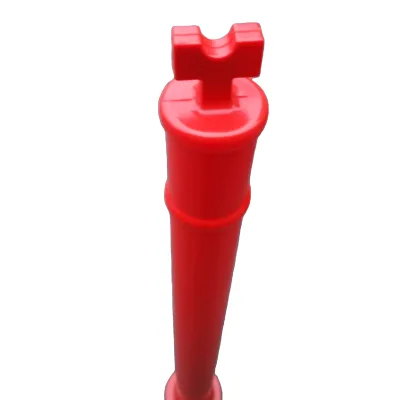


32" Reflective Portable Traffic Safety Delineator Post with Black PVC Base
$3.00 - $8.00
MOQ: 500 Pieces

Comprehensive Sourcing Guide
Strategic Sourcing Guide for Reflective PVC Traffic Delineator Posts
Understanding Product Variants and Core Specifications
When sourcing reflective PVC traffic delineator posts, buyers must first navigate a diverse landscape of product variants that share a common material base but differ significantly in dimensions, weight, and specific application profiles. The core material for these safety devices is consistently identified as PVC or a PC/PVC blend, selected for its durability and flexibility. This material composition allows the posts to bend under impact and return to their original shape, a critical feature for roadside safety. The primary product names observed in the market include "PVC Delineator Post," "Reflective Delineator," "Guardrail Delineator," and "Flexible Reflective Warning Post." While the terminology varies, the functional intent remains the same: to provide high-visibility guidance for road users.
A critical aspect of specification verification is the physical dimension, which is not uniform across all listings. For instance, one prominent configuration lists a size of 1300mm in length, 100mm in width, and 3mm in thickness, with a corresponding weight of 1.25kg. In contrast, other models, such as the "Rebound Delineator Post," may feature a height of 75cm with a base diameter of 20cm and a post diameter of 8cm, weighing 1.2kg. Some listings specify a length of 1.5m or offer customization, while others note a width of 100mm. The reflector size also varies; standard configurations include reflectors measuring 4x18cm or 4x20cm, whereas some flexible warning posts utilize a 3x7cm reflector film. Buyers must treat these numerical values as observations of specific models rather than universal standards. The "Remark" section of product data often highlights that height can be customized to any length, suggesting that the 1.3m or 1.5m figures are common but not exclusive.
Compliance, Certification, and Regulatory Alignment
In the realm of traffic safety equipment, regulatory compliance is non-negotiable. The supplied data indicates that certain products carry a "CE Certificate," which is a significant indicator of conformity with European health, safety, and environmental protection standards. However, the presence of this certification in the data should be verified on a per-product basis, as it is not universally applied to every listing. The "Low-confidence background" section notes CE certification, but the "High-confidence facts" explicitly list "Ce Certificate: Yes" for specific items. This distinction is vital for procurement teams; a buyer cannot assume all flexible delineators are CE-certified without explicit documentation.
Beyond the CE mark, buyers must investigate the specific standards applicable to their target market. While the provided text mentions a product standard listed as "46x 37 x 37cm," this appears to refer to packaging dimensions rather than a manufacturing standard code. Similarly, a standard labeled "75cm" is noted, which likely refers to the height specification of a particular model rather than a regulatory code. In the absence of specific ISO or ASTM standard numbers in the source data, procurement teams must request the relevant test reports and compliance certificates from suppliers. The "Function" of these posts is listed as "Warning," and their "Position" is often "Central Isolation Barrier," implying they must meet specific visibility and impact resistance criteria defined by local transportation authorities. Buyers should verify that the supplier can provide documentation proving the product meets the specific national or regional standards for road delineation, rather than relying solely on the generic "CE" label.
Cost Drivers and Economic Factors
The economic landscape for sourcing these posts is influenced by several key variables, including material composition, customization levels, and packaging efficiency. The observed price range in the market sits between 1 and 100 USD, a wide spectrum that reflects the diversity in product specifications. A post measuring 1300mm with a 1.25kg weight will naturally carry a different cost structure than a 75cm post weighing 875g. The material cost is driven by the quality of the PVC or PC/PVC blend used, which must balance flexibility with long-term UV resistance.
Customization is a primary cost driver. The data explicitly states that "Customization: Available" and that height can be "Any Lengh" (Length). Customizing the length, width, or the specific placement and size of the reflector film will increase the unit price and potentially the Minimum Order Quantity (MOQ). The observed MOQ range is between 10 and 1000 units. A buyer ordering a standard 1.3m post might face an MOQ of 10, whereas a custom-designed post with specific reflector patterns could require an order of 1000 units to justify the production setup.
Packaging also impacts the total landed cost. The standard packaging is listed as "Carton," with specific carton sizes such as 85x43x80cm. One model, the "Flexible Reflective Warning Post," has a packaging quantity of 25 pieces per carton, with a net weight of 27.5kg and a gross weight of 29kg. These dimensions and weights are critical for calculating shipping costs. A buyer must consider the volumetric weight of the cartons, as the 85cm height and 43cm width can lead to inefficient container utilization if not packed optimally. The "Produce Time" is noted as 1000 units per day, which suggests a high-capacity production line, but this capacity does not necessarily guarantee immediate availability for custom orders.
Typical Applications and Operational Context
Reflective PVC delineator posts serve multiple roles in traffic management, primarily functioning as warning devices and visual guides. The "Function" is explicitly listed as "Warning," and the "Position" is frequently identified as "Central Isolation Barrier." This indicates their primary use in separating lanes of traffic moving in opposite directions or in dividing different types of roadways. They are also suitable for "Road Construction" zones, where they guide drivers around work areas safely.
The flexibility of the material makes them ideal for areas prone to vehicle impact. Unlike rigid concrete posts, these delineators can bend and rebound, reducing the risk of vehicle damage and driver injury. The "Life Time" is stated as "More Than Five Years," which is a crucial metric for lifecycle cost analysis. This longevity is contingent on the quality of the reflective film and the UV stability of the PVC body. The "Color" is typically a "White Body" with "White Yellow Reflector," providing high contrast in both daylight and low-light conditions.
Different models are suited for different contexts. The "Guardrail Delineator" with a size of 1400x120x4mm and a 4x20cm reflector is likely designed for heavy-duty applications where higher visibility and robustness are required. In contrast, the "Rebound Delineator Post" with a 75cm height and 3x7cm reflector might be better suited for temporary roadwork or lower-speed environments. The "Flexible Reflective Warning Post" with a 1.5m length offers a balance between visibility and flexibility for general road use. Buyers should match the specific model dimensions and reflector sizes to the speed of the traffic and the severity of the hazard they are intended to mitigate.
Supplier Evaluation and Production Capacity
Evaluating a supplier for these posts requires a focus on production capacity, origin, and quality assurance processes. The data indicates that the "prod_origin" is "Beijing, China" or generally "China." This geographic concentration suggests a mature supply chain with access to raw PVC materials and established manufacturing networks. The "Produce Time" of 1000 units per day indicates that suppliers have the capacity to handle large orders, but buyers must confirm if this rate applies to standard stock items or if it slows down for customized orders.
When selecting a supplier, buyers should verify the "prod_model" codes, such as "PSLKB," "LKB," "PSLLKB1," "RSG-D-02," and "JSZ75." These codes serve as unique identifiers for specific product configurations. A supplier that can clearly map these models to their internal quality control records is preferable. The "Product Name" variations, such as "PVC Delineator" versus "Reflective Delineator," should be consistent with the model code to avoid confusion in the supply chain.
Quality control should be a central part of the supplier evaluation. Buyers must request samples to verify the "Weight" specifications, such as the 1.25kg for the 1300mm post or the 875g for the 1.5m version. Discrepancies in weight often indicate variations in material density or wall thickness, which directly affect durability. Additionally, the "Reflective" feature must be tested for brightness and durability. The supplier should demonstrate a clear process for ensuring the "Life Time" of more than five years, which involves testing the material's resistance to weathering and the reflector's ability to maintain visibility over time.
Long-Term Procurement and Quality Assurance
Sourcing reflective PVC delineator posts is not merely a transactional purchase but a long-term commitment to road safety. The "Life Time" of more than five years is a significant value proposition, but it relies heavily on the consistency of the manufacturing process. Buyers should establish a quality assurance protocol that includes regular sampling and testing. The "Carton" packaging, with specific dimensions like 85x43x80cm, must be robust enough to protect the posts during transit. Damage to the flexible posts or the reflective film during shipping can render the product useless, negating the five-year lifespan claim.
Procurement teams should also consider the "Customization" aspect for future needs. As road infrastructure evolves, the need for specific post heights or reflector placements may change. A supplier that offers flexible customization without excessive lead times or MOQ penalties is a strategic partner. The "Remark" stating that height can be any length is a strong indicator of this flexibility, but the buyer must clarify the lead time implications for non-standard lengths.
Finally, the "Standard" and "Specification" data provided should be used as a baseline for contract negotiations. While the data lists specific sizes like 1300x100x3mm, buyers should ensure that the contract explicitly defines the acceptable tolerance ranges for these dimensions. The "Weight" specifications, such as 1.2kgs or 0.8kg/PCS, should also be included as quality benchmarks. By anchoring the procurement process in these specific, observable facts, buyers can mitigate the risk of receiving substandard products and ensure that the traffic delineator posts perform effectively in their intended "Central Isolation Barrier" or "Road Construction" applications.
FAQs
What are the standard dimensions for a reflective PVC delineator post?
Standard dimensions vary by model, with common sizes like 1300mm length by 100mm width and 3mm thickness. Other models may feature a 75cm height with a 20cm base diameter. Buyers should verify specific model codes like PSLKB or JSZ75 for exact measurements before ordering.
Can I customize the height of these flexible delineator posts?
Yes, customization is available, and the height can be any length as noted in product remarks. While standard lengths include 1.3m or 1.5m, custom orders may require higher minimum order quantities. Always confirm lead times and pricing adjustments for non-standard lengths with the supplier.
Which certifications do these traffic posts typically hold?
Some specific models carry a CE Certificate, indicating conformity with European safety standards. However, this certification is not universal across all listings. Buyers must request explicit documentation for each product to verify compliance rather than assuming all flexible delineators are certified.
How long is the expected service life of these posts?
The product life time is stated to be more than five years under normal conditions. This longevity depends on the UV resistance of the PVC material and the durability of the reflective film. Proper installation and maintenance are required to achieve this full service duration.
What is the typical weight and material composition of these posts?
Posts are made from PC/PVC or plastic blends, with weights ranging from 0.8kg to 1.25kg per unit depending on size. For instance, a 1300mm post weighs 1.25kg, while a 75cm model weighs 1.2kg. Heavier posts often indicate thicker walls for increased durability.
What are the common reflector sizes used on these delineators?
Reflector sizes vary by model, with common dimensions including 4x18cm or 4x20cm for standard posts. Some flexible warning posts use smaller 3x7cm reflector films. The specific reflector size should match the visibility requirements of the intended road or construction zone application.
Where are these products typically manufactured and shipped from?
Products originate from Beijing, China, or generally from China as a manufacturing hub. The production capacity is noted at 1000 units per day for standard items. Buyers should verify if this capacity applies to custom orders and confirm shipping lead times from the specific factory location.