Source Reinforced Scaffolding Tarpaulin for Construction, Security, and Cover
Find 30 Reinforced Scaffolding Tarpaulin options from Chinese manufacturers. Compare PE and polyester materials with weights from 40-500 GSM. These windproof and water-resistant sheets are ideal for construction sites, security fencing, and outdoor awnings; compare the available evidence and request quotations based on your requirements.
Key considerations
Products List


PE Reinforced Leno Scaffold Protection Safety Flame Retardant Tarpaulin
$0.20 - $2.00
MOQ: 10000 Square Meters


Construction Protective Scaffolding Sheet Tarpaulin Leno Tarp PE Material with Flame Retardant
$0.50 - $2.30
MOQ: 1000 Square Meters


Scaffolding Tarpaulin PE Tarpaulin Waterproof Scratch Resistant PE Tarpaulin
$0.12 - $1.00
MOQ: 5000 Square Meters


High-Tensile Strength PE Tarpaulin for Scaffolding Containment and Construction Dust Control.
$0.12 - $1.00
MOQ: 5000 Square Meters
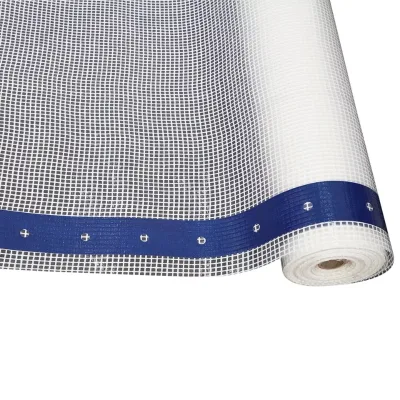


PE Scaffolding Tarp Poly Sheeting Tarpaulin 235GSM Tarpaulin Scaffold Sheeting
$1550.00 - $1600.00
MOQ: 8 Tons


Flame Retardant Scaffold Sheeting, Grid Laminated Fabric Tarpaulin
$0.50 - $1.00
MOQ: 50 Square Meters


Woven Scaffolding Sheet Leno Tarpaulin Scaffold Sheeting for Construction
$2000.00 - $2200.00
MOQ: 3 Tons

Scaffolding Enclosure Tarp Waterproof Construction Plastic Scaffolding Sheeting Tarpaulin
$0.23 - $1.12
MOQ: 100000 Square Meters


PVC Fireproof Coated Mesh Tarpaulin for Construction and Scaffolding
$0.20 - $0.80
MOQ: 6000 Square Meters

Leno Scaffold Sheeting -Fr Scaffold Sheet Leno Tarpaulin for Building Construction
$0.23 - $1.12
MOQ: 100000 Square Meters

Construction Safety PE Leno Scaffold Sheeting Heavy-Duty Fire-Retardant Leno Tarpaulin
$0.23 - $1.12
MOQ: 100000 Square Meters


Comprehensive Sourcing Guide
Reinforced Scaffolding Tarpaulin Sourcing Guide
Buyers must first distinguish between general tarpaulin types and those specifically engineered for scaffolding applications, as the supply chain offers distinct variations in material composition and structural integrity. The observed product range includes options labeled as "TWS-Scaffolding tarp" and "TWS-Scaffold sheeting," which are explicitly categorized under architectural and security textiles. These items often feature a woven structure with polyethylene or polyester materials, designed to withstand the specific environmental stresses encountered on construction sites.
Procurement decisions should prioritize the customization capabilities listed in the product attributes, as scaffolding projects rarely utilize standard dimensions. The available data indicates that width and grammage can be tailored to specific requirements, with observed ranges spanning from 85 to 350 GSM depending on the specific model. This flexibility allows buyers to select a product that balances weight and durability, ensuring the tarpaulin provides adequate protection without adding unnecessary load to the scaffolding structure.
Product Scope and Observed Listing Signals
The market presents a diverse array of reinforced tarpaulins, ranging from simple polyethylene laminates to complex coated fabrics with specific yarn counts like 1000d*1000d. Listings frequently highlight features such as windproof, water-resistant, and anti-UV properties, which are critical for outdoor applications like tents, awnings, and side curtains. Buyers should verify that the "Style" attribute matches the intended use, noting distinctions between plain patterns and coated finishes that offer enhanced weather resistance.
Observations of the product listings reveal significant variation in packaging and model identifiers, such as "TWS-LENO TARP" or "TWS-PE tarp," which may indicate different weaving techniques or coating processes. While some products are packed in rolls with cardboard tubes, others utilize bale or carton packaging, a factor that influences logistics costs and on-site handling efficiency. It is essential to confirm that the "Applicable to The" field aligns with the project's safety requirements, as some listings explicitly note "None Crowd," suggesting specific usage limitations.
Technical Specifications to Verify
Verification of grammage is a primary technical step, as the observed data shows a wide spectrum from 70 to 500 GSM, directly impacting the material's tensile strength and longevity. Buyers must ensure the selected weight class matches the local wind loads and expected duration of the scaffolding setup, as lighter weights may tear under high stress while heavier options could be unnecessarily expensive. The "Thickness" is often described as medium weight, but specific numerical verification is required to confirm the material can support the intended load without sagging.
Width and dimensional customization are equally critical, with listings indicating widths can be tailored or fixed at specific measurements like 2x2 meters or ranging from 55 to 2020 millimeters. The "Yarn Count" and "Structure" attributes, such as fabric form or woven techniques, determine the overall durability and resistance to tearing. Procurement teams should request detailed technical sheets to confirm that the "Standard" meets the specific project requirements, as generic standards may not suffice for high-risk construction environments.
Compliance and Safety Documentation
Safety compliance for scaffolding tarps often hinges on the material's ability to resist fire and UV degradation, which are implied by features like "Anti-UV" and "Anti-Mildew" found in the product attributes. While specific certification names are not universally listed in the provided data, buyers must demand evidence that the plastic sheet or coated fabric meets local building codes for temporary structures. The "Standard" field often states "As customer required," necessitating a proactive approach to define and validate the necessary safety benchmarks before ordering.
Documentation regarding the origin of the material, particularly from regions like Shandong, China, should be cross-referenced with import regulations and safety standards of the destination country. Buyers should verify that the "Technics" used, such as weaving or coating processes, have been tested for consistency and reliability in real-world conditions. It is vital to ensure that the product does not contain hazardous substances that could compromise worker safety, especially when the tarpaulin is used in close proximity to active construction zones.
Cost Drivers and Commercial Terms
The price range observed in the market spans from $0.12 to $2500, a variance driven primarily by the material type, grammage, and the extent of customization required. High-cost items typically involve specialized coatings, higher yarn counts, or complex weaving techniques that enhance durability, while lower-cost options may be standard polyethylene sheets with minimal reinforcement. Buyers must analyze the total cost of ownership, considering that a cheaper tarpaulin with lower GSM may require more frequent replacement, ultimately increasing long-term expenses.
Minimum Order Quantities (MOQ) vary significantly, ranging from 1 to 100,000 units, which directly impacts the financial feasibility of small-scale projects versus large infrastructure contracts. The "Packing" method, whether roll, bale, or carton, also influences shipping costs and storage requirements on the job site. Negotiation strategies should focus on aligning the MOQ with the project timeline and budget, ensuring that the supplier can accommodate the specific "Requirement" for packaging and delivery without incurring excessive surcharges.
Supplier Qualification and Quality Control
Supplier qualification should begin with a review of their production capabilities, specifically their ability to deliver the "Customization" options listed in the product attributes. Buyers must verify that the supplier can consistently produce the required "Width" and "Gram Weight" specifications, as inconsistencies in these areas can lead to structural failures in the scaffolding setup. The "Product Origin" being China is common, but the specific factory location and production history should be assessed to ensure quality control measures are robust and reliable.
Quality control protocols must include checks on the "Feature" set, such as windproof and water-resistant capabilities, to ensure the product performs as advertised under stress. Buyers should request sample testing results for the "Coating" and "Layer" attributes to confirm that the single-layer or multi-layer construction meets the project's durability standards. Establishing a clear communication channel for addressing defects or deviations from the "Standard" is essential for maintaining the integrity of the supply chain and ensuring timely project completion.
Long-Term Procurement Checks
Long-term procurement success relies on establishing a relationship with suppliers who can maintain consistent quality over multiple orders and varying project scales. Buyers should monitor the supplier's ability to adhere to the "As customer required" standards over time, ensuring that the "Style" and "Material" specifications do not drift without notification. Regular audits of the production process and material sourcing can help identify potential risks before they impact the supply chain or project timelines.
Performance tracking of the installed tarpaulins is crucial for validating the initial selection and informing future purchasing decisions. Buyers should collect data on the lifespan of the product in different weather conditions, specifically noting the effectiveness of the "Anti-Wrinkle" and "Anti-Mildew" features in real-world scenarios. This feedback loop allows for continuous improvement in the selection process, ensuring that future orders are based on empirical evidence of performance rather than just initial product descriptions.
FAQs
What materials are used for Reinforced Scaffolding Tarpaulin?
The product uses PE or Polyethylene materials with a woven structure. Some variants feature HDPE fabric with LDPE coating. The material selection ensures durability for outdoor applications like scaffolding and security textiles.
Can I customize the width and weight of the tarp?
Yes, customization is available for width and gram weight. Width can be set as a custom requirement, while gram weight ranges from 40 to 350 GSM. Specific models allow tailored dimensions to meet unique project needs.
Which features make this tarp suitable for scaffolding?
This tarp offers windproof, water-resistant, and anti-UV properties. It also includes anti-wrinkle and anti-mildew features. These characteristics ensure the fabric remains durable and protective when used as scaffolding sheeting in various weather conditions.
How is the product packed for shipping?
Packaging options include roll packages, cartons, bales, or plastic bags with cardboard tubes. The specific packing method depends on customer requirements. This flexibility ensures safe transport and easy handling upon delivery to the job site.
What is the origin and standard of the product?
The product originates from China, specifically Shandong. Standards are set as per customer requirements rather than a fixed global standard. This allows buyers to specify exact compliance needs for their specific regional or project regulations.
What are the available color options for the tarp?
Colors include white and black, or they can be customized as required. The pattern is typically plain or coated. This variety allows the tarp to blend with different architectural or security textile environments effectively.
Can the tarp be used for outdoor tents or awnings?
Yes, the product is applicable for outdoor tents, awnings, covers, and side curtains. Its woven structure and coating provide necessary protection. This versatility makes it suitable for multiple temporary shelter applications beyond just scaffolding.