Source Reusable Food Grade Slush Cup for smoothies, drinks, and cold beverages
Explore 30 listings of Reusable Food Grade Slush Cup options featuring silicone and PLA materials. Buyers can compare specifications like temperature resistance, capacity, and customization availability to find suitable suppliers for smoothies, beverages, and cold drinks.
Key considerations
Products List


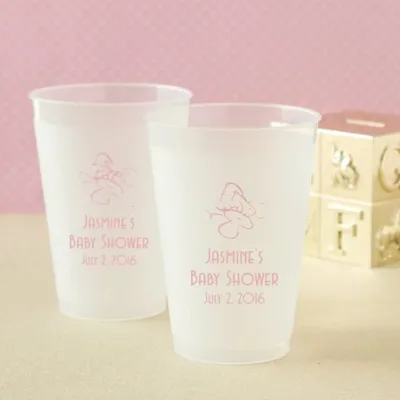


Food Grade Disposable Juice Cup: Custom Logo & Size for Juice, Coffee, Tea
$0.01 - $0.04
MOQ: 20000 Pieces


Biodegradable PP Plastic Cups That Can Be Used for Beverage Juices and Cold Drinks
$0.01 - $0.50
MOQ: 200000 Pieces


Comprehensive Sourcing Guide
Strategic Sourcing Guide for Reusable Food Grade Slush Cups
The global demand for sustainable beverage solutions has elevated the profile of reusable food-grade slush cups within the B2B procurement landscape. These specialized vessels are engineered to withstand extreme thermal fluctuations while maintaining structural integrity, making them ideal for smoothie bars, juice shops, and cold beverage retailers. Sourcing these items requires a disciplined approach that balances technical performance with regulatory compliance. This guide outlines the critical parameters buyers must evaluate, drawing upon verified product attributes and industry standards to ensure a robust supply chain strategy.
Technical Specifications and Material Performance
When evaluating reusable slush cups, the primary focus must be on material durability and thermal resistance. The core functionality of a slush cup relies on its ability to retain cold temperatures without condensation issues or structural failure. Based on observed product data, high-performance silicone variants demonstrate a hardness range of 20-80 Shore A, a metric that directly correlates with the cup's flexibility and resistance to deformation under pressure. This hardness spectrum ensures the cup can be squeezed for mixing or serving while returning to its original shape.
Thermal resistance is another non-negotiable specification. Verified data indicates a temperature resistance range of -40 to 230 degrees Celsius for specific silicone models. This wide operational window is critical for slush applications, where the cup must endure freezing temperatures without becoming brittle. Conversely, the upper limit of 230 degrees Celsius suggests the material can also withstand sterilization processes or hot water cleaning, adding versatility to the product line. Buyers should verify that the specific supplier's batch matches this thermal profile, as lower-grade materials may fail at the -40 degree threshold.
Physical dimensions also play a pivotal role in functionality. Observed specifications list a size of 8.610.620.8 cm for certain models, providing a substantial volume suitable for large smoothies. Weight is another key indicator of material density; a unit weight of 330g per piece suggests a robust construction compared to lightweight disposable alternatives. The presence of a lid is a standard feature for these reusable units, with options including printed, debossed, or embossed logo types. Some models are designed with a cover, while others may feature a handle, though the absence of a handle is also a documented variation. The capacity of 16 oz is a common standard for these vessels, aligning with typical single-serve beverage portions.
Compliance and Certification Verification
In the food contact industry, certification is not merely a marketing asset but a legal requirement for market entry. Buyers must rigorously verify that suppliers possess valid documentation for food safety standards. The supplied product data highlights specific certifications including FDA, SGS, LFGB, and QS. These represent distinct regulatory frameworks: FDA (Food and Drug Administration) for the United States market, LFGB (German Food Code) for European standards, and SGS for independent testing verification. The presence of QS certification further indicates compliance with specific Chinese quality standards.
It is essential to distinguish between product standards and certification bodies. While the product standard may reference FDA, SGS, and LFGB, the actual certification documents must be current and applicable to the specific material composition of the cup. Buyers should request copies of the test reports that correspond to the temperature resistance claims of -40 to 230 degrees Celsius. Additionally, the "Food Grade" designation must be backed by migration tests ensuring no harmful substances leach into acidic or frozen beverages. The absence of these certifications in a supplier's portfolio should be treated as a red flag, regardless of the product's visual appeal or price point.
Cost Drivers and Economic Factors
The pricing structure for reusable slush cups is influenced by several dynamic factors, primarily material quality, customization complexity, and order volume. The observed price range in the market spans from $0.01 to $58.50, a variance that reflects the difference between basic single-use alternatives and premium, highly customized reusable units. For reusable silicone cups, the cost is driven by the raw material grade, the complexity of the molding process, and the inclusion of accessories like lids.
Minimum Order Quantity (MOQ) is a significant economic driver. Data indicates MOQs ranging from 1 to 300,000 units, with specific high-volume tiers observed at 5,000 and 10,000 pieces. Suppliers often offer tiered pricing, where the unit cost decreases as the order volume increases. However, buyers must balance the cost savings of large orders against inventory holding costs and cash flow constraints. Customization is another cost variable; options such as multi-color printing (up to 6 colors), embossing, or debossing add to the production time and expense. The sample time of 5 days suggests a relatively agile production cycle, but bulk lead times may vary significantly based on the supplier's capacity and the complexity of the custom design.
Typical Applications and Usage Scenarios
Reusable slush cups are designed for specific high-usage environments where durability and brand visibility are paramount. The primary application is for making and serving smoothies, as indicated by the product attributes. These cups are ideal for cold beverage stations where the drink is prepared and served immediately, or where the cup is intended for repeated use by the consumer. The "Cold Cup" designation confirms their suitability for frozen drinks, while the "Non-Disposable" attribute highlights their role in reducing waste.
Beyond smoothies, the versatility of these cups extends to general beverage consumption. The "Drinking" and "Beverage" usage tags suggest they can accommodate a wide range of liquids, from juices to iced teas. The "Adult" age classification indicates that these products are targeted at general consumer markets rather than specialized pediatric lines. The "Durian Cup" and "DIY Silicone Smoothies Cup" labels point to niche applications where the cup's shape or material facilitates specific serving styles, such as scooping or mixing ingredients directly in the vessel. The collapsible feature found in some models offers additional utility for storage and transport, making them suitable for outdoor events or catering services.
Supplier Evaluation and Sourcing Strategy
Selecting the right supplier requires a multi-faceted evaluation process that goes beyond price comparisons. Buyers should prioritize suppliers with a verified origin, such as Xiamen, China, a known hub for silicone manufacturing. The presence of OEM and ODM capabilities is crucial for businesses seeking to brand their products uniquely. Suppliers should welcome customization requests, offering options for logo placement and packaging variations, such as 1OPP/PC or white box packaging.
When assessing a supplier, buyers must verify their production capacity and quality control systems. The ability to produce up to 300,000 units suggests a large-scale operation, but consistency in quality across such volumes must be confirmed. Buyers should inquire about the sample availability and the turnaround time, noting that a 5-day sample time is a benchmark for efficiency. Furthermore, the supplier's adherence to standards like 1000pcs/ctn for packing indicates an organized logistics approach. It is vital to avoid suppliers who cannot provide clear documentation regarding their certifications or who make unverifiable claims about material safety.
Quality Control and Long-Term Procurement
Maintaining product quality over time requires a robust quality control (QC) framework. Buyers should implement incoming inspection protocols that verify the hardness, temperature resistance, and dimensional accuracy of the cups. The "Fancy" attributes, such as colored or printed designs, must be checked for durability and resistance to fading or peeling during use and cleaning. For reusable items, the integrity of the lid and the seal are critical to prevent leaks and maintain the cold temperature of the beverage.
Long-term procurement considerations involve building a relationship with a supplier who can scale with demand. The wide range of MOQs allows for flexibility, but buyers should plan for consistent order volumes to secure better pricing and priority production slots. The "Customized" nature of these products means that any changes in design or material must be re-validated through testing. Buyers should also consider the environmental impact, noting that while some products are marketed as "Compostable" or "Eco Friendly," the reusable nature of silicone cups offers a different sustainability profile focused on longevity rather than biodegradability.
Comparative Analysis of Product Attributes
To assist in decision-making, the following table summarizes key attributes observed in the market for reusable slush cups. This comparison highlights the variance in specifications that buyers must navigate.
| Attribute | Observation A | Observation B | Observation C |
|---|---|---|---|
| Material Type | Silicone | Silicone | PLA (Biodegradable) |
| Disposability | Non-Disposable | Non-Disposable | Disposable |
| Temperature Range | -40 to 230°C | -20 to 50°C | Not Specified |
| Hardness | 20-80 Shore A | Not Specified | Not Specified |
| Certification | FDA, SGS, LFGB, QS | FDA, SGS | Not Specified |
| MOQ | 1 - 300,000 | 5,000 PCS | 10,000 PCS |
| Lid Status | With Lid | With Cover | With Cover |
| Handle | Without Handle | Without Handle | Without Handle |
| Origin | Xiamen, China | China | China |
| Weight | 330g/PC | Not Specified | Not Specified |
This table illustrates that while many products share the "With Lid" and "Without Handle" attributes, the material composition and temperature resistance vary significantly. Buyers must align their specific operational needs with these technical realities. For instance, a facility requiring sterilization at high temperatures must select the -40 to 230°C range, whereas a facility focused solely on cold drinks might consider lower-cost alternatives, provided they meet the necessary food safety standards.
Conclusion
Sourcing reusable food-grade slush cups is a complex process that demands attention to technical specifications, regulatory compliance, and supplier reliability. By focusing on verified attributes such as temperature resistance, hardness, and certification status, buyers can mitigate risks and ensure the procurement of high-quality products. The market offers a diverse range of options, from high-volume silicone cups to specialized biodegradable alternatives, each with unique cost and performance profiles. A disciplined approach to supplier evaluation, combined with rigorous quality control measures, will enable buyers to build a sustainable and efficient supply chain for their beverage operations.
FAQs
What certifications do reusable food grade slush cups typically hold?
These cups typically hold FDA, SGS, LFGB, and QS certifications. Buyers must verify that the specific supplier provides current test reports matching these standards to ensure the material is safe for food contact and meets regulatory requirements for the target market.
How much is the minimum order quantity for these cups?
The minimum order quantity ranges from 1 to 300,000 units depending on the supplier. Specific high-volume tiers often start at 5,000 or 10,000 pieces, so buyers should confirm the exact MOQ before negotiating pricing or production schedules.
Can these cups withstand extreme temperature changes during use?
Yes, verified silicone models withstand temperatures from -40 to 230 degrees Celsius. This wide range allows the cups to handle freezing smoothies without brittleness and endure hot water cleaning or sterilization processes without structural failure.
Which customization options are available for the cup logo?
Logo customization is available via printed, debossed, or embossed methods. Suppliers often support up to six colors for printing, and buyers can request custom packaging such as white boxes or 1OPP bags to match their brand identity.
What is the typical hardness rating for the silicone material?
The hardness rating for high-performance silicone cups falls between 20 and 80 Shore A. This specific range ensures the cup remains flexible enough for mixing or squeezing while maintaining the structural integrity needed to return to its original shape.
Where are these reusable cups primarily manufactured?
These cups are primarily manufactured in Xiamen, China, a known hub for silicone production. Buyers should verify the origin to ensure the supplier has access to established supply chains and quality control systems specific to this manufacturing region.
How long does it take to receive a sample of the cup?
Sample production typically takes about five days. Buyers should note that while sample times are short, bulk lead times may vary significantly based on order volume, customization complexity, and the supplier's current production capacity.