Source Reusable Silicone Travel Bottle for Gym, Hiking, and Camping
Explore 30 options for a Reusable Silicone Travel Bottle suitable for gym, outdoor, and climbing activities. Buyers can compare specifications like volume, material, and customization features from verified suppliers in China.
Key considerations
Products List


Collapsible Water Bottles Leakproof Reusable Silicone Foldable Travel Water Bottle
$1.70 - $1.74
MOQ: 574 Pieces
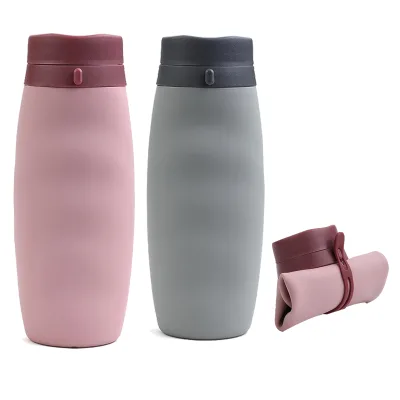


700ml Foldable Silicone Travel Outdoor Retractable Water Bottle for Sports
$1.20 - $1.70
MOQ: 1000 Pieces

Hot Portable Retractable Collapsible Traveling Silicone Water Bottle Kettle
$1.40 - $1.48
MOQ: 1000 Pieces


Silicone Outdoor Sports Portable Kettle Travel Collapsible Water Bottle
$2.50 - $3.10
MOQ: 1000 Pieces


High-Quality Silicone Dispensing Bottles, Travel Size, Portable & Space-Saving
$0.45 - $0.50
MOQ: 3000 Pieces


Comprehensive Sourcing Guide
Sourcing Strategy for Reusable Silicone Travel Bottles
The global demand for sustainable, portable hydration solutions has elevated the Reusable Silicone Travel Bottle to a staple category in the B2B procurement landscape. These products are increasingly favored by brands seeking lightweight, durable, and space-efficient alternatives to rigid plastic or metal containers. For procurement professionals, navigating this market requires a disciplined approach that balances material science, regulatory compliance, and supply chain logistics. The following guide outlines the critical factors for sourcing these items, grounded in observed market data and verified technical attributes.
Technical Specifications and Material Attributes
When evaluating reusable silicone travel bottles, the primary technical differentiator is the material composition. The core product attribute observed in the market is silicone, a polymer known for its flexibility, temperature resistance, and safety profile. Unlike rigid plastics, silicone allows for collapsibility, a feature explicitly noted in product specifications where the "Collapsible" attribute is marked as "Yes." This characteristic significantly reduces the footprint of the bottle when empty, making it ideal for travel, hiking, and gym use.
Capacity and dimensions are the next critical technical parameters. Market data indicates a standard volume range centered around 550ml (approximately 20oz), with specific product models adhering to a 500ml standard. Dimensions vary by design, with observed specifications including a size of 18.9*8.7cm, though customization is frequently available to meet specific brand requirements. The physical form factor often includes a "without Handle" or "with Handle" configuration, depending on the intended user experience. Additionally, the presence of a "Cover" or "Lid" is a variable attribute; some units are supplied with a cover, while others are listed as without, necessitating clear specification during the ordering process.
The manufacturing model also influences technical performance. Specific product models, such as SR2588 and YW-0413, demonstrate that standardization exists alongside customization. The "Standard" attribute often references volume (e.g., 550ml) or physical dimensions (e.g., 2.75 x 9.05 inches). Buyers must verify whether the silicone used is food-grade, as this directly impacts the product's suitability for holding beverages. The "Special Feature" of being "Leak-Proof" and "Reusable" is a key performance indicator that must be validated through physical testing rather than assumed based on marketing claims.
Compliance and Certification Verification
In the B2B sector, regulatory compliance is non-negotiable, particularly for products intended for direct contact with food and beverages. The supply chain for reusable silicone bottles is heavily influenced by certification requirements. Observed data confirms that many suppliers possess "FDA" certification, a critical standard for food safety in the United States. However, for international markets, the scope of certification often expands. Specific product listings indicate compliance with "FDA, CE / EU, CIQ, LFGB, EEC" standards.
Procurement teams must treat these certifications as observations of specific supplier capabilities rather than universal guarantees for all products in the category. The "LFGB" standard is particularly relevant for the European market, while "CE" indicates conformity with health, safety, and environmental protection standards for products sold within the European Economic Area. "CIQ" (China Inspection and Quarantine) is a domestic Chinese export standard that often accompanies international certifications.
Buyers should verify the validity of these certifications for the specific batch of goods being ordered. The "Certification" attribute in product data serves as a starting point for due diligence. It is essential to request current certificates of analysis (CoA) or compliance documents from the supplier to ensure that the silicone material used meets the specific migration limits and heavy metal restrictions defined by these standards. Relying solely on the presence of a certification label without verifying the document's date and scope can lead to compliance failures at the destination port.
Cost Drivers and Pricing Dynamics
Understanding the cost structure of reusable silicone travel bottles is vital for budgeting and margin analysis. The observed price range in the market spans from $0.33 to $3.19 USD. This wide variance is driven by several factors, including material quality, customization complexity, and order volume. The "Material" being silicone generally places the product in a mid-to-high price tier compared to standard single-use plastics, but the cost is offset by the product's durability and reusability.
Minimum Order Quantity (MOQ) is a significant cost driver. The market exhibits an MOQ range of 100 to 5,000 units, with specific product lines requiring an MOQ of 200 or 1,000 pairs. Lower MOQs allow for smaller, more agile orders but often come with a higher unit cost. Conversely, larger orders typically benefit from economies of scale, reducing the per-unit price. The "Customization" attribute, which includes options for "Custom Color," "Customized Logo," and "OEM&ODM" acceptance, adds to the cost. Customization requires additional tooling, setup time, and quality control checks, all of which are factored into the final price.
Other cost factors include packaging and logistics. The "prod_packing" attribute shows options ranging from "White Box" to "1prs/Polybag" or "Carton." Customized packaging solutions will incur higher costs than standard polybagging. Furthermore, the "Lead Time" of approximately 30 days for production, combined with a "Sample Time" of 3 to 5 days, impacts the overall cost of capital and inventory planning. Buyers must factor in these timelines when calculating total landed costs, especially for time-sensitive campaigns.
Typical Applications and User Demographics
The versatility of reusable silicone travel bottles makes them suitable for a diverse range of applications. The "Recommended Uses" attribute explicitly lists "Gym" and "Outdoors," highlighting the product's utility in active lifestyles. The "Occasion" attribute further specifies "Climbing," suggesting that these bottles are designed to withstand rugged environments. The "Application" is broadly categorized as "Outdoor," and the "Style" is often described as "Classic," appealing to a wide demographic.
The target user base is clearly defined as "Adults," with specific attributes noting "Applicable People: Adults." The product is designed for daily use, as indicated by the model name "Daily use-5238D." The "Special Feature" of being "Waterproof" and "Leak-Proof" ensures reliability in various conditions, from sweaty gym sessions to wet hiking trails. The "Item Weight" of 135g indicates a lightweight design, which is a crucial factor for consumers who prioritize portability.
Color options play a significant role in market appeal. Observed colors include "Black, Pink, Camouflage, Orange Camouflage," as well as "White, Black, Grey, Green, Pink." The ability to offer "Custom Color" allows brands to align the product with their corporate identity or seasonal trends. The "Type of Water Bottle Caps" is typically "Screw-On," providing a secure seal that is essential for the "Leak-Proof" claim. These features collectively position the Reusable Silicone Travel Bottle as a functional accessory for modern, active consumers.
Supplier Evaluation and Selection Criteria
Selecting the right supplier is a critical step in the procurement process. The "Location" attribute indicates that the primary manufacturing hub is "China," with specific origins noted as "Shanghai, China." This concentration of manufacturing capability offers buyers access to a robust supply chain but requires careful vetting to ensure quality consistency.
Suppliers should be evaluated based on their ability to meet the "Customization" requirements. The "OEM&ODM: Accept" attribute suggests that many suppliers are willing to collaborate on design and branding. Buyers should assess the supplier's capacity for "Customized Logo" application, noting that the technical method is often "Laser Engraved." This method ensures durability but requires specific equipment and expertise.
The "Sample Time" is another key evaluation metric. With observed sample times ranging from 3 to 5 days, suppliers who can deliver prototypes quickly demonstrate operational efficiency. However, buyers must ensure that the sample quality matches the mass production standards. The "Lead Time" of about 30 days for production is a standard benchmark, but suppliers with shorter lead times may offer a competitive advantage for urgent orders.
Finally, the "Product Packing" options, such as "White Box" or "Carton," should align with the buyer's logistics strategy. Suppliers offering flexible packaging solutions can help reduce shipping costs and minimize waste. It is essential to verify that the supplier has a proven track record of meeting the "Certification" requirements and maintaining consistent quality across batches.
Quality Control and Long-Term Procurement Considerations
Quality control (QC) is paramount when sourcing silicone products. The "Special Feature" of being "Reusable" implies that the product must withstand repeated use without degrading. Buyers should implement a rigorous QC plan that includes testing for "Leak-Proof" performance and verifying the "Collapsible" mechanism's durability. The "Standard" attribute, such as "500ML" or "550ml," should be verified to ensure the bottle holds the advertised volume without deformation.
Long-term procurement considerations involve building a sustainable relationship with suppliers. The "Customization" capability allows for product evolution over time, but it requires clear communication and documentation. Buyers should establish a quality agreement that defines acceptable tolerances for dimensions, weight, and color. The "Material" consistency is crucial; any deviation in the silicone grade can affect the product's safety and performance.
The "Lead Time" of 30 days should be factored into inventory planning to prevent stockouts. Buyers should also consider the "Sample Time" for new product development cycles. As the market evolves, suppliers may introduce new features or materials. Maintaining open lines of communication and regularly reviewing supplier performance against the "Certification" and "Standard" requirements will ensure a stable supply chain.
In conclusion, sourcing reusable silicone travel bottles requires a comprehensive understanding of technical specifications, regulatory compliance, and supply chain dynamics. By focusing on verified attributes such as material quality, certification status, and customization capabilities, buyers can make informed decisions that align with their brand values and market demands. The observed data provides a solid foundation for developing a robust procurement strategy that balances cost, quality, and performance.
FAQs
What certifications do reusable silicone travel bottles typically have?
Many products hold FDA certification, with some listings also showing CE, LFGB, and EEC compliance. Buyers must verify specific batch certificates rather than assuming all units meet these standards.
Can I customize the color and logo on these bottles?
Custom colors and logos are available through OEM and ODM services. Logos are often applied via laser engraving, though customization requires meeting specific minimum order quantities.
What is the standard capacity for these collapsible bottles?
Standard capacities include 500ml and 550ml, with some models listed as 20oz. Dimensions vary, with specific models measuring around 18.9 by 8.7 centimeters or customizable sizes.
How long does it take to receive samples and bulk orders?
Sample times range from 3 to 5 days, while bulk production lead times are approximately 30 days. These timelines affect inventory planning and total cost of ownership.
What is the minimum order quantity for these products?
MOQs vary between 100 and 5,000 units, with specific lines requiring 200 or 1,000 pairs. Lower quantities allow smaller orders but may result in higher per-unit costs.
Where are these silicone bottles manufactured?
Primary manufacturing locations are in China, with specific origins noted as Shanghai. Buyers should verify the origin for each batch to ensure consistent quality and compliance.