Source Reversible Counter Digital Timer Switch for Industrial, Timer, and Counter
Source 30 verified products including a Reversible Counter Digital Timer Switch for industrial automation, timer switch applications, and universal counting tasks. Buyers can compare voltage ratings, timing accuracy, and mounting options across models like AHC15A and KG316T.
Key considerations
Products List


Superior Performance Time Control Switch Timer Switch Digital Time Switch
$5.00 - $5.71
MOQ: 10 Pieces


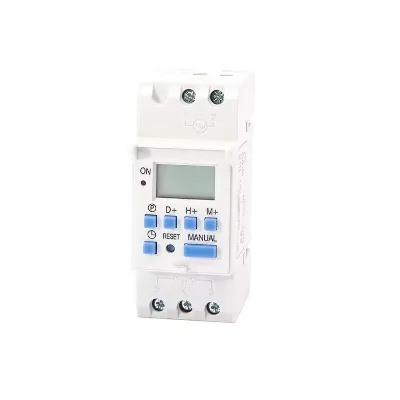


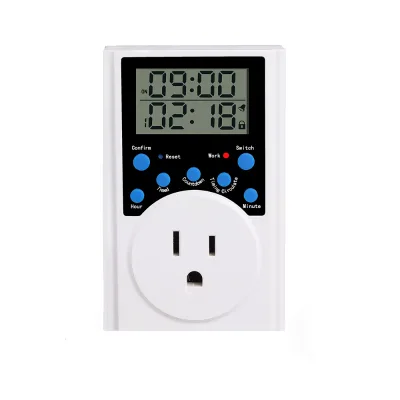


Comprehensive Sourcing Guide
Strategic Sourcing Guide for Reversible Counter Digital Timer Switches
Procuring industrial automation components requires a disciplined approach to technical verification and supply chain reliability. The core keyword "Reversible Counter Digital Timer Switch" identifies a specific class of control devices that integrate timing functions with bidirectional counting capabilities. These units are essential for manufacturing environments where process cycles, batch counts, and operational durations must be tracked with precision. The following guide synthesizes observed product attributes and industry standards to assist procurement professionals in evaluating potential suppliers and selecting the correct hardware for their operational needs.
Technical Architecture and Functional Specifications
The fundamental distinction of a Reversible Counter Digital Timer Switch lies in its ability to perform both time-based control and bidirectional counting. Based on the observed product data, these devices are available in multiple theoretical architectures, including digital, mechanical, and electronic implementations. The digital variants often utilize quartz mechanisms to ensure timing stability, while electronic models may offer different power consumption profiles. A critical functional attribute observed in the supply chain is the "Addition Counter, Subtract Counter, Reversible Counter" capability. This allows operators to increment or decrement values based on real-time production data, a feature vital for inventory management and cycle tracking.
Voltage ratings and limits are primary technical constraints that must be matched to the facility's power infrastructure. The observed market data indicates a prevalence of units rated for AC 220V at 50/60Hz, with a specific voltage limit range of AC 180V to 250V. However, alternative configurations exist for lower voltage applications, including DC options ranging from 6V to 110V, and specific models supporting 24V DC or 12V DC. Buyers must verify the specific "Order Voltage" required for their application, as the supply chain offers diverse options including 36V, 48V, and 110V inputs.
Timing precision and range vary significantly by model. Some units feature a countdown capability ranging from 1 second to 99 minutes and 59 seconds, while others support pulse intervals up to 59 minutes and 59 seconds. For applications requiring extended measurement, certain digital timer switches offer a measurement range of 0 to 99,999.99 hours with a timing accuracy of ±0.1. The physical interface also differs; some models utilize a "Dialy 96 Pins" mechanism, while others rely on electronic displays with minimum setting intervals of 15 minutes. Understanding these specific parameters is essential before initiating a purchase order.
Compliance, Certification, and Safety Standards
In the industrial sector, compliance with international safety standards is non-negotiable. The supply chain data confirms that specific models carry CE certification, indicating adherence to European health, safety, and environmental protection standards. While other certifications like ROHS are mentioned in background contexts, buyers should treat these as observations rather than guaranteed attributes for every listed product. Procurement teams must request current certification documentation for the specific model number before finalizing a contract.
Load capacity is another critical safety parameter. The observed data specifies a resistive load rating of 16A at 250VAC, with a lagging load capacity of 10A at 250VAC. The maximum current rating is consistently listed as 16A. Exceeding these limits can lead to device failure or safety hazards. Furthermore, the power consumption is noted to be a maximum of 7.5 VA, which is a useful metric for calculating the total thermal load in control cabinets. Buyers should verify that the selected unit's load ratings align with the connected machinery to prevent overheating or electrical faults.
Cost Drivers and Pricing Dynamics
The pricing structure for these components is influenced by the complexity of the internal mechanism and the specific functional requirements. The observed listed price range in the market spans from $0.50 to $8.94 USD. This wide variance suggests that cost is driven by factors such as the type of theory (digital vs. mechanical), the voltage rating, and the presence of advanced features like back-up batteries or specific mounting mechanisms.
Minimum Order Quantity (MOQ) is a significant cost driver in the procurement process. The observed MOQ range extends from 1 unit to 3,000 units. For small-scale projects or prototyping, suppliers offering an MOQ of 1 are available, whereas large-scale industrial deployments may require bulk purchasing to achieve optimal unit economics. The packaging standard is also a factor; most units are shipped in export packaging, with a standard carton quantity of 100 pieces per carton. Buyers should factor in the cost of storage and handling when negotiating MOQs, as ordering in full carton quantities may reduce per-unit shipping costs.
Typical Industrial Applications and Use Cases
The versatility of reversible counter digital timer switches allows them to serve in a wide array of industrial applications. The primary usage categories identified include industrial timer switches, universal counters, time counters, and electromagnetic counters. These devices are frequently employed in automated assembly lines where precise cycle timing is required to synchronize operations. The "Addition Counter" function is particularly useful for tracking the number of units produced, while the "Subtract Counter" function can manage inventory depletion or waste tracking.
Installation flexibility is another key driver for their adoption. The observed data highlights two primary installation methods: snap-in mounting and DIN-rail mounting. This adaptability allows the devices to be integrated into existing control panels without requiring extensive structural modifications. The "Relative Humidity Sealed" property of certain models makes them suitable for environments with varying atmospheric conditions, ensuring reliable operation in dusty or humid factory floors. Additionally, the back-up time of up to 100 hours for specific models ensures that timing data is retained during power interruptions, a critical feature for continuous production processes.
Supplier Evaluation and Quality Assurance
When evaluating potential suppliers, buyers must look beyond the basic product listing and assess the supplier's ability to provide consistent quality. The origin of the products is predominantly Zhejiang, China, a region known for its manufacturing capabilities in electrical components. However, the specific location of the supplier's facility and their quality control processes should be verified. Buyers should request information regarding the "prod_packing" standards, such as "Export Packaging" or "Conventional Export Packaging," to ensure that the goods will arrive in pristine condition.
Quality assurance should focus on the consistency of the technical specifications. Since the product attributes are treated as observations rather than universal claims, buyers must verify that the specific batch they receive matches the claimed specifications. For instance, if a model is advertised with a timing accuracy of ±0.1, the buyer should request test results or a certificate of conformity for that specific batch. The "Theory" of operation (Digital, Mechanical, or Electronic) must also be confirmed, as this affects the long-term reliability and maintenance requirements of the device.
Long-Term Procurement Considerations
Sourcing these components requires a long-term perspective on maintenance and supply chain continuity. The availability of spare parts and the longevity of the product are critical. The "Mechanism" type, such as quartz or electronic, dictates the expected lifespan and susceptibility to environmental factors. Buyers should inquire about the warranty period and the supplier's policy on product obsolescence.
Furthermore, the customization availability noted in the product attributes suggests that suppliers may offer tailored solutions. If a standard model does not meet specific operational requirements, buyers should explore the possibility of customization. However, this often involves higher MOQs and longer lead times. The "Minimum Setting Interval" of 15 minutes for daily settings is a fixed constraint that buyers must account for when designing control logic. Finally, maintaining a relationship with a supplier who can provide consistent "Standard Exporting Carton" packaging and reliable lead times will ensure that production schedules are not disrupted by component shortages.
Comparative Analysis of Key Product Attributes
To facilitate decision-making, the following table summarizes the key technical attributes observed across the different models available in the market. This comparison highlights the diversity in voltage, theory, and functionality that buyers must navigate.
| Attribute Category | Model A (Digital/Quartz) | Model B (Electronic) | Model C (Mechanical) | Model D (Universal) |
|---|---|---|---|---|
| Primary Function | Addition Counter, Timer | Volt Output/Volt Free | Time Switch | Reversible Counter |
| Theory | Digital | Electronic | Mechanical | Electric Digital |
| Voltage Rating | AC 220V 50/60Hz | AC 220V 50/60Hz | AC 220V~240V | DC 24V, AC 110V/220V |
| Max Current | 16A | 16A | 16A | 16A |
| Timing Range | 1 Sec - 99min 59 Sec | 1 Min Display | 0-99999.99h | 1 Sec - 59 Min 59 Sec |
| Installation | Snap-in / DIN-Rail | Snap-in / DIN-Rail | Snap-in / DIN-Rail | Snap-in / DIN-Rail |
| Certification | CE | CE | CE | CE |
| Origin | Zhejiang, China | China | China | China |
This table illustrates that while the core functionality remains consistent, the specific implementation details vary. Buyers must align these attributes with their specific operational constraints. For example, a facility requiring long-duration timing (up to 99,999 hours) must select a model with the appropriate measurement range, while one needing precise short-interval control must prioritize the 1-second minimum setting.
Conclusion
Sourcing a Reversible Counter Digital Timer Switch involves a careful balance of technical verification, compliance checks, and cost management. The market offers a wide range of options, from simple mechanical timers to complex digital units with reversible counting capabilities. By adhering to the observed specifications and avoiding assumptions about universal attributes, procurement professionals can select the most suitable device for their industrial applications. The key to success lies in rigorous supplier evaluation, confirmation of certification status, and a clear understanding of the specific technical requirements of the intended application.
FAQs
What voltage ratings are available for these switches?
Most units operate at AC 220V 50/60Hz with a limit of 180V to 250V. Some models also support DC inputs ranging from 6V to 110V depending on the specific configuration required.
Can these devices count up and down simultaneously?
Yes, specific models function as reversible counters capable of both addition and subtraction. This bidirectional capability allows for precise tracking of production cycles and inventory depletion.
How is the timing accuracy defined for digital models?
Digital timer switches typically offer a timing accuracy of plus or minus 0.1 seconds. Extended measurement ranges can reach up to 99,999.99 hours for long-duration industrial applications.
What installation methods are supported by these units?
Devices generally support snap-in mounting or DIN-rail installation for flexible integration. This adaptability allows easy incorporation into existing control panels without major structural modifications.
Which certifications are confirmed for these products?
Selected models carry CE certification indicating compliance with European safety standards. Buyers should verify specific certification documents for the exact batch before finalizing any procurement contract.
What is the maximum current capacity for resistive loads?
The maximum current rating is 16A at 250VAC for resistive loads. Lagging loads are rated lower at 10A, so matching the load type is critical for safety.
How long does the back-up battery last during power loss?
Certain models provide a back-up time of up to 100 hours to retain timing data. This feature ensures continuous operation tracking even during unexpected power interruptions in the facility.