Source Road Marking Machine for Warehouses, Roads, and Airports
Explore 30 listings of Road Marking Machine options suitable for warehouses, sports fields, and parking lots. Buyers can compare automatic electric models with varying dimensions and power sources to find the right equipment for their specific marking needs.
Key considerations
Products List


Vehicle Rubber Delineator Safety Product Road Marking Machine
$2.30 - $5.00
MOQ: 500 Square Meters
Wenzhou Xiangying Reflective Materials Science Technology Co., Ltd.
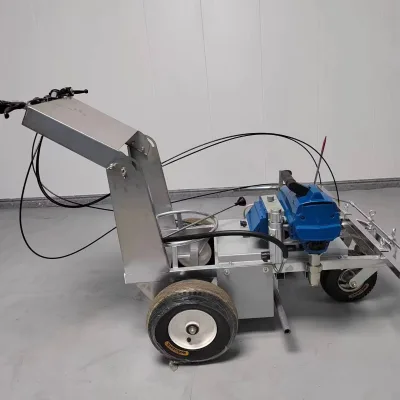


$1800.00 - $2400.00
MOQ: 1 Pieces


$1340.00 - $1428.00
MOQ: 1 Pieces


New Type Road Marking Machinery for Sale
$3250.00 - $3450.00
MOQ: 1 Pieces
Tongling Longshun Environmental Protection Equipment Co., Ltd.


Professional Cold Spray Road Line Marking Machine for Asphalt Pavement
$4000.00 - $4500.00
MOQ: 1 Pieces
Comprehensive Sourcing Guide
Strategic Sourcing Guide for Road Marking Machines
Navigating the global market for road marking equipment requires a disciplined approach that balances technical capability with supply chain reliability. Buyers seeking road marking machines must distinguish between manual, hand-push, and fully automatic systems, as the operational requirements for a warehouse differ significantly from those of a municipal highway department. The following guide outlines the critical factors for evaluating potential suppliers and selecting the right machinery, grounded in verified product attributes and industry standards.
Technical Specifications and System Architecture
The first step in sourcing is defining the technical architecture of the machine. The market presents a dichotomy between electric-powered systems and those utilizing internal combustion engines. Electric models typically operate on standard voltages such as 220V or 380V, with specific configurations like the HT-HXJ3 model featuring a rated voltage of 380V and a host power of 7.5kw. In contrast, other units may rely on Honda engines with power ratings around 9.5HP. Buyers must verify the power source compatibility with their local infrastructure before procurement.
Dimensional constraints are equally critical for logistics and on-site maneuverability. Observed specifications indicate a wide range of physical footprints. Compact units may measure approximately 750420660mm, while larger industrial models can reach dimensions of 6805801100mm or even 12511198cm. The weight of the equipment also varies, with some heavy-duty units weighing up to 360kg. When evaluating mobile options, the "Moving Type" is often listed as mobile, allowing for flexibility in application sites ranging from airports to sports fields.
The marking rate is a primary indicator of productivity. High-performance units claim a marking rate between 0.5 and 3KM/H, which directly impacts the time required to complete large-scale projects. For buyers focusing on precision, the "Cut spacing" and "Number of saw blades" are relevant attributes in specific contexts, such as 18 blades with a 22mm spacing, though this specific configuration may apply to specialized cutting or preparation machinery rather than the marking head itself. Additionally, water tank capacities, such as 46L, suggest the inclusion of cooling or cleaning systems integral to the machine's operation.
Compliance, Certification, and Safety Standards
Ensuring that equipment meets international safety and quality standards is non-negotiable for B2B procurement. The most frequently observed certification in the current market data is CE marking. While this indicates compliance with European health, safety, and environmental protection standards, buyers should not assume that every listed product automatically satisfies this requirement without explicit verification from the supplier. The presence of a CE certificate should be treated as a claim that requires documentation, rather than a guaranteed attribute of the entire product line.
Beyond certifications, the "prod_standard" often refers to the physical dimensions of the machine itself, such as 750420660mm, rather than a regulatory standard. Buyers must distinguish between product dimensions and regulatory compliance documents. For machinery intended for export, verifying that the supplier provides a valid CE certificate is essential. Furthermore, the "Video outgoing-inspection" feature is a valuable tool for remote quality assurance, allowing buyers to visually confirm the condition and functionality of the machine before shipment. This feature helps mitigate the risk of receiving non-compliant or damaged goods, especially when the supplier is located in regions like Henan or Shandong in China.
Cost Drivers and Pricing Structures
The pricing for road marking machines exhibits a massive variance, ranging from approximately $2.30 to $29,000. This wide spectrum reflects the difference between consumable accessories, small manual tools, and fully automated industrial units. The "Host power" and "Core Components," such as the motor, are significant drivers of cost. A unit with a 7.5kw electric motor or a 9.5HP Honda engine will command a higher price point than a basic hand-push model.
Minimum Order Quantity (MOQ) is another critical cost factor. While some suppliers offer an MOQ of just 1 unit, others, particularly those selling related materials like road marking paint or tape, may require orders of 500 square meters. The "Small Orders: Accepted" attribute indicates flexibility for buyers who need to test the market or fulfill smaller projects without committing to bulk inventory. However, buyers must be aware that lower MOQs often come with a higher unit price. Packaging costs also influence the final landed cost; options include fumigation-free wooden boxes for heavy machinery or OPP bags and cartons for smaller components.
Typical Applications and Operational Versatility
The versatility of road marking machines is a key selling point, with applications spanning diverse environments. The "Application" field lists warehouses, sports fields, schools, road markings, parking lots, factories, and airports. This broad applicability suggests that many machines are designed with adjustable settings to handle different surface types and marking requirements. For instance, a machine used in a warehouse may require high precision for narrow aisles, while one used on a sports field needs durability for outdoor conditions.
The "Advantage" of high efficiency and high precision is frequently cited, particularly for electric models. The operation is described as "Easily," implying a user-friendly interface that reduces the training time required for operators. For specific tasks like road signs, the machine must handle common pressures ranging from 10-20Mpa. Buyers should match the machine's capabilities to their specific use case; a hand-push type may suffice for small parking lots, whereas large-scale highway projects may require the higher output of a mobile, automatic system.
Supplier Evaluation and Origin Verification
When evaluating suppliers, the "prod_origin" is a primary data point. The majority of the observed products originate from China (Mainland), specifically from provinces like Henan and Shandong. While these regions are known for manufacturing, buyers should verify the specific factory location to ensure supply chain stability. The "Brand Name" is another factor, with some suppliers operating under specific brand identities like ZSMC.
Supplier reliability can be assessed through their "Video outgoing-inspection" services and the availability of customization options. The "Customization: Available" attribute is crucial for buyers with unique requirements, such as specific branding or logo printing capabilities. Some suppliers offer "Available Printing" for DOT-C2, CCC, or custom logos, which is vital for companies needing branded safety equipment. However, buyers must treat these claims as observations and request proof of capability before finalizing a contract.
Quality Control and Long-Term Procurement
Quality control extends beyond the initial purchase. The "Condition" of the machine is typically listed as "New," but buyers should verify the "Work Lifespan," which is observed to be more than 3 years for certain models. This longevity claim should be supported by warranty terms and the availability of spare parts. The "Material" composition, such as PC/PVC for certain components, also plays a role in durability.
Packaging is a critical aspect of quality control during transit. The use of "Fumigation-Free Wooden Box Packaging" for heavy machinery ensures that the equipment arrives without damage and complies with international phytosanitary regulations. For smaller items, "OPP Bags, Carton, Box" combinations are standard. Buyers should insist on detailed packing lists and insurance coverage for high-value shipments.
Comparative Analysis of Machine Types
To assist in decision-making, the following table compares key attributes of the observed machine types based on the provided data.
| Attribute | Electric Automatic Model | Hand-Push / Mobile Model | Specialized Unit |
|---|---|---|---|
| Control System | Automatic | Manual / Hand-push | Automatic |
| Power Source | Electric (220V/380V) | Electric / Engine (Honda) | Electric |
| Host Power | 7.5kw | 9.5HP (Engine) | 6.5 horsepower |
| Dimensions | 750420660mm | 12511198cm | 6805801100mm |
| Weight | 360kg | Varies | Varies |
| Marking Rate | 0.5-3KM/H | Varies | Varies |
| Certification | CE (Verified) | CE (Verified) | CE (Verified) |
| Origin | Henan, China | Shandong, China | China (Mainland) |
| MOQ | 1 | 1-500 | 500 Sq Meters (for materials) |
Final Procurement Considerations
In conclusion, sourcing road marking machines requires a meticulous review of technical specifications, certification status, and supplier capabilities. Buyers must navigate a market with significant price and feature variations, ensuring that the selected equipment aligns with their specific operational needs. By verifying the "Video outgoing-inspection," confirming the "CE" certification, and understanding the "Work Lifespan," buyers can mitigate risks and secure reliable equipment. The availability of customization and the diverse range of applications further enhance the value proposition of these machines. Ultimately, a successful procurement strategy relies on clear communication with suppliers, rigorous verification of claims, and a thorough understanding of the technical requirements for the intended application.
FAQs
What power sources are available for road marking machines?
Road marking machines typically use electric power sources operating at 220V or 380V. Some models also utilize internal combustion engines, such as Honda engines with 9.5HP power, to ensure operation in areas without reliable electricity access.
Which certifications should I verify for road marking machines?
The CE certification is the most frequently observed standard for these machines, indicating compliance with European safety requirements. Buyers must explicitly request documentation to verify this claim, as it is not automatically guaranteed for every listed product.
How does the marking rate affect machine selection?
High-performance units offer a marking rate between 0.5 and 3KM/H, which directly impacts project completion time. Selecting a machine with a higher rate is essential for large-scale projects like highways, while slower rates may suffice for smaller parking lots.
Can I customize road marking machines for specific needs?
Customization is available for many road marking machines, allowing for specific branding or logo printing capabilities. Suppliers may offer options for DOT-C2, CCC, or custom logos, but buyers should verify these capabilities before finalizing a contract.
What is the typical minimum order quantity for these machines?
The minimum order quantity ranges from 1 unit for machinery to 500 square meters for related materials like paint or tape. Some suppliers accept small orders, though this often results in a higher unit price compared to bulk purchases.
Where are road marking machines typically manufactured?
Most observed products originate from China, specifically from provinces like Henan and Shandong. Buyers should verify the specific factory location to ensure supply chain stability and confirm the origin details provided in the product specifications.