Source RoHS CE LED Driver for Lighting, Adapters, and Drivers
Find 30 RoHS CE LED Driver options from verified Chinese manufacturers. Compare specifications like output power, input voltage, and certifications including CCC, UL, and TUV for various lighting applications.
Key considerations
Products List


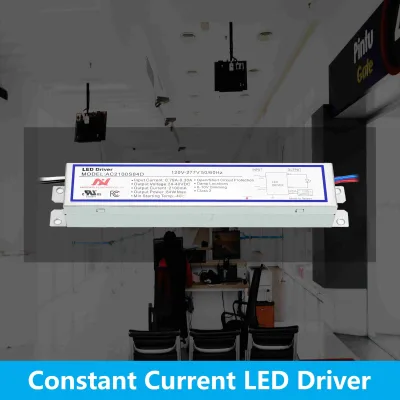


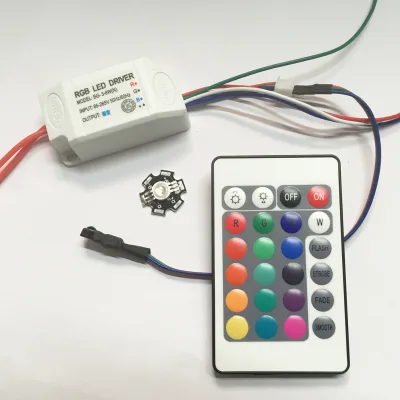
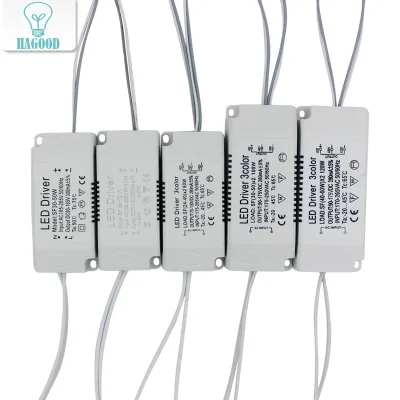


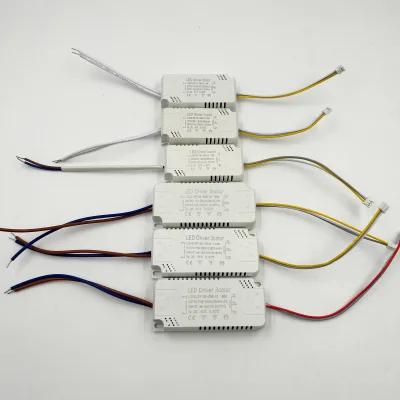
Comprehensive Sourcing Guide
Strategic Sourcing Guide for RoHS and CE Compliant LED Drivers
Navigating the global market for LED drivers requires a disciplined approach to technical verification and compliance validation. Buyers focusing on the core keyword "RoHS CE LED Driver" must distinguish between marketing assertions and verified product attributes. The procurement landscape for these components is defined by specific electrical characteristics, rigorous safety standards, and supply chain transparency. This guide outlines the essential factors for sourcing reliable power solutions, ensuring that every selected unit meets the stringent requirements of modern lighting applications while adhering to international regulatory frameworks.
Understanding Technical Specifications and Electrical Architecture
The foundation of a successful procurement strategy lies in a precise understanding of the driver's electrical architecture. The supplied data indicates that the target products are predominantly Switching Power Supplies utilizing a PWM (Pulse Width Modulation) modulation system. This architecture is critical for maintaining stable output currents, which is essential for the longevity of LED arrays. The driving method is consistently identified as LED Constant Current, ensuring that the light output remains steady regardless of minor fluctuations in input voltage or temperature changes.
When evaluating technical specifications, buyers must scrutinize the Input Voltage range. The observed data points to a broad input capability, specifically AC85-Usage:Light and 100-240VAC 50/60Hz. This wide-range input is a standard requirement for global distribution, allowing the driver to function in regions with varying grid standards without the need for local voltage converters. The Output Type is noted as Single, which implies a dedicated output channel suitable for specific lighting configurations.
The power capacity is another vital parameter. The Output Power range spans from 1 - 50W, covering a vast spectrum of applications from low-power accent lighting to high-intensity commercial fixtures. Correspondingly, the Output Current ranges from 100mA to 2000mA. Procurement teams must match these specific current ranges to the forward current requirements of the LED modules they intend to power. Mismatches here can lead to premature failure or suboptimal performance. Furthermore, the Circuit Structure is described as an Electronic Step-down Transformer or PWM Controlled, confirming the Step-down Type nature of the power supply. This design efficiently reduces the high input voltage to the lower voltage required by the LED circuitry.
Compliance Verification and Certification Standards
Compliance with environmental and safety regulations is non-negotiable for international trade. The core keyword "RoHS CE" reflects a demand for products that meet specific European and global environmental directives. The provided facts confirm that RoHS and CE are central certifications for these products. However, a robust sourcing strategy requires looking beyond these two labels to a broader suite of approvals.
The observed certification list includes CCC (China Compulsory Certification), UL (Underwriters Laboratories), TUV, SGS, and CUL. These certifications indicate that the products have undergone rigorous testing for safety, electromagnetic compatibility, and environmental impact. For instance, the CCC standard is mandatory for products sold within the Chinese market, while UL and CUL are critical for North American markets. The presence of TUV-GS CB certificates suggests compliance with international safety standards that facilitate cross-border acceptance.
Buyers must verify that the specific model they are purchasing carries the relevant certifications for their target market. The data lists various standards such as CCC/CE/GS/TUV/UL/CUL, indicating that different models or batches may carry different combinations of approvals. It is imperative to request current certification documents for the specific prod_model (e.g., YSL80 series, YSL6, YSL40) to ensure validity. Relying on general claims without verifying the specific certificate for the batch can lead to customs delays or market rejection. The ISORoHS notation further emphasizes the integration of environmental compliance with quality management systems, though buyers should confirm the specific ISO standard version if required by their internal policies.
Cost Drivers and Procurement Economics
The pricing and Minimum Order Quantity (MOQ) structures for LED drivers are influenced by several technical and logistical factors. The observed price range is extensive, spanning from 0.03 to 500 USD. This wide variance is not arbitrary; it directly correlates with the Output Power, Certification level, and Customization options. A basic 1W driver with standard certifications will sit at the lower end of this spectrum, while a 50W unit with UL, TUV, and custom engineering features will command a premium price.
The MOQ ranges from 1 to 5000 units. This flexibility allows buyers to scale their orders based on project needs. Small prototyping runs can be accommodated with an MOQ of 1, often facilitated by suppliers offering Free Sample services. However, for mass production, higher volumes are typically required to achieve optimal unit economics. The Customization attribute is available, which introduces variable costs. Customizing the prod_packing (e.g., moving from a standard PE Bag to a White Box or Carton) or altering the Dimension and Weight specifications will impact the final price.
Buyers should also consider the prod_origin as a cost driver. The data indicates origins in Ningbo, China and Zhejiang, China. These regions are major manufacturing hubs, offering competitive labor and material costs. However, logistics costs, tariffs, and lead times associated with shipping from these locations must be factored into the total landed cost. The Life expectancy of 3-5 Years Alternative suggests that while the initial cost is a factor, the long-term cost of ownership (TCO) is driven by reliability. A slightly higher upfront cost for a driver with superior certifications and a longer lifespan can yield significant savings in maintenance and replacement costs over time.
Typical Applications and Usage Scenarios
The Usage field explicitly identifies Light as the primary application, with specific mentions of LED Power Supply, LED Power Adapter, and LED Driver. These components are integral to the lighting industry, powering everything from residential bulbs to industrial high-bay fixtures. The Color options of Black&Gray and White&Gray suggest versatility in housing designs, allowing the drivers to be integrated into various aesthetic contexts without compromising functionality.
The Energy Transmission is described as One-way Transmission, and the Connection Mode is Series Switching Power Supply. This architecture is typical for driving LED strings where current consistency is paramount. The Power Supplying System is noted as Terminal Power Distribution Equipment, indicating suitability for distributed lighting networks. The Dimension of 6447.528mm and Weight of 60g provide insight into the physical footprint, making these drivers suitable for compact fixtures where space is at a premium.
Buyers should match the Output Current range (100mA-2000mA) to the specific LED load. For example, high-power commercial lighting may require drivers near the 2000mA end of the spectrum, while decorative lighting might utilize the lower 100mA range. The Inrush Current specification of 65 AMPS Max. at 230VAC/50Hz, Full Load and Leakage Current of 2.5mA Max. at 264VAC Input are critical safety parameters that ensure the driver does not trip circuit breakers or pose a shock hazard during operation.
Supplier Evaluation and Quality Assurance
Evaluating suppliers requires a focus on their ability to provide verified data and consistent quality. The prod_packing details, such as PE Bag, White Box, Carton or 100PCS/CTN with specific carton dimensions (462629.5cm), indicate a level of logistical maturity. Suppliers who provide detailed packing specifications are more likely to have robust quality control processes in place.
The Service attribute includes Provide Customized Service, which is a strong indicator of a supplier's flexibility and customer focus. However, customization should be approached with caution. Buyers must ensure that the supplier has the engineering capacity to maintain the Standard certifications (CCC/CE/TUV/GS/UL/CUL) even when customizing the product. A supplier that cuts corners on customization to meet deadlines may compromise the safety and compliance of the final product.
Quality control should extend to the Life expectancy claims. The 3-5 Years Alternative life span is a key performance indicator. Buyers should request test data or reliability reports that support this claim, rather than accepting it as a generic statement. The Modulation System being PWM is a technical feature that should be verified through performance testing to ensure it effectively manages heat and current stability.
Long-Term Procurement Considerations and Risk Management
Sourcing LED drivers is not a one-time transaction but a long-term partnership. The prod_model variations (YSL80 series, YSL6, YSL40, YSL36, YSL15T, YCL20) suggest a portfolio approach. Buyers should aim to standardize on a few models to simplify inventory management and reduce the risk of obsolescence. The Free Sample availability is a valuable tool for initial risk mitigation, allowing buyers to test the Inrush Current and Leakage Current performance in their specific application before committing to large orders.
Supply chain resilience is another critical consideration. With origins in Ningbo and Zhejiang, buyers should be aware of potential logistical disruptions. Establishing clear communication channels regarding lead times and production capacity is essential. The Standard certifications provide a baseline for quality, but ongoing audits or third-party inspections may be necessary for high-volume contracts to ensure continued compliance.
Finally, buyers must remain vigilant regarding the Certification status. The list includes CCC, ISORoHS, UL, SGS, CE, TUV, and TUV-GS CB. As regulations evolve, suppliers must keep their certifications current. Procurement teams should verify that the Certificates and Approvals are valid for the specific production batch being ordered. By focusing on these detailed attributes and maintaining a rigorous verification process, buyers can secure a reliable supply of high-quality, compliant LED drivers that meet the demands of the modern lighting market.
FAQs
What certifications do these LED drivers have?
These drivers hold CCC, RoHS, UL, CE, TUV, and SGS certifications. Specific models may also include CUL and TUV-GS CB approvals to meet regional safety standards.
How is the output power configured for these units?
The output power ranges from 1 to 50W with a maximum of 18W for specific models. Output current varies between 100mA and 2000mA to match different LED loads.
Can I get customized packaging for these drivers?
Yes, customized service is available for packaging options like PE bags, white boxes, or cartons. Suppliers can adjust dimensions and packing quantities to fit your needs.
What is the input voltage range for operation?
The drivers support a wide input voltage of 100-240VAC at 50/60Hz. This range ensures compatibility with global grid standards without requiring local voltage converters.
Where are these LED drivers manufactured?
Manufacturing locations include Ningbo and Zhejiang in China. These regions are major hubs for producing switching power supplies with competitive labor and material costs.
What is the expected lifespan of these drivers?
The alternative life expectancy is 3 to 5 years under normal operating conditions. This duration depends on maintaining stable current and avoiding excessive thermal stress.