Source RoHS Lead-Free PCB and PCBA for Consumer Electronics
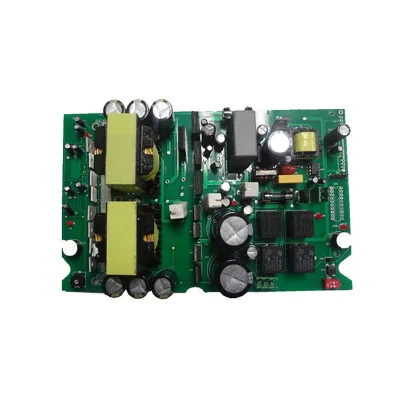
Compare 30 listings for RoHS Lead-Free PCB and PCBA from suppliers in Shenzhen and Guangdong. Options include multilayer rigid boards with tin or copper coatings, available in various colors and thicknesses for diverse manufacturing needs.
Key considerations
Products List




Comprehensive Sourcing Guide
Strategic Sourcing Guide for RoHS Lead-Free PCB and PCBA Solutions
Navigating the global market for RoHS-compliant, lead-free Printed Circuit Boards (PCBs) and Printed Circuit Board Assemblies (PCBAs) requires a disciplined approach to technical verification, compliance auditing, and supplier evaluation. For procurement professionals, the core objective is to secure components that meet rigorous environmental standards while maintaining structural integrity and electrical performance. The following guide synthesizes observed market data and technical attributes to provide a framework for sourcing these critical electronic substrates without relying on unverified claims or speculative market figures.
Technical Specifications and Material Architecture
The foundation of any successful PCB procurement lies in understanding the specific material architecture and layer configurations required for the application. The market offers a diverse range of base materials, with FR-4 being a predominant choice for general-purpose applications due to its balance of mechanical strength and dielectric properties. However, specific use cases may necessitate alternative substrates. For instance, aluminum-based materials are observed in the market, often paired with electrolytic foil processing technologies, suggesting suitability for thermal management applications where heat dissipation is critical.
Layer count is another pivotal specification. While standard double-sided rigid PCBs are common, the capability to produce multilayer boards extends significantly in high-end manufacturing. Observed data indicates that suppliers can accommodate configurations ranging from single layers up to 64 layers, allowing for complex routing in high-density interconnect (HDI) designs. The minimum component size supported is a crucial metric for miniaturization; current capabilities include handling components as small as 01005, which is essential for modern consumer electronics and portable devices.
Physical dimensions are equally important. Standard production lines often support large panel sizes, with maximum PCB dimensions reaching up to 740mm by 400mm. This capacity facilitates high-volume panelization, which can optimize production efficiency. The structural integrity of the board is typically defined as rigid, with dielectric materials offering flame-retardant properties (V-rating) and insulation provided by organic resins. Color options for the solder mask are varied, including green, blue, black, red, and yellow, allowing for brand differentiation or functional coding on the final assembly.
Compliance and Certification Verification
Ensuring compliance with environmental regulations is non-negotiable in modern electronics manufacturing. The core keyword "RoHS" refers to the Restriction of Hazardous Substances directive, which limits the use of specific hazardous materials in electrical and electronic equipment. Lead-free processing is a direct consequence of these regulations, ensuring that soldering processes do not introduce lead into the final product.
When evaluating potential suppliers, buyers must verify the presence of comprehensive certification portfolios. Trusted sources in the market often cite certifications such as ISO, UL, RoHS, and REACH. These certifications indicate that the manufacturer adheres to international quality management systems and environmental safety standards. The testing protocols employed by these manufacturers are robust, frequently including Spi (Solder Paste Inspection), Aoi (Automated Optical Inspection), Ict (In-Circuit Test), Fct (Functional Circuit Test), X-ray inspection, and aging tests. These steps are designed to catch defects early and ensure long-term reliability.
It is critical to distinguish between a supplier's claim of compliance and their actual certification status. Buyers should request valid, up-to-date certificates from accredited bodies rather than accepting self-declared statements. The "Lead Free HASL" (Hot Air Solder Leveling) surface finish is a common observation in compliant products, serving as a reliable indicator of the supplier's adherence to lead-free soldering standards. Furthermore, the base material itself must be verified as RoHS-compliant, ensuring that the resin and copper content do not contain restricted substances.
Cost Drivers and Economic Factors
The pricing of RoHS lead-free PCBs and PCBAs is influenced by a complex interplay of technical specifications and production parameters. The observed price range in the market spans from $0.03 to $35.00 USD, a wide variance that reflects differences in layer count, material type, board size, and the complexity of the assembly process.
Several key factors drive these costs. First, the number of layers is a primary cost driver; moving from a double-sided board to a 64-layer multilayer board exponentially increases the manufacturing complexity and material usage. Second, the choice of base material significantly impacts the final price. While standard FR-4 is cost-effective, specialized materials like aluminum or high-Tg (glass transition temperature) resins command a premium. Third, the surface finish selected, such as Lead Free HASL versus other options, affects both material costs and processing time.
The Minimum Order Quantity (MOQ) also plays a role in unit economics. The market supports flexible ordering, with observed MOQs ranging from 1 to 10 units. This flexibility is beneficial for prototyping and small-batch production, allowing buyers to test designs without incurring prohibitive upfront costs. However, larger production runs typically yield better per-unit pricing. Buyers should also consider the "Mode of Production," whether it is Surface Mount Technology (SMT) or Dual In-line Package (DIP), as the automation level and labor intensity of these processes influence the final cost structure.
Typical Applications and Industry Use Cases
The versatility of RoHS lead-free PCBs allows them to serve a broad spectrum of industries. Consumer electronics represent a significant application area, where the demand for miniaturization and aesthetic variety is high. The availability of various solder mask colors and the capability to handle 01005 components make these boards ideal for smartphones, wearables, and portable gadgets.
Beyond consumer electronics, the robust nature of rigid PCBs and the thermal properties of aluminum-based boards make them suitable for industrial and automotive applications. The "Rigid Circuit Board" structure ensures durability in environments with vibration or mechanical stress. The "Semi-Additive Process" mentioned in production capabilities is particularly relevant for high-precision applications where fine line widths and tight spacing are required, such as in advanced communication equipment or medical devices.
The "OEM/ODM" (Original Equipment Manufacturer/Original Design Manufacturer) capabilities observed in the market indicate that suppliers can support custom design requirements. This is vital for companies developing proprietary products that require unique form factors or specific electrical characteristics. Whether the application involves simple double-sided boards or complex 64-layer multilayer stacks, the ability to customize the design ensures that the final product meets the specific functional needs of the end-user.
Supplier Evaluation and Operational Capabilities
Selecting the right supplier requires a thorough evaluation of their operational capabilities and geographic footprint. The supply chain for these components is often centered in manufacturing hubs like Shenzhen and Guangdong, China, which are known for their dense ecosystem of electronics manufacturers. Buyers should verify the "prod_origin" to understand the logistics implications, including lead times and shipping costs.
A critical aspect of supplier evaluation is their production process and quality assurance infrastructure. Suppliers utilizing the "Semi-Additive Process" and offering "Anti-Static Bag + Foam Protective Cotton + Cardboard" or "Inner Vacuum Packing Outer Carton Box" demonstrate a commitment to protecting sensitive components during transit. The presence of advanced testing equipment, such as X-ray and aging test facilities, is a strong indicator of a supplier's ability to deliver high-quality products consistently.
Buyers should also assess the supplier's flexibility regarding customization. The availability of "Customization" and "Customized" options suggests that the supplier can adapt to unique design requirements. Additionally, the ability to handle "Orders of Small or Medium Quantity" is a significant advantage for startups and companies with fluctuating demand. It is essential to verify that the supplier's stated capabilities, such as maximum PCB dimensions and layer counts, align with the buyer's specific project needs before engaging in a contract.
Quality Control and Long-Term Procurement Considerations
Maintaining high quality standards is essential for the longevity and reliability of electronic assemblies. The "Condition" of the product, whether "New" or "Used," must be clearly defined, as most B2B procurement focuses on new, factory-fresh components. For new products, the "Mechanical Rigid" structure and "FR-Flame Retardant Properties" are baseline requirements that must be met.
Long-term procurement considerations involve establishing a relationship with a supplier who can scale with the buyer's growth. This includes verifying the supplier's ability to maintain consistent quality over time, especially when transitioning from prototype to mass production. The "Standard" specifications, such as "8 layers FR4 PCB" or "FR 4, 0.8mm, 1 Layer, 1OZ Copper Thickness," should be strictly adhered to in all production runs to ensure interchangeability and reliability.
Buyers should also consider the packaging standards. "Safe Packing" and "Inner Vacuum Packed" methods are crucial for preventing damage from moisture and static electricity, which can degrade the performance of lead-free solder joints over time. Regular audits of the supplier's quality control processes, including their adherence to "Spi, Aoi, Ict, Fct, X-ray, RoHS and Aging" protocols, will help mitigate risks associated with supply chain disruptions or quality failures.
Comparative Analysis of PCB Attributes
To facilitate informed decision-making, the following table summarizes key attributes observed in the market for RoHS lead-free PCBs and PCBAs. This comparison highlights the diversity of options available and helps buyers identify the specifications that best match their project requirements.
| Attribute Category | Common Observation | High-End / Specialized Option |
|---|---|---|
| Base Material | FR-4 (Standard) | Aluminum, High-Tg Resin |
| Layer Count | Double-Sided (2 Layers) | Multilayer (up to 64 Layers) |
| Surface Finish | Lead Free HASL | Electrolytic Foil, Copper Coating |
| Minimum Component | 01005 | 01005 (High Precision) |
| Max Dimension | 740*400mm | Custom Large Panels |
| Certification | ISO, RoHS, REACH | UL, ISO, RoHS, REACH |
| Production Mode | SMT, DIP | Semi-Additive Process |
| Packing | Anti-Static Bag + Foam | Inner Vacuum + Outer Carton |
| Origin | Shenzhen, Guangdong | China (General) |
This table serves as a reference point for buyers to quickly assess the range of capabilities available in the market. It underscores the importance of matching specific technical requirements with the supplier's proven capabilities. By focusing on these verified attributes, procurement professionals can navigate the complexities of sourcing RoHS lead-free PCBs and PCBAs with confidence, ensuring that the final products meet both regulatory standards and performance expectations.
In conclusion, successful sourcing of RoHS lead-free PCBs and PCBAs requires a deep understanding of technical specifications, rigorous verification of certifications, and a strategic approach to supplier evaluation. By leveraging the observed data and adhering to the principles outlined in this guide, buyers can secure high-quality components that drive innovation and reliability in their electronic products.
FAQs
What certifications do RoHS lead-free PCBs typically have?
These boards typically hold ISO, UL, RoHS, and REACH certifications. Manufacturers verify compliance through rigorous testing protocols including Spi, Aoi, Ict, Fct, X-ray, and aging tests to ensure safety standards are met.
How many layers can multilayer PCBs support?
Multilayer configurations can support up to 64 layers. This capacity allows for complex routing in high-density designs, ranging from standard double-sided boards to advanced multilayer stacks for specialized applications.
Can suppliers customize PCB dimensions and materials?
Yes, customization is available for dimensions up to 740 by 400 mm. Suppliers offer various base materials like FR-4 or Aluminum and can adjust copper thickness and layer counts to meet specific project needs.
What is the minimum order quantity for small batches?
Orders of small or medium quantities are welcomed with MOQs ranging from 1 to 10 units. This flexibility supports prototyping and low-volume production runs without requiring large initial commitments from buyers.
Which surface finishes are used for lead-free compliance?
Lead-free HASL is a common surface finish used for compliance. This process ensures the absence of lead in soldering, aligning with environmental regulations while providing reliable electrical connections for the final assembly.
Where are these PCBs typically manufactured?
Production often originates from manufacturing hubs in Shenzhen and Guangdong, China. These locations provide a dense ecosystem of electronics manufacturers capable of handling diverse production processes and customization requirements.