Source Rotary Disc Mower for Farmland Lawn and Orchard
Source 30 rotary disc mower units tailored for farmland, lawn, and orchard applications. Buyers can compare specifications including cutting width, blade count, and power requirements from verified Chinese manufacturers.
Key considerations
Products List


5 Rotors High Speed Adjustable Height Tractor Disc Lawn Mower for Farm
$2000.00 - $2080.00
MOQ: 1 Sets

Heavy-Duty Tractor Mounted Disc Mower Lawn Mower for Efficient Grass Cutting
$1890.00 - $2000.00
MOQ: 1 Sets




Comprehensive Sourcing Guide
Strategic Sourcing Guide for Rotary Disc Mowers in Farmland Operations
Understanding Rotary Disc Mower Technical Specifications
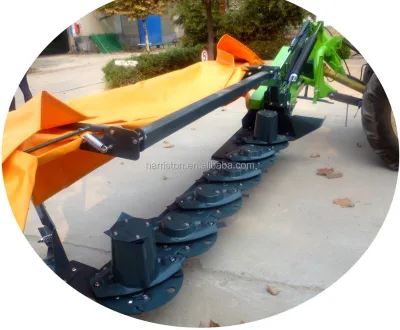
When sourcing a rotary disc mower specifically for farmland applications, buyers must first anchor their selection in the precise technical architecture of the machine. The core mechanism relies on a rotary working way, where high-speed discs equipped with blades cut vegetation through impact and shear forces. This design is distinct from flail mowers or sickle bars, offering a cleaner cut that is particularly beneficial for forage quality in agricultural settings. The observed market data indicates a clear segmentation based on cutting width, which directly correlates to the scale of the farmland operation.
Buyers will encounter models ranging from compact units with a cutting width of 800mm to larger industrial units capable of 2100mm coverage. For instance, specific model configurations like the 9GX-2.45 feature a substantial cutting width of 2100mm, suitable for large-scale open fields, while the DM165 model offers a more compact 800mm width, ideal for smaller plots or orchards with tighter spacing. The number of blades is another critical variable; observed specifications list blade counts of 8, 10, and 12. A higher blade count generally increases the cutting frequency and surface finish, but it also demands more power from the tractor.
The power requirement is intrinsically linked to the machine's weight and cutting capacity. The supporting power supply for these units typically ranges from 40HP to 100HP. Smaller units, such as the 9GX-1.7, are designed for tractors in the 40-70HP range and weigh approximately 430kg. In contrast, the larger 9GX-2.45 model requires a more robust power source of 60-100HP and has a weight of 590kg. The driven type is almost universally PTO (Power Take-Off), meaning the mower derives its energy directly from the tractor's transmission. Buyers must verify that their existing tractor fleet matches the specific HP requirements of the selected mower model to ensure operational efficiency and prevent mechanical strain.
Compliance and Certification Verification
In the global agricultural machinery market, compliance and certification are not merely administrative hurdles but essential indicators of manufacturing quality and safety. When evaluating potential suppliers for rotary disc mowers, buyers should prioritize products that carry recognized international certifications. The supplied data highlights the presence of CE certification, which is a mandatory requirement for selling machinery within the European Economic Area and serves as a strong baseline for safety and electromagnetic compatibility standards globally.
Furthermore, quality management systems are often verified through ISO standards. Observations indicate that suppliers may provide ISO 9001 certification, which validates that the manufacturer adheres to consistent quality control processes in their production lines. Some listings combine certifications, such as ISO 9001 alongside CE, suggesting a comprehensive approach to both product safety and manufacturing consistency. However, buyers must exercise caution regarding specific standard versions. While some background data mentions ISO 9001:2000, this is an older standard. It is critical to verify that the supplier is operating under the current ISO 9001:2015 standard or equivalent, as older certifications may not reflect modern quality assurance protocols.
The origin of the product is also a factor in compliance. A significant portion of the observed inventory originates from China, with specific manufacturing hubs noted in Shandong province. While this region is a major producer of agricultural machinery, buyers should ensure that the specific supplier can provide valid, up-to-date certification documents that are traceable to the actual production batch. Relying on generic certification claims without verifying the specific certificate number against the issuing body is a risk that should be mitigated during the supplier evaluation phase.
Cost Drivers and Pricing Dynamics
The pricing of rotary disc mowers is influenced by a complex interplay of factors, including cutting width, weight, blade configuration, and the level of customization offered. The observed price range for these units spans from approximately $70 to $8,010 USD. This wide disparity reflects the difference between basic, smaller-scale models and heavy-duty, large-width industrial units. The lower end of the spectrum likely corresponds to compact mowers with narrower cutting widths (e.g., 800mm to 900mm) and lower horsepower requirements. Conversely, the higher price points are associated with larger models like the 9GX-2.45, which feature wider cutting decks, heavier frames, and more complex blade assemblies.
Beyond the base unit cost, the Minimum Order Quantity (MOQ) plays a significant role in the total cost of ownership. The observed MOQ range is between 1 and 500 units. Buyers purchasing a single unit for immediate deployment will face different pricing structures compared to those engaging in bulk procurement for fleet expansion. Bulk orders often unlock volume discounts, but the high MOQ of 500 units may be prohibitive for smaller farms or individual contractors. Additionally, customization is listed as an available attribute, which can introduce variable costs. Customizations might include specific color options, altered packing standards, or modifications to the cutting height mechanisms.
Packing standards also contribute to logistics costs. While many units are shipped in carton packaging, some heavy-duty models utilize iron frame packing to prevent damage during transit. The dimensions of the packaging, such as 880625625mm or 12009501000mm, directly impact shipping volume and freight charges. Buyers should calculate the total landed cost, including freight, insurance, and potential import duties, rather than focusing solely on the ex-factory price. The weight of the unit, ranging from 400kg to 590kg, further influences shipping logistics, as heavier items incur higher freight rates.
Typical Applications and Operational Versatility
Rotary disc mowers are designed for versatility across various agricultural environments. The primary application is farmland, where they are used for hay and silage production. However, the observed data indicates a broader scope of use, including lawns, fruit trees, tea trees, and paddy fields. This versatility makes the rotary disc mower a valuable asset for diversified farms. The ability to cut in fruit and tea tree orchards is particularly notable, as the design allows for operation in confined spaces where larger machinery might struggle.
The cutting height is a critical parameter for different applications. For general farmland and lawn maintenance, a cutting height range of 50-60mm is observed, which is suitable for creating a uniform forage layer. For more specialized applications, such as orchard maintenance or uneven terrain, models offering a wider adjustment range of 10-80mm provide the necessary flexibility to avoid damaging tree roots or navigating obstacles. The maximum travel speed for these units is typically between 5 and 15 km/h, a range that balances operational efficiency with the need for a clean cut. Exceeding these speeds can compromise the quality of the cut and increase wear on the blades and discs.
The specific model selection should align with the crop type. For instance, the 9GX series models are well-suited for open farmland, while the BRM-80 and DM165 models, with their specific cutting widths and dimensions, may be better adapted for row crops or orchard settings. The blade quantity also influences performance; a higher number of blades ensures a finer cut, which is essential for high-quality forage intended for livestock. Buyers must assess their specific terrain and crop requirements to select the model that offers the optimal balance of cutting width, height adjustment, and power requirements.
Supplier Evaluation and Quality Control
Evaluating suppliers for rotary disc mowers requires a rigorous approach to quality control and manufacturing capability. Given the mechanical nature of the product, the integrity of the iron frame and the precision of the blade assembly are paramount. The observed packing standards, ranging from carton cases to iron frames, serve as an initial indicator of how the supplier protects the product during transit, which reflects their attention to detail. However, visual inspection of packaging is insufficient; buyers must request detailed quality control reports that cover material thickness, weld integrity, and blade hardness.
When assessing suppliers, buyers should verify the consistency of the product specifications. The data shows variations in blade counts (8, 10, 12) and weights (400kg to 590kg) across different models. A reliable supplier will provide clear documentation linking specific model numbers to their exact specifications, ensuring that the buyer receives the machine they ordered. Additionally, the availability of customization suggests that the supplier has flexible manufacturing capabilities, but this should not come at the expense of standard quality benchmarks.
Buyers should also inquire about the supplier's track record in the specific region of origin, such as Shandong, China. While the region is a hub for agricultural machinery, the quality of individual manufacturers can vary. Requesting references from previous buyers, particularly those who have used the mowers in similar farmland conditions, can provide valuable insights into long-term durability and after-sales support. It is also essential to verify the supplier's ability to provide spare parts, such as replacement blades and discs, to ensure minimal downtime during the growing season.
Long-Term Procurement and Maintenance Considerations
Sourcing a rotary disc mower is not a one-time transaction but the beginning of a long-term operational relationship. Buyers must consider the total cost of ownership, which includes maintenance, spare parts availability, and the lifespan of the equipment. The PTO-driven nature of these mowers means that the connection point between the tractor and the mower is a critical wear point. Regular inspection of the PTO shaft and universal joints is necessary to prevent catastrophic failure during operation.
The cutting blades are consumable items that will require periodic replacement. The number of blades (8, 10, or 12) determines the frequency and cost of maintenance. A model with 12 blades may offer a superior cut but will also incur higher replacement costs and more frequent downtime for blade changes compared to an 8-blade model. Buyers should negotiate terms that include a supply of spare blades or a discount on future purchases of consumables.
Furthermore, the customization options available, such as color or specific packing, should be evaluated for their long-term impact. While a specific color may be aesthetically pleasing, it should not compromise the corrosion resistance of the frame. The standard dimensions of the packaging, such as 960755320mm or 12009501000mm, should be considered in the context of the buyer's storage facilities. Ensuring that the equipment can be stored efficiently will protect the investment and extend the life of the machinery. Ultimately, the goal is to select a rotary disc mower that offers a reliable balance of performance, durability, and maintainability for the specific demands of the farmland operation.
FAQs
What power supply is required for a Rotary Disc Mower for Farmland?
The supporting power supply typically ranges from 40HP to 100HP depending on the model. Smaller units like the 9GX-1.7 require 40-70HP, while larger models such as the 9GX-2.45 need 60-100HP to operate effectively.
Which cutting width options are available for Rotary Disc Mower for Farmland?
Available cutting widths range from 800mm to 2100mm based on the specific model selected. Compact models like the DM165 offer 800mm width, whereas larger industrial units like the 9GX-2.45 provide a 2100mm cutting width for extensive fields.
How many blades are typically installed on a Rotary Disc Mower for Farmland?
The number of blades varies by model, with observed counts of 8, 10, or 12 blades. Higher blade counts generally increase cutting frequency, but the specific number depends on the chosen model configuration and power requirements.
Can I customize the color or packing for a Rotary Disc Mower for Farmland?
Yes, customization is available for attributes such as color and packing standards. Buyers can select optional colors and choose between carton packaging or iron frame packing depending on their specific logistics and aesthetic needs.
What certifications are available for Rotary Disc Mower for Farmland products?
Products often carry CE certification and ISO 9001 quality management system certification. These certifications indicate compliance with safety standards and consistent manufacturing quality, though specific certificate versions should be verified with the supplier.
Where are Rotary Disc Mower for Farmland units typically manufactured?
Most units originate from China, with specific manufacturing hubs located in Shandong province. Buyers should verify the specific origin and request valid certification documents traceable to the actual production batch from these regions.