Source Rotary Cultivator for Weeding and Soil Preparation for Farming
Find 30 Rotary Cultivator for Weeding and Soil Preparation units from verified Chinese manufacturers. Compare specifications including working width, power source, and drive types to select the right machinery for farm land plowing and garden cultivation.
Key considerations
Products List


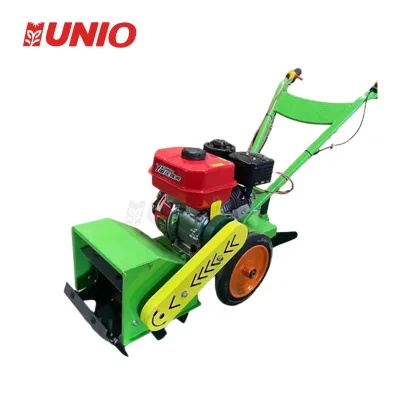


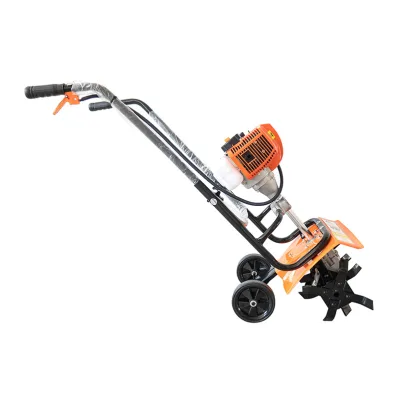

High Quality Agricultural Rotary Tiller for Efficient Soil Preparation
$750.00 - $2000.00
MOQ: 1 Pieces


Comprehensive Sourcing Guide
Strategic Sourcing Guide for Rotary Cultivators in Agriculture
Understanding Rotary Cultivator Technology and Operational Mechanics
The rotary cultivator, often referred to as a rotavator or rotary tiller, represents a critical category of agricultural machinery designed for soil preparation and weeding. These machines utilize a set of rotating blades to till the soil, effectively breaking up clods, incorporating crop residues, and preparing a fine seedbed. The core mechanism involves a horizontal axis equipped with multiple blades that rotate at high speeds to cut and mix the soil. In the context of modern procurement, buyers must distinguish between different drive configurations and power sources, as these directly influence the machine's suitability for specific farming scales and soil conditions.
Based on observed market data, rotary cultivators are primarily categorized by their power source and drive type. The supply chain features units powered by tractors, typically requiring a power input in the range of 40-50 HP for larger field operations, while smaller, garden-scale units often utilize gasoline engines ranging from 6.5 HP to 8 HP. The drive mechanism is equally critical; while some models employ a gear drive system for robust torque transmission, others utilize a chain drive configuration. The traction type is predominantly "hanging," meaning the unit is suspended from the tractor's three-point linkage, allowing for depth control and transport flexibility. The working width is a primary specification, with observed models ranging from compact 20-45 cm units suitable for narrow rows to heavy-duty 1600 mm models designed for broad-acre farming. Understanding these mechanical distinctions is the first step in aligning procurement with operational needs.
Technical Specifications and Performance Parameters
When evaluating rotary cultivators, buyers must scrutinize specific technical parameters to ensure the machinery matches the intended application field. The working width is a definitive metric for throughput; for instance, a model designated as RTBM160 offers a 1600 mm working width, suitable for large-scale soil preparation, whereas other variants may offer widths between 20 and 45 cm for specialized or smaller plot work. The number of blades, or "Blade PCS," is another vital specification. A standard configuration for heavy-duty units may include 48 blades, which ensures a consistent tillage depth and soil texture.
Weight is a significant factor in determining the machine's stability and soil penetration capability. Observed data indicates a substantial variance in weight, with heavy-duty tractor-mounted units weighing approximately 340 kg, while lighter, engine-driven mini tillers may weigh as little as 40 kg. This disparity dictates the required power source; the heavier units necessitate a tractor with sufficient horsepower (40-50 HP range), whereas the lighter units are self-propelled via gasoline engines. The dimension of the machine, often cited as 620950570 mm for smaller models, impacts storage and transport logistics. Furthermore, the arbor configuration is typically a horizontal axis, which is standard for effective soil mixing. Buyers should verify that the specific model's power rating aligns with the engine's output, noting that some units specify power in watts (e.g., 7 HP or 8 HP) while others reference tractor PTO requirements.
Compliance, Certification, and Regulatory Standards
Navigating the regulatory landscape is essential for international procurement to ensure that imported machinery meets safety and operational standards. A high-confidence observation in the current market is the presence of CE certification for certain rotary cultivator models. This certification indicates compliance with European Union safety, health, and environmental protection requirements, which is a crucial benchmark for buyers targeting markets that recognize CE marking. However, the certification status is not universal across all listed products; buyers must verify the specific certification status of the unit they intend to purchase rather than assuming all models are certified.
Beyond specific certifications, the concept of "prod_standard" is frequently noted as "many" in product listings. This suggests a diversity of manufacturing standards depending on the origin and the target market of the supplier. Buyers should not rely on a single generic standard but must request documentation confirming which specific national or international standards the machinery adheres to. Additionally, the provision of machinery test reports is a valuable indicator of quality assurance. Some suppliers provide these reports, offering empirical data on the machine's performance and safety. When evaluating compliance, procurement teams should also consider the "After-sales Service" and "After Warranty Service" provisions, such as online support and spare parts availability, which are often listed as one-year services. These service commitments are part of the broader compliance framework, ensuring that the machinery remains operational and safe throughout its lifecycle.
Cost Drivers and Economic Considerations in Procurement
The pricing structure for rotary cultivators is influenced by a complex array of factors, including power source, working width, build quality, and customization options. The observed price range in the market is extensive, spanning from 0.5 USD to 10,000 USD. This wide variance reflects the difference between simple, lightweight mini tillers and heavy-duty, tractor-mounted rotary tillers with complex gear drives and large working widths. The minimum order quantity (MOQ) also varies significantly, ranging from 1 unit for single-item purchases to 10,000 units for bulk industrial orders. This flexibility allows buyers to scale their procurement based on immediate needs or long-term supply chain strategies.
Customization is a key driver of cost and value. Many suppliers offer "Customization: Available," allowing buyers to tailor the machine to specific farming policies or operational requirements. For instance, the "Farming Policy" of "Dry Cultivating Machinery" may require specific modifications to the blade configuration or frame strength to handle arid soil conditions. The packing method is another cost factor; while some units come in standard wooden packing, others offer "Customers Requirement" packing, which may involve specialized crating for export or specific handling instructions. Buyers should analyze the total cost of ownership, which includes not just the unit price but also the cost of shipping, potential customization fees, and the long-term cost of spare parts. The "Selling Units" being listed as "Single item" suggests that even high-value machinery can be procured individually, though bulk orders may yield better pricing tiers.
Supplier Evaluation and Geographic Origins
The geographic origin of the machinery is a primary indicator of supply chain dynamics and manufacturing capabilities. The majority of the observed rotary cultivators originate from China, with specific mentions of "Shan Dong China" and "Shandong, China" as key production hubs. This concentration of manufacturing in Shandong suggests a mature supply chain with established logistics and specialized knowledge in agricultural machinery production. When evaluating suppliers, buyers should prioritize those who can provide clear documentation of their place of origin and manufacturing capabilities.
Supplier reliability is further assessed through their after-sales support structure. The market data highlights "After-sales Service Provided: 1 Year" and "After Warranty Service: Online Support Spare Parts" as common offerings. These services are critical for minimizing downtime in agricultural operations. Buyers should verify the responsiveness of the supplier's support team and the availability of spare parts. The "Key Selling Points" often include "Multifunctional" capabilities, suggesting that suppliers are competing on versatility. A supplier that can demonstrate a range of applications, from "Farm Land Plow" to "Garden Power Tiller," is likely to have a more robust product line and better technical support. Additionally, the "Key Word" and "Keywords" associated with products, such as "Farm Plough Equipment" and "Rotovator," help in identifying suppliers who specialize in specific niches within the broader agricultural machinery market.
Quality Control and Long-Term Procurement Strategy
Ensuring the quality of rotary cultivators requires a proactive approach to quality control and long-term planning. The "Core Components" of these machines are often listed as "Other," which necessitates a detailed inquiry into the specific materials and components used, such as the quality of the blades, the durability of the gears or chains, and the robustness of the frame. Buyers should request detailed specifications on these components to assess the machine's longevity and resistance to wear and tear in demanding soil conditions.
For long-term procurement, the "Application Field" of "Agriculture" and specific uses like "Ploughing Soil" and "Farm Work Machinery" indicate that these machines are subject to rigorous usage cycles. Buyers should establish a maintenance schedule and ensure that the supplier provides a clear guide for upkeep. The "Operation" mode, described as "Soil Preparation Machinery" and "Continuous Running Operation," implies that the machine is designed for sustained use, and the quality of the drive system (Gear Drive vs. Chain Drive) will significantly impact its performance over time. Furthermore, the "Type" of the machine, whether it is a "Rotary Tiller," "Farm Cultivator," or "Cultivator," should align with the specific farming practices of the buyer. By focusing on these technical and operational details, buyers can mitigate risks and ensure a reliable supply of high-quality agricultural machinery that meets their specific needs.
Comparative Analysis of Product Variants
To facilitate informed decision-making, it is helpful to compare the distinct variants of rotary cultivators available in the market. The following table summarizes the key differences observed in the product listings, highlighting the trade-offs between power, size, and application.
| Feature | Heavy-Duty Tractor Unit | Mini Tiller / Garden Unit |
|---|---|---|
| Power Source | Tractor (40-50 HP) | Gasoline Engine (6.5-8 HP) |
| Drive Type | Gear Drive | Chain Drive |
| Working Width | 1600 mm | 20-45 cm |
| Weight | ~340 kg | ~40 kg |
| Blade Count | 48 PCS | Varies (often lower) |
| Application | Large Farm Land Plow | Garden, Small Plot |
| Model Example | RTBM160 | UN-03 |
| Packing | Wooden | Customers Requirement |
| Certification | CE (Observed) | CE (Observed) |
This comparison underscores the importance of matching the machine's specifications to the scale of the farming operation. The heavy-duty unit is optimized for efficiency and large-scale soil preparation, while the mini tiller offers flexibility and ease of use for smaller areas. Buyers must carefully evaluate their specific requirements against these parameters to select the most appropriate equipment.
Final Procurement Recommendations
In conclusion, sourcing rotary cultivators for weeding and soil preparation requires a meticulous approach that balances technical specifications, compliance requirements, and economic factors. Buyers should prioritize suppliers who provide clear documentation on certifications like CE, detailed technical specifications regarding power and dimensions, and robust after-sales support. By understanding the nuances between different drive types, power sources, and working widths, procurement teams can make informed decisions that align with their agricultural operations. The diverse range of products available, from compact garden tillers to heavy-duty tractor-mounted units, offers significant opportunities for customization and optimization. Ultimately, the success of the procurement process depends on thorough due diligence, clear communication with suppliers, and a strategic focus on long-term value and operational reliability.
FAQs
What power source is required for heavy-duty rotary cultivators?
Heavy-duty units require a tractor power source rated between 40 and 50 HP. This configuration supports large working widths of 1600 mm and weights around 340 kg for efficient soil preparation.
Can I find rotary cultivators with CE certification for export?
Yes, CE certification is available for specific rotary cultivator models in the current market. Buyers should verify the certification status of the specific unit before purchase to ensure compliance with safety standards.
Which drive type is used for high-torque transmission in these machines?
Gear drive systems are used for robust torque transmission in heavy-duty tractor-mounted units. Some smaller models utilize a chain drive configuration instead, depending on the specific power requirements and design.
How does the working width vary between different rotary tiller models?
Working widths vary significantly, ranging from compact 20 to 45 cm for mini tillers up to 1600 mm for heavy-duty units. The 1600 mm width is typical for large-scale farm land plowing operations.
What is the typical weight difference between tractor and engine units?
Tractor-mounted units typically weigh approximately 340 kg, while gasoline engine mini tillers weigh around 40 kg. This weight difference dictates the required power source and intended application scale.
Can buyers request custom packaging for their rotary cultivator orders?
Yes, customization is available, including specific packaging requirements such as wooden crates or customer-specified options. Suppliers offer flexible packing solutions to meet export needs or specific handling instructions.