Source Rugby Sport Towel for Football, Rugby, and Sports
Explore 30 verified listings for Rugby Sport Towel options featuring microfiber and cotton materials. Buyers can compare custom sizes, quick-dry features, and embroidery capabilities from suppliers in China.
Key considerations
Products List










Comprehensive Sourcing Guide
Strategic Sourcing Guide for Rugby Sport Towels
The procurement of rugby sport towels requires a nuanced understanding of the intersection between athletic performance requirements and industrial manufacturing capabilities. Unlike general-purpose household textiles, rugby towels must withstand rigorous physical contact, intense sweating, and frequent laundering while maintaining structural integrity. This guide synthesizes available market data to provide a framework for sourcing high-quality rugby towels, focusing on material composition, technical specifications, and supplier evaluation criteria. Buyers must navigate a market where product attributes vary significantly between listings, necessitating a verification-first approach to ensure that the final procurement aligns with specific team or organizational needs.
Material Composition and Performance Characteristics
The foundation of a high-performance rugby towel lies in its material composition. Market observations indicate a divergence in primary materials, with listings featuring both Microfiber and 100% cotton terry options. Each material offers distinct advantages that must be weighed against the specific usage context. Microfiber products are frequently highlighted for their "Quick Dry" and "Ultra Soft" properties, alongside claims of being "Mothproof." These characteristics suggest a synthetic blend designed for rapid moisture wicking, which is critical for athletes who need to dry off quickly between high-intensity plays. The "Quick-Dry" feature is often paired with "SKIN-FRIENDLY" and "healthy antibacterial" claims, indicating a focus on hygiene and comfort during prolonged physical exertion.
Conversely, cotton terry options are described with attributes such as "High Absorbent" and "Ultra Soft." The "100% cotton terry" specification suggests a traditional approach to absorbency, where the looped pile structure of the terry cloth maximizes water retention. For rugby contexts where heavy perspiration is common, the high absorbency of cotton is a significant functional benefit. However, the trade-off often involves drying time, which may be longer than microfiber alternatives. Buyers must verify the specific GSM (grams per square meter) of the towel, as this metric directly correlates with thickness and absorbency. Observed data points to a GSM range of 300-499, a substantial weight that implies a premium, plush towel suitable for post-match recovery rather than a lightweight, pocket-sized option.
Technical Specifications and Dimensional Standards
When evaluating rugby towels, technical specifications regarding size, shape, and packaging are paramount. The market data reveals a wide variance in dimensions, ranging from compact sizes like 3550cm to elongated formats such as 30100cm. The 30*100cm dimension is particularly relevant for rugby, as it allows for a larger surface area to cover the shoulders and back of a player, or to be used as a makeshift seat on the sidelines. The shape is consistently noted as "Rectangle," which is the standard for functional sports towels.
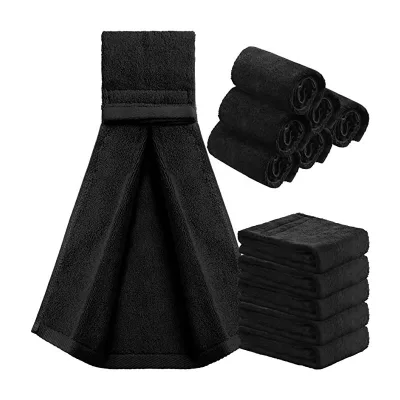
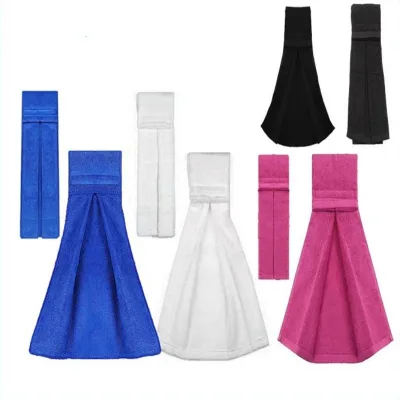
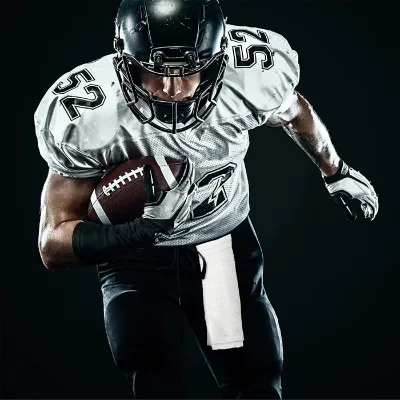
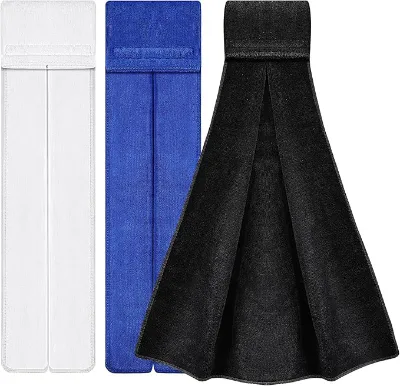
Packaging specifications also vary, with options including "OPP Bags" and "OPP Bag/Carton" configurations. The single package size is listed as ranging from 15X10X5 cm to 38X30X10 cm, reflecting the difference between rolled, compact towels and bulkier, flat-packed units. For teams requiring portability, the "Portable" style with "Velcro" closures observed in some listings offers a practical solution for securing the towel to a bag or belt. This feature prevents the towel from becoming loose during travel or active movement. Buyers should verify the "Single gross weight," which is observed at 0.08 kg for certain models, to estimate shipping costs accurately. Furthermore, the "technics" used in production, such as "Woven" or "Yarn Dyed," influence the texture and colorfastness of the final product. Yarn-dyed fabrics generally offer superior color retention compared to piece-dyed alternatives, a crucial factor for team branding where consistent colors are required.
Customization, Branding, and Design Flexibility
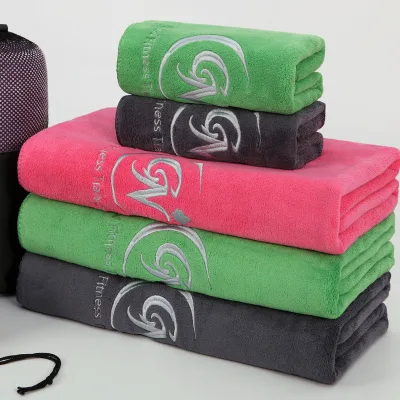
One of the most critical aspects of sourcing rugby towels is the ability to customize the product for team identity. The market data confirms that "Customized" options are widely available, with "Customization" explicitly listed as a service. This flexibility extends to multiple dimensions, including color, pattern, and logo application. Color options are diverse, ranging from standard shades like "Blue/Black/White/Red" to "Custom" requests. Patterns observed include "Embroidered," "Printed," "Plain Dyed," and "Solid color," with some listings even noting "Floral" patterns, though solid colors are likely more appropriate for professional rugby teams.
The availability of "Logo" customization is a key differentiator. Suppliers indicate that logos are "Avaliable," allowing teams to imprint their crests or sponsor names directly onto the towel. This is often achieved through embroidery or printing techniques. The "prod_standard" is frequently listed as "custom," suggesting that dimensions and material blends can be tailored to specific order requirements. However, buyers must be cautious; while "custom" is a common attribute, the specific tolerances for these customizations must be defined in the purchase order. The "Age Group" is listed as "Adults" and "Children," indicating that suppliers can produce towels in varying sizes to accommodate different squad members, from junior players to senior professionals.
Cost Drivers and Minimum Order Quantities
Understanding the cost structure of rugby towels is essential for budget planning. The observed price range in the market is broad, spanning from 0.18 to 15 USD. This significant variance is driven by factors such as material quality (microfiber vs. cotton), GSM weight, customization complexity, and order volume. Higher GSM towels with custom embroidery and specific branding will naturally command a price closer to the upper end of this spectrum.
Minimum Order Quantities (MOQ) present another variable for buyers. The data shows an MOQ range from 1 to 10,000 units. Some listings specify an MOQ of 50 pieces, while others require 20 sets. This flexibility allows for both small-scale purchases, such as for a single team or event, and large-scale procurement for leagues or manufacturers. The "Selling Units" are often listed as "Single item," which can be misleading if the MOQ is actually higher; buyers must clarify the actual minimum purchase requirement before finalizing an order. Additionally, the "Samples" lead time is noted as 7 days, which is a standard benchmark for verifying product quality before committing to a bulk order. Buyers should factor in the cost of these samples and the lead time for their production when planning their procurement timeline.
Supplier Evaluation and Geographic Considerations
The geographic origin of the product is a significant factor in supplier evaluation. The data indicates that products originate from "China," with specific provinces mentioned such as "Hebei" and "Jiangsu." These regions are known for their textile manufacturing capabilities, but the specific location can influence logistics, lead times, and communication efficiency. For instance, "Hebei" and "Jiangsu" may have different industrial focuses; Jiangsu is often associated with higher-end textile production, while Hebei may focus on volume manufacturing.
When evaluating suppliers, buyers should look for consistency in product attributes. For example, a supplier listing "prod_model" as "SAY-25010903" versus "LAQ100" or "GL-ST040" indicates a diverse catalog. The presence of specific model numbers suggests a structured inventory, which can be a positive sign of a professional operation. However, buyers must verify that the supplier can consistently deliver the specific attributes observed, such as the "Quick Dry" feature or the "Mothproof" quality. The "brand name" "GOODLIFE" appears in some listings, but buyers should not assume that all products carry this brand or that the brand guarantees quality without independent verification.
Quality Control and Compliance Verification
Quality control is the final and perhaps most critical step in the sourcing process. While the market data lists various "features" such as "High Absorbent," "Ultra Soft," and "Mothproof," these are observations that must be validated through physical testing. Buyers should not rely solely on the product description but should request third-party test results or conduct their own sampling. The "standard" for the product is often listed as "custom," which means there may not be a universal industry standard to reference. Instead, buyers should establish their own quality benchmarks based on the intended use.
Compliance and certification checks are also necessary, although the provided data does not list specific certifications like Oeko-Tex or ISO. Buyers must explicitly ask suppliers for documentation regarding chemical safety, especially given the "SKIN-FRIENDLY" and "healthy antibacterial" claims. The "technics" used, such as "Yarn Dyed," should be verified to ensure that the dyes used are non-toxic and colorfast. Additionally, the "prod_packing" must be robust enough to protect the towels during shipping, especially for international orders. The "Single package size" and "Single gross weight" data provided can help in calculating shipping costs and ensuring that the packaging meets the requirements of the destination country.
Long-Term Procurement and Usage Strategy
For long-term procurement, buyers should consider the lifecycle of the rugby towel. The "Usage" is specified as "Football, Sports, Rugby," indicating that these towels are designed for high-intensity environments. The "Advantage" of being "Portable, Soft, Highly Absorbent" suggests that the towels are intended for repeated use. Buyers should evaluate the durability of the towel under repeated washing cycles, as rugby towels are subjected to frequent laundering. The "GSM" range of 300-499 suggests a heavy-duty towel that should withstand regular use, but the specific care instructions must be confirmed.
Furthermore, the "Age Group" of "Adults, Children" implies that the towels can be used across different demographics, making them versatile for team kits. However, the "MOQ" and "lead time" for custom orders must be managed carefully to ensure that the team has sufficient inventory for the entire season. The "Samples" availability allows for a trial run, which is a prudent strategy before committing to a large order. By establishing a clear understanding of the product attributes, technical specifications, and supplier capabilities, buyers can secure a reliable supply of rugby towels that meet the demanding requirements of the sport.
In conclusion, sourcing rugby sport towels involves a careful balance of material selection, customization needs, and supplier reliability. The market offers a wide array of options, from microfiber quick-dry towels to heavy cotton terry options, each with its own set of advantages. By adhering to the verification principles outlined in this guide, buyers can navigate the complexities of the market and secure high-quality products that enhance the performance and comfort of rugby athletes. The key lies in meticulous attention to detail, from the GSM weight to the packaging specifications, ensuring that the final product aligns perfectly with the team's specific needs.
FAQs
Can I get a Rugby Sport Towel with custom branding?
Yes, customization including logo application is available for these towels. Suppliers offer options for embroidered or printed designs on various colors like blue, black, or custom shades to match team identity.
What materials are used for rugby sport towels?
These towels are primarily made from microfiber or 100% cotton terry. Microfiber options feature quick-dry and mothproof properties, while cotton terry provides high absorbency and an ultra-soft feel for post-match recovery.
Which size options are available for rugby sport towels?
Standard sizes include compact 35 by 50 cm and elongated 30 by 100 cm formats. The 30 by 100 cm dimension is particularly suitable for covering shoulders or serving as a sideline seat during matches.
How quickly can I receive samples of rugby sport towels?
Samples are typically ready within 7 days of request. This short lead time allows buyers to verify quality attributes like GSM weight and texture before committing to a larger bulk order for their team.
What is the minimum order quantity for rugby sport towels?
Minimum order quantities range from 1 unit up to 10,000 units depending on the supplier. Some specific listings require a minimum of 50 pieces or 20 sets, offering flexibility for small teams or large leagues.
Can I find rugby sport towels made in specific Chinese provinces?
Yes, products originate from regions such as Hebei and Jiangsu in China. These locations are known for textile manufacturing, with specific model numbers like GL-ST040 indicating structured inventory from these areas.
What features do quick-dry rugby sport towels offer?
Quick-dry towels are designed with microfiber to wick moisture rapidly and are often skin-friendly. They also feature antibacterial properties and ultra-soft textures to ensure comfort and hygiene during intense physical exertion.