Source Ruffle Girls Dress for parties, daily wear, and leisure
Find 30 Ruffle Girls Dress options from Chinese manufacturers. Compare styles including sweet and casual designs, sizes for infants to children, and features like breathable fabric and sublimation printing for various occasions.
Key considerations
Products List


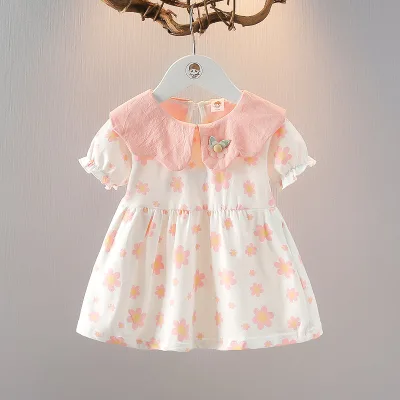
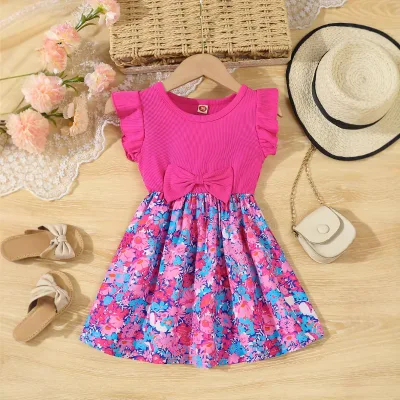
Wholesale Children's Twirl Dress for Girls Custom Eco Friendly Kids' Dresses
$0.50 - $2.00
MOQ: 100 Pieces


Girls Cupcake Flower Girl Dresses Sleeveless Puffy Applique Little Girl Dresses F189
$90.00 - $129.00
MOQ: 1 Pieces




Comprehensive Sourcing Guide
Strategic Sourcing Guide for Ruffle Girls Dresses
Understanding Product Specifications and Variations
When sourcing ruffle girls dresses, buyers must first navigate the diverse technical specifications that define this category. The market presents a wide array of attributes that directly influence the final product's suitability for specific retail segments. Based on current market observations, the core keyword "Ruffle Girls Dress" encompasses items ranging from infant and toddler wear to styles suitable for children aged 2 to 7 years. A critical observation in the current supply landscape is the variation in sizing standards. While some listings reference a size range of 2 to 7 years, others utilize a sizing system denoted as 2XS to 6XL, indicating a potential confusion between children's sizing and adult sizing conventions in certain supplier catalogs. Buyers must verify the actual size chart for each specific model to ensure the inventory matches the target demographic.
The physical construction of these garments varies significantly regarding length and sleeve configuration. Observed data indicates a split between medium-length options and long-length variations, with some specific models identified as "Knee-Length" while others are described as "Long." Similarly, sleeve styles range from short sleeves, often paired with round necks for summer occasions, to long sleeves suitable for spring and autumn wear. The front closure mechanism is another pivotal specification; while some designs feature a zipper front fly, others utilize a pullover style, which is common for infant and toddler garments to facilitate easier dressing. The waist type is predominantly high-waisted, a design choice that aligns with current trends for a "sweet" or "casual" aesthetic.
Material composition is a primary differentiator in this sector. The supply chain currently offers products constructed from polyester, noted for its durability and suitability for plain dyed techniques, as well as options made from 100% cotton, which are often highlighted for their breathability. The production techniques observed include plain dyeing and sublimation printing, the latter being particularly relevant for colorful designs. The color palette is frequently described as "colourful," catering to the vibrant preferences of the young demographic. Additionally, the packaging details vary, with some suppliers offering bag packages or box packages, while others specify 1 set per OPP bag or 1 lot per OPP bag. These variations in packing can impact the perceived value and the logistics of the final shipment.
Compliance, Certification, and Safety Verification
In the realm of children's apparel, particularly for the "Infant & Toddlers" and "2 to 7 Years" age groups, compliance and safety standards are non-negotiable. While the supplied product data does not explicitly list specific certification bodies or test results, buyers must treat the absence of such data as a critical risk factor requiring immediate verification. The "Good Quality" and "Nice Designs" features mentioned in supplier descriptions are subjective marketing terms and do not substitute for objective safety compliance.
Buyers should verify that the supplier can provide documentation confirming adherence to relevant safety standards for the destination market. For children's clothing, this typically involves testing for flammability, chemical content (such as formaldehyde or azo dyes), and physical safety regarding small parts or choking hazards. The material composition, whether polyester or 100% cotton, must be verified against the specific chemical restrictions of the importing country. For instance, cotton garments intended for infants often face stricter scrutiny regarding fiber content and the absence of harmful substances compared to polyester blends.
Furthermore, the origin of the product plays a role in compliance. The observed data points to origins in China and specifically Shanghai, China. While these are major manufacturing hubs, the regulatory environment and export compliance practices can vary by facility. Buyers should not assume that products labeled as "Made in China" automatically meet the safety standards of the European Union, North America, or other specific regions. It is essential to request third-party test reports from recognized laboratories that validate the product against the specific regulatory framework of the target market. The "Supply Ability" of 5000 sets per week suggests a capacity for volume, but this does not guarantee that the quality control processes at that scale maintain consistent compliance.
Cost Drivers and Pricing Dynamics
The pricing structure for ruffle girls dresses is influenced by a complex interplay of material costs, production techniques, and order volume. The observed price range in the market spans from 0.5 to 129 USD, a wide variance that reflects differences in material quality, design complexity, and brand positioning. A dress made from 100% cotton with sublimation printing and intricate ruffle detailing will naturally command a higher price point than a plain dyed polyester version. The "Sweet" and "Casual" styles, which often require more fabric manipulation for ruffles and specific cuts, may also contribute to higher unit costs compared to simpler designs.
Order volume is a significant driver of cost efficiency. The Minimum Order Quantity (MOQ) ranges from 1 to 2000 units, with a specific observation of an MOQ of 30 pieces for certain models. This flexibility allows buyers to test the market with smaller quantities, but it often comes at a higher unit price. Conversely, larger orders, such as those meeting the "Customize Designs" threshold of 200 pieces or more, typically unlock lower per-unit costs. The "Customize Logo" requirement, which starts at 50 pieces, introduces an additional cost layer for branding. Buyers must calculate the total landed cost, including the base price, customization fees, and shipping, to determine the true cost driver.
Other factors influencing cost include the supply type. "In-Stock Items" may offer immediate availability but could be priced differently than custom-made goods. The "7 Days Sample Order Lead Time" suggests a capability for rapid prototyping, which can be valuable for urgent needs but may incur premium charges. The "Feature" of "Cheaper Price" observed in some listings should be approached with caution; while it indicates a competitive market position, it may also reflect cost-cutting measures in materials or labor that could compromise long-term quality. Buyers should balance the desire for a lower price with the necessity of maintaining product integrity and safety standards.
Typical Applications and Market Segmentation
The versatility of ruffle girls dresses allows them to serve multiple market segments and occasions. The observed data highlights a strong presence in the "Party" and "Daily" wear categories. The "Sweet" style, often characterized by ruffles and bright colors, is particularly well-suited for special occasions such as birthdays, family gatherings, and festive events. In contrast, the "Casual" and "Leisure Suit" classifications indicate a utility for everyday wear, where comfort and durability are paramount.
The seasonal applicability is another key consideration. The market offers distinct options for "Summer," featuring short sleeves and breathable materials like cotton, and "Spring & Autumn," which includes long sleeves and potentially heavier fabrics. The "Knee-Length" and "Medium" length options are versatile, suitable for various weather conditions and activity levels. The "Suitable for: Children" and "Age Group: Infant & Toddlers" tags confirm that these garments are designed for a broad spectrum of young consumers, from babies requiring easy-to-wear pullover styles to older children needing more structured party wear.
The "Occasion: Daily" and "Occasion: Party" duality suggests that buyers can source a single product line that serves dual purposes, provided the design is adaptable. For example, a colorful ruffle dress in a breathable fabric can transition from a school day to a weekend party with the addition of accessories. The "Supply Type: in-Stock Items" indicates that retailers can rely on immediate availability for restocking popular items, while the "Customization" options allow for unique designs that can target niche markets or specific brand identities. Understanding these applications helps buyers align their inventory with consumer demand patterns throughout the year.
Supplier Evaluation and Operational Capabilities
Evaluating suppliers for ruffle girls dresses requires a focus on their operational capabilities and flexibility. The observed data reveals a mix of suppliers offering "Customization" and "OEM Support," which are critical for brands looking to differentiate their products. The ability to customize logos starting at 50 pieces and designs at 200 pieces indicates a tiered approach to customization that can accommodate both small startups and larger retailers. However, buyers must verify the actual capacity of the supplier to handle these custom orders without compromising quality or lead times.
The "Supply Ability" of 5000 sets per week is a significant metric that suggests a robust production capacity. However, this figure should be cross-referenced with the "Available Quantity" of 10000 sets to understand the balance between production and inventory. A supplier with high supply ability but low available inventory may be operating on a made-to-order model, which could impact lead times. The "7 Days Sample Order Lead Time" is a positive indicator of responsiveness, allowing buyers to quickly validate product quality before committing to large orders.
When evaluating suppliers, buyers should also consider the "Product Origin." With origins listed in China and Shanghai, China, buyers should be aware of the logistical implications of shipping from these regions. While these locations offer competitive manufacturing costs, they may also involve longer transit times compared to local sourcing. The "Packaging Details" vary, and suppliers offering "Bag Package or Box Package" provide options that can affect the final presentation and protection of the goods. Buyers should assess whether the packaging aligns with their retail requirements and sustainability goals.
Quality Control and Long-Term Procurement Strategy
Ensuring consistent quality in ruffle girls dresses is essential for maintaining brand reputation and customer satisfaction. The "Feature: Good Quality" and "Feature: Breathable" claims observed in the market are subjective and must be validated through rigorous quality control processes. Buyers should implement a multi-stage QC strategy that includes pre-production sample approval, in-line inspection during manufacturing, and pre-shipment inspection. Given the variation in materials like polyester and cotton, testing for color fastness, shrinkage, and seam strength is crucial.
Long-term procurement strategies should focus on building relationships with suppliers who demonstrate reliability and flexibility. The "Customization" options and "OEM Support" indicate that many suppliers are willing to collaborate on product development. Buyers should leverage these capabilities to create exclusive designs that can differentiate their offerings in a competitive market. However, it is important to establish clear quality benchmarks and communication channels to ensure that customization does not lead to inconsistencies.
The "MOQ" range of 1 to 2000 units offers flexibility for scaling operations. Buyers can start with smaller orders to test the market and gradually increase volume as demand grows. This approach minimizes risk and allows for adjustments based on real-world sales data. Additionally, the "Supply Type: in-Stock Items" provides a safety net for unexpected demand spikes, ensuring that retailers can meet customer needs without long delays. By combining strategic sourcing with robust quality control, buyers can build a resilient supply chain for ruffle girls dresses that supports long-term growth and market success.
FAQs
What are the available customization options for Ruffle Girls Dress?
Customization is available for logos starting at 50 pieces and designs at 200 pieces. Buyers can also request OEM support for specific production needs. The minimum order quantity for general customization is 30 pieces.
Which materials are used for manufacturing Ruffle Girls Dress?
Products are primarily made from polyester or 100% cotton. Polyester options often feature plain dyed techniques, while cotton variants may include sublimation printing. Both materials are selected for durability and comfort.
How long is the lead time for sample orders of Ruffle Girls Dress?
Sample orders can be completed within 7 days. This lead time supports rapid prototyping for buyers needing quick validation. In-stock items are also available for immediate supply without waiting for production.
Can I source Ruffle Girls Dress with specific size standards?
Size standards vary, including ranges like 2XS to 6XL or specific age groups like 2 to 7 years. Buyers must verify the actual size chart for each model to ensure it matches the target demographic.
What is the minimum order quantity for Ruffle Girls Dress?
The minimum order quantity ranges from 1 to 2000 units depending on the supplier. A specific observation notes an MOQ of 30 pieces for certain models. Custom logo orders require at least 50 pieces.
Where are the Ruffle Girls Dress products manufactured?
Products originate from China, with specific mentions of Shanghai. Buyers should verify compliance with destination market safety standards regardless of the manufacturing location. Origin details are critical for logistics planning.
What packaging details are provided for Ruffle Girls Dress?
Packaging options include bag packages, box packages, or 1 set per OPP bag. Some listings specify 1 lot per OPP bag. These variations impact the final presentation and protection of the goods during shipment.