Source Sand Casting Cast Iron Planter for Landscape and Dining
Find 30 Sand Casting Cast Iron Planter options from Chinese manufacturers. Compare custom sizes, ISO9001 certified production, and semi-manual to automatic grades for landscape engineering, dining, and hotel applications; compare the available evidence and request quotations based on your requirements.
Key considerations
Products List


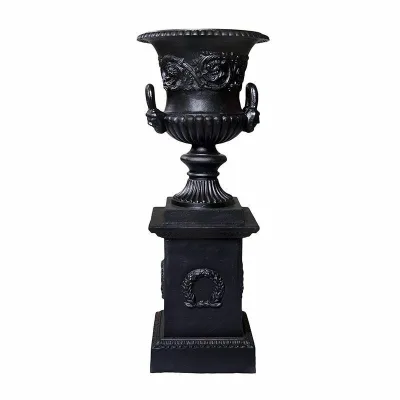


Comprehensive Sourcing Guide
Sand Casting Cast Iron Planter Sourcing Guide
Procurement of sand casting cast iron planters requires distinguishing between decorative landscape units and heavy-duty industrial components, as the supply chain often blends these categories. The observed market data indicates a wide variance in product origins, with specific listings pointing to Qingdao and Guangzhou as key manufacturing hubs for these metal goods. Buyers must carefully align their specific application needs, such as landscape engineering or outdoor dining, with the actual product attributes listed, including shape, size, and finishing methods like galvanization.
The available inventory reveals a mix of standardized models and fully customizable options, with some units offering OEM and ODM capabilities to meet unique design requirements. While some listings specify exact dimensions like 60x60x60 cm or 120x120x100 cm, others allow for custom sizing, necessitating clear communication during the initial inquiry phase. Understanding whether the supplier focuses on semi-manual or fully automatic production methods is critical, as this influences the consistency of the final cast iron product and its suitability for large-scale commercial projects.
Product Scope and Observed Listing Signals
Buyers should verify that the product scope matches the intended use, as listings often conflate general metal processing machinery parts with specific planter units. The observed data shows applications ranging from metal casting machinery to landscape engineering, suggesting that a single supplier may offer diverse metal goods. It is essential to confirm that the specific item is a planter designed for flowers or plants, rather than a generic metal component, by checking the explicit application tags and model numbers provided in the catalog.
The physical attributes of the planters vary significantly, with some described as rectangular and others potentially custom-shaped, all finished with processes like galvanization to ensure durability. The observed price range is extremely broad, spanning from nominal values to high six-figure amounts, which likely reflects differences in material weight, casting complexity, and order volume rather than a standard retail price. Procurement teams must scrutinize the "Good Quality and Price" claims, specifically looking for tolerance specifications like 0.01mm, to ensure the dimensional accuracy meets the strict requirements of architectural or landscaping installations.
Technical Specifications to Verify
Dimensional accuracy and material composition are the primary technical factors to validate when sourcing cast iron planters. The supply data highlights a tolerance of 0.01mm for steel alloy machining parts, which serves as a benchmark for precision in custom orders. Buyers must explicitly request technical drawings or sample verification to ensure that the cast iron components meet these tight tolerances, especially for models intended for modular assembly or precise fitting within larger structural designs.
Production methods also vary between semi-manual and semi-mechanical processes, which directly impacts the surface finish and structural integrity of the final product. The observed listings mention specific finishing techniques such as galvanization, which is crucial for outdoor applications to prevent rust and corrosion. Procurement specialists should verify the automatic grade of the machinery used, distinguishing between semi-automatic and fully automatic lines, as this affects the consistency of the sand casting process and the uniformity of the planter walls.
Compliance and Safety Documentation
Regulatory compliance is a non-negotiable aspect of sourcing, with the observed data listing certifications such as ISO, RoHS, and CE as standard attributes for many suppliers. Buyers must ensure that the specific batch of planters carries valid certification documents that match the listed standards, as these confirm the material safety and environmental compliance of the finished goods. The presence of ISO9001 standards in the product attributes suggests a commitment to quality management systems, which should be verified through recent audit reports before finalizing any purchase agreement.
Safety documentation must also address the specific application environment, whether it is an indoor office building or an outdoor landscape engineering project. The listed certifications imply adherence to international safety norms, but buyers should request specific test results for the galvanization process and the structural load-bearing capacity of the cast iron. It is vital to confirm that the product origin, whether from Qingdao or Guangzhou, aligns with the regulatory requirements of the destination market to avoid customs delays or rejection of non-compliant goods.
Cost Drivers and Commercial Terms
The commercial terms for sand casting cast iron planters are heavily influenced by the customization level and the order volume, with observed MOQs ranging from a single piece to 300 units. Buyers should anticipate that custom sizes and specific finishing requirements will incur higher costs compared to standard models like the PB-M-116 or PB-M-112 series. The wide price range observed in the market suggests that unit costs are not fixed but are dynamic, depending on the complexity of the sand casting process and the specific alloy composition used.
Packaging and logistics represent significant cost drivers, with options ranging from Europe Standard Packing to full set-in-the-box configurations. The origin of the product, whether from China or specific cities like Qingdao, impacts shipping costs and lead times, which must be factored into the total landed cost calculation. Procurement teams should negotiate clear terms regarding export packaging and handling to ensure that the heavy cast iron items arrive without damage, as the fragility of the casting process can lead to high replacement costs if not properly managed.
Supplier Qualification and Quality Control
Supplier qualification requires a deep dive into their production capabilities, specifically their ability to handle both semi-manual and automatic sand casting processes. The observed data indicates that suppliers often possess diverse capabilities, from simple metal processing to complex casting machinery parts, so buyers must verify that the specific team assigned to the planter order has the requisite expertise. Checking the brand name, such as Hongyi, and cross-referencing it with their production history can provide insight into their reliability and consistency in delivering high-quality cast iron products.
Quality control protocols must be established to ensure that the final product meets the specified tolerance of 0.01mm and the required finishing standards. Buyers should request a detailed quality assurance plan that covers the entire production cycle, from the initial sand casting to the final galvanization and packaging stages. It is essential to verify that the supplier adheres to the listed standards, including BS, ANSI, JIS, and GB, to ensure that the planters are robust enough for their intended application in dining, outdoor, or hotel environments.
Long-Term Procurement Checks
Establishing a long-term procurement strategy involves regular audits of the supplier's ability to maintain consistent quality and delivery schedules over time. The observed variability in product models and standards suggests that suppliers may shift production lines or change specifications, so buyers must implement a system for continuous monitoring of product attributes and compliance status. Regular reviews of the supplier's certification status, particularly regarding ISO and RoHS, are necessary to ensure ongoing adherence to international safety and environmental regulations.
Future-proofing the supply chain requires assessing the supplier's flexibility in handling custom orders and their capacity to scale production as demand grows. Buyers should evaluate the supplier's track record in delivering custom sizes and specific finishing options, as these capabilities are often the differentiating factors in the market. Maintaining open communication channels and setting clear expectations for lead times and quality control will help mitigate risks associated with the complex nature of sand casting and ensure a stable supply of high-quality cast iron planters.
FAQs
How can I customize the size of a Sand Casting Cast Iron Planter?
Customization is available, and listed models such as PB-M-112 at 120*120*100 cm and PB-M-116 at 60*60*60 cm also support custom sizes. Buyers can submit their required dimensions, and manufacturers can produce to specification. Tolerance for machined steel alloy parts is stated as 0.01mm. Provide drawings or samples so the casting and finishing process can be planned accordingly.
What certifications do Sand Casting Cast Iron Planter suppliers typically hold?
Listed products show certifications including ISO, GS, RoHS, and CE, with ISO9001 quality management also referenced. Certification coverage can vary by individual product listing, so confirm the exact certificates for the items you intend to order. Request copies of valid certificates before placing an order, since product attributes are observations rather than guarantees for every listing.
What is the typical minimum order quantity for cast iron planters?
Some listings state an MOQ of 1 piece, while the overall observed MOQ range across products extends up to 300 pieces. Actual MOQ depends on the specific supplier, model, and whether customization is involved. Confirm the applicable MOQ with the supplier before ordering, especially for custom sizes or finishes, as requirements may differ between standard and made-to-order items.
Which surface finishing options are offered for cast iron planters?
Galvanized finishing is listed among available processes for metal products. Galvanizing helps protect cast iron against corrosion, which is useful for landscape engineering and outdoor applications. Other finishing options may be available through customization, so discuss your requirements with suppliers. Confirm the finish, coating thickness, and appearance expectations before production begins.
Can I order a custom-sized cast iron planter for outdoor landscape projects?
Yes, customization through OEM and ODM is available, and custom sizes are explicitly supported on several listed models. Cast iron planters are suited to landscape engineering scenes, and applications include outdoor, hotel, apartment, and office building settings. Provide your target dimensions and installation environment so the supplier can advise on wall thickness, drainage, and finishing suitable for outdoor use.
What standards and specifications apply to sand casting cast iron products?
Listed products reference standards including BS, ANSI, JIS, GB, GOST, ASTM, and DIN, and some products note ISO9001 production. Specifications vary by model, with examples such as 60*60*60 cm, 120*120*100 cm, and custom sizes. When requesting quotes, specify which standard your project requires so the manufacturer can confirm compliance and provide supporting documentation for the castings.
How are sand casting cast iron planters packed for export?
Packing options shown include Europe standard packing, full set in the box, export packaging, and custom packing. Packing choice often depends on the planter size, order volume, and destination requirements. Large rectangular planters may need reinforced export packaging to avoid damage in transit. Confirm the packing method, palletization, and loading arrangements with the supplier when finalizing your order.
What materials are used in sand casting cast iron planters?
Cast iron is the primary material for these sand casting planters, with metal and steel alloy machining parts also referenced among related products. Material selection affects strength, weight, and corrosion resistance, especially for outdoor use. Ask suppliers to specify the exact casting grade and any machining tolerances, which are stated as 0.01mm for machined steel alloy parts, before approving production samples.