Source Sand Filter Beach Funnel for Lab, Water, and Industrial Use
Compare 30 Sand Filter Beach Funnel options ranging from glass laboratory funnels to large-scale SS304 filtration units. Buyers can evaluate dimensions, materials, and automation features to find the right solution for environmental protection or lab work.
Key considerations
Products List


$2400.00 - $60000.00
MOQ: 1 Sets


High Performance Beach Sand Concentrator for Stable Mineral Production
$50000.00 - $80000.00
MOQ: 1 Sets


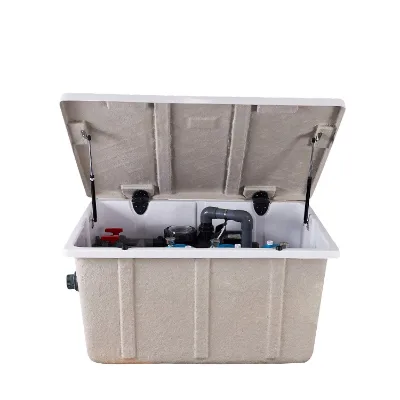


Sand Filter / Carbon Filter Pressure Vessel Store Water / Pretreatment Tank
$20000.00 - $31000.00
MOQ: 1 Pieces
Comprehensive Sourcing Guide
Strategic Sourcing Guide for Sand Filter and Laboratory Funnel Systems
The procurement landscape for equipment described under the keyword "Sand Filter Beach Funnel" encompasses a diverse range of industrial and laboratory-grade filtration solutions. While the terminology might suggest recreational beach equipment, the supplied product data reveals a specialized market focused on laboratory sand core funnels, triangular suction filtration units, and industrial circulating water side stream shallow sand filters. Buyers must navigate this distinction carefully, as the technical requirements, material standards, and operational contexts differ significantly between a laboratory glass funnel and a large-scale industrial filtration housing. This guide provides a structured approach to sourcing these specific filtration assets, relying strictly on verified product attributes and established procurement principles to ensure a compliant and efficient acquisition process.
Technical Specifications and Dimensional Analysis
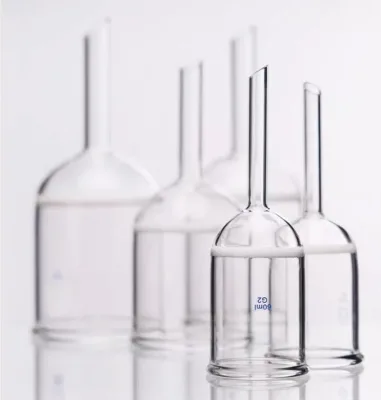
Understanding the precise dimensional and material specifications is the first critical step in sourcing. The product data indicates a clear segmentation between small-scale laboratory glassware and large-scale industrial filtration units. For laboratory applications, the "sand core funnel" series offers specific volumetric capacities ranging from 35 mL to 60 mL. These units are constructed from glass, a material chosen for its chemical resistance and transparency, which allows for visual monitoring of the filtration process. The dimensions vary by model; for instance, the 60 mL variant measures 52 mm in width and 145 mm in height, while the 35 mL version is slightly more compact at 40 mm width and 135 mm height.
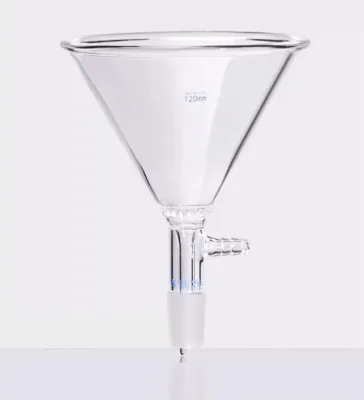
In the realm of triangular suction filtration funnels, the specifications are defined by the entrance width and the standard glass joint size. The data lists entrance widths of 75 mm for several models, with specific joint standards such as 24# and 19#. The dimensions for these units are precise, with the 50 mm/24# model measuring 50 mm in width and 105 mm in height, and the 60 mm/19# model measuring 60 mm in width and 110 mm in height. These measurements are crucial for compatibility with existing laboratory vacuum manifolds and flasks.
Conversely, the industrial segment, represented by the "Circulating Water Side Stream Shallow Sand Filter," operates on a vastly different scale. These units are constructed from SS304 stainless steel or carbon steel, designed to withstand a working pressure of 1.4 MPa. The physical footprint is substantial, with a height of 1800 mm and a diameter of 1400 mm. The filtration area is specified at 1.54 m², and the system utilizes quartz sand as the primary filter media. The operational mode is automatic, driven by a PLC control system, and the motive force is pressure-based. Buyers must ensure that the facility's infrastructure can accommodate these large dimensions and pressure requirements.
Compliance, Certification, and Material Standards
When sourcing industrial filtration equipment, verifying compliance with international standards is non-negotiable. The supplied product facts explicitly mention CE and RoHS certifications for the industrial sand filter units. These certifications indicate that the equipment meets European Union safety, health, and environmental protection requirements. The CE mark suggests conformity with relevant EU directives, while RoHS compliance ensures the restriction of hazardous substances in the manufacturing process.
For the laboratory glass funnels, the material is identified as glass, which is generally inert, but buyers should verify the specific type of glass (e.g., borosilicate) if high thermal or chemical resistance is required, although the provided data only lists "Glass." The industrial units specify SS304 as a material option, which is a standard austenitic stainless steel known for its corrosion resistance. However, the data also lists "Carbon Steel/Stainless Steel" as housing options. Procurement teams must clarify the specific alloy grade and thickness to ensure the equipment can handle the intended working pressure of 1.4 MPa without risk of failure.
It is important to note that while ISO 27001 is mentioned in the background context, it is a standard for information security management, not a product certification for filtration hardware. Buyers should not assume this standard applies to the physical equipment unless explicitly confirmed by the supplier. Instead, focus on the CE and RoHS certifications provided in the product facts. Additionally, the product standard for the industrial unit is listed as "140014001800," which likely refers to the dimensional footprint rather than a formal ISO standard number. Buyers should request the specific technical standard documents (e.g., ASME, EN, or GB standards) that govern the pressure vessel design and fabrication.
Cost Drivers and Pricing Variables
The pricing for these filtration systems is highly variable, influenced by the complexity of the unit, the materials used, and the level of customization. The observed price range in the market spans from $0.06 to $80,000. This wide disparity reflects the difference between a single laboratory glass funnel and a fully automated industrial filtration skid. The low-end price point likely corresponds to individual glass funnels or basic components, while the high-end figure represents the complete industrial system, including the PLC control, pressure vessel, and filtration media.
Several factors drive the cost of these products. For laboratory funnels, the cost is primarily driven by the glass quality, the precision of the sand core, and the specific joint standard (e.g., 19# vs. 24#). The single package weight for these items is very low, around 0.010 kg, which keeps shipping costs minimal. For industrial units, the cost is driven by the stainless steel or carbon steel construction, the filtration area (1.54 m²), the height (1800 mm), and the inclusion of automated controls. The "Product Name" suggests a specialized application, which often commands a premium over generic filtration equipment.
The Minimum Order Quantity (MOQ) also impacts the effective unit cost. The observed MOQ range is 1 to 1000 units. For laboratory glassware, an MOQ of 1 is common, allowing for small batch testing. However, for industrial systems, the MOQ may be higher, or the cost structure may be based on a single unit purchase. Buyers should negotiate based on the total volume of the project. If the project requires multiple industrial units, the per-unit cost may decrease, but the initial investment remains significant. Customization is available for these products, which will inevitably increase the price. The "Customized support: OEM" attribute indicates that suppliers can modify dimensions or features, but this service should be factored into the budget.
Typical Applications and Operational Context
The applications for these products are distinct and should not be conflated. The laboratory sand core funnels and triangular suction filtration funnels are designed for chemical analysis, environmental testing, and pharmaceutical research. The "Performance" attribute is listed as "Efficient Filtration," and the "Usage" is noted as "Environmental Protection," suggesting these are used for filtering samples in water quality testing or chemical processing. The "Transparent" color of the glass funnels is a functional feature, allowing operators to observe the clarity of the filtrate and the condition of the filter media in real-time.
The industrial "Circulating Water Side Stream Shallow Sand Filter" serves a different purpose, likely in large-scale water treatment, industrial cooling systems, or environmental protection facilities. The "Working Pressure" of 1.4 MPa and the "Motive Force" of pressure indicate a system designed for continuous, high-volume flow. The "Operation" mode is "Automatic Running," supported by a "PLC" control system, which implies integration into a larger automated plant infrastructure. The "Filter Media" is quartz sand, a standard choice for removing suspended solids from water. The "Style" is vertical, and the "Tanks Quantities" are listed as 1, suggesting a single-pass or batch processing unit.
Supplier Evaluation and Customization Capabilities
Evaluating suppliers requires a focus on their ability to meet the specific technical and logistical requirements of the project. The "Brand Name" SWHG is associated with these products, and the "Place of Origin" is Jiangxi, China. While specific supplier names should not be recommended, buyers should verify the manufacturer's capacity to handle the "Customization: Available" requirement. The data confirms that OEM support is offered, meaning suppliers can produce units with specific dimensions or features.
When evaluating a potential supplier, buyers should request proof of the CE and RoHS certifications mentioned in the product facts. They should also verify the "Warranty" period, which is listed as 1 Year. This warranty should cover the pressure vessel, the PLC system, and the filtration media integrity. The "Service" attribute indicates "Support Online," which is a valuable resource for troubleshooting technical issues or managing the "Automatic Running" system.
The "Single Package Size" varies significantly between product types. Laboratory funnels come in small packages (e.g., 14.0x4.0x4.0 cm or 11.0x5.0x5.0 cm), while industrial units are packed in containers. Buyers must ensure that their logistics partners can handle the "prod_packing: Container" requirement for the industrial units. The "Selling Units" are listed as "Single item," which simplifies the ordering process for laboratory equipment but may require bulk negotiation for industrial systems.
Quality Control and Long-Term Procurement Considerations
Quality control is paramount, especially for pressure vessels and laboratory glassware. For the industrial sand filters, the "Standard" is listed as "140014001800," but buyers should demand detailed engineering drawings and pressure test reports to verify the integrity of the SS304 or carbon steel housing. The "Filtration Area" of 1.54 m² must be validated to ensure the system meets the required throughput. For laboratory funnels, the dimensional accuracy of the entrance width (75 mm) and the joint standards (19#, 24#) must be verified to ensure compatibility with existing lab equipment.
Long-term procurement considerations include the availability of replacement parts and the lifecycle of the filter media. The "Filter Media" is quartz sand, which may require periodic replacement or regeneration. Buyers should inquire about the supplier's ability to supply replacement media and the expected lifespan of the sand. The "Warranty" of 1 Year provides a baseline for reliability, but the "Service: Support Online" suggests ongoing technical assistance.
The "Model Number" for the industrial unit is YLD-SF-1400, and for the laboratory units, it is SW-014001 or SW-022201. These identifiers are crucial for tracking and reordering. Buyers should maintain a database of these model numbers to streamline future procurement. The "Color" options, such as "Transparent" for glass and "White" for other units, may also influence the aesthetic integration into the facility, though this is secondary to performance.
Comparative Overview of Product Categories
To assist in decision-making, the following table summarizes the key differences between the laboratory and industrial filtration products identified in the data.
| Feature | Laboratory Sand Core Funnel | Triangular Suction Funnel | Industrial Side Stream Filter |
|---|---|---|---|
| Material | Glass | Glass | SS304 / Carbon Steel |
| Capacity/Size | 35 mL - 60 mL | 50 mm - 90 mm Diameter | 1400 mm Diameter |
| Height | 105 mm - 146 mm | 110 mm - 140 mm | 1800 mm |
| Working Pressure | N/A (Atmospheric/Vacuum) | N/A (Vacuum) | 1.4 MPa |
| Control System | Manual | Manual | PLC (Automatic) |
| Certification | N/A | N/A | CE, RoHS |
| Primary Use | Lab Analysis | Lab Filtration | Industrial Water Treatment |
| Filter Media | Sand Core | Sand Core | Quartz Sand |
This comparison highlights the distinct operational environments for each product type. The laboratory units are designed for precision and manual operation, while the industrial unit is built for high-pressure, automated, and continuous processing. Buyers must align their procurement strategy with the specific application requirements to ensure optimal performance and safety. By adhering to the verified specifications and avoiding assumptions about unlisted attributes, procurement teams can effectively source these specialized filtration systems.
FAQs
What materials are used for the Sand Filter Beach Funnel?
The Sand Filter Beach Funnel is constructed from glass for laboratory units or SS304 stainless steel for industrial models. Glass units are transparent to allow visual monitoring, while industrial housings may also use carbon steel to withstand high working pressures up to 1.4 MPa.
How large is the industrial circulating water sand filter unit?
The industrial unit has a height of 1800 mm and a diameter of 1400 mm with a filtration area of 1.54 square meters. This vertical style tank is designed for automatic running and requires a container for shipping due to its substantial size.
Which certifications do the industrial sand filter units hold?
The industrial sand filter units carry CE and RoHS certifications to ensure compliance with European safety and environmental standards. These certifications verify that the equipment restricts hazardous substances and meets relevant EU directives for pressure vessels.
Can I customize the dimensions of the Sand Filter Beach Funnel?
Yes, customization is available for both laboratory funnels and industrial filters through OEM support. Suppliers can adjust specific dimensions like the entrance width or height, though this service may affect the minimum order quantity and pricing structure.
What is the warranty period for the Sand Filter Beach Funnel?
The product comes with a standard one-year warranty covering the equipment's structural integrity and operational performance. This warranty applies to the glass laboratory funnels and the industrial pressure vessels manufactured in Jiangxi, China.
How much does a single Sand Filter Beach Funnel cost?
Prices for Sand Filter Beach Funnel products range widely from 0.06 to 80,000 USD depending on the unit type. Laboratory glass funnels are priced at the lower end, while fully automated industrial filtration skids command the higher price points.
What is the minimum order quantity for sand filter beach funnels?
The minimum order quantity varies between 1 and 1000 units depending on the specific product model and customization needs. Single laboratory items can often be purchased individually, whereas larger industrial systems may require higher volume commitments.