Source Sand Casting Cast Steel Mantle for Mining and Construction
Find 30 Sand Casting Cast Steel Mantle options tailored for cone crushers, mining machinery, and heavy industrial applications. Compare specifications from suppliers in Ningbo and Jinhua, China, noting ISO 9001 certifications and customizable surface treatments like sand blasting; compare the available evidence and request quotations based on your requirements.
Key considerations
Products List


High Quality Spare Parts Casting Steel Mantle for Cone Crusher Wear Parts
$1.00 - $59.99
MOQ: 10 Pieces

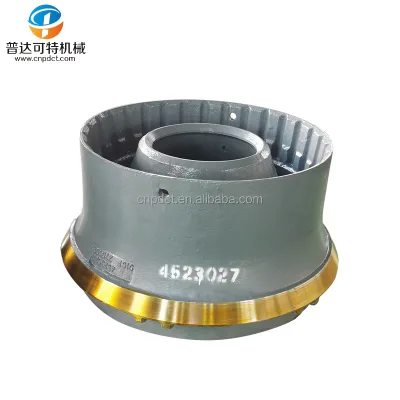


Comprehensive Sourcing Guide
Sand Casting Cast Steel Mantle Sourcing Guide
Procuring sand casting cast steel mantles requires a precise understanding of the specific foundry capabilities available in the current market. Buyers must distinguish between general cast iron components and specialized steel mantles designed for high-impact crushing applications. The observed product listings indicate a diverse range of origins, including Ningbo and Jinhua, which suggests a need to verify the specific material grade and casting technique for each potential supplier.
The core keyword implies a focus on heavy-duty mining machinery parts, yet the data also reveals listings for furniture parts and manhole covers. This variance necessitates a rigorous filtering process to ensure the selected vendor specializes in cone crusher components rather than general industrial castings. Buyers should prioritize suppliers who explicitly list "Cone Crusher" as a primary application to avoid receiving mismatched products that lack the necessary structural integrity for mining operations.
Product Scope and Observed Listing Signals
The market presents a wide spectrum of casting techniques, ranging from sand casting to thermal gravity casting, which directly influences the final product's density and grain structure. While some listings specify "Sand Casting" with clay sand cores, others mention "Thermal Gravity Casting," requiring buyers to confirm which method aligns with the required mechanical properties for a mantle. The observed tolerance levels, such as CT9-12, provide a baseline for dimensional accuracy, but specific tolerance requirements for the mantle's wear surface must be explicitly defined in the purchase order.
Surface treatment and painting options vary significantly across the observed listings, with some offering sand blasting and others specifying spray painting or customized colors like blue, yellow, or red. These finishing processes are critical for corrosion resistance and identification in harsh mining environments. Buyers must verify if the surface treatment is applied uniformly and if the painting adheres to the specific requirements of the mining site, as inconsistent finishes can lead to premature failure or safety hazards during operation.
Technical Specifications to Verify
Dimensional accuracy and material composition are the primary technical factors that determine the longevity of a cast steel mantle. The observed data includes specific dimensions like 2250x2160x1560mm for related machinery, but the mantle itself must be matched to the exact crusher model, such as the DL-Z450-B or other specific part numbers. Buyers should request detailed engineering drawings to ensure the casting dimensions, including the frontal and lateral angles, match the original equipment manufacturer specifications to prevent installation issues.
The mechanical properties of the cast steel must be validated against the expected operational loads, including hydraulic pressure ranges and weight constraints. While some listings mention hydraulic pressures of 40-60kpa and mold weights up to 135kg, these figures likely refer to the casting process rather than the final product's operational limits. It is essential to verify the tensile strength and hardness of the cast steel to ensure it can withstand the abrasive forces of crushing rock without cracking or excessive wear.
Compliance and Safety Documentation
Certification status is a critical indicator of a supplier's commitment to quality management and product safety. The observed listings frequently cite ISO 9001, with some suppliers also holding RoHS and CE certifications, which are vital for international trade and regulatory compliance. Buyers must request valid, up-to-date certificates for each batch of mantles to ensure the manufacturing process adheres to recognized international standards and that the materials used do not contain prohibited substances.
Safety documentation should also include material test reports that verify the chemical composition and mechanical properties of the cast steel. While some listings mention standards like DIN, ASTM, GB, and ANSI, the specific standard applicable to the mantle must be confirmed to ensure it meets the safety requirements of the mining jurisdiction. Buyers should insist on third-party inspection reports that validate the casting's integrity and confirm that the product meets the necessary safety thresholds for heavy industrial machinery.
Cost Drivers and Commercial Terms
The price range for sand casting cast steel mantles is highly variable, with observed listings spanning from $1 to $5,000,000, reflecting differences in size, material grade, and production complexity. Buyers must understand that the lowest price often correlates with lower material quality or less rigorous quality control, which can lead to higher long-term costs due to frequent replacements. It is crucial to evaluate the total cost of ownership, including shipping, packaging, and potential downtime, rather than focusing solely on the unit price.
Commercial terms such as Minimum Order Quantity (MOQ) and lead times are significant factors in the procurement strategy. The observed MOQ ranges from 1 to 1000 units, allowing flexibility for small-scale projects but potentially increasing the unit cost for larger orders. Buyers should negotiate clear delivery schedules and payment terms that align with their production cycles, ensuring that the supplier can meet the required lead times without compromising on the quality of the cast steel mantles.
Supplier Qualification and Quality Control
Supplier qualification involves a thorough assessment of their manufacturing capabilities, including their casting techniques and machining processes. The observed data highlights the use of CNC and PLC control types, indicating a level of automation that can enhance consistency and precision. Buyers should verify the supplier's experience with sand casting and their ability to handle complex geometries, as these factors directly impact the quality and performance of the final mantle product.
Quality control measures must be robust and transparent, with suppliers providing detailed inspection reports for every batch produced. The observed listings mention various packing methods, such as steel pallets and wooden packages, which are essential for protecting the castings during transit. Buyers should require a comprehensive quality assurance plan that includes visual inspections, dimensional checks, and non-destructive testing to ensure that every mantle meets the specified standards before shipment.
Long-Term Procurement Checks
Establishing a long-term relationship with a reliable supplier requires continuous monitoring of product performance and supplier responsiveness. Buyers should implement a feedback loop to track the wear rates and failure modes of the cast steel mantles in actual operating conditions. This data will help identify any recurring quality issues and allow for adjustments in the procurement strategy to optimize the performance and lifespan of the components.
Regular audits and re-qualification of suppliers are necessary to maintain high standards of quality and compliance over time. Buyers should schedule periodic reviews of the supplier's certification status, production capacity, and quality control processes to ensure they continue to meet the evolving needs of the mining operation. By maintaining a proactive approach to supplier management, buyers can mitigate risks and ensure a steady supply of high-quality sand casting cast steel mantles for their crushing equipment.
FAQs
How is a Sand Casting Cast Steel Mantle produced for cone crushers?
A Sand Casting Cast Steel Mantle is produced by pouring molten steel into sand molds, then machined and finished to size. Typical process steps include sand blast surface treatment, machining to drawing tolerances around CT9-12, and inspection. Manufacturers commonly work to DIN, ASTM, GB, ANSI, BS, ASME, or AISI standards, and castings can be customized to match your cone crusher model and drawings.
What tolerances can be achieved on a Sand Casting Cast Steel Mantle?
Sand Casting Cast Steel Mantle castings typically follow CT9-12 casting tolerance grades, with final dimensions refined through machining. Critical wearing surfaces and mounting seats are finished by CNC or conventional machining to meet drawing requirements. Because tolerances vary with casting size and geometry, buyers should share part numbers, drawings, or samples so the foundry can confirm achievable tolerances before quoting production.
Which surface treatments are available for cast steel mantle castings?
Common surface treatments include sand blast cleaning and spray-paint finishing. Paint color such as blue, yellow, or red can be customized according to your requirement or applied as per drawings. Surface roughness for machined areas is typically around Ra12 after treatment. Confirm the required finish, coating thickness, and paint specification at the inquiry stage so the supplier can plan the process and packing accordingly.
Can I order customized mantles based on my crusher drawings?
Yes, customization is generally available. Suppliers can produce Sand Casting Cast Steel Mantle parts according to part numbers, customer drawings, or samples, including dimensions, material grade, and painting color. To start, provide drawings with tolerances, material specification, and required standards such as ASTM, DIN, or GB. Non-customized standard models may also be available for common cone crusher applications.
How are cast steel mantle castings packed for export shipping?
Typical packing options include pallets, steel cartons, plywood cases, or steel pallets, with wooden packages treated as required before shipment. Heavy mantle castings are usually secured in steel pallets for safe ocean freight. Packing choice depends on part weight, quantity, and destination port requirements. Mention your shipping terms and packaging preference when requesting a quotation so the supplier includes suitable packing costs.
What certifications should mantle casting suppliers hold?
Look for suppliers with ISO 9001 certification covering their manufacturing and casting processes, which indicates a documented quality management system. Some foundries also hold CE and RoHS certifications for applicable product lines. Certification alone does not guarantee part quality, so request material certificates, heat treatment records, and dimensional inspection reports with each mantle order, and verify certificates match the material specification in your purchase contract.
What information should I provide when requesting a mantle quote?
Provide the crusher model, part number, drawings or samples, material specification, required standards such as ASTM, AISI, or GB, and estimated annual quantity. Include your preferred painting color, packing type, and destination port. This allows the supplier to confirm casting technique, tolerance grade, machining scope, and tooling needs. Clear specifications reduce quoting time and help prevent dimensional or material mismatches during production.