Source Scented Ink Highlighter for Office, School, and Promotional Use
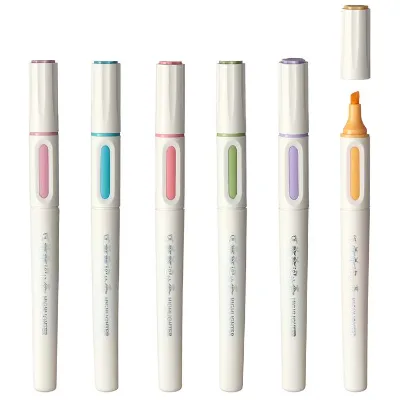
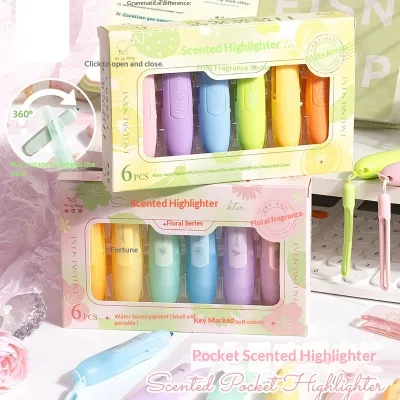
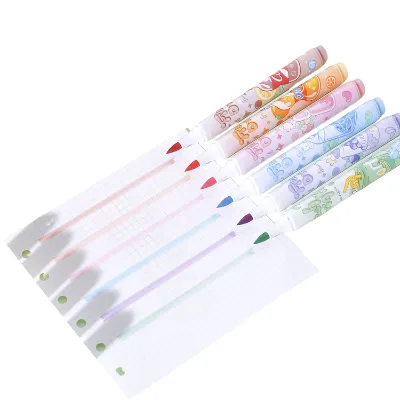
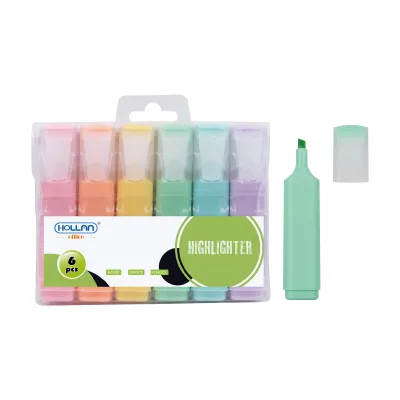
Find and compare 30 Scented Ink Highlighter options from Zhejiang suppliers. Evaluate features like oblique brush tips, multi-color sets, and custom logo printing for office, school, and promotional applications.
Key considerations
Products List
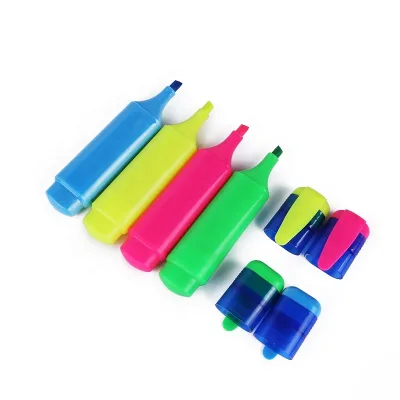
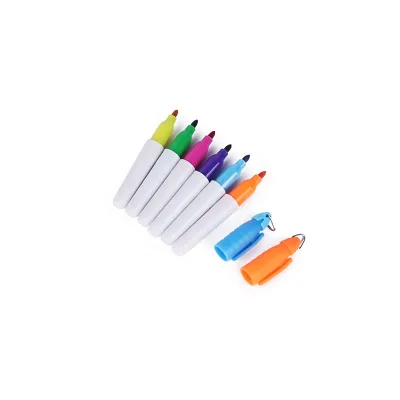

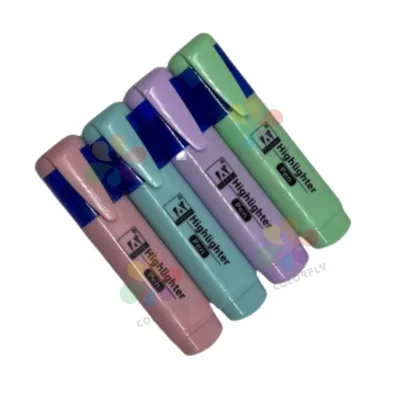
Promotional Dual Tip Highlighter Pen Water-Based Colored Ink Highlighter
$0.15 - $0.25
MOQ: 3000 Pieces


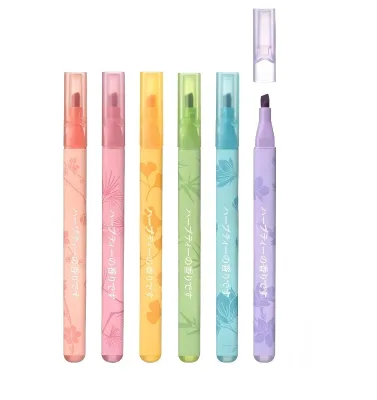


Comprehensive Sourcing Guide
Scented Ink Highlighter Sourcing Guide
Scented ink highlighters combine the practical marking function of an office or school marker with a mild fragrance that appeals strongly to students and promotional buyers. For procurement teams, this product sits at the intersection of stationery manufacturing and fragrance formulation, which means sourcing requires attention not only to pen construction and tip quality but also to ink chemistry and scent safety. Listings in this category commonly originate from Zhejiang, China, with suppliers offering multiple models such as 8-color and 10-color sets in oblique and round-toe brush tip configurations.
This guide walks through the decisions a buyer should make in sequence: understanding the product scope visible on marketplace listings, verifying technical specifications, confirming compliance documentation, evaluating cost drivers and commercial terms, qualifying suppliers, and building long-term procurement controls. Each section is written to support a specific stage of the buying journey, from first RFQ to repeat-order quality management.
Product Scope and Observed Listing Signals
The observed listings span several related product types. Core highlighter products include multi-color sets under model numbers such as JL-356 (10 colors, brush tip oblique, 11.5 × 2.5 × 1.6 cm, roughly 15 g) and JL-852 (8 colors, oblique or round toe tips, 8.5 × 1.3 × 1.2 cm, roughly 8 g), positioned for office and school use with branding attributed to names like "jianjian." Alongside finished markers, the listings also include ink and pigment products—labeled for ink pigment usage and scented ink application—under brands such as TK, indicating that some suppliers in this space sell raw scented ink rather than assembled highlighters. Buyers should decide early whether they need finished goods, private-label blanks, or ink supply, because supplier profiles differ substantially across these three categories.
Listing signals also reveal meaningful commercial patterns. Observed price points range widely, from a few cents per unit to higher values likely tied to bulk ink or larger packs, and stated MOQs range from single-piece samples to tens of thousands of units. Several listings advertise customization availability, logo printing, and multi-color assortments, while packaging options span blister cards, display boxes, white boxes, OPP and PVC bags. Supply capacity figures in the region of one million pieces per month appear on some listings, and Ningbo is cited as a dispatch port. Treat these as observations about individual listings rather than guarantees—confirm every attribute directly with the specific supplier you contact.
Technical Specifications to Verify
Marker construction details determine user experience and should be pinned down in writing before ordering. Verify tip geometry (oblique versus round toe), tip material and firmness—some listings describe hardness as "medium soft" or "partial hard"—barrel material (plastic is cited in observed listings), and whether the product is single-headed or double-headed. For highlighter function specifically, confirm line width, chisel or brush tip durability after repeated use, and ink flow consistency. Sample testing on standard paper types, including thin textbook paper where bleed-through matters most to school buyers, should be part of every pre-order evaluation. Note also that at least one observed listing specifies "Erasable Or Not: No," so clarify erasability expectations explicitly if your market requires it.
Scent and ink specifications deserve separate attention. Ask suppliers to describe the fragrance type, its concentration, and how it is applied (ink-integrated versus barrel or cap scenting), and confirm scent longevity expectations over shelf life. For color sets, request a full color chart covering all listed shades—observed listings cite red, orange, yellow, green, and blue among others—and confirm that highlighter inks remain fluorescent and legible when dry. Model numbering (e.g., JL-356, JL-852, XL-20107) should be locked into the purchase contract, along with size tolerances, single gross weight, and packaging dimensions such as the cited 11.5 × 2.5 × 1.6 cm and 135 × 15 mm product standards, so incoming inspection has objective reference points.
Compliance and Safety Documentation
Because scented highlighters are primarily used by school-age consumers, safety documentation is the most important verification step in this category. One observed listing cites certification to EN71-3 and ASTM D4236 with a nontoxic claim—these are relevant reference points for European toy/material safety migration limits and US art-material labeling respectively—but you must not assume every supplier holds these certifications. Request current, verifiable certificates issued within the last validity period, check that the certificate covers the exact model and ink formulation you are buying, and confirm the testing laboratory is recognized. Any fragrance components should be covered by corresponding safety assessment, since scent additives change the ink formulation being certified.
Beyond the headline certificates, build a documentation checklist into your RFQ: safety data sheets (SDS) for the ink, art-material labeling statements such as ASTM D4236 conformity for products sold in the US, and any market-specific chemical restrictions applicable to your destination country. Ask whether the same certified formulation will be used across all colors in a set, since a 10-color assortment requires each ink to be compliant, not just the base formulation. Keep copies of certificates matched to production batches, and include a contractual clause allowing re-testing at the buyer's expense if documentation proves inaccurate. Suppliers who resist providing these documents during initial discussions are a meaningful risk signal.
Cost Drivers and Commercial Terms
Price in this category is driven by several identifiable factors. Multi-color sets naturally cost more per unit than fewer-color versions—an 8-color versus 10-color comparison should account for ink variety, assembly complexity, and packaging size. Tip type and quality, barrel material, scent formulation (more refined fragrances cost more), and packaging format all move unit cost: blister card and display box packaging command a premium over simple OPP or PVC bags. Customization—logo printing, custom color assortments, private-label branding—adds setup costs that are amortized differently depending on order volume. Observed MOQs in this category range from single pieces to 20,000 units, so determine early whether a supplier's MOQ aligns with your initial trial volume and later replenishment scale.
Commercial terms should be negotiated as a package, not as a standalone price. Confirm the incoterms and shipping route—Ningbo is cited as a dispatch port in observed listings, with sea, air, and express shipping all mentioned as options—since freight choice affects landed cost significantly for lightweight but bulky stationery items. Clarify payment terms, sample costs and whether sample fees are credited against first orders, packaging cost breakdowns by format, and price validity periods given ink and plastic input cost volatility. Also confirm production capacity against your forecast: observed supply ability figures around one million pieces per month are meaningful only if verifiable against actual output. Finally, agree on how pricing changes with color count, packaging upgrades, and repeat orders so future negotiations start from a documented baseline.
Supplier Qualification and Quality Control
Qualifying a scented highlighter supplier requires checking both general manufacturing capability and fragrance/ink-specific competence. Start by verifying business legitimacy, years in the stationery category, and whether the supplier manufactures finished markers or trades them; the observed listings mixing finished markers with raw scented ink suggest some suppliers are component makers, which can be an advantage for ink quality control or a risk if assembly is outsourced. Request production floor photos or a virtual factory tour, confirm monthly capacity with evidence, and ask which parts of the process—tip insertion, ink filling, scent addition, assembly, packaging—are handled in-house versus subcontracted.
Quality control should be structured across the order lifecycle. Before mass production, approve a golden sample covering color accuracy, tip performance, scent strength, and packaging print quality. During production, define inspection checkpoints—pre-production material verification, in-process checks on ink fill volume and tip seating, and pre-shipment inspection using an agreed AQL sampling plan. Include functional tests in your inspection protocol: cap-off performance (how long a highlighter survives uncapped before drying), tip deformation under normal pressure, and scent consistency across units. Define defect categories in writing—ink leakage, weak scent, off-color ink, printing errors—and specify the remedy for each, whether replacement, discount, or rejection. For first orders, consider a third-party inspection at the supplier's facility before shipment, and document results to establish a quality baseline for future orders.
Long-Term Procurement Checks
Sustainable sourcing in this category depends on repeatable quality, not one-off inspection success. Build an annual supplier review covering defect rates across shipments, on-time delivery performance, responsiveness to quality complaints, and consistency of ink and scent formulation between batches—fragrance drift is a common long-term issue in scented stationery and should be tracked explicitly. Maintain retained samples from each accepted batch so future shipments can be compared against historical references, and require advance notification whenever a supplier changes ink suppliers, fragrance houses, or tip sources, since any of these changes can alter product performance or compliance status.
Relationship and risk management matter equally. Diversify across at least two qualified suppliers once volumes justify it, keeping second-source samples on file in case of capacity constraints or quality failures. Monitor regulatory developments in your destination markets—chemical safety requirements for children's stationery evolve, and a formulation that was compliant at first order may need re-certification later. Negotiate framework agreements covering pricing tiers, capacity reservation during peak back-to-school season, and lead-time commitments for repeat orders. Finally, track customer feedback from your own channels for signals that escape factory inspection—scent complaints, drying issues, or tip failures discovered by end users—and feed these findings back into supplier reviews and golden sample revisions so the specification improves with every order cycle.
FAQs
What are the available brush tip options for these highlighters?
The highlighters feature oblique brush tips, with some models offering a round toe variant. These tips are designed for smooth application and are suitable for office and school marking tasks. The hardness is described as medium soft to partial hard, ensuring comfortable writing without damaging paper surfaces during daily use.
Can these highlighters be customized with a logo?
Yes, logo printing is available for these products. Buyers can request customized branding on the highlighters, which are made from plastic materials. This customization service allows businesses to create promotional items or branded stationery for office and school use, enhancing brand visibility while providing functional writing tools.
What certifications do these highlighters meet for safety?
These highlighters are certified under En71-3 and ASTM D4236 standards, confirming they are nontoxic. This ensures safety for users in office and school environments. The products are designed to be handy and cute, with smooth ink flow, making them suitable for children and adults who require safe, reliable stationery supplies.
What is the typical packaging format for bulk orders?
Packaging options include blister cards, display boxes, white boxes, OPP bags, and PVC bags. For bulk orders, inner boxes may contain 50 pieces, with 200 pieces per carton. This flexible packaging supports various retail and wholesale needs, ensuring products are protected during shipping from the port of dispatch in Ningbo.
Are these highlighters erasable after application?
No, these highlighters are not erasable. They use permanent ink to ensure markings remain visible and durable over time. This characteristic makes them ideal for long-term note-taking, document highlighting, and office organization tasks where permanent records are required, distinguishing them from temporary or washable marker alternatives.
What is the monthly supply capacity for these items?
The supply ability is 1,000,000 pieces per month. This high capacity supports large-scale procurement for global markets. Manufacturers can handle significant order volumes, ensuring consistent availability for distributors and retailers. The production originates from Zhejiang, China, leveraging established manufacturing infrastructure to meet diverse international demand efficiently.