Source Scented Mug for Home, Office, and Gift Uses
Compare 30 listings for Scented Mug options featuring ceramic mugs with cotton wicks and moderate scent strength. Buyers can review customization, washable features, and packaging details for prayer rooms, gyms, and daily use.
Key considerations
Products List






Comprehensive Sourcing Guide
Strategic Sourcing Guide for Scented Mugs
Understanding Product Definitions and Technical Specifications
The term "Scented Mug" in a B2B procurement context often refers to a hybrid product category where functional drinkware integrates aromatic elements, or it may describe ceramic mugs designed specifically for use in environments where scent is a secondary but relevant feature, such as meditation or prayer rooms. Based on the available market data, the core product attributes for these items vary significantly depending on the specific model and intended use case. The primary material identified for these vessels is ceramic, specifically noted as "glazed" in certain listings, which suggests a non-porous surface suitable for holding liquids while potentially housing or complementing aromatic components.
Technical specifications for these ceramic mugs indicate a range of sizes and capacities. One specific model, designated as "Ceramic-001," is associated with a standard of "10oz," while another entry lists a capacity of "380ml." These figures are critical for buyers to align with their target market's expectations for serving sizes. The physical dimensions also vary; a single package size of "15.0X15.0X10.0 cm" is observed for certain units, while others are packed in cartons with dimensions of "442736cm" for bulk shipments of 36 pieces. The weight of individual units is documented at "0.550 kg," a factor that directly influences shipping costs and logistics planning.
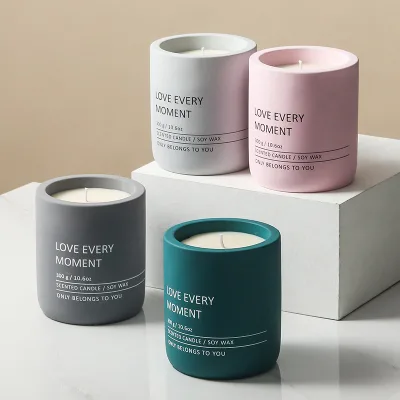
The functional design includes specific features such as a "HANDGRIP" accessory, which enhances usability, and a "Cotton" wick type, which implies that some of these "scented" units may function as integrated candle holders or aroma diffusers rather than standard beverage containers. The scent profiles associated with these products include Lemon, Lavender, Frankincense, Sandalwood, and Rose, with a "Moderate" scent strength. This suggests that the product is engineered to release fragrance without overwhelming the immediate environment, making it suitable for settings like gyms, cars, or home offices. The burn time for the aromatic component is listed as "8 hours," a key performance metric for buyers assessing the longevity of the product's value proposition.
Compliance, Certification, and Safety Standards
When sourcing ceramic mugs with integrated scent features, compliance and safety are paramount, particularly because the product involves both food-contact materials and combustion elements if the wick is used. The supplied data indicates that certain models are "dishwasher safe," which is a significant indicator of material durability and chemical stability. However, buyers must verify that the glazing and ceramic body meet local food safety standards for the destination market, such as FDA regulations in the United States or EU food contact regulations. While the provided text does not list specific certification bodies, the presence of a "Customized Logo" and "OEM" branding suggests that the manufacturing process allows for third-party verification of these standards.
For the aromatic components, specifically the "Cotton" wicks and the "Moderate" scent strength, buyers should inquire about the flammability ratings and the composition of the fragrance oils. If the product is marketed for use in "Prayer Rooms," "Meditation," or "Health Care" settings, the safety of the combustion process is non-negotiable. The standard "10oz" and "s" (likely referring to a specific size standard) mentioned in the data require validation against local fire safety codes. Buyers should request test reports confirming that the ceramic material does not leach harmful substances when heated and that the wick does not produce excessive soot. The "10oz" standard mentioned in the context of "prod_standard" should be treated as a reference point for volume, but the actual safety certification must be confirmed with the supplier.
Cost Drivers and Pricing Dynamics
The pricing for scented mugs is influenced by a complex interplay of material costs, customization levels, and packaging requirements. The observed price range in the market spans from $0.24 to $4.90 USD, a wide variance that reflects differences in production complexity, brand positioning, and order volume. The lower end of this spectrum likely corresponds to basic, non-customized units with minimal packaging, while the higher end may include premium glazing, custom branding, or integrated scent mechanisms.
Minimum Order Quantities (MOQ) are a critical cost driver, with observed ranges from 10 to 10,000 units. A specific listing cites an MOQ of "20pcs," which is accessible for small businesses or startups testing the market. However, larger orders typically unlock better unit economics. The packaging method significantly impacts the final landed cost. Options include "1PC/Custom Box" or bulk "Carton" packing. The "1PC/Custom Box" option allows for higher retail value but increases the per-unit packaging cost and shipping volume. Conversely, the "442736cm" carton for 36 pieces offers a more efficient logistics profile for bulk importers.
Additional cost factors include the "Customization" availability. Buyers seeking "Customized Logo" or specific scent profiles will incur setup fees and potentially higher unit costs due to the complexity of the manufacturing process. The "Stocked" versus "Not Inverted" feature also suggests that inventory availability affects pricing; stocked items may be priced lower due to immediate availability, while custom orders may require longer lead times and higher costs. Payment terms such as "T/T," "Western Union," and "Trade assurance" also play a role in the financial risk and cash flow management for the buyer, though they do not directly alter the unit price.
Typical Applications and Market Segmentation
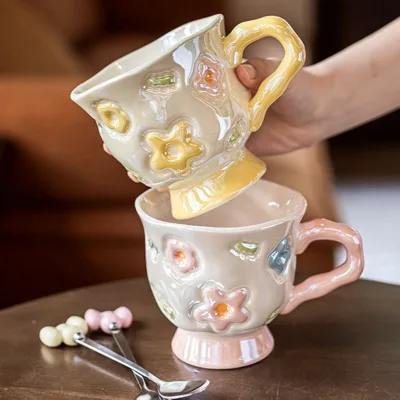
The versatility of scented mugs allows them to serve a diverse array of applications, ranging from daily household use to specialized gift markets. The data highlights usage in "Home," "Hotel," "Restaurant," and "Office" settings, indicating a broad appeal for general consumers and hospitality businesses. Specific applications include "Afternoon tea," "drinks cold," and "drinks hot," suggesting that these mugs are designed for versatile beverage service. The "Creative pearl glazed flower ceramic coffee mug" is explicitly marketed for "Business Gifts," "Back to School," and "Decoration," pointing to a strong potential in the corporate gifting and seasonal retail sectors.
Niche applications are equally significant. The product is noted as suitable for "Prayer Room," "Yoga," "Meditation," and "Health Care," where the aromatic element plays a functional role in creating a calming atmosphere. The "Odor Removal" and "Fresh Air" attributes suggest utility in spaces like "Gymnasium" and "Car," where scent control is a priority. The "Modern" style and "Floral" pattern align with current interior design trends, making these mugs attractive for home decor enthusiasts. The "Gift" usage category is reinforced by the "Business Gifts" and "Afternoon tea" applications, indicating that the product is often purchased as a thoughtful, multi-functional item rather than just a vessel for liquid.
Supplier Evaluation and Sourcing Strategy
Evaluating suppliers for scented mugs requires a focus on their ability to manage both the ceramic manufacturing and the integration of aromatic components. The data indicates that the place of origin is primarily "Zhejiang, China," a region known for its ceramic production capabilities. Buyers should verify the supplier's experience with "OEM" (Original Equipment Manufacturer) services, as the availability of "Customized Logo" and "Custom" packaging suggests a high level of manufacturing flexibility.
Key evaluation criteria include the supplier's capacity to handle the observed MOQ range of 10 to 10,000 units. A supplier offering an MOQ of "20pcs" may be ideal for small buyers, while those capable of fulfilling orders of 10,000 units are better suited for large-scale distribution. The "Single package size" and "Single gross weight" data provided by suppliers are essential for calculating shipping costs and optimizing container utilization. Buyers should also assess the supplier's quality control processes, particularly regarding the "dishwasher safe" claim and the consistency of the "8 hours" burn time.
Communication regarding the "Scent" and "Wick Type" is crucial. Suppliers must be able to provide detailed specifications on the fragrance oils and wick materials to ensure they meet safety standards. The "Payment" terms, including "T/T," "Western Union," and "Trade assurance," should be reviewed to ensure secure transactions. Buyers should prioritize suppliers who offer "Trade assurance" as it provides a layer of protection against non-delivery or quality disputes.
Quality Control and Long-Term Procurement Considerations
Maintaining consistent quality in scented mugs involves rigorous testing of both the ceramic body and the aromatic components. The "dishwasher safe" attribute must be verified through repeated cycle testing to ensure the glaze does not degrade and the scent mechanism remains intact. For the "Cotton" wick and "8 hours" burn time, buyers should request burn tests to confirm that the flame remains stable and that the scent release is consistent throughout the duration. The "Moderate" scent strength should be validated to ensure it does not become overpowering or fade too quickly.
Long-term procurement considerations include the stability of the supply chain and the ability to scale production. The "Customization" feature allows for brand differentiation, but buyers must ensure that the supplier can maintain consistency in the "Floral" pattern, "White" color, and "Modern" style over time. The "Packaging" options, such as "box" or "Carton," must be durable enough to protect the product during transit, especially given the "0.550 kg" weight and the potential fragility of ceramic.
Buyers should also consider the environmental impact of the materials used, particularly the fragrance oils and the packaging. The "Stocked" status of some items suggests that inventory management is a factor; buyers should plan for lead times that accommodate the "10-10000" MOQ range to avoid stockouts. Finally, the "Application" diversity means that marketing strategies must be tailored to different segments, from "Home Hotel Restaurant" to "Prayer Room," requiring a flexible approach to product positioning and quality assurance.
| Feature Category | Observed Attribute | Procurement Verification Point |
|---|---|---|
| Material | Ceramic, Glazed | Food safety certification for glaze |
| Capacity | 10oz, 380ml | Volume accuracy and leak testing |
| Scent | Lemon, Lavender, Sandalwood | Fragrance oil safety and burn consistency |
| Wick | Cotton | Flammability and soot production tests |
| Durability | Dishwasher Safe | Cycle testing for glaze integrity |
| Packaging | 1PC/Box, 36PCS/Carton | Drop test and structural integrity |
| Customization | Logo, Scent, Pattern | Proofing and color matching accuracy |
| Origin | Zhejiang, China | Supplier audit and ethical sourcing |
By adhering to these guidelines and leveraging the specific data points available, buyers can navigate the complex landscape of Scented Mug procurement with confidence, ensuring that the final products meet both functional and aesthetic expectations while maintaining high standards of safety and quality.
FAQs
What materials are used for scented mugs?
These mugs are primarily made of ceramic with a glazed finish. The ceramic body is designed to be durable and often includes a cotton wick for aromatic release, suitable for holding liquids or serving as an aroma diffuser in various settings.
Can these mugs be customized with logos?
Yes, customization is available for logos and packaging. Buyers can request custom boxes or specific branding, though this may affect the minimum order quantity and lead time depending on the supplier's production capacity and current stock levels.
How long does the scent last in these mugs?
The burn time for the aromatic component is typically around 8 hours. This duration ensures a moderate scent strength that is suitable for environments like prayer rooms, gyms, or cars without becoming overpowering for extended periods.
What is the minimum order quantity for these items?
The minimum order quantity ranges from 10 to 10,000 units depending on the supplier. Some listings offer a low entry point of 20 pieces, while bulk orders may require higher volumes to achieve better pricing and shipping efficiency.
Are these ceramic mugs dishwasher safe?
Yes, certain models are explicitly listed as dishwasher safe. This indicates the glaze and ceramic material are durable enough to withstand repeated washing cycles, making them practical for daily use in homes, hotels, and restaurants.
Which scents are available for these products?
Available scents include Lemon, Lavender, Frankincense, Sandalwood, and Rose. These profiles are selected to provide a moderate strength suitable for meditation, health care, or general home decoration purposes without overwhelming the immediate environment.
Where are these scented mugs manufactured?
The products originate from Zhejiang, China, a region known for ceramic production. Buyers should verify specific supplier locations within this region to ensure compliance with local export regulations and to optimize logistics for international shipping.