Source Scented Disposable Perfume Wipes for Home, Travel, and Car
Find 30 options for Scented Disposable Perfume Wipes suitable for household, travel, and car use. Buyers can compare specifications like size, material, and packaging to select the right cleaning and skin care solution.
Key considerations
Products List


Custom Scented Disposable Moist Wet Wipes Private Label OEM Wholesale for Daily Cleaning
$0.11 - $0.28
MOQ: 1 40hq container


Nonwoven Organic and Natural Perfume Wet Wipes Bamboo Facial Cleansing Tissue
$0.20 - $0.30
MOQ: 10000 Bags

Flushable Toilet Wet Wipes Fragrance-Free Cleaning Toilet Wet Tissue Paper
$0.30 - $0.50
MOQ: 10000 Bags

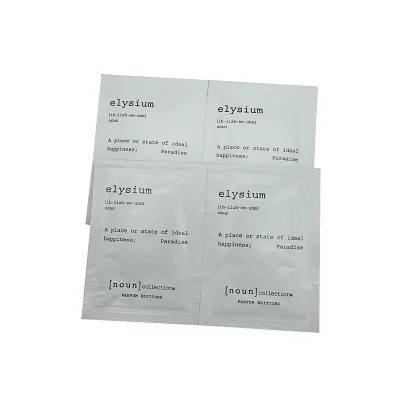


Disposable Baby Wipes - Customized Fragrance Wet Wipes for Gentle Care
$0.25 - $0.80
MOQ: 10000 Pieces


Comprehensive Sourcing Guide
Strategic Sourcing Guide for Scented Disposable Perfume Wipes
The global demand for convenient, single-use personal care solutions has driven significant innovation in the wet wipe sector. For procurement professionals targeting Scented Disposable Perfume Wipes, the market presents a complex landscape of material compositions, functional additives, and logistical variables. While the core keyword suggests a product designed for fragrance application and skin care, the actual supply chain data reveals a diverse array of offerings ranging from basic household cleaning to specialized cosmetic treatments. This guide provides a disciplined framework for evaluating suppliers, verifying product attributes, and structuring procurement contracts based on verified industry facts and observable market data.
Understanding Product Specifications and Material Composition
The foundation of any successful procurement strategy lies in a precise understanding of technical specifications. In the wet wipe industry, the distinction between a "scented" product and a standard cleaning wipe often hinges on the formulation of the liquid solution and the choice of carrier material. The supplied market data indicates that non-woven fabrics are the predominant material used for these products. Specifically, observations show a density of 40GSM, which suggests a lightweight, breathable fabric suitable for single-use applications where heavy durability is not the primary requirement.
Size is another critical specification that varies significantly across suppliers. Market observations list dimensions ranging from 150mm200mm to 15x20cm, with some entries noting a standard of 1820. For buyers seeking scented perfume wipes, the surface area directly impacts the dosage of fragrance and active ingredients per sheet. A standard size of 150mm*200mm is frequently cited, offering a balance between portability and coverage. Buyers must verify if the supplier's standard dimensions align with their packaging machinery or retail requirements.
The layer count and sheet quantity per pack are equally vital for cost and utility calculations. Data points indicate a common configuration of 1 Ply, with sheet counts varying from 80 sheets per bag to smaller quantities like less than 10 per bag for sample or travel-sized units. The packaging format also varies, with options including 80 pieces per bag with 24 bags per carton, or 85 pieces per bag. Understanding these unit economics is essential for calculating the cost per wipe, which is the true metric for budgeting rather than the price per carton.
Functional Attributes and Application Scenarios
While the core keyword emphasizes "scented" and "perfume," the functional capabilities of the available supply are broader. The observed data reveals a wide spectrum of applications, including household cleaning, skin care, makeup removal, and antiseptic use. Some products are explicitly marketed for specific body parts, such as the hand or face, while others are designed for general body cleaning. The presence of attributes like "Anti-Aging," "Whitening," and "Moisturizing" suggests that many of these wipes are formulated with cosmetic actives in addition to fragrance.
The functional profile of the wipes also includes specialized features such as cooling, mosquito repelling, and anti-sweat properties. This indicates that the "scented" aspect is often combined with other therapeutic or protective benefits. For a buyer specifically seeking perfume wipes, it is crucial to distinguish between products that rely solely on fragrance and those that incorporate deodorant powders or specific formulas like "Deodorant Power." The data notes that some products are alcohol-free, which is a significant differentiator for buyers targeting sensitive skin or specific regulatory environments that restrict alcohol content.
The versatility of these products is further highlighted by their intended use cases, which span household settings, traveling, car interiors, and hotel amenities. This broad applicability means that a single supplier may offer a product line that serves multiple verticals. Procurement teams must clearly define whether their primary need is for a luxury cosmetic wipe, a travel-sized hygiene product, or a bulk cleaning solution. The "Portable" style and "With cover" or "Lid" attributes are particularly relevant for travel and hotel applications, ensuring the wipes remain moist and the scent does not dissipate before use.
Compliance, Certification, and Safety Verification
Navigating the regulatory landscape for scented personal care products requires rigorous due diligence. While the supplied data mentions potential certifications like FSC and OEKO-TEX, these are flagged as low-confidence background information and should not be assumed as standard for all listed products. Buyers must treat these certifications as variables to be verified rather than inherent product features. The absence of explicit certification data in the high-confidence facts necessitates a proactive approach to supplier validation.
Safety and compliance are paramount, especially for products intended for facial application or use on sensitive skin. The data indicates that some products are formulated for specific skin types, such as "Combination" skin, and are targeted at adult females. This specificity implies that the formulation must adhere to cosmetic safety standards. Buyers should request documentation regarding the safety of the fragrance components, ensuring that the "scented" attribute does not introduce allergens or irritants that violate local regulations.
Furthermore, the "Without Alcohol" and "Without Flavor" attributes observed in some listings highlight the existence of hypoallergenic alternatives. For buyers seeking scented products, the challenge is to balance the desired fragrance profile with safety compliance. It is essential to verify that the fragrance is derived from approved sources and that the product meets the standards of the destination market. The lead time of 30 days noted in the data suggests that custom formulations or specific certification verifications may require additional time, impacting the overall procurement schedule.
Cost Drivers and Pricing Dynamics
The pricing structure for Scented Disposable Perfume Wipes is influenced by several key factors, including material quality, packaging complexity, and order volume. The observed price range in the market is extremely low, spanning from $0.01 to $0.90 per unit, which reflects the highly competitive nature of the commodity wet wipe market. However, this range likely represents the cost of basic, unscented, or minimally processed wipes. The addition of fragrance, cosmetic actives, and specialized packaging can significantly alter the final price point.
Minimum Order Quantity (MOQ) is a critical cost driver, with observed ranges spanning from 1 unit to 50,000 units. This wide variance allows buyers to scale their orders based on demand, but it also introduces complexity in logistics and inventory management. Suppliers often offer tiered pricing, where the unit cost decreases as the order volume increases. The data explicitly notes that prices "Could Be Cheaper If Your Quantity Is Large," confirming the existence of volume-based discounts.
Packaging costs also play a significant role. Options range from simple plastic bags to cartons with lids or covers. The "Plastic Bag" and "Carton" packaging materials are standard, but the inclusion of features like "With cover" or "Lid" may incur additional manufacturing costs. Buyers should evaluate the total landed cost, including shipping and handling, rather than focusing solely on the unit price. The sample cost policy, which often requires the buyer to pay for express fees while the product itself is free, is a common practice that should be factored into the initial budgeting phase.
Supplier Evaluation and Quality Control Protocols
Selecting the right supplier requires a systematic evaluation of their capabilities, location, and quality control processes. The supply data indicates that manufacturers are located in various regions of China, including Quanzhou and Ningbo. These locations are known for their textile and manufacturing expertise, but buyers should verify the specific capabilities of each facility. The "prod_origin" attribute confirms the Chinese origin of the products, which is a key factor in logistics planning and tariff considerations.
Quality control should be a central component of the supplier selection process. Buyers must verify that the supplier has robust testing protocols for sheet density, liquid absorption, and fragrance consistency. The observed data points to specific product models, such as "YR-ED-Y" and "A 30-7," which can serve as reference points for standardizing specifications. However, relying solely on model numbers is insufficient; buyers should request batch testing reports to ensure consistency across production runs.
The lead time of 30 days is a standard benchmark observed in the data, but this can vary based on order complexity and current production capacity. Buyers should establish clear communication channels with suppliers to monitor production progress and mitigate potential delays. Additionally, the availability of customization, as indicated by the "Customization: Available" attribute, offers an opportunity to tailor products to specific brand requirements. However, customization often extends lead times and increases costs, requiring careful planning and negotiation.
Long-Term Procurement and Strategic Sourcing
Building a sustainable supply chain for Scented Disposable Perfume Wipes involves more than just securing a one-time order. It requires a strategic approach to relationship management, inventory planning, and market adaptation. The variability in product attributes, such as the presence or absence of a cover, lid, or specific functional claims, suggests that the market is dynamic and responsive to consumer trends. Buyers should maintain flexibility in their specifications to adapt to changing market demands.
Long-term considerations also include the environmental impact of the products. While the data mentions "Non-woven" materials, the sustainability of these materials and the packaging is an increasingly important factor for modern consumers. Buyers should inquire about the recyclability of the plastic bags and cartons, as well as the biodegradability of the non-woven fabric. Although FSC and OEKO-TEX certifications are not confirmed in the high-confidence data, the market trend toward eco-friendly products suggests that these may become standard requirements in the near future.
Finally, the procurement strategy should account for the potential for product diversification. The observed data shows a wide range of applications, from cleaning to anti-aging skincare. Buyers may find it advantageous to source a portfolio of products that cater to different segments of the market, leveraging the same supplier base to reduce logistics costs and simplify management. By maintaining a disciplined approach to specification verification, cost analysis, and supplier evaluation, buyers can navigate the complexities of the scented disposable perfume wipe market and secure a reliable, high-quality supply chain.
FAQs
Can I customize the scent and packaging for these wipes?
Yes, customization is available for these products. Buyers can request specific formulations or packaging styles, though lead times may extend to 30 days for custom orders.
What are the standard dimensions for these non-woven wipes?
Standard dimensions include 150mm by 200mm or 15 by 20 centimeters. Some variations exist, such as 18 by 20 centimeters, depending on the specific product model selected.
Are these wipes suitable for facial skin care applications?
Yes, certain models are designed for face application and target combination skin types. These wipes often include functions like moisturizing, anti-aging, and acne control.
What is the typical minimum order quantity for these wipes?
Minimum order quantities range from 1 unit up to 50,000 units depending on the supplier. Larger quantities often result in lower unit costs and better pricing tiers.
Do these wipes contain alcohol or strong flavors?
Many options are available without alcohol and without flavor to suit sensitive skin needs. However, specific scented variants exist that may include deodorant power formulas.
How are these wipes packaged for shipping and storage?
Wipes are typically packed in plastic bags with lids or covers to maintain moisture. Bulk shipping often uses cartons containing 24 bags or 48 packs per carton.