Source Seam Sealed SMD Crystal Oscillator for IoT, Medical, and Industrial
Compare 30 Seam Sealed SMD Crystal Oscillator options from verified manufacturers. Evaluate frequency ranges, supply voltages, and dimensions to find components suitable for IoT, medical, and industrial applications.
Key considerations
Products List


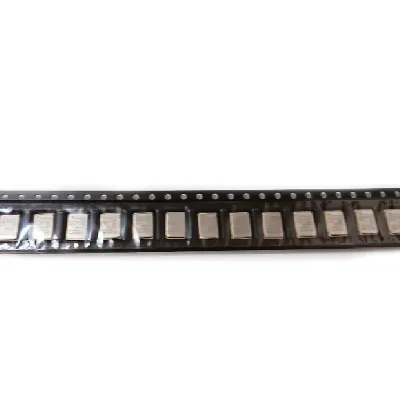


High-Precision Quartz Crystal Oscillator, SMD5032, 2.5V-3.5V, 10MHz-320MHz
$1.19 - $2.99
MOQ: 3000 Pieces

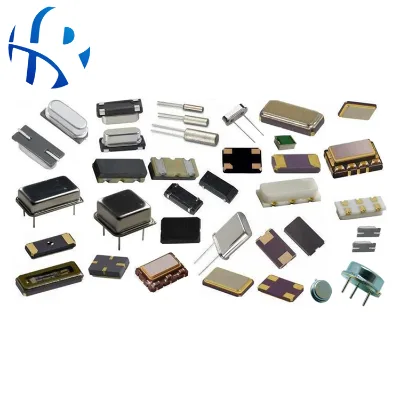


Comprehensive Sourcing Guide
Strategic Sourcing Guide for Seam Sealed SMD Crystal Oscillators
Understanding Technical Specifications and Performance Parameters
When sourcing seam sealed SMD crystal oscillators, buyers must first establish a rigorous understanding of the technical specifications that define device performance and reliability. The core of this component lies in its ability to generate precise frequency signals across a wide operating spectrum. Based on available product data, these oscillators typically support frequency ranges extending from 32.768 kHz up to 150 MHz, with specific high-performance variants covering 10 MHz to 750 MHz for LVDS/PECL applications and 25 MHz to 175 MHz for HCSL configurations. It is critical to distinguish between these ranges, as the drive level and output waveform requirements vary significantly depending on the application.
The drive level is a pivotal parameter that influences the longevity and stability of the crystal. Observed data indicates a drive level of 0.5 MW for certain models, which must be matched against the system's power budget to prevent over-driving the crystal and causing frequency shifts or physical damage. Furthermore, the output waveform is a defining characteristic; while some units provide a standard CMOS square wave, others offer differential outputs such as LVDS (Low Voltage Differential Signaling), PECL (Positive Emitter Coupled Logic), or HCSL (High-Speed Current Steering Logic). Selecting the correct waveform is essential for signal integrity in high-speed digital circuits.
Physical dimensions and mounting type are equally critical for PCB layout and mechanical integration. The supply chain offers various standard footprints, including 2.5mm x 2.0mm x 0.8mm, 3.2mm x 2.5mm x 0.95mm, and larger 7.0mm x 5.0mm x 1.45mm packages. These dimensions correspond to specific model numbers such as the PX25A, PX32A, and PX75B series. The mounting type is consistently surface mount, which facilitates automated assembly processes. Buyers must verify that the selected package size aligns with the available real estate on the target circuit board and that the reflow profile is compatible with the specific package height and material composition.
Compliance, Certification, and Regulatory Standards
In the B2B electronics sector, compliance with international standards is non-negotiable for ensuring product safety and market access. The supply base for seam sealed SMD crystal oscillators typically adheres to a robust framework of management and product certifications. Management systems are often certified under ISO standards, with specific mentions of IATF 16949, which is the global technical standard for quality management in the automotive industry. This certification is particularly relevant for buyers sourcing components for automotive electronics, where supply chain traceability and defect prevention are paramount.
Product-level certifications further validate the safety and environmental compliance of the oscillators. Common certifications observed include CE (Conformité Européenne) and ROHS (Restriction of Hazardous Substances), ensuring that the devices meet European safety requirements and restrict the use of specific hazardous materials. Additionally, ISO14001 certification indicates that the manufacturer has an effective environmental management system in place, which is increasingly important for corporate sustainability goals. Buyers should verify that the specific lot of components being purchased carries the necessary documentation to prove compliance with these standards, as counterfeit or non-compliant parts can lead to significant liability issues.
The origin of the manufacturing plays a role in regulatory compliance as well. Products are noted to originate from Chengdu, China, a region known for its semiconductor and electronic component manufacturing capabilities. While the location itself does not dictate quality, it informs the logistics and potential regulatory frameworks applicable to the shipment. Buyers must ensure that the supplier can provide a Certificate of Conformity (CoC) and a Material Safety Data Sheet (MSDS) for every batch, confirming that the materials used, including the ceramic and metal components, meet the declared standards.
Cost Drivers and Pricing Dynamics
The pricing structure for seam sealed SMD crystal oscillators is influenced by a complex interplay of technical specifications, order volume, and supply chain logistics. The observed price range in the market spans from $0.01 to $2.99 USD, reflecting the vast diversity in component complexity and performance capabilities. Entry-level oscillators with standard frequencies and basic output waveforms tend to cluster at the lower end of this spectrum, while high-frequency models supporting LVDS/PECL interfaces or those with tighter frequency temperature stability commands a premium.
Order volume is a primary driver of unit cost. The Minimum Order Quantity (MOQ) ranges widely from 1 unit to 3,000 units, offering flexibility for prototyping and small-batch production while incentivizing bulk purchases for mass production. Suppliers often provide tiered pricing structures where the per-unit cost decreases significantly as the order quantity increases. For buyers with large volume requirements, negotiating based on the 3,000-unit threshold can yield substantial savings. Conversely, for R&D phases where small quantities are needed, the higher per-unit cost is often an acceptable trade-off for flexibility.
Customization is another significant cost factor. While standard models are readily available, the availability of customization services allows for tailored specifications, such as unique frequency values or specific packaging requirements. Customized support, including OEM (Original Equipment Manufacturer) services, typically incurs additional tooling or setup fees and may result in higher unit costs or longer lead times. Buyers must weigh the benefits of a custom solution against the cost implications, ensuring that the added performance or fitment justifies the expense. Additionally, the supply type, whether from an original manufacturer or a retailer, can influence pricing, with direct manufacturer channels often offering more competitive rates for large orders.
Typical Applications and Operational Environments
Seam sealed SMD crystal oscillators are integral to a wide array of electronic systems where precise timing and frequency stability are required. The wide operating temperature range of -55℃ to 125℃ makes these components suitable for harsh environments, including automotive under-hood applications, industrial automation systems, and outdoor telecommunications equipment. The ability to withstand extreme temperatures without frequency drift is a critical requirement for maintaining system reliability in these sectors.
In the telecommunications and networking domain, the high-frequency capabilities of these oscillators are leveraged for data transmission. The support for LVDS, PECL, and HCSL output waveforms allows for high-speed data interfaces with reduced electromagnetic interference (EMI). These features are essential in server motherboards, network switches, and communication gateways where signal integrity at gigabit speeds is paramount. The frequency ranges up to 750 MHz enable these devices to serve as clock sources for high-performance processors and memory interfaces.
Consumer electronics and IoT devices also rely heavily on these components. The compact form factors, such as the 2.5mm x 2.0mm x 0.8mm packages, allow for integration into space-constrained mobile devices, wearables, and smart sensors. The low power consumption associated with 1.8V to 3.3V supply voltages makes them ideal for battery-operated applications. Furthermore, the aging rate of 1ppm/Year ensures long-term stability, which is crucial for devices that require precise timing over extended periods without frequent recalibration.
Supplier Evaluation and Sourcing Strategy
Evaluating suppliers for seam sealed SMD crystal oscillators requires a multi-faceted approach that goes beyond simple price comparison. Buyers should prioritize suppliers who demonstrate a clear commitment to quality management and transparency. The presence of IATF 16949 and ISO14001 certifications is a strong indicator of a supplier's maturity and adherence to industry best practices. These certifications suggest that the supplier has robust processes for defect prevention, variation reduction, and waste management.
The supplier's capability to provide customized support is another key evaluation criterion. Whether the buyer requires OEM services or specific model modifications, the supplier must demonstrate the technical expertise to deliver these solutions. The availability of small orders is also a significant factor, as it indicates a flexible supply chain capable of supporting both prototyping and mass production phases. Buyers should assess the supplier's ability to scale production and manage inventory to ensure a steady supply of components.
Geographic location and logistics capabilities are also important considerations. With products originating from Chengdu, China, buyers should evaluate the supplier's logistics network to ensure timely delivery and efficient customs clearance. The shipping carton packaging standard helps protect components during transit, but buyers should verify that the packaging meets their specific storage and handling requirements. Additionally, the supplier's reputation for reliability and their track record in the market should be investigated through references and case studies.
Quality Control and Long-Term Procurement Considerations
Ensuring the quality of seam sealed SMD crystal oscillators requires a proactive approach to quality control throughout the procurement lifecycle. Buyers should implement rigorous incoming inspection protocols to verify that received components match the specified parameters, such as frequency, load capacitance, and supply voltage. The load capacitance of 15PF and the duty cycle of 50±5% at 25℃ are critical parameters that must be validated to ensure compatibility with the design.
Long-term procurement considerations involve establishing a strategic partnership with the supplier rather than a transactional relationship. This includes negotiating favorable terms for small orders and bulk purchases, securing supply chain resilience against market fluctuations, and ensuring access to technical support for troubleshooting and design integration. The start-up time of ≤10ms is a performance metric that can impact system boot-up times, and buyers should ensure that the supplier can consistently meet this specification across all production batches.
Frequency temperature stability is another area requiring careful attention. While specific stability values are often detailed in technical tables, buyers should request detailed characterization data for the specific models they intend to use. This data should cover the full operating temperature range to ensure that the oscillator will perform reliably in all environmental conditions. By maintaining a focus on quality control and long-term supplier relationships, buyers can mitigate risks and ensure the continuous availability of high-performance crystal oscillators for their critical applications.
Comparative Analysis of Product Models
To facilitate informed decision-making, buyers can utilize a comparative analysis of the available product models. The following table summarizes key specifications for the observed models, highlighting the differences in frequency range, package size, and output waveform.
| Model Number | Frequency Range | Package Dimensions (mm) | Output Waveform | Supply Voltage (V) |
|---|---|---|---|---|
| PX25A | 32.768K/1MHz~125MHz | 2.5 x 2.0 x 0.8 | CMOS Square | 1.8V~3.3V |
| PX32A | 32.768K/0.5MHz~150MHz | 3.2 x 2.5 x 0.95 | CMOS Square | 1.8V~3.3V |
| PX32B | 10 | 3.2 x 2.5 x 0.9 | Lvds, Pecl, Hcsl | 1.8V~3.3V |
| PX53B | 10 | 5.0 x 3.2 x 1.25 | Lvds, Pecl, Hcsl | 2.5V; 3.3V |
| PX75A | N/A | 7.0 x 5.0 x 1.3 | N/A | 1.8V~5V |
| PX75B | N/A | 7.0 x 5.0 x 1.45 | N/A | 1.8V~5V |
This comparison underscores the diversity of the product line, allowing buyers to select the most appropriate component based on their specific application requirements. The variation in supply voltage and output waveform options provides the flexibility needed to integrate these oscillators into a wide range of electronic designs. By carefully reviewing these specifications, buyers can optimize their designs for performance, cost, and reliability.
FAQs
What certifications do Seam Sealed SMD Crystal Oscillator manufacturers hold?
Manufacturers typically hold ISO14001, ISO, and IATF 16949 management certifications. Product certifications often include CE and ROHS to ensure safety and environmental compliance for global markets.
Which frequency ranges are supported by these oscillators?
Supported ranges extend from 32.768 kHz up to 150 MHz. High-performance variants cover 10 to 750 MHz for LVDS/PECL and 25 to 175 MHz for HCSL configurations.
Can I order small quantities of seam sealed smd crystal oscillators?
Yes, small orders are accepted with a minimum order quantity starting at 1 unit. Bulk purchasing options are available up to 3000 units for cost efficiency.
What is the operating temperature range for these components?
The wide operating temperature range spans from -55°C to 125°C. This ensures reliable performance in harsh environments like automotive under-hood applications and industrial systems.
Which supply voltages are compatible with these oscillators?
Compatible supply voltages include 1.8V, 2.5V, 3.3V, and up to 5V depending on the model. Specific variants support ranges from 1.8V to 3.3V or 1.8V to 5V.
How can I verify the physical dimensions of the oscillator?
Dimensions vary by model, such as 2.5mm x 2.0mm x 0.8mm for the PX25A series. Larger packages like 7.0mm x 5.0mm x 1.45mm are available for the PX75B series.