Source Seamless Pipe Piles for Oil and Gas, Construction, and Boiler
Find 30 listings for Seamless Pipe Piles from Chinese manufacturers offering carbon steel and stainless options. Buyers can compare specifications, grades, and certifications for pipeline transport, oil and gas, and boiler applications.
Key considerations
Products List


Wear Proof High Pressure 321 Seamless Pipe Piles for Municipal Projects
$2080.00 - $2220.00
MOQ: 5 Tons


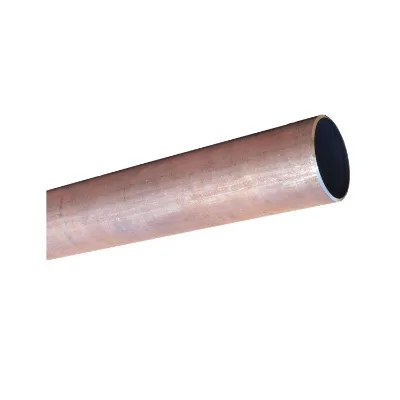


Seamless Steel Pipes Building Materials Seamless Pipe Carbon Steel Pipe
$770.00 - $900.00
MOQ: 10 Tons

Carbon Steel Seamless Steel Pipe for Construction Seamless Tube Seamless Pipe
$499.00 - $560.00
MOQ: 10 Tons


Comprehensive Sourcing Guide
Strategic Sourcing Guide for Seamless Pipe Piles
Understanding Technical Specifications and Material Variability
When sourcing Seamless Pipe Piles, buyers must navigate a complex landscape of technical parameters that directly influence structural integrity and application suitability. The core product category encompasses seamless pipes characterized by a round cross-section, though market listings also indicate availability in square, rectangular, hexagonal, octagonal, and oval shapes. The manufacturing technique is a primary differentiator, with hot rolling being a dominant process, while cold drawing, cold rolling, and electric resistance welding (ERW) are also observed in specific market segments. The seamless nature of the pipe is critical for high-pressure applications, ensuring uniformity in the wall thickness and eliminating the weld seam that could become a failure point under stress.
Material composition is equally vital. The supply chain frequently lists carbon steel as a base material, yet specific product models and grades often reference stainless steel variants such as TP304, TP304L, TP304H, and TP310. These grades are essential for environments requiring corrosion resistance, such as the pharmaceutical, food, and chemical industries. The outer diameter (OD) for Seamless Pipe Piles varies significantly across suppliers, with observed ranges spanning from 20mm up to 1200mm, and in some specialized listings, extending from 10.3mm to 914.4mm. Wall thickness is another critical dimension, with observed specifications ranging from 1.73mm to 40mm in standard offerings, and up to 3000mm in specialized heavy-duty contexts. Lengths are typically customized, with standard options including 1-12 meters, 6 meters, or 12 meters, depending on the specific project requirements and logistics constraints.
Buyers should verify the exact grade and specification against their engineering drawings. While some listings mention models like GH-299, GH-290, and GH-300, these are often internal identifiers. The more universal verification points are the ASTM standards, such as ASTM A312 for stainless steel seamless pipes, and API standards like Spec 5L and Spec 5CT for pipeline applications. The surface treatment also varies, with options including antiseptical coatings, Ba 2b 8K polished finishes, and standard mill finishes. Understanding these variables is the first step in defining a precise technical request for quotation (RFQ) to avoid receiving non-compliant products.
Compliance, Certification, and Quality Verification Protocols
In the global procurement of Seamless Pipe Piles, compliance with international standards and third-party certifications is non-negotiable for ensuring safety and longevity. The market data indicates that ISO certification is a common attribute, with specific mentions of ISO Type: Seamless Pipe and ISOCE. However, buyers must distinguish between general company certifications and product-specific testing. For instance, while some listings mention "ISOMaterial:304 Stainless Steel," this phrasing suggests a need for rigorous verification that the material grade matches the certification claims.
Quality verification often involves a multi-layered approach. In-house laboratories are frequently cited as a baseline for inspection, but for high-stakes applications involving oil and gas drilling or construction, third-party inspections are essential. Trusted agencies such as SGS, TUV, BV, and ABS are commonly referenced in the supply chain for conducting independent tests. The specific tests performed on these pipes typically include hydraulic testing, eddy current testing (ET), and ultrasonic testing (UT). These tests are designed to detect internal and external defects, ensuring the pipe can withstand the intended pressure and load conditions.
Markings on the product are a crucial compliance tool. Standard markings often include the seamless designation (SMLS), the applicable ASTM standard (e.g., ASTM A312), the specific grade (e.g., TP304 or TP310), the size (e.g., 3" SCH40S), and the heat number (e.g., HEAT NO: HT). These markings allow for traceability back to the melt batch, which is vital for quality assurance and liability management. Buyers should explicitly require these markings in their purchase orders and verify their presence upon delivery. Additionally, standards such as ASTM A53, A106, and A252 are referenced in the context of pipe specifications, and buyers must confirm that the delivered product meets the specific version of these standards required by their local jurisdiction or project specifications.
Cost Drivers and Pricing Structure Analysis
The pricing of Seamless Pipe Piles is influenced by a dynamic interplay of material costs, manufacturing complexity, and logistical factors. The observed price range in the market is vast, spanning from $0.20 to $6,000 per unit or batch, reflecting the diversity in size, grade, and quantity. This wide variance indicates that cost cannot be evaluated in isolation; a low unit price for a small-diameter carbon steel pipe does not equate to a low cost for a large-diameter, high-grade stainless steel pipe.
Material grade is a primary cost driver. Stainless steel grades like TP304, TP304L, and TP316 are significantly more expensive than carbon steel grades such as L245/B or S235 due to the alloying elements required for corrosion resistance. The source of the raw material also impacts cost, with major suppliers like TSINGSHAN, FUKAI, and YONGXING being noted as material sources. Sourcing from these established mills often commands a premium but ensures consistency and traceability.
Manufacturing techniques further influence pricing. Hot-rolled pipes are generally more cost-effective for larger diameters and thicker walls, while cold-drawn or cold-rolled pipes, which offer tighter tolerances and smoother finishes, incur higher processing costs. Surface treatments, such as the Ba 2b 8K polished finish, add to the production expense. Additionally, the customization level plays a significant role. While standard products may be available from stock with a lead time of 7 days, custom-made orders (MTO) typically require 30 days and involve higher setup and production costs.
Packaging is another often-overlooked cost factor. Options range from standard sea-worthy packing to international standard packaging, or specific bundling and plywood box configurations. For overseas shipments, the choice of packaging affects freight costs and the risk of damage during transit. Buyers should request detailed cost breakdowns that separate material, processing, packaging, and logistics to understand the true cost drivers and negotiate effectively.
Typical Applications and Industry-Specific Requirements
Seamless Pipe Piles serve a multitude of industries, each with unique performance requirements. The versatility of these products allows them to be utilized in pipeline transport, boiler systems, hydraulic systems, and automotive applications. In the oil and gas industry, seamless pipes are critical for drilling operations and pipeline transport, where they must withstand high pressures and corrosive environments. The API Spec 5L and Spec 5CT standards are particularly relevant here, ensuring the pipes can handle the rigors of extraction and transport.
The chemical and pharmaceutical industries demand high levels of purity and corrosion resistance, making stainless steel grades like TP304 and TP316L the preferred choice. These applications often require specific surface treatments and rigorous testing to prevent contamination. Similarly, the food and beverage industry relies on seamless pipes for processing and transport, where hygiene and ease of cleaning are paramount. The automotive industry utilizes these pipes for hydraulic systems and structural components, requiring precise dimensions and high strength-to-weight ratios.
Construction and decoration projects also utilize seamless pipes, particularly for structural columns and decorative elements. In these applications, the aesthetic finish, such as the 8K polished surface, is as important as the structural integrity. The mining industry requires pipes that can endure abrasive conditions and heavy loads, often utilizing carbon steel grades with enhanced wall thicknesses. Understanding the specific demands of the target industry is essential for selecting the correct material grade, wall thickness, and surface treatment.
Supplier Evaluation and Sourcing Strategy
Evaluating suppliers for Seamless Pipe Piles requires a comprehensive approach that goes beyond price comparison. Buyers should assess the supplier's origin, with China, specifically Wenzhou, being a noted production hub. The ability to provide a wide range of models and grades, from GH-290 to GH-300, indicates a supplier's capacity to meet diverse needs. However, the presence of multiple models does not guarantee quality; buyers must verify the supplier's track record and production capabilities.
Key evaluation criteria include the supplier's certification status, inspection capabilities, and trade terms. Suppliers offering ISO certification and in-house lab testing are preferable, as they demonstrate a commitment to quality control. The availability of third-party inspection services from agencies like SGS and TUV is also a strong indicator of reliability. Trade terms such as EXW, FOB, CFR, CIF, and DDP should be clearly understood, as they define the responsibilities and risks associated with the shipment.
The lead time is another critical factor. Suppliers offering stock availability with a 7-day delivery time provide a significant advantage for urgent projects, while those with a 30-day lead time for custom orders require earlier planning. Buyers should also consider the supplier's packaging standards, ensuring that products are packed in bundles, plywood boxes, or sea-worthy containers to prevent damage during transit. Finally, the supplier's ability to provide detailed documentation, including material test reports and certification certificates, is essential for compliance and quality assurance.
Quality Control and Long-Term Procurement Considerations
Ensuring the quality of Seamless Pipe Piles is an ongoing process that begins with the supplier selection and extends through the entire supply chain. Buyers should implement a robust quality control plan that includes pre-shipment inspections, random sampling, and final acceptance testing. The use of advanced testing methods such as hydraulic, eddy current, and ultrasonic testing is crucial for detecting defects that could compromise the pipe's performance.
Long-term procurement considerations involve building a strategic relationship with reliable suppliers. This includes negotiating favorable trade terms, establishing clear communication channels, and ensuring consistent quality over time. Buyers should also consider the total cost of ownership, which includes not only the purchase price but also maintenance, replacement, and potential downtime costs. Selecting high-quality materials and adhering to strict specifications can reduce long-term costs by minimizing failures and extending the service life of the pipes.
Furthermore, buyers should stay informed about changes in industry standards and regulations. The seamless pipe market is subject to evolving requirements, and suppliers must be able to adapt to these changes. By maintaining a proactive approach to quality control and supplier management, buyers can ensure the reliability and safety of their seamless pipe pile projects, ultimately achieving better outcomes and cost efficiency.
Comparative Analysis of Product Attributes
To facilitate informed decision-making, the following table summarizes key product attributes observed in the market, highlighting the variability and specific requirements buyers should verify.
| Attribute | Observed Range/Options | Verification Requirement |
|---|---|---|
| Material | Carbon Steel, TP304, TP304L, TP310, TP316L | Verify grade against project specs and material certs. |
| Outer Diameter | 20mm - 1200mm; 10.3mm - 914.4mm | Confirm exact OD tolerance and measurement method. |
| Wall Thickness | 1.73mm - 40mm; 6mm - 3000mm | Check for custom thickness availability and tolerance. |
| Technique | Hot Rolled, Cold Drawn, Cold Rolled, ERW | Match technique to pressure and finish requirements. |
| Surface Treatment | Antiseptical, Ba 2b 8K Polished, Standard | Verify finish for corrosion resistance and aesthetics. |
| Certification | ISO, ISOCE, Spec 5L, ASTM A312 | Ensure specific standard version is met and documented. |
| Testing | Hydraulic, ET, UT, In-House Lab, SGS, TUV | Require third-party test reports for critical applications. |
| Packaging | Bundles, Plywood Box, Sea-Worthy, International | Confirm packaging prevents damage during transit. |
| Origin | China (Wenzhou), TSINGSHAN, FUKAI, YONGXING | Verify mill source for material traceability. |
| Lead Time | Stock 7 Days; MTO 30 Days | Align lead time with project schedule and urgency. |
This comparative overview underscores the necessity of precise specification definition. Buyers must move beyond generic descriptions and demand detailed data on each attribute to ensure the Seamless Pipe Piles meet the rigorous demands of their specific applications. By adhering to these guidelines, procurement professionals can mitigate risks and secure high-quality products that deliver value over the long term.
FAQs
What material grades are available for Seamless Pipe Piles?
Available grades include TP304, TP304L, TP304H, and TP310, alongside carbon steel options like L245/B and S235. These materials are sourced from established mills such as TSINGSHAN and FUKAI to ensure quality and traceability for various industrial applications.
Which surface treatments are offered for Seamless Pipe Piles?
Surface treatments include antiseptical coatings, Ba 2b 8K polished finishes, and standard mill finishes. The specific treatment depends on the application, such as pharmaceutical or food industry requirements, and can be customized to meet specific client standards.
How long is the delivery time for custom Seamless Pipe Piles?
Custom orders typically require a 30-day lead time, while stock items can be delivered within 7 days. The duration depends on whether the product is manufactured to order or available in inventory, affecting the overall project timeline significantly.
What certifications are provided for Seamless Pipe Piles?
Products come with ISO certification and specific material certifications like ISOMaterial:304 Stainless Steel. Additional verification can be obtained through third-party agencies such as SGS, TUV, BV, and ABS to ensure compliance with international safety and quality standards.
Can Seamless Pipe Piles be customized for specific dimensions?
Yes, customization is available for outer diameters ranging from 20mm to 1200mm and wall thicknesses up to 3000mm. Lengths can also be adjusted to meet project needs, with standard options including 1-12 meters or 6-12 meter bundles.
Which industries commonly use Seamless Pipe Piles?
These pipes are widely used in the oil and gas, pharmaceutical, food, chemical, and automotive industries. They are also essential for pipeline transport, boiler systems, and hydraulic applications where high pressure and corrosion resistance are critical requirements.