Source Self-Adhesive Printing Paper Envelope for Letters Gifts Parties
Compare 30 self-adhesive printing paper envelope options featuring custom logo support, biodegradable materials, and various sizes. Buyers can evaluate specifications like sealing methods, printing types, and delivery times from verified Chinese manufacturers.
Key considerations
Products List


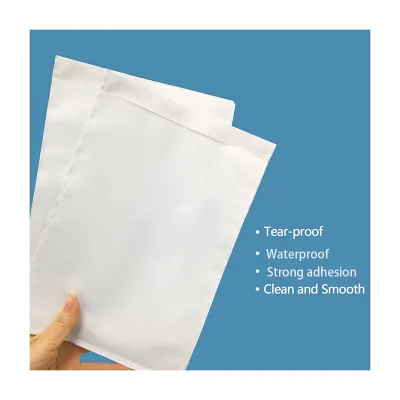


Professional Hot Sell Kraft Paper Envelope with Self Adhesive Release Paper
$0.02 - $0.08
MOQ: 10000 Pieces

White Self-Adhesive Packing Gift Compostable Corrugated Kraft Paper Mailing Envelope
$0.14 - $0.99
MOQ: 10000 Pieces

Custom Size Self Adhesive Yellow Kraft Paper Mailer Bag Bubble Envelope
$0.03 - $0.99
MOQ: 10000 Pieces


Self-Adhesive Corrugated Kraft Paper Envelopes Shipping Mailers Packing Bags
$0.14 - $0.99
MOQ: 10000 Pieces


Manufacturer Customized with Adhesive Shipping Craft Paper Document Envelope
$0.07 - $0.07
MOQ: 50000 Pieces


Manufacturer Customized Express with Adhesive Document 100% Kraft Paper Envelope
$0.07 - $0.07
MOQ: 50000 Pieces

Comprehensive Sourcing Guide
Strategic Sourcing Guide for Self-Adhesive Printing Paper Envelopes
Understanding Technical Specifications and Material Composition
When sourcing self-adhesive printing paper envelopes, the primary focus must be on the specific material composition and structural integrity that define the product's utility. Based on available market data, the core material is identified as paper, with specific options including cardboard, corrugated, coated, and kraft paper. These variations significantly influence the envelope's rigidity, printability, and environmental profile. The standard specification for these items often cites a model type of "Paper Envelope" or specific model codes such as HDP0209 and HDP0202, indicating that manufacturers offer distinct SKUs for different structural needs.
The sealing mechanism is a critical technical differentiator. The observed products consistently utilize a self-sealing method, often described as self-adhesive or self-seal. This feature eliminates the need for water activation or glue application, streamlining the packing process for high-volume operations. The surface finish and coating processes are equally vital; while some listings specify an uncoated surface, others indicate that various surface finish processes are accepted for customization. This flexibility allows buyers to select between matte, glossy, or textured finishes depending on the desired aesthetic and tactile experience.
Dimensional specifications vary by application, with common sizes including 176mm x 125mm, which aligns with the DL standard often used for business correspondence. However, the carton dimensions provided in supplier data, such as 362630 cm or 502725 cm, highlight the importance of logistics planning. Buyers must verify that the internal product dimensions match their specific mailing or packaging requirements, as the "Western" style and "Creative" letter pad styles suggest a design range that extends beyond standard business forms into promotional and gift applications. The packing density, typically listed as 2000 pieces per carton, is a key metric for calculating shipping volume and storage requirements.
Compliance, Certification, and Regulatory Verification
In the B2B procurement of paper-based packaging, regulatory compliance is not merely a formality but a prerequisite for market access, particularly in regions with strict environmental and food safety standards. The supply chain data indicates a robust array of certifications that buyers should verify before finalizing orders. These include CE/EU compliance, CIQ (China Inspection and Quarantine), EEC, FDA, LFGB, and SGS. The presence of these certifications suggests that the manufacturing facilities are equipped to meet international safety and quality benchmarks.
The FDA and LFGB certifications are particularly significant for envelopes intended for food-related applications or those that may come into indirect contact with consumables, although the primary use case listed is for letters, gifts, and business invitations. The CE/EU mark confirms adherence to European safety, health, and environmental protection requirements. SGS certification provides an additional layer of assurance regarding the quality and safety of the materials used.
Buyers must exercise caution regarding the interpretation of these certifications. While the data lists these standards as available, it does not guarantee that every single unit or batch possesses them without specific verification. The "Low-confidence background" regarding FSC (Forest Stewardship Council) certification serves as a reminder that sustainability claims should be treated with scrutiny. Buyers should explicitly request current, valid certificates for each production batch rather than relying on general supplier claims. The "Disposable Eco-Friendly Recyclable Biodegradable" feature listed in the product attributes aligns with these certifications, but the specific biodegradation rate or recyclability percentage is not provided in the source data. Therefore, procurement teams should request third-party test reports to validate these environmental claims, ensuring that the "biodegradable" label meets the specific regulatory definitions of the target export market.
Cost Drivers and Pricing Dynamics
The pricing structure for self-adhesive printing paper envelopes is influenced by a complex interplay of material costs, customization levels, and order volume. The observed listed price range in the market is notably broad, spanning from $0.01 to $2.70 USD per unit. This wide variance is not indicative of a single product but rather reflects the spectrum of options available, from simple, unprinted kraft paper envelopes to highly customized, multi-color offset printed designs with embossing or debossing.
A primary cost driver is the customization of the logo and design. The product attributes confirm that "Customized Logo Support" is available, and printing methods include offset printing, debossing, and embossing. Each of these processes adds to the unit cost. Offset printing is generally more cost-effective for large runs, while embossing and debossing require additional tooling and labor, increasing the price point. The choice of paper type also dictates cost; while standard kraft paper is economical, coated or corrugated cardboard options will command a higher price due to the raw material costs and processing complexity.
Order volume is another critical factor. The Minimum Order Quantity (MOQ) data presents a significant constraint for buyers. The observed MOQ range is extensive, from 100 to 3,000,000 units, but the high-confidence fact for this specific product category lists an MOQ of 50,000 pieces. This high threshold suggests that the supply chain is optimized for mass production. Buyers with smaller requirements may face challenges finding suppliers willing to accept orders below this threshold without incurring significant surcharges or being forced to purchase "stocked" items, where the MOQ might be lower (e.g., "50,000PCS If We Have Stock").
Payment terms, typically cited as T/T (Telegraphic Transfer), are standard in this sector but require careful management of cash flow. The lead time, ranging from 20-25 working days for standard orders to 25-30 working days for customized runs, further impacts the total cost of ownership. Longer lead times can necessitate higher safety stock levels, tying up capital. Buyers should negotiate based on the trade-off between unit price and lead time, understanding that expedited production often incurs premium costs.
Typical Applications and Usage Scenarios
The versatility of self-adhesive printing paper envelopes makes them suitable for a diverse array of commercial and personal applications. The primary use cases identified include letters, gifts, parties, and business invitations. The "Western" style and "Creative" letter pad styles suggest a design language that is adaptable to both formal corporate communications and more casual, event-driven contexts.
For business applications, these envelopes are ideal for sending invitations, promotional materials, and official correspondence. The ability to accept custom logos and designs allows companies to reinforce brand identity directly on the packaging. The "Business Invitations" and "Promotion" tags highlight their utility in marketing campaigns where the envelope itself serves as a brand touchpoint. The "Gift Envelope" classification indicates that these products are also designed for the retail and gifting sectors, where presentation is paramount.
The "Disposable Eco-Friendly" nature of the product makes it particularly suitable for events and parties where waste management is a concern. The biodegradable and recyclable attributes appeal to environmentally conscious consumers and organizations looking to reduce their carbon footprint. However, the "Non-waterproof" performance is a critical limitation. Buyers must ensure that the intended application does not involve exposure to moisture or harsh weather conditions. For outdoor events or shipments in humid climates, this limitation necessitates additional protective measures or the selection of a different product category.
The specific model sizes, such as the DL standard (176mm x 125mm), are optimized for standard business correspondence. However, the availability of custom sizes and the "Carton Size" variations suggest that manufacturers can accommodate non-standard requirements. This flexibility is valuable for businesses with unique packaging needs, such as oversized invitations or specialized gift sets.
Supplier Evaluation and Sourcing Strategy
Evaluating suppliers for self-adhesive printing paper envelopes requires a rigorous assessment of their capabilities, reliability, and compliance record. The supply chain data indicates that the origin of these products is primarily China (Mainland), which is a major hub for paper packaging manufacturing. Buyers should verify the specific location and facility details to ensure they are dealing with a legitimate manufacturer rather than a trading company, although the distinction is less critical if the trading company provides direct access to factory certifications.
Key evaluation criteria should include the supplier's ability to meet the high MOQ of 50,000 pieces. Suppliers who cannot meet this volume may lack the production capacity required for consistent quality and cost-efficiency. The sample service is a crucial component of the evaluation process. With a sample time of 3-7 working days, buyers should request physical samples to verify the self-sealing mechanism, the quality of the print, and the texture of the paper. The "Support Sample Service" attribute confirms that this is a standard offering, but buyers must ensure that the sample represents the final production quality.
Communication regarding customization is another vital area. The supplier must demonstrate a clear understanding of the buyer's design requirements, including the specific printing type (offset, debossing, embossing) and the desired surface finish. The ability to provide a "Customized" solution is a key differentiator, and buyers should assess the supplier's design team's responsiveness and technical expertise.
Finally, the supplier's track record in handling certifications should be scrutinized. Given the list of certifications like CE, FDA, and SGS, the supplier must be able to provide valid documentation for each order. Buyers should request copies of these certificates and verify their authenticity with the issuing bodies. The "2000PCS/CTN" packing standard is also a point of verification; the supplier must demonstrate consistent adherence to this packing density to ensure that the goods arrive in good condition and that the shipping calculations are accurate.
Quality Control and Long-Term Procurement Considerations
Implementing a robust quality control (QC) protocol is essential for maintaining the integrity of self-adhesive printing paper envelopes. The QC process should begin with the raw materials, verifying that the paper (cardboard, kraft, coated, etc.) meets the specified standards for thickness, strength, and environmental compliance. The self-sealing adhesive must be tested for tackiness and durability to ensure it holds securely without damaging the envelope or the contents.
During the printing phase, color accuracy and registration are critical. Buyers should establish a color standard and require that the supplier matches this standard for every batch. The "Various Process Customization Is Accepted" attribute implies a high degree of flexibility, which can lead to inconsistencies if not strictly managed. Regular in-process inspections and pre-shipment inspections are necessary to catch defects early. The "Non-waterproof" characteristic means that the envelopes are susceptible to moisture damage, so storage conditions during transit and at the destination must be controlled.
For long-term procurement, building a strategic partnership with the supplier is more beneficial than transactional buying. Given the high MOQ and lead times, buyers should plan their orders well in advance to avoid stockouts. The "20-25 Working Days" delivery time requires a forecasted demand model to ensure timely replenishment. Negotiating long-term contracts can help stabilize pricing and secure production slots, mitigating the risk of supply chain disruptions.
Buyers should also consider the environmental impact of their procurement decisions. The "Eco-Friendly" and "Biodegradable" features are selling points that can enhance the buyer's brand reputation. However, these claims must be backed by verifiable data. Long-term contracts should include clauses that require the supplier to maintain or improve their environmental certifications and to provide transparency regarding their sourcing of raw materials.
In conclusion, sourcing self-adhesive printing paper envelopes involves a careful balance of technical specifications, compliance verification, cost management, and supplier relationship building. By adhering to the standards and data provided, buyers can navigate the complexities of this market and secure high-quality products that meet their specific business needs. The wide range of customization options and the robust certification landscape offer significant opportunities for differentiation, provided that the procurement process is disciplined and evidence-based.
FAQs
What is the minimum order quantity for custom paper envelopes?
The standard minimum order quantity is 50,000 pieces for custom orders. If the supplier has existing stock available, the requirement may be lower, but buyers should verify specific stock conditions before placing an order.
How long does it take to receive samples of these envelopes?
Sample preparation typically requires 3 to 7 working days. This timeline applies to the creation of customized prototypes, allowing buyers to verify print quality and sealing mechanisms before committing to a full production run.
Which certifications are available for these paper envelopes?
Available certifications include CE, EU, CIQ, EEC, FDA, LFGB, and SGS. These documents verify compliance with international safety and quality standards, though buyers must request specific certificates for each production batch to ensure validity.
Can I get a customized logo printed on the envelopes?
Yes, customized logo support is available using offset printing, debossing, or embossing techniques. Buyers can select from various paper types like kraft or coated paper to achieve the desired aesthetic and tactile finish for their brand.
What is the typical delivery time for a bulk order?
Standard delivery time ranges from 20 to 25 working days for regular orders. Customized runs may extend this period to 25-30 working days, so buyers should plan their inventory levels accordingly to avoid stockouts.
Are these envelopes waterproof for outdoor use?
No, these paper envelopes are non-waterproof and not suitable for wet conditions. They are designed for indoor applications such as letters, gifts, and business invitations where moisture exposure is minimal or controlled.
What payment methods are accepted for this product?
The standard payment method accepted is T/T, or Telegraphic Transfer. Buyers should confirm specific payment terms with the supplier, as this method is typical for B2B transactions involving high minimum order quantities.