Find Self-Resetting Key Switch for Industrial, Home & Hotel Use
Browse 30 Self-Resetting Key Switch listings on SourcingX and compare models, certifications, materials, and packing options side by side. Buyers can review rotary key switch specifications and request quotes from listed suppliers.
Key considerations
Products List


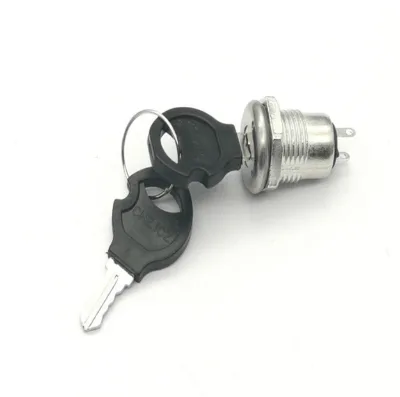

Square Button on-off Self-Lock/Non Lock Push Button Switch Press Key Switch
$0.15 - $0.25
MOQ: 500 Pieces


Comprehensive Sourcing Guide
Self-Resetting Key Switch Sourcing Guide
Procuring self-resetting key switches requires a disciplined approach to distinguishing between momentary action types and maintaining latching mechanisms. These components are critical in industrial control panels, home automation systems, and electronic devices where a temporary input triggers a specific state change without requiring the operator to hold the actuator. Buyers must understand that "self-resetting" typically refers to a momentary function where the switch returns to its original position upon release, often used for start buttons, reset functions, or temporary signal generation. The sourcing process involves verifying the mechanical action, electrical rating, and environmental durability to ensure the component meets the specific operational demands of the end product.
The market for these switches is diverse, with manufacturers offering a wide range of configurations including rotary, push-button, and composite types. Sourcing decisions should be guided by the intended application environment, such as whether the switch will be used in a residential apartment, an industrial facility, or a hotel setting. Buyers need to evaluate the physical interface, including the key type and terminal configuration, to ensure compatibility with existing panel designs and wiring harnesses. This guide provides a structured framework for evaluating suppliers, verifying technical specifications, and managing commercial risks associated with these essential control components.
Product Scope and Observed Listing Signals
The current market landscape for self-resetting key switches reveals a broad spectrum of product models and configurations. Observed listings indicate a variety of model identifiers, such as KS5, DM-12, M-203F, KS-FIVE, KS-THREE, LA62C-11Y, S3012, and NS106, suggesting a high degree of customization and specialized design across different manufacturers. These models often correspond to specific functional requirements, such as five-position rotary actions or single-pole on-off configurations. Buyers should note that the presence of multiple model numbers from a single supplier may indicate a modular product line capable of adapting to various customer specifications, which is a positive signal for supply chain flexibility.
Price and minimum order quantity (MOQ) signals in the market show significant variability, with observed price ranges spanning from $0.10 to $100 USD and MOQs ranging from 1 to 1,000 units. This wide dispersion reflects the difference between standard off-the-shelf components and highly customized industrial solutions. Lower price points and minimal MOQs are typically associated with basic push-button switches or simple rotary keys intended for low-volume prototyping or consumer electronics. Conversely, higher price points and larger MOQs often correlate with switches featuring advanced certifications, specialized materials like aluminum or steel, and complex internal mechanisms designed for heavy-duty industrial use. Buyers must align their volume requirements with the appropriate tier of supplier capability.
Technical Specifications to Verify
When evaluating technical specifications, the mechanical action and terminal configuration are paramount. Buyers should verify whether the switch operates as a momentary or maintained type, as this directly impacts the control logic of the end device. Key attributes to confirm include the number of poles, such as 6-pole configurations, and the breaking form, which may be single or double type depending on the circuit requirements. Additionally, the wiring configuration, including null line and live line arrangements, must be compatible with the system’s electrical design. The structure of the switch, whether it is power built-in or surface-mounted, also influences installation complexity and panel integration.
Material composition and physical dimensions are critical for durability and fit. Common materials observed in the market include aluminum and steel, each offering distinct advantages in terms of corrosion resistance, aesthetic finish, and mechanical strength. The weight of the component, often listed around 0.200kg per piece, can serve as a proxy for build quality and internal component density. Buyers should also assess the protection features, such as dust-proof ratings or durable coatings, which are essential for switches deployed in harsh industrial environments. The detection method, whether reflection type or mechanical contact, further defines the switch’s reliability and lifespan under continuous operation.
Compliance and Safety Documentation
Regulatory compliance is a non-negotiable aspect of sourcing electrical switches, particularly for applications in regulated markets. Buyers must verify that suppliers provide valid certification documents, such as CE, ISO9001, CCC, and UL certifications. These certifications indicate that the product meets specific safety, electromagnetic compatibility, and quality management standards. The presence of multiple certifications, such as both CE and UL, suggests a higher level of quality control and broader market acceptance, which can reduce the risk of regulatory hurdles in the buyer’s destination market. It is essential to request copies of these certificates and verify their validity with the issuing bodies.
Environmental and operational standards also play a crucial role in ensuring long-term reliability. Switches intended for industrial or outdoor use may require specific environmental ratings, such as resistance to temperatures below 250°C or protection against dust and moisture. Buyers should inquire about the testing protocols used to validate these ratings, including thermal cycling, vibration, and ingress protection tests. Additionally, the standard of the switch, such as LA62 or UL certified switch lock standards, should be clearly documented in the product specifications. Ensuring that the switch complies with the relevant international or regional standards is vital for maintaining safety and avoiding liability issues.
Cost Drivers and Commercial Terms
Several factors influence the total cost of ownership for self-resetting key switches, including material costs, manufacturing complexity, and certification expenses. High-quality materials like aluminum and steel, along with complex internal mechanisms, contribute to higher unit prices. Buyers should also consider the cost of customization, as many suppliers offer tailored solutions that may involve additional tooling or setup fees. The observed availability of customization services indicates that suppliers are flexible, but buyers must clarify the cost implications of any custom requirements upfront to avoid unexpected expenses.
Commercial terms, including packaging, delivery, and payment conditions, significantly impact the procurement process. Packaging options range from simple polybag packages to more robust solutions like paper boxes, cartons, and plywood cases, which are necessary for protecting switches during transit. The choice of packaging can affect shipping costs and the risk of damage, so buyers should select the option that best balances protection and cost. Delivery details, such as the ability to ship on any workday, offer logistical flexibility, but buyers should confirm lead times and shipping methods to ensure timely delivery. Clear communication of these terms is essential for effective supply chain management.
Supplier Qualification and Quality Control
Supplier qualification is a critical step in ensuring the reliability and consistency of self-resetting key switches. Buyers should assess the supplier’s manufacturing capabilities, including their production capacity, quality control processes, and experience in the industry. Suppliers located in major manufacturing hubs like Shanghai, China, or Taiwan, often have established supply chains and access to high-quality raw materials. However, buyers must verify the supplier’s track record through references, case studies, or third-party audits to ensure they meet the required standards. The presence of ISO9001 certification is a strong indicator of a supplier’s commitment to quality management.
Quality control measures should be integrated into the procurement process to minimize defects and ensure product consistency. Buyers should request detailed quality control plans, including incoming material inspections, in-process checks, and final product testing. The use of neutral packing or specific packaging requirements can also serve as a quality indicator, as it reflects the supplier’s attention to detail and customer-specific needs. Additionally, buyers should establish clear acceptance criteria and inspection protocols for incoming shipments, including visual inspections and functional testing. Regular communication with the supplier regarding quality issues and continuous improvement initiatives is essential for maintaining high standards.
Long-Term Procurement Checks
Long-term procurement success depends on establishing a robust relationship with suppliers and implementing continuous improvement strategies. Buyers should conduct regular performance reviews to assess supplier reliability, product quality, and responsiveness to issues. This includes monitoring key performance indicators such as on-time delivery rates, defect rates, and customer satisfaction scores. By maintaining open lines of communication and addressing issues promptly, buyers can foster a collaborative partnership that benefits both parties. Regular audits and site visits can also provide valuable insights into the supplier’s operations and help identify areas for improvement.
As technology and market demands evolve, buyers must stay informed about emerging trends and innovations in the self-resetting key switch market. This includes monitoring changes in regulatory requirements, new material technologies, and advancements in switch design. Buyers should also evaluate the supplier’s ability to adapt to these changes and offer updated solutions that meet future needs. By proactively managing the procurement process and maintaining a focus on quality and compliance, buyers can ensure a stable and efficient supply of self-resetting key switches for their operations. This strategic approach minimizes risks and supports the long-term success of the end product.
FAQs
How does a Self-Resetting Key Switch return to its original position?
A Self-Resetting Key Switch springs back to its default position automatically once the key or released pressure is removed. Inside the switch, a return spring repositions the contact mechanism after actuation, so no manual reset is needed. This makes it suitable for start buttons, control switches, and program functions where the circuit should only stay active while held or keyed.
What certifications should I look for when sourcing a Self-Resetting Key Switch?
Common listings on product pages include CE, CCC, UL, and ISO9001 quality management certification, sometimes appearing together on a single model. For industrial control applications, CE and ISO9001 are frequently cited baselines, while UL matters for North American projects. Always request the actual certificate documents for the exact model number, since certification claims can vary between product families from the same supplier.
Can I order a Self-Resetting Key Switch with custom branding or packaging?
Yes, customization is listed as available on several product pages, and packing options include paper boxes, cartons, plywood cases, polybags, and neutral packing. Neutral packing is often chosen by distributors who resell under their own brand. Confirm customization scope, such as logo printing or terminal variants, directly with the supplier before placing a trial order, and check whether customization affects minimum order quantities or lead time.
Which models of Self-Resetting Key Switch are commonly listed by suppliers?
Listed model numbers include KS5, DM-12, M-203F, KS-FIVE, KS-THREE, LA62C-11Y, S3012, and NS106. These cover rotary key switches, push button switches, and multi-position control switches with features such as five position function and six pole terminals. When comparing models, match the pole count, function positions, and wiring requirements to your control circuit rather than choosing by model name alone.
What is the typical unit weight and how does it affect shipping cost?
One listed specification shows a weight of 0.200kg per piece, which is a practical benchmark for small control switches. At this weight, air freight remains economical for sample quantities, while sea freight in cartons or plywood cases suits bulk orders. Ask suppliers for net and gross carton weights so you can calculate freight accurately before committing to a volume order.
How should I evaluate the protection rating of a Self-Resetting Key Switch?
Listed attributes include dust proof construction and durable protection, which indicate resistance to particulates in panel mounted applications. However, product pages do not always publish formal ingress protection ratings, so request the specific IP classification and test documentation for your model. For environments with moisture, oil mist, or washdown requirements, confirm sealing performance explicitly rather than relying on general durability descriptions.
Where are Self-Resetting Key Switch suppliers typically located?
Listed origins include Shanghai China, China generally, and Taiwan, reflecting the concentration of switch and control component manufacturing in these regions. Shanghai based listings reference CE and ISO9001 standards, while Taiwan sourced items reference UL certified switch locks. Consider proximity to your market, port access, and certification fit when shortlisting, and verify the stated origin on the purchase contract for customs purposes.
Can I get samples before committing to a bulk order of key switches?
Many suppliers list minimum order quantities starting from a single piece, which suggests sample orders are feasible for at least some listings. Observed MOQ ranges extend up to 1000 pieces for other products, so terms vary considerably. Ask each supplier about sample availability, sample cost, and whether sample pricing differs from bulk pricing, and use samples to verify key operation, reset action, and terminal fit before scaling up.