Source Self Service Health Checkup Kiosk for Clinics
Source the Self Service Health Checkup Kiosk for clinics, hospitals, and pharmacies. Compare 30 models with features like ECG, blood pressure, and height/weight scales. Find OEM/ODM options from Chinese manufacturers; compare the available evidence and request quotations based on your requirements.
Key considerations
Products List


Self Service Health Intelligent Health Kiosk Hospital Health Checkup Kiosk
$11000.00 - $12500.00
MOQ: 1 Pieces


Medical Self Service L Health Screening Blood Pressure Health Check Kiosk
$3000.00 - $3300.00
MOQ: 1 Pieces




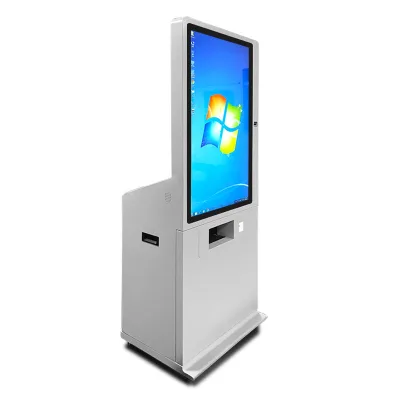
32inch Kiosk Android Healthcare Kiosk Touch Kiosk Self Service Kiosk
$1980.00 - $2500.00
MOQ: 1 pieces


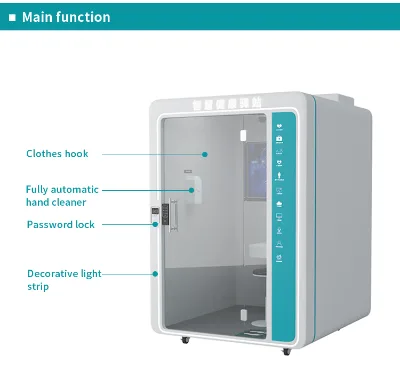
Multi-Functional Health Check Station Smart Health Cabin Checkpoint Self-Service
$21865.89 - $24781.34
MOQ: 1 pieces
Comprehensive Sourcing Guide
Self Service Health Checkup Kiosk Sourcing Guide
Procurement teams must first define the operational environment to select the appropriate kiosk configuration. The observed market features units designed for hospital triage and indoor physical examinations, utilizing a queue system to manage patient flow efficiently. Buyers should verify if the specific model supports the required screen configuration, as some listings indicate a setup with three distinct displays ranging from 11.5 to 32 inches to facilitate both patient interaction and staff monitoring.
The functional scope extends beyond basic measurements to include advanced diagnostic capabilities like 12-lead ECG and bone mineral density testing. When evaluating options, purchasers must confirm the presence of essential modules such as fingernail oximetry and blood pressure monitoring, ensuring the device aligns with the physiological functions of diagnosis and monitoring equipment standards. This verification ensures the selected unit can deliver the multi-functionality required for comprehensive health checkups without requiring additional peripheral hardware.
Product Scope and Observed Listing Signals
Buyers should analyze the observed price range of 150 to 24,781.34 USD to understand the variance in feature sets and build quality. This significant spread often reflects differences in the included diagnostic modules, such as the presence of breathalyzers or fast ECG capabilities, and the complexity of the operating system, which may be either Windows or Android based. Understanding these price drivers helps in budgeting for a unit that matches the specific clinical needs rather than simply selecting the lowest cost option.
The minimum order quantity for these units is consistently observed at one unit, allowing for flexible procurement strategies for pilot programs or single-site deployments. However, the physical dimensions and packaging standards vary significantly, with some models requiring large wooden cases measuring up to 198 cm in length. Procurement teams must account for these logistical requirements early in the planning phase to ensure adequate space for storage and installation at the intended facility.
Technical Specifications to Verify
Technical due diligence requires confirming the power specifications and voltage compatibility to ensure seamless integration with local electrical infrastructure. The observed data indicates a power consumption of less than 60W with a voltage range of 110V to 240V at 50Hz, which offers broad compatibility. Nevertheless, buyers must verify the specific power type is electric and check the data transmission capabilities, which may include RJ-45, WiFi, or optional 4G interfaces, to guarantee reliable connectivity with existing hospital networks.
Measurement accuracy and range are critical parameters that must be validated against clinical requirements before finalizing a purchase. The observed specifications list height ranges from 0 to 200 cm and weight capacities up to 500 kg, but the exact accuracy for blood oxygen and ECG measurements must be confirmed for each specific model. Additionally, the operation system, whether Windows or Windows Mobile, dictates the software ecosystem and compatibility with third-party health management applications, making this a key decision point for IT integration.
Compliance and Safety Documentation
Regulatory compliance is a non-negotiable aspect of sourcing medical diagnostic equipment, requiring verification of all relevant certifications. The market data highlights the presence of CE and ISOCE certifications, which are essential for market access in many regions. Buyers must request current certification documents for the specific model number, such as HW-V7000 or SH-T16, to ensure the device meets the safety and performance standards required for healthcare physical examinations in their jurisdiction.
Sterilization and material safety are also vital considerations for equipment that comes into direct contact with patients. The product attributes indicate that sterilization is a standard feature, yet procurement teams must confirm the specific protocols and materials used to maintain hygiene standards. Furthermore, the classification of the device as physiological functions of diagnosis and monitoring equipment necessitates adherence to strict safety guidelines, ensuring that the unit does not pose any risk during routine health checkups.
Cost Drivers and Commercial Terms
Commercial negotiations should focus on the total cost of ownership, which includes not only the unit price but also customization and software engineering fees. The availability of OEM, ODM, and software reengineering support suggests that pricing will vary based on the level of branding and functional customization requested. Buyers should clarify whether the quoted price includes the wooden box packaging and specific standard dimensions, as these logistical elements can impact the final landed cost.
Warranty terms and support structures are critical components of the commercial agreement that protect the buyer's investment. The observed warranty period is typically one year, but the scope of coverage for hardware failures and software updates must be explicitly defined in the contract. Additionally, the customization availability allows for tailored solutions, but procurement teams must ensure that any custom features do not void the standard warranty or extend the lead time beyond acceptable operational timelines.
Supplier Qualification and Quality Control
Supplier qualification requires a thorough assessment of the manufacturing origin and production standards to ensure consistent quality. The observed data points to Zhengzhou, Henan, China, as a primary origin, but buyers should verify the specific factory capabilities and quality control processes for each model. It is essential to confirm that the production standards, such as the specific wooden case dimensions, are consistently met across all units to prevent logistical issues during shipping and installation.
Quality control protocols must extend to the final product testing and performance verification before shipment. Buyers should request test results for key metrics like blood oxygen accuracy and ECG precision to validate the manufacturer's claims. The presence of a built-in 2-megapixel camera and laser printer also requires functional testing to ensure these components operate reliably within the Windows or Android operating systems, preventing potential disruptions in patient data capture and reporting.
Long-Term Procurement Checks
Sustainability and future-proofing are key considerations when selecting a self-service health checkup kiosk for long-term deployment. The modular nature of the optional functions, such as bone mineral density tests, allows for future upgrades without replacing the entire unit. Procurement teams should evaluate the software update policy and the availability of spare parts to ensure the kiosk remains operational and relevant as medical technologies evolve over the warranty period and beyond.
Maintenance and operational support are critical for minimizing downtime in high-traffic healthcare environments. Buyers must establish clear service level agreements regarding response times for technical issues, particularly for complex systems involving multiple display screens and data transmission interfaces. Regular maintenance schedules should be planned to ensure the sterilization features and mechanical components, such as the bim body height weight scale, continue to function accurately and safely for years of continuous use.
FAQs
What functions can a Self Service Health Checkup Kiosk typically measure?
Typical stations combine a BMI body height and weight scale with blood pressure measurement, fingernail blood oxygen testing, and standard 12-lead ECG readings. Optional modules such as bone mineral density testing and breath analysis can be added. Multi-function configurations are common, and customization is available so buyers can match the function set to their healthcare physical examination requirements.
Can buyers customize the kiosk configuration and branding?
Yes, customization is available on listed models, with support options including OEM, ODM, and software reengineering. Buyers can typically choose the color, with white as a standard option, and adjust the function set or display setup. Before ordering, confirm which modules are standard versus optional, because items like fast ECG or bone density testing may affect configuration and pricing.
Which certifications should I verify before ordering a health checkup kiosk?
Listed products carry CE certification, and some models reference ISO and CE compliance, so request certificates for the exact model and serial configuration. Ask which certificate applies to the complete kiosk rather than individual components. Since these are physiological diagnosis and monitoring devices, also confirm any registration or approval requirements in your destination market before shipment.
What is the minimum order quantity and packing arrangement?
The minimum order quantity is 1 unit, which suits pilot deployments and evaluation purchases. Packing is in wooden cases, with packing dimensions varying by model, such as a single case of 198 by 67 by 94 centimeters for one model and two wooden cases for another. Confirm the exact packing configuration and gross weight for your chosen model when arranging freight.
How do the kiosks handle data transmission and reporting?
Data can be transmitted through RJ-45 network connection, WiFi, a cloud interface, or optional 4G, allowing results to reach hospital systems or remote dashboards. The data collector may run on Windows or Windows Mobile depending on the model, and a laser printer produces printed reports. Verify integration options with your existing software before purchase, since software reengineering support is offered.
Which display and operating system options are available on these kiosks?
Configurations vary by model. One queue-and-triage style unit uses three display screens of 32, 18.5, and 11.5 inches, while other models run on Windows or Android operating systems. Screen count, size, and system type affect the user experience and software compatibility, so match these to your triage workflow and ask the supplier to confirm the exact display configuration per model.
What electrical and physical specifications should I prepare for installation?
Units operate on 110V to 240V at 50Hz with power consumption under 60W, so a standard outlet is usually sufficient. Physical dimensions differ by model, for example 180 by 180 by 235 centimeters for one kiosk. Measure your indoor space including clearance around the unit, check doorway widths for the wooden case dimensions, and plan the network connection point in advance.