Source Semi-Automatic Wine Bottle Corking Machine for Beverages, Oils, and Dairy
Explore 30 listings for a semi-automatic wine bottle corking machine designed for sealing wine, juice, and syrup. Buyers can compare specifications like bottle diameter, cork height, and hourly capacity across various models from Chinese manufacturers.
Key considerations
Products List

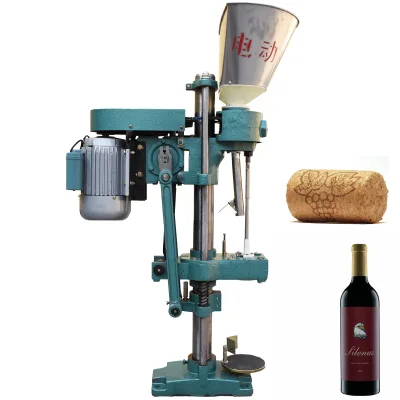
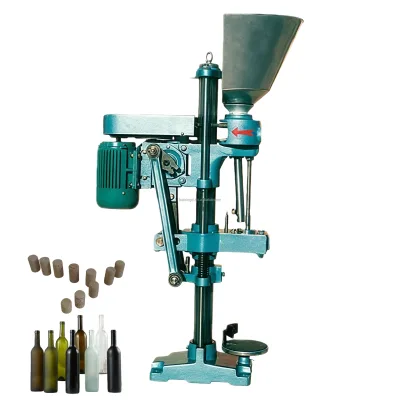
Semi Automatic Wine Bottle Corking Machine
$690.00 - $1190.00
MOQ: 1 set
Qingdao Zhongkang Printing and Packaging Machinery Co., Ltd.

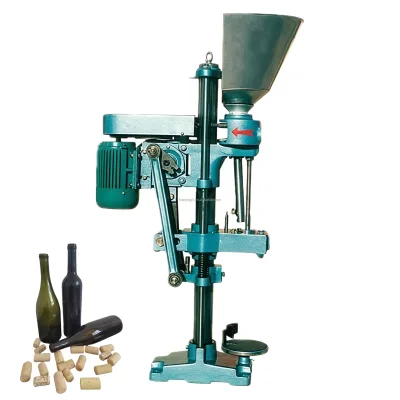
Semi Automatic Wine Corker/Red Wine Corking Machine
$580.00 - $1130.00
MOQ: 1 set
Qingdao Zhongkang Printing and Packaging Machinery Co., Ltd.




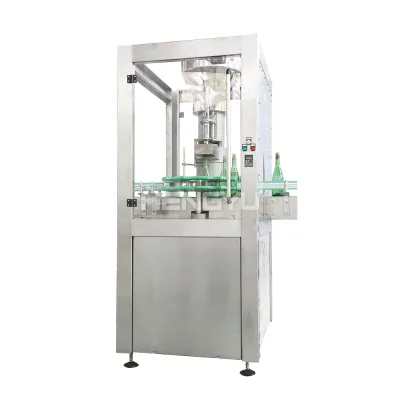


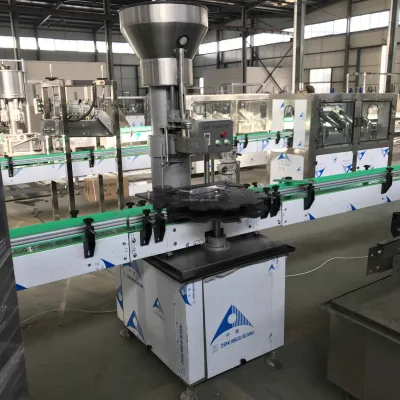
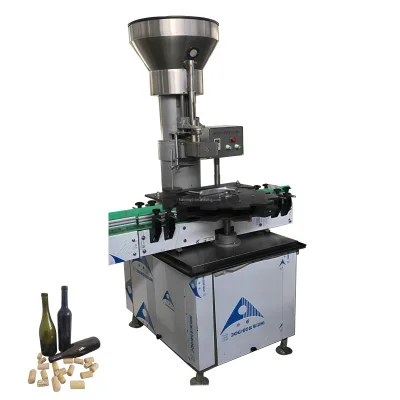
Automatic Wine Champagne Liquor Beverage Cork Bottle Capping Machine
$4986.00 - $12080.00
MOQ: 1 Pieces


Comprehensive Sourcing Guide
Strategic Sourcing Guide for Semi-Automatic Wine Bottle Corking Machines
Understanding the Operational Scope and Automation Levels
When sourcing a semi-automatic wine bottle corking machine, buyers must first distinguish between fully automated lines and equipment that requires manual intervention for specific stages. The market presents a spectrum of automation, ranging from fully automatic systems capable of high-volume throughput to semi-automatic units designed for flexibility and lower capital expenditure. In the context of semi-automatic operations, the buyer is often looking for a balance where the machine handles the precise mechanical action of cork insertion, while the operator or a preceding conveyor system manages bottle feeding and positioning.
The provided product data indicates a clear segmentation in the market. While some listings describe fully automatic grades, others explicitly identify as "Semi-Automatic." This distinction is critical for procurement planning. A semi-automatic machine typically offers a lower initial cost and reduced complexity, making it suitable for wineries with variable production schedules or smaller batch sizes. However, the operational efficiency depends heavily on the speed of the human operator or the upstream conveyor system. Buyers should verify the specific "Automatic Grade" of any unit they consider, as the term "Semi-Automatic" implies a specific workflow where the machine does not autonomously handle bottle loading. The observed data also highlights that some units are categorized strictly as "Sealing Machines" or "Capping Machines," which may differ from corking in mechanism but serve similar sealing functions. For wine specifically, the focus must remain on corking capabilities, ensuring the machine is designed for the unique elasticity and compression requirements of natural or synthetic corks.
Technical Specifications and Adaptability Parameters
The technical viability of a corking machine is defined by its ability to adapt to the physical dimensions of the bottles and corks used. Unlike generic sealing machines, wine corking requires precise tolerances to ensure a proper seal that preserves the product's integrity over time. The supplied facts reveal specific dimensional ranges that buyers should use as a benchmark for compatibility. For instance, observed specifications indicate an adapted bottle diameter range of 60-85mm and a bottle height range of 250-420mm. These figures are not universal; they represent the capabilities of specific models like the FY-A. A buyer must confirm that their inventory of wine bottles falls strictly within these parameters before purchase. If a winery utilizes standard 750ml bottles with a diameter of 65mm, the machine must be adjustable to accommodate this size without requiring a complete overhaul of the mechanism.
Furthermore, the cork dimensions are equally critical. The data points to an adapted cork diameter of 20.5-23mm and a cork height of 35-45mm. These measurements correspond to standard wine cork sizes, but variations exist in the industry. A machine that cannot adjust to a 23mm cork will fail to seal larger bottles, while one limited to 20.5mm may not handle premium natural corks effectively. The "Capability" metric is another vital specification; one observed unit lists a capacity of 2000 bottles per hour. However, for semi-automatic models, this figure is often theoretical and dependent on operator speed. Buyers should treat such numbers as maximum potential throughput rather than guaranteed output. The physical footprint of the machinery is also a constraint; dimensions such as 770 x 370 x 1280 mm or 900 x 770 x 1800 mm must be compared against the available floor space in the production facility. The weight of the unit, observed at 135kg for some models, indicates the need for a stable, level foundation to prevent vibration during the high-force corking process.
Compliance, Certification, and Safety Standards
In the B2B machinery market, compliance with international safety and quality standards is non-negotiable, particularly for equipment that interacts with food and beverage products. The provided facts explicitly mention the "CE" standard for certain models. This certification indicates that the machine meets the essential health, safety, and environmental protection requirements for products sold within the European Economic Area. When sourcing from China, as indicated by the "prod_origin" and "place of origin" data (Shandong, China), verifying the CE mark is a primary step. However, buyers should not assume that all listed units carry this certification. The presence of the CE mark in the data should be treated as an observation of specific models, not a blanket attribute of all semi-automatic corking machines.
Beyond the CE mark, buyers must investigate the electrical safety standards relevant to their local jurisdiction. The observed voltage specification of 220V/50HZ is common in many regions, but variations exist. If a buyer operates in a region with 110V or 60Hz power grids, they must verify if the machine can be configured for these parameters or if a transformer is required. The "core components" listed include motors and other unspecified parts. The quality of these components directly impacts the machine's longevity and safety. Buyers should request documentation regarding the origin and certification of the motor and other critical parts. Additionally, the "machinery test report" being "Provided" for some units is a strong indicator of quality assurance. This report should be reviewed to ensure it covers the specific safety tests relevant to the machine's operation, such as emergency stop functionality and pressure testing of the sealing mechanism.
Cost Drivers and Financial Considerations
The financial landscape of sourcing a semi-automatic wine bottle corking machine is influenced by several variables beyond the sticker price. The observed price range in the market spans from approximately $508.59 to $12,080. This vast disparity suggests that the cost is driven by factors such as build quality, automation level, brand reputation, and included features. A unit at the lower end of this spectrum may be a basic, manual-assist model with minimal durability, while a unit at the higher end likely includes advanced features, robust construction, and comprehensive after-sales support.
Buyers must look beyond the initial purchase price to understand the total cost of ownership. The "warranty period" is a significant cost driver; observed data indicates a standard warranty of one year, with some providers offering "Video Technical Support" and "Online support." A longer warranty or more comprehensive service package can justify a higher upfront cost. The "After-sales Service Provided" is another critical financial factor. If a machine breaks down, the cost of downtime in a winery can far exceed the cost of the machine itself. Therefore, the availability of spare parts and the responsiveness of the supplier are essential financial considerations. The "prod_packing" method, noted as "Wooden Standard" or "Wood Carton," also impacts shipping costs and the risk of damage during transit. Proper packaging is an investment in the safety of the machinery during the long journey from the origin in China to the buyer's facility.
Typical Applications and Versatility
While the core keyword focuses on wine, the versatility of these machines often extends to other liquid products. The application data lists a wide array of potential uses, including "Seasoning, Rice, Flour, Snack, Fish, Meat, Vegetable, Fruit, Tea, Drinks, Dairy Products, Hair Care Products, Skin Care Products, Cosmetics, Oil, Cleaning, Detergent." This broad applicability suggests that the mechanical principles of sealing and capping are transferable across industries. However, for a buyer specifically seeking a "Wine Bottle Corking Machine," the relevance of these other applications is secondary. The machine's design for wine implies specific pressure controls and cork handling mechanisms that may not be suitable for dry goods like flour or viscous products like honey without modification.
The data explicitly mentions "Corking Machine for Wine," "Corking Machine for Juice," "Corking Machine for Vodka," and "Corking Machine for Whiskey." This indicates that the machine is versatile within the alcoholic and beverage sector. The ability to handle different liquid types, from wine to syrup, suggests that the sealing mechanism can be adjusted for different viscosities and bottle neck sizes. For a winery, this versatility might be a bonus if they plan to expand into fruit wines or sparkling beverages. However, buyers should be cautious not to overestimate the machine's capability for non-liquid or semi-solid products unless the manufacturer explicitly confirms the adaptation. The "Packaging" type, listed as "Box" or "Bottles," further reinforces the machine's role in the final packaging stage of liquid products.
Supplier Evaluation and Quality Assurance
Evaluating a supplier for a semi-automatic wine bottle corking machine requires a rigorous approach to verifying their claims and capabilities. The brand name "TONGXINGYUAN" appears in the data, serving as an example of a manufacturer in this space. However, buyers should not limit their search to a single brand. Instead, they should use the brand as a reference point for the level of detail expected in a product listing. A reputable supplier will provide clear documentation regarding the "prod_model," such as FDS-1 or FY-A, and will be transparent about the "Automatic Grade."
Quality control is paramount. The fact that a "machinery test report" is provided for some units is a positive signal. Buyers should request these reports for any machine they consider purchasing. The report should detail the results of stress tests, safety checks, and performance verification. Additionally, the "After-sales Service Provided" section, which includes "Video Technical Support" and "Online support," is a key indicator of the supplier's commitment to customer success. A supplier that offers robust support is more likely to have a reliable supply chain for spare parts and a knowledgeable technical team. Buyers should also verify the "place of origin" and ensure that the manufacturing facility adheres to consistent quality standards. The "Standard" of "CE" is a baseline, but buyers should inquire about any additional certifications the supplier may hold, such as ISO standards for quality management.
Long-Term Procurement and Operational Sustainability
Sourcing a semi-automatic wine bottle corking machine is not just a one-time transaction but a long-term investment in the winery's production capabilities. The "warranty" of one year is a standard starting point, but buyers should negotiate terms that extend beyond this period, especially for critical components like the motor. The "core components" listed as "Other, Motor" highlight the importance of the motor's reliability. A high-quality motor ensures consistent performance and reduces the frequency of maintenance.
Sustainability and efficiency are also long-term considerations. The "Automatic Grade" of the machine affects energy consumption and labor costs. A semi-automatic machine reduces labor costs compared to a fully manual system but may require more operator attention than a fully automatic one. Buyers should assess the energy efficiency of the machine, particularly the motor specifications, to ensure it aligns with their sustainability goals. The "prod_packing" of "Wooden Standard" suggests a focus on robust protection, which is essential for maintaining the machine's condition over time. Finally, the "Capability" of 2000 bottles per hour should be viewed as a scalability metric. As the winery grows, the ability to upgrade or add to the existing line becomes a critical factor in the procurement decision. Buyers should ensure that the machine is part of a modular system that can adapt to future production needs without requiring a complete replacement.
FAQs
What automation level is available for wine bottle corking machines?
Both semi-automatic and automatic grades are available in the market. Buyers should verify the specific automatic grade of any unit they consider, as semi-automatic models require manual intervention for bottle feeding while handling the precise cork insertion mechanically.
Which bottle dimensions are compatible with the FY-A model?
The FY-A model adapts to bottles with a diameter between 60 and 85mm and a height ranging from 250 to 420mm. Buyers must confirm their inventory falls strictly within these parameters before purchase to ensure proper sealing without mechanism overhaul.
Can the machine handle corks of different sizes?
Yes, the machine can adapt to corks with a diameter of 20.5 to 23mm and a height of 35 to 45mm. These measurements correspond to standard wine cork sizes, though variations exist in the industry requiring specific adjustment capabilities.
What certifications are provided for the machinery?
Certain models carry the CE standard, indicating compliance with European health and safety requirements. Buyers should not assume all units have this certification and must verify the CE mark on specific listings before proceeding with procurement.
How long is the warranty period for these machines?
The standard warranty period is one year for the observed units. Some providers also offer video technical support and online support, which are critical factors for minimizing downtime costs in a winery production environment.
What is the typical price range for these machines?
The observed price range spans from approximately 508.59 to 12,080 USD. This disparity reflects differences in build quality, automation level, and included features, requiring buyers to look beyond the initial sticker price to total cost of ownership.
Where are these machines typically manufactured?
The place of origin is listed as Shandong, China, with a general origin of China. Buyers should verify the manufacturing facility adheres to consistent quality standards and request documentation regarding the origin of core components like motors.