Source Sheet Metal Bending Pliers Set for HVAC, Roofing, and Auto Repair
Explore 30 verified options for the Sheet Metal Bending Pliers Set, featuring high carbon steel construction and customizable handles. Buyers can compare jaw widths, surface treatments, and OEM support to find the right tool for professional sheet metal work.
Key considerations
Products List

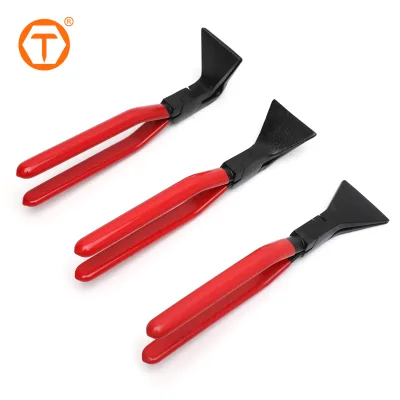


Professional Stainless Steel Multifunctional Tool Multitool Pliers Folding Pliers
$12.16 - $13.20
MOQ: 200 Pieces


Multitool Pliers Set Stainless Steel Screwdriver Tool with Screwdriver Bits Black
$0.98 - $1.75
MOQ: 500 Pieces


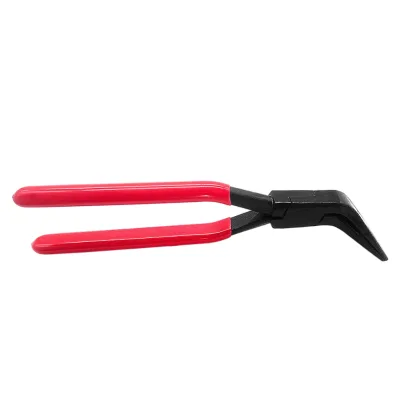
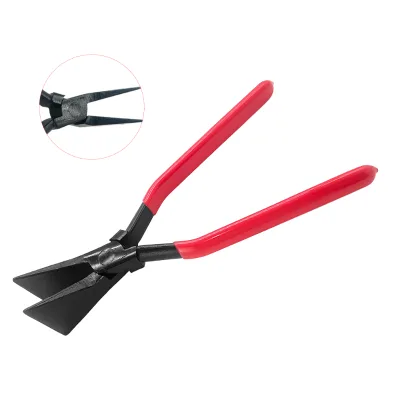


Complete Set Mold Bending Press Brake Tooling for Sheet Metal Bending
$50.00 - $500.00
MOQ: 100 Pieces


Professional Combination Plier Long Nose Siding Cutting Hand Pliers Tool Set
$1.80 - $2.00
MOQ: 120 Pieces

Comprehensive Sourcing Guide
Strategic Sourcing Guide for Sheet Metal Bending Pliers Sets
Understanding Product Specifications and Material Composition
When sourcing a Sheet Metal Bending Pliers Set, the primary objective is to identify tools that balance durability with precise manipulation capabilities. Based on current market observations, the core material composition for these tools typically involves high-grade carbon steel. Specifically, suppliers often utilize 45# carbon steel or general high carbon steel, which is subsequently forged to ensure structural integrity. This forging process is critical as it aligns the grain structure of the metal, enhancing the tool's resistance to deformation under high torque. The hardness of the finished product is a vital metric; observed specifications indicate a hardness range of HRC 35-45. This range suggests a balance between toughness and edge retention, preventing the jaws from chipping during heavy-duty bending tasks while maintaining the ability to hold a shape.
The physical dimensions of the tool are equally significant for operational efficiency. The standard length for these pliers is observed to be approximately 27cm, providing sufficient leverage for the user. The jaw width is commonly standardized at 60mm or 6cm, which accommodates a wide variety of sheet metal gauges. The jaw shape is typically flat, designed to distribute pressure evenly across the metal surface to prevent marring. Furthermore, the jaw texture is often smooth, which is essential for bending applications where surface finish matters. The tool features a box joint structure, a design choice that offers superior strength compared to pivot joints, ensuring the pliers remain rigid during the bending process. The maximum opening capacity is a key specification to verify, with observed data pointing to a capacity of 1 1/2 inches, allowing for the manipulation of thicker or wider metal strips.
Functional Capabilities and Operational Design
The functional scope of a Sheet Metal Bending Pliers Set extends beyond simple bending. While the primary application is bending, many sets in the current market are engineered as multi-functional tools. The observed functional attributes include cutting, wire stripping, crimping, and punching. This versatility makes the tool suitable for comprehensive sheet metal work where multiple operations are required without switching tools. The specific bending capabilities are often defined by the head style; common configurations include straight 45-degree and 90-degree heads, allowing for precise angular bends in various directions. The shaft style can vary, with observations noting both straight and arched designs, each offering different ergonomic advantages depending on the workspace constraints.
The handle design plays a crucial role in user comfort and safety. The handles are frequently coated with PVC plastic, often in a combination of red and black colors. This coating serves a dual purpose: it provides a non-slip grip for better control and offers electrical insulation, although buyers should note that these tools are generally not rated as ESD-safe. The handle material is described as a new material black PVC plastic-coated handle in some listings, indicating ongoing improvements in grip comfort and durability. The packaging often includes an OEM color box, suggesting that the tools are marketed as professional-grade equipment suitable for industrial or commercial use. The product is categorized for adult application age, implying that the force required and the size of the tool are designed for mature users with developed hand strength.
Compliance, Standards, and Certification Verification
In the B2B procurement of industrial hand tools, verifying compliance with standards is a critical step that often gets overlooked. While specific certification documents are not universally listed for every product, buyers must actively seek verification of the manufacturing standards. The product is identified as a "3 Piece Bender Pliers Tool," which implies a set configuration that should adhere to consistent quality benchmarks. The origin of these tools is predominantly China, with specific manufacturing hubs noted in Zhejiang. This geographical concentration suggests a mature supply chain, but it also necessitates rigorous due diligence regarding the specific factory's quality management systems.
Buyers should verify if the manufacturer adheres to international quality standards such as ISO 9001, though this is not explicitly confirmed in the provided data. The absence of explicit certification claims in the product description means that procurement teams cannot assume compliance based on the listing alone. Instead, the verification process should involve requesting third-party test reports that validate the hardness (HRC 35-45) and tensile strength of the carbon steel used. Additionally, since the tools are intended for building decoration and general industrial use, compliance with local safety regulations regarding tool sharpness and structural integrity is mandatory. The "Diy" grade mentioned in some attributes suggests a market segment that may range from professional to hobbyist, requiring buyers to clarify the intended professional grade before finalizing orders.
Cost Drivers and Pricing Dynamics
The pricing of sheet metal bending pliers sets is influenced by several distinct factors, primarily material costs, manufacturing complexity, and customization requirements. The use of forged 45# carbon steel is a significant cost driver, as the forging process is more expensive than casting but yields a superior product. The surface treatment, specifically the electrophoretic black finish, adds another layer of cost. This process provides excellent corrosion resistance and a uniform appearance, which is preferred in professional environments. The complexity of the jaw design, particularly the inclusion of specific angles like 45 and 90 degrees, also impacts the machining time and tooling costs.
Market observations indicate a wide price range, with listed prices spanning from $0.50 to $500.00 USD. This vast disparity highlights the difference between basic, generic models and high-end, specialized sets. The lower end of the spectrum likely represents basic tools with minimal finishing or standard packaging, while the higher end may include premium materials, specialized coatings, or complete sets with multiple pieces. The Minimum Order Quantity (MOQ) is another critical cost factor, with observed ranges from 10 to 100,000 units. A specific observation notes an MOQ of 500 sets, which is a common threshold for OEM orders. Buyers must consider that lower unit prices are typically achievable only at higher volume tiers, and the cost per unit will fluctuate based on the total order quantity. Packaging costs, such as the OEM color box and the specific carton dimensions (31.523.539.5cm), also contribute to the final landed cost, especially when factoring in shipping logistics.
Supplier Evaluation and Customization Options
Selecting the right supplier requires a deep understanding of their customization capabilities and production capacity. The market data indicates that customization is a widely available attribute, with suppliers offering OEM, ODM, and OBM support. This flexibility allows buyers to tailor the product to their specific brand requirements, including the ability to fix handle colors and apply custom logos. The brand name "Sinotools" is observed in the market, indicating that some suppliers operate under established brand identities, while others may be white-label manufacturers.
When evaluating suppliers, buyers should prioritize those with a proven track record in the Zhejiang region, known for its manufacturing expertise. The supplier's ability to handle the "3 Piece Bender Pliers Tool" standard configuration is a baseline requirement. However, the true value lies in their ability to manage the entire production lifecycle, from the forging of the carbon steel to the final electrophoretic black treatment. Buyers should request samples to verify the jaw texture, shaft style, and handle grip quality. The packaging information, which specifies 6 sets per carton with a gross weight of 16.8-17.5 kg, provides insight into the supplier's logistics efficiency. A supplier that can consistently meet the specified packing dimensions and weight limits demonstrates a mature supply chain capable of handling large-scale orders without logistical bottlenecks.
Quality Control and Long-Term Procurement Strategy
Implementing a robust quality control (QC) strategy is essential for maintaining the integrity of the sheet metal bending pliers sets. Given the critical nature of the tool's function, QC should focus on the hardness verification, ensuring the HRC 35-45 range is met across the entire batch. The surface treatment must be inspected for uniformity, with no signs of peeling or uneven coating on the electrophoretic black finish. The jaw width and length must be measured against the specified 60mm and 27cm dimensions to ensure consistency. Additionally, the structural integrity of the box joint should be tested to prevent loosening or failure during high-stress bending operations.
For long-term procurement, buyers should consider the warranty terms, which are observed to be 1 year for these tools. This warranty period serves as a baseline for supplier confidence in their product. However, relying solely on the warranty is insufficient; buyers should establish a partnership with suppliers who offer ongoing support and spare parts availability. The "Single item" selling unit suggests that individual tool replacement is possible, but bulk ordering strategies should be developed to minimize downtime. The measurement system is metric, which is standard for most international markets, but buyers must ensure that all documentation and specifications align with their local requirements. By focusing on these quality metrics and establishing clear communication channels with suppliers, buyers can ensure a steady supply of high-performance sheet metal bending pliers sets that meet their operational needs.
Comparative Analysis of Tool Attributes
To facilitate informed decision-making, the following table summarizes the key attributes observed in the market for sheet metal bending pliers sets. This comparison highlights the variations in specifications that buyers should consider when selecting a supplier.
| Attribute | Observed Specification | Significance for Procurement |
|---|---|---|
| Material | High Carbon Steel / 45# Carbon Steel | Determines durability and resistance to wear. |
| Hardness | HRC 35-45 | Critical for balancing toughness and edge retention. |
| Jaw Width | 60mm / 6cm | Defines the maximum width of metal that can be bent. |
| Total Length | 27cm | Affects leverage and user ergonomics. |
| Handle Material | PVC Plastic-Coated | Provides grip and insulation; color options vary. |
| Surface Treatment | Electrophoretic Black | Ensures corrosion resistance and aesthetic finish. |
| Bend Angles | 45 and 90 Degree Heads | Determines the versatility of bending operations. |
| Structure | Box Joint | Offers superior strength compared to pivot joints. |
| Origin | Zhejiang, China | Indicates manufacturing hub and supply chain maturity. |
| MOQ | 500 sets (Typical) | Influences initial capital investment and inventory levels. |
| Warranty | 1 Year | Standard protection period for manufacturing defects. |
This comparative analysis underscores the importance of verifying each attribute against the specific needs of the buyer's application. While the observed data provides a strong baseline, the final selection should be based on a thorough review of samples and a detailed assessment of the supplier's ability to meet these specifications consistently. By adhering to these guidelines, buyers can navigate the complex landscape of sheet metal bending pliers procurement with confidence and precision.
FAQs
What material is used for the Sheet Metal Bending Pliers Set?
The set is made from forged 45# carbon steel or high carbon steel to ensure structural integrity. This material is heat-treated to achieve a hardness range of HRC 35-45, balancing toughness with resistance to deformation during heavy bending tasks.
Which jaw configurations are available for bending applications?
The tool features straight 45-degree and 90-degree heads designed for precise angular bends. The jaws have a flat shape with a smooth texture to distribute pressure evenly and prevent marring the surface of the sheet metal being worked on.
Can buyers customize the handle color and packaging for this tool?
Yes, customization is available including OEM, ODM, and OBM support for handle colors and branding. The standard packaging uses an OEM color box with specific carton dimensions, though the handle color can be fixed to match buyer preferences.
What is the minimum order quantity for purchasing this pliers set?
The standard minimum order quantity is 500 sets for this specific product model. However, market observations indicate that MOQs can range from 10 to 100,000 units depending on the supplier and the specific customization requirements of the order.
How long is the warranty period for the sheet metal bending pliers?
The product comes with a standard one-year warranty covering manufacturing defects. This warranty period reflects the supplier's confidence in the durability of the forged carbon steel and the quality of the electrophoretic black surface treatment.
What is the maximum opening capacity of the pliers jaws?
The maximum opening capacity is 1 1/2 inches, allowing for the manipulation of thicker metal strips. This capacity, combined with a jaw width of 60mm, ensures the tool can handle a wide variety of sheet metal gauges effectively.
Where are these sheet metal bending pliers manufactured?
These tools are manufactured in Zhejiang, China, a region known for its mature hand tool supply chain. The product origin is listed as China, with specific production hubs concentrated in this area to support both domestic and international demand.