Source Silicone Mouthpiece for Diving, Snoring, and Sleep Care
Explore 30 verified listings for Silicone Mouthpiece options suitable for diving, snoring control, and sleep health care. Buyers can compare materials, certifications, and customization features to find the right supplier for home, office, or travel needs.
Key considerations
Products List




Comprehensive Sourcing Guide
Strategic Sourcing Guide for Silicone Mouthpiece Procurement
Understanding Material Composition and Functional Attributes
When sourcing silicone mouthpieces, the primary focus must remain on the material integrity and its specific application within the product lifecycle. Based on the available market data, silicone is a dominant material choice for this category, offering distinct advantages over other thermoplastics. The observed product attributes indicate that silicone mouthpieces are frequently marketed with a "BPA Free" advantage, a critical specification for health-related oral devices. This attribute ensures that the material does not leach harmful bisphenol A compounds, a standard expectation for products intended for prolonged oral contact.
However, procurement teams must exercise caution when generalizing material properties across all listings. The supply chain for these items is diverse, with some products explicitly listing "TPE" (Thermoplastic Elastomer) or "thermoplastic mouth tray" as the material composition. While TPE shares some flexibility characteristics with silicone, it is a distinct polymer class. A buyer researching "Silicone Mouthpiece" must verify that the specific SKU they are evaluating is indeed silicone and not a TPE alternative, as this distinction affects chemical resistance, durability, and biocompatibility. The observed product models, such as WU6002F and TUWAN-006, represent different iterations of these devices, often varying in their specific material formulations.
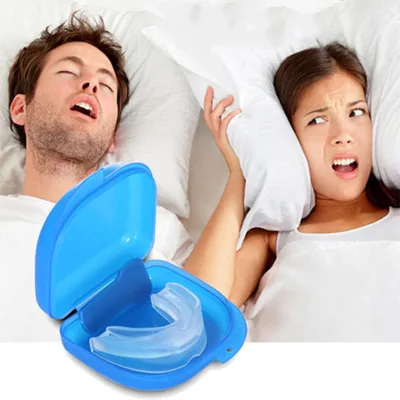
The functional profile of these mouthpieces is equally varied. While the core keyword suggests a focus on the material, the actual applications range from "Diving" to "Sleep Health Care Instrument" and "Snore Stopper" devices. This divergence implies that a single material specification may not suffice for all use cases. A mouthpiece designed for diving requires different pressure resistance and sealing capabilities compared to one designed for anti-snoring or sleep health care. Buyers must cross-reference the material specification with the intended usage. For instance, the "Anti Snoring" function is explicitly linked to specific models, while "Diving" is associated with others. Ensuring the material matches the functional requirement is the first step in a compliant procurement process.
Technical Specifications and Dimensional Standards
Technical specifications for silicone mouthpieces are not uniform and vary significantly based on the intended application and manufacturer. The observed data reveals a wide range of packaging dimensions and product standards. For example, one model is listed with a standard size of 1.81.50.6 cm, while another is packaged in a box measuring 9X9X6 cm. These discrepancies highlight the importance of verifying the "Single package size" and "Single gross weight" for logistics planning. The observed gross weight for certain items is as low as 0.050 kg, which is a critical factor for calculating shipping costs, particularly for air freight.
Dimensional consistency is another area requiring rigorous verification. The data shows product standards ranging from 854590MM to 748CM. These variations suggest that there is no single industry-standard dimension for a generic "Silicone Mouthpiece." Instead, dimensions are likely tailored to specific jaw sizes, mouth shapes, or device types (e.g., a mouthguard versus a sleep aid). Procurement teams must request detailed CAD drawings or physical samples to confirm that the dimensions align with the target demographic, such as the "Middle-aged and Old" group mentioned in the product attributes.
Packaging standards also play a significant role in the technical evaluation. The supply chain offers various packaging options, including "50 PCS Per Carton," "Plastic Travel Case," "Neutral Gift Box," and "Polybag." The choice of packaging impacts the unit cost, the protection of the silicone material during transit, and the final presentation to the end consumer. For instance, a "Color Box" suggests a retail-ready product, whereas a "Polybag" indicates a bulk wholesale item. The standard of "1 pcs in a bag" is common for individual units, but bulk orders may require different cartoning strategies to meet the "prod_packing" requirements of the buyer.
Compliance, Certification, and Regulatory Verification
Navigating the compliance landscape for silicone mouthpieces requires a clear understanding of the certifications present in the market and those that must be verified. The observed data explicitly lists "CE" certification as a standard attribute for several products. This indicates that at least a segment of the supply chain adheres to European conformity standards, which is essential for selling in the European market. However, the presence of CE on a listing does not automatically guarantee that every unit of that model is certified; it is an observation of the product's claimed status.
Beyond CE, the market data references "ISO 10993" as a background standard. This is a critical series of standards for the biological evaluation of medical devices, covering cytotoxicity, sensitization, and irritation. While the data notes this as a "low-confidence background" fact, it remains a vital benchmark for buyers. A Silicone Mouthpiece intended for "Sleep Health Care" or "Snore Stopper" functions often falls under the category of medical devices or health care instruments. Therefore, verifying that the manufacturer has conducted ISO 10993 testing is a non-negotiable step for high-risk applications. Buyers should not assume compliance based on the product title alone but must request the specific test reports.
The "BPA Free" attribute is another compliance-related claim that requires verification. While listed as an advantage, it is a chemical safety claim. Buyers should ensure that the supplier can provide a Certificate of Analysis (CoA) confirming the absence of BPA and other harmful plasticizers. Additionally, the "BSCI" certification is mentioned in the background data. While not a product-specific certification, BSCI (Business Social Compliance Initiative) addresses the social responsibility of the manufacturing facility. For buyers concerned with ethical sourcing and supply chain transparency, verifying BSCI status or similar social compliance audits is a prudent consideration, even if it does not directly affect the physical properties of the mouthpiece.
Cost Drivers and Minimum Order Quantity Dynamics
The pricing and order volume dynamics for silicone mouthpieces are influenced by several factors, including material costs, customization levels, and packaging requirements. The observed price range in the market is 0.01 to 6 USD, a wide spectrum that reflects the diversity of product complexity and quality. The lower end of this range likely corresponds to simple, non-customized polybagged items, while the higher end may include products with custom logos, premium packaging like "Color Box" or "Plastic Travel Case," and advanced certifications.
Minimum Order Quantity (MOQ) is a significant cost driver. The data shows an observed MOQ range from 1 to 5000 units. This flexibility allows buyers to test the market with small orders or commit to large volumes for better unit economics. Specific models have defined MOQs, such as 100PCS for one model and 50PCS for another. Furthermore, a "Customization MOQ" of 500PCS is noted, indicating that adding a custom logo or modifying the mold incurs a higher volume threshold. This is a standard industry practice to amortize the cost of mold creation and setup.
Buyers must also consider the impact of "Logo Printing" on costs. The market offers options for "Without Logo Printing" and "with Logo Printing." Customized logo printing is explicitly listed as "Acceptable" for certain brands like IVISMILE. The decision to include branding will affect the unit price and the MOQ. Additionally, the "Service" attributes of "Wholesales, Retails, OEM" suggest that suppliers are willing to accommodate different business models, but the cost structure will vary accordingly. OEM services often require higher MOQs and longer lead times due to the customization of molds and packaging.
Supplier Evaluation and Operational Capabilities
Evaluating suppliers for silicone mouthpieces requires a multi-faceted approach that goes beyond the product listing. The observed data indicates that suppliers are located in various regions of China, including "Guangdong," "Fujian," and "Jiangxi." While these are known manufacturing hubs, the specific location can influence logistics costs and lead times. Buyers should verify the exact "place of origin" for the specific batch they intend to purchase, as this affects the supply chain resilience.
The "Condition" of the products is consistently listed as "New" or "Brand New," which is a baseline expectation. However, the "Service" attributes provide deeper insight into supplier capabilities. The mention of "Sample: Availiable" is a crucial indicator of a supplier's willingness to engage in the pre-procurement phase. Buyers should leverage this to request physical samples to verify the "BPA Free" claim, the texture of the silicone, and the accuracy of the dimensions. The "Sample" availability also allows for testing the "Anti Snoring" or "Snore Stopper" function in a real-world scenario before committing to a bulk order.
Furthermore, the "Customization" attribute is available across the board, suggesting that most suppliers are capable of OEM and ODM services. However, the "Customization MOQ" of 500PCS acts as a barrier for small buyers. Buyers must assess whether their projected volume justifies the customization investment. The "Brand" attribute, such as "IVISMILE," indicates that some suppliers operate with their own brand identity, while others may be purely contract manufacturers. Understanding whether a supplier is a brand owner or a pure manufacturer helps in negotiating pricing and intellectual property rights.
Quality Control and Long-Term Procurement Strategy
Implementing a robust quality control (QC) strategy is essential for sourcing silicone mouthpieces, given the direct contact with the human body. The "prod_packing" and "prod_standard" attributes provide a starting point for inspection criteria. For example, verifying that the "1 pcs in a bag" standard is met ensures that each unit is individually protected. However, buyers must go further and establish a QC protocol that includes visual inspection for defects, dimensional checks against the "Single package size," and material verification.
Long-term procurement considerations involve building a relationship with suppliers who can maintain consistency. The "MOQ" and "Customization MOQ" figures suggest that suppliers are prepared for recurring orders. Buyers should aim to establish a framework for continuous quality monitoring, including periodic third-party testing for the "ISO 10993" standards and "CE" compliance. The "Advantage" of being "BPA Free" should be re-verified with every new batch to ensure that the supplier has not changed their material sourcing.
The "Group" attribute, specifically "Middle-aged and Old," highlights the need for products that cater to specific physiological needs. This demographic may require different levels of flexibility or thickness in the silicone. Buyers should ensure that the supplier understands these nuances and can adjust the product specifications accordingly. The "Function" of "Anti Snoring" and "Snore Stopper" also implies a need for durability and comfort over long periods of use. Quality control should therefore include stress testing to ensure the mouthpiece does not degrade or lose its shape after repeated use.
In conclusion, sourcing silicone mouthpieces requires a disciplined approach that balances technical specifications, compliance requirements, and supplier capabilities. By leveraging the observed data and applying rigorous verification processes, buyers can navigate the complexities of this market and secure high-quality products that meet their specific needs. The wide range of options, from simple polybagged items to customized OEM solutions, offers flexibility, but it also demands careful due diligence to ensure that the final product aligns with safety, performance, and cost expectations.
FAQs
What certifications are available for silicone mouthpieces?
CE certification is available for several Silicone Mouthpiece models in the supply chain. Buyers should verify specific test reports for medical standards like ISO 10993, as this is a low-confidence background fact not guaranteed on every listing.
Can I customize the logo on silicone mouthpieces?
Customized logo printing is acceptable for many models, but it requires a minimum order quantity of 500 pieces. Some listings offer options without logo printing for smaller orders starting at 50 pieces.
Which materials are used for these mouthpieces?
Silicone is a dominant material choice, often marketed as BPA Free. However, some products use TPE or thermoplastic mouth trays, so buyers must verify the specific material composition for each SKU.
What is the minimum order quantity for these items?
The minimum order quantity ranges from 1 to 5000 units depending on the model. Specific models have fixed MOQs like 100 pieces, while customizations typically require 500 pieces to amortize setup costs.
How are silicone mouthpieces packaged for shipping?
Packaging varies from polybags and neutral gift boxes to color boxes and plastic travel cases. Bulk orders may use cartons containing 50 pieces per carton, while individual units often come in a bag.
Where are these Silicone Mouthpiece manufacturers located?
Manufacturers are located in various regions of China, including Guangdong, Fujian, and Jiangxi. Buyers should verify the exact place of origin for specific batches to calculate logistics costs accurately.