Source Sine Wave Output Online UPS for Industry, Communication, Fire Safety
Find 30 Sine Wave Output Online UPS units with single or three-phase options, pure sine wave output, and IP protection levels. Buyers can compare models ranging from 1KVA to 20KVA with features like SNMP slots and LED displays for industrial, communication, and fire safety applications.
Key considerations
Products List


Online Double Conversion Single Phase Low Frequency Sine Wave Output UPS
$350.00 - $1600.00
MOQ: 1 Pieces


Single Phase Low Frequency Double Conversion Online Sine Wave Output UPS
$350.00 - $1600.00
MOQ: 1 Pieces


1-10kVA Rack Mount Online UPS - High Frequency, Pure Sine Wave Output
$129.00 - $348.00
MOQ: 10 Pieces


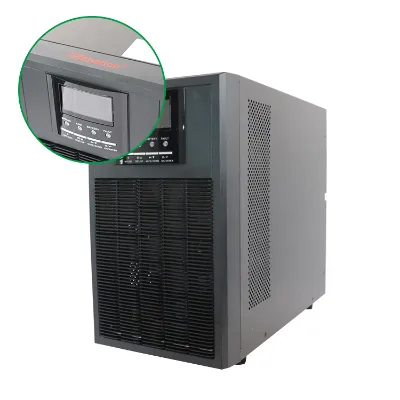

High Frequency Online Single Phase UPS Dual Conversion Pure Sine Wave Output
$105.00 - $122.00
MOQ: 1 Pieces

High Frequency Online UPS Real-Time Dual Conversion Pure Sine Wave Output
$105.00 - $122.00
MOQ: 1 Pieces


Comprehensive Sourcing Guide
Sine Wave Output Online UPS Sourcing Guide
Procuring sine wave output online uninterruptible power supplies (UPS) requires a disciplined approach to technical verification and supplier qualification. These systems are critical for protecting sensitive electronic infrastructure, including communication networks, industrial automation, and fire safety systems, by providing continuous, clean power regardless of grid conditions. The core value proposition lies in the double-conversion design, which isolates the load from utility power anomalies and delivers a pure sine wave output essential for the proper operation of active power factor correction (PFC) power supplies and inductive loads. Buyers must navigate a market where specifications vary significantly, ensuring that the selected unit matches the precise electrical and environmental demands of the deployment site.
This guide provides evidence-based procurement strategies for sourcing these specialized power protection devices. It focuses on interpreting observed listing signals, verifying critical technical parameters, and establishing robust commercial and quality control frameworks. By adhering to the principles outlined herein, procurement teams can mitigate risks associated with incompatible hardware, non-compliant documentation, and unreliable supply chains. The objective is to secure a solution that offers long-term reliability, operational efficiency, and seamless integration into existing centralized or decentralized power architectures.
Product Scope and Observed Listing Signals
The market for Sine Wave Output Online UPS units spans a wide range of capacities and form factors, as evidenced by observed listing signals. Product models such as the B 1-20KVA and RP 1K-3KVA indicate a tiered approach to capacity, catering to both small-scale office applications and larger industrial installations. Listings also reference specific series like the Queen Star Series and Melody Star Series, suggesting differentiated product lines that may vary in features, packaging, or target market segments. Buyers should observe that output capacity is categorized into both small and large types, implying that the supplier portfolio is designed to handle diverse load requirements, from single-server racks to entire facility backups.
Listing attributes reveal significant variability in physical and operational characteristics that must be carefully matched to project needs. Observed data points include single-phase and three-phase configurations, indicating that the supplier offers solutions for both residential/light commercial and heavy industrial environments. The equipment mode is described as both centralized and decentralized, allowing for flexible deployment strategies depending on the site’s power distribution architecture. Additionally, standby time is characterized as either long-acting or standard, which directly impacts the runtime capability of the battery bank and the duration of protection during extended grid outages.
Technical Specifications to Verify
Technical verification must begin with the output waveform and conversion topology. The sine wave output is a non-negotiable feature for many modern electronic loads, and buyers should confirm that the unit employs a double-conversion design. This topology ensures that the output is derived from an internal inverter, providing complete isolation from input disturbances. The transfer time is a critical metric; observed listings indicate a transfer time of 0ms or 0ms, which is essential for maintaining uptime in mission-critical applications where even a millisecond interruption could cause data loss or equipment damage. Buyers must verify that the pure sine wave specification is maintained under all load conditions, including peak loads.
Input and output electrical parameters require precise alignment with the site’s power infrastructure. The power factor is listed as 0.8 or 0.9, which affects the efficiency of power utilization and the sizing of the UPS relative to the connected load. The current crest ratio is observed as 1:1, a specification that indicates the UPS can handle inrush currents typical of certain electronic loads without tripping. Buyers should also verify the phase configuration, ensuring that the selected unit matches the site’s single-phase or three-phase supply. Additionally, the IP class, observed as IP20, defines the level of protection against solid objects and water, which is crucial for determining suitable installation environments, such as server rooms versus industrial floors.
Compliance and Safety Documentation
Compliance with international safety and quality standards is paramount for ensuring the reliability and legal marketability of the UPS units. Listings reference CE and ISO certificates, which serve as foundational indicators of adherence to European safety directives and international quality management systems. However, buyers must request and verify the actual documentation for these certifications, ensuring they are current and applicable to the specific model being procured. The presence of these certificates suggests a baseline level of manufacturing rigor, but they do not replace the need for model-specific test reports and compliance statements.
Environmental and operational standards also play a significant role in the procurement decision. The operating temperature range is specified as 0-40°C, while the storage temperature range extends from -25°C to 70°C. These parameters define the environmental conditions under which the UPS can function safely and effectively. Buyers must assess whether the deployment site’s ambient conditions fall within these ranges, particularly in regions with extreme climates. Furthermore, the packaging is described as safety-oriented with no pollution, and materials include cartons, wooden pallets, and wooden boxes. This indicates a focus on protecting the equipment during transit, which is vital for preventing damage to sensitive internal components before installation.
Cost Drivers and Commercial Terms
Several factors influence the total cost of ownership for Sine Wave Output Online UPS systems. The capacity range, from 1KVA to 20KVA and beyond, directly impacts the base price, with larger units commanding higher costs due to increased material and manufacturing requirements. The inclusion of physical isolation transformers is another significant cost driver, as these components add weight, size, and expense but provide enhanced electrical isolation and noise filtering. Buyers should evaluate whether the added cost of a transformer-based design is justified by the specific electrical environment of the site, particularly in areas with poor power quality.
Commercial terms such as minimum order quantity (MOQ) and customization options also affect procurement strategy. Observed MOQ ranges from 1 to 10 units, suggesting flexibility for both pilot projects and larger deployments. The availability of OEM/ODM services indicates that buyers can request custom branding or specific feature modifications, which may incur additional setup costs or longer lead times. Additionally, optional features such as SNMP cards for remote monitoring and LCD/LED displays for local interface enhance functionality but also increase the unit price. Buyers should carefully assess the necessity of these add-ons to avoid over-specifying and incurring unnecessary expenses.
Supplier Qualification and Quality Control
Supplier qualification is a critical step in mitigating supply chain risks. Buyers should verify the supplier’s manufacturing capabilities, particularly their ability to produce units with the observed specifications, such as the 590230750mm and 596305890mm form factors. The weight of the units, observed at 115kg and 116kg, provides insight into the build quality and component density, which can be indicative of robust construction. However, buyers must not rely solely on these observations; they should request detailed technical datasheets and perform independent verification of key performance indicators.
Quality control processes should be established to ensure consistency across production batches. Buyers should inquire about the supplier’s testing protocols, including factory acceptance tests (FAT) and routine quality checks. The presence of optional SNMP slots suggests a modular design, which can facilitate easier maintenance and upgrades. Buyers should also assess the supplier’s after-sales support capabilities, including warranty terms, technical assistance, and availability of spare parts. Establishing a clear communication channel with the supplier’s engineering team can help resolve technical queries and ensure that the delivered units meet the project’s specific requirements.
Long-Term Procurement Checks
Long-term procurement success depends on ongoing performance monitoring and supplier relationship management. Buyers should establish key performance indicators (KPIs) for the UPS units, such as uptime, efficiency, and maintenance frequency. Regular audits of the supplier’s quality management system can help ensure that production standards are maintained over time. Additionally, buyers should stay informed about technological advancements in UPS technology, such as improvements in battery chemistry or inverter efficiency, to ensure that their procurement strategy remains competitive and effective.
Environmental and regulatory changes may also impact procurement decisions. Buyers should monitor updates to international standards and local regulations that may affect the design and operation of UPS systems. For instance, changes in energy efficiency requirements or safety standards may necessitate upgrades or replacements of existing equipment. By maintaining a proactive approach to regulatory compliance and technological evolution, buyers can ensure that their investment in Sine Wave Output Online UPS systems continues to deliver value and protection for their critical infrastructure.
FAQs
What output waveform does this online UPS provide?
This online UPS provides a pure sine wave output. The product specifications confirm a sine wave output design suitable for sensitive communication and industrial equipment requiring stable power.
Can I customize the UPS for specific applications?
Yes, customization is available for this equipment. The product attributes list OEM and ODM services, allowing modifications for communication, industry, or fire safety applications based on buyer needs.
Which protection features are included in the system?
The system includes overvoltage and overcurrent protection. These safety features ensure reliable operation for centralized or decentralized equipment modes while maintaining high IP levels for environmental resistance.
How long is the standby time for this machine?
Standby time varies between standard and long-acting machine configurations. Buyers can select specific models like the Queen Star or Melody Star series to match their required operational duration.
What packaging options are available for shipping?
Packaging options include cartons, wooden pallets, and wooden boxes. These methods ensure safety and prevent pollution during transit, with dimensions specified for various capacity types ranging from small to large.
Which certifications apply to this UPS product?
The product holds CE and ISO certificates. These standards validate the manufacturing quality and safety compliance for the Sine Wave Output Online UPS intended for global industrial and communication markets.