Source Small Scale Lime Production Plant for Construction, Lime Production, Active Lime
Compare 30 listings for the Small Scale Lime Production Plant featuring ISO and CE certifications, flexible automation, and guided installation. Buyers can review specifications including Q235 steel construction, various fuel options, and a 12-month warranty from Zhengzhou suppliers.
Key considerations
Products List


Top Manufacturer Small Mini Quick Active Lime Calcination Cement Production Plant
$23000.00 - $280000.00
MOQ: 1 Pieces
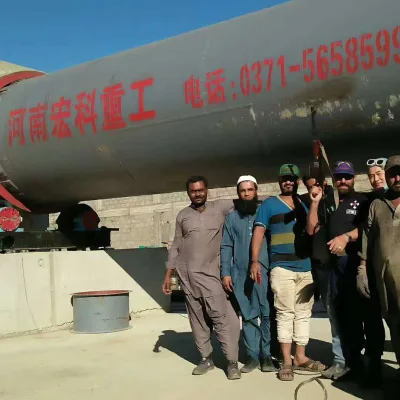


300tpd Complete Active Lime Plant / Lime Production Plant/Lime Production Line Manufacturers
$15000.00 - $20000.00
MOQ: 1 Pieces

Complete 50t/H Lime Production Line/Lime Manufacturer Plant/Lime Plant for Sale
$15000.00 - $20000.00
MOQ: 1 Pieces

Slaked Lime Production Plant Hydrated Lime Production Machine Vertical Shaft Lime Kiln
$200000.00 - $1000000.00
MOQ: 1 Pieces

Comprehensive Sourcing Guide
Strategic Sourcing Guide for Small Scale Lime Production Plants
Procuring a small-scale lime production plant requires a meticulous approach that balances technical capability with rigorous compliance verification. The global market for industrial lime processing equipment presents a wide spectrum of options, ranging from basic rotary kilns to fully automated production lines. For buyers entering this sector, the primary objective is to identify machinery that aligns with specific production capacities while adhering to international safety and quality standards. This guide synthesizes observed market data and technical attributes to provide a structured framework for evaluating potential suppliers and equipment configurations.
Technical Specifications and Production Capabilities
The core of any lime production plant lies in its rotary kiln system and associated automation features. Based on current market observations, small-scale units often feature dimensions such as a length of 3.0 meters and a diameter ranging from 1 meter to 5 meters, though exact specifications vary by model. The material composition is critical for durability; high-quality units typically utilize Q235 steel for the outer shell combined with a refractory inner wall to withstand the extreme temperatures required for calcination. The power consumption for these systems can vary, with specific models observed operating at 100 Watts for auxiliary components, though the main drive power depends on the kiln size and throughput requirements.
Automation is a significant differentiator in modern small-scale plants. Buyers should look for systems described as having "Automatic Grade" capabilities, which often include comprehensive automatic production lines designed to minimize manual intervention. The transmission type is frequently flexible, allowing for smooth operation under varying load conditions. Fuel flexibility is another essential technical attribute; viable plants must be capable of utilizing multiple fuel sources, including coal, mazut, and natural gas, to ensure operational continuity regardless of local fuel availability. The core components driving these systems typically include high-grade bearings, motors, and gears, which are pivotal for maintaining consistent rotational speed and structural integrity.
Compliance and Certification Verification
Navigating the regulatory landscape is paramount when sourcing industrial machinery. A reliable supplier must provide documentation that validates their adherence to international standards. Observed product attributes consistently highlight the presence of ISO 9001 and ISO 14000 certifications, which signify adherence to quality management and environmental management systems, respectively. Additionally, the CE marking is a frequent requirement, indicating conformity with health, safety, and environmental protection standards for products sold within the European Economic Area.
Buyers must verify that the certificates provided match the specific machinery being purchased. The documentation should explicitly list ISO9001, ISO14000, and CE as the relevant standards for the unit. It is also common to see references to "CE&ISO certificate" in product descriptions, but the physical or digital copies must be reviewed to ensure they are current and issued by accredited bodies. Beyond the certifications, the standard of the equipment itself should be verified against the "Various Model" or "Various" designations found in product listings. This ensures that the specific configuration meets the buyer's local regulatory requirements, which may differ from the general international standards.
Cost Drivers and Pricing Structures
The pricing for small-scale lime production plants exhibits a vast range, observed in the market from as low as 4 USD to as high as 7,000,000 USD. This extreme variance is not indicative of a single product type but rather reflects differences in scale, automation level, customization, and included services. The minimum order quantity (MOQ) for these industrial units is typically 1, allowing for single-unit procurement, which is standard for capital-intensive machinery.
Several factors drive the final cost. First, the level of customization plays a significant role; units marked as "Customized" or offering "Customized" capacity will command higher prices than standard models. Second, the inclusion of comprehensive after-sales services, such as overseas third-party support or guided installation by engineers, adds value and cost to the initial purchase. Third, the weight and material usage are direct cost indicators; a unit weighing 310,000 kg implies a substantial amount of steel and refractory material, influencing the base price. Buyers should analyze the price-to-specification ratio rather than seeking the lowest absolute price, as a lower cost may indicate reduced material quality or a lack of essential automation features.
Typical Applications and Operational Scope
Small-scale lime production plants are versatile and serve multiple industrial sectors. The primary application identified in the market is for the production of active lime, which is essential in various chemical and metallurgical processes. Beyond active lime, these plants are frequently utilized in the broader construction industry, where lime serves as a fundamental building material. The ability to produce "active lime" suggests that the plant is designed to maintain high reactivity, a crucial quality for applications requiring rapid chemical reactions.
The operational scope of these plants is often defined by their "Automatic Production Line" status, which allows for continuous operation with minimal downtime. The "Flexible Production" attribute, often linked to intelligent manufacturing concepts, enables the plant to adapt to different production demands. Whether the end product is intended for construction aggregates or specialized chemical feedstocks, the plant must maintain a consistent output quality. The "Condition" of the equipment is typically listed as "New," ensuring that the buyer receives a fully functional unit ready for immediate deployment. The "Key Selling Points" often emphasize ease of operation, which is vital for facilities that may not have highly specialized technical staff on-site.
Supplier Evaluation and Company Background
When evaluating potential suppliers, historical stability and technical expertise are critical indicators of reliability. A notable attribute in the market is the establishment date of the manufacturer; some suppliers have been established as early as 1956, indicating over 50 years of experience in the field. This longevity often correlates with a deep understanding of the manufacturing process and the ability to troubleshoot complex issues. The "Advantage" of these suppliers is frequently described as "Professional Manufacture," suggesting a focus on core competencies rather than a diversified, unfocused product line.
Geographic origin is another factor to consider. Many observed units originate from Zhengzhou, China, or the broader Henan province, regions known for their heavy industrial manufacturing capabilities. The "Place of Origin" should be clearly stated in the product specifications to ensure transparency regarding logistics and potential trade barriers. Furthermore, the "Brand Name" associated with the equipment, such as Hongke, should be cross-referenced with the supplier's corporate identity to avoid confusion with resellers or unauthorized distributors. A reputable supplier will clearly articulate their "Experience" and "Company Established" dates to build trust with prospective buyers.
Quality Control and Installation Support
Ensuring the quality of the equipment before shipment and during installation is a critical phase of the procurement process. Suppliers offering "Video outgoing-inspection" provide a valuable tool for buyers to verify the condition and assembly of the machinery remotely. This feature allows for a preliminary quality check before the unit leaves the factory. Additionally, the "Installation" process is often supported by the supplier, with options ranging from "Guided by Our Engineers" to "under our engineer guide." This technical guidance is essential for ensuring that the complex components, such as the transmission and core mechanical parts, are assembled correctly.
The "After Sale Service" and "After-sales Service Provided" are equally important. Buyers should confirm that the supplier offers "Engineers available to service machinery overseas," which is a common offering for international transactions. The warranty period is typically standardized at "12 Months" or "one year," covering defects in materials and workmanship. The "Warranty Period" should be clearly defined in the contract to ensure that any post-installation issues are addressed promptly. The "prod_packing" is usually described as "Export Standard Package" or "Standard Export Packing," designed to protect the equipment during long-distance shipping. However, some suppliers also offer packing "According to Your Special Requirements," which can be beneficial for oversized or uniquely shaped components.
Long-Term Procurement Considerations
Sourcing a lime production plant is a long-term investment that requires careful consideration of maintenance, scalability, and lifecycle costs. The "Warranty" period is a starting point, but the long-term viability depends on the availability of spare parts and the durability of core components like bearings and motors. Buyers should verify the "Material" specifications to ensure that the Q235 steel and refractory lining are of a grade that resists corrosion and thermal degradation over time.
The "Voltage" specifications, such as 220v, must be compatible with the local power grid to avoid the need for expensive transformers or electrical modifications. Furthermore, the "Color" of the equipment is often customizable "as you required," which can be a factor in maintaining a consistent industrial aesthetic or adhering to corporate branding standards. The "Capacity" is often listed as "Customized," meaning the buyer must clearly define their throughput requirements during the ordering phase to ensure the plant meets production goals. Finally, the "Automatic Grade" and "Automation" features should be evaluated for their potential to reduce labor costs and increase efficiency over the plant's operational life. By focusing on these long-term factors, buyers can secure a production asset that delivers consistent value and performance for years to come.
FAQs
What certifications do small scale lime production plants have?
These plants typically hold ISO 9001, ISO 14000, and CE certifications. Buyers should verify that the specific unit matches these documented standards for quality and safety compliance before purchase.
How is installation handled for these production units?
Installation is guided by the supplier's engineers who provide technical support. Overseas third-party support is also available to ensure the machinery is assembled and operated correctly at the buyer's site.
Can the production capacity be customized for specific needs?
Yes, the production capacity is fully customized to meet specific requirements. Buyers can request tailored dimensions and output levels, ensuring the plant fits their exact operational goals and site constraints.
What warranty period is provided for the equipment?
The standard warranty period is twelve months covering defects in materials and workmanship. This ensures protection for the buyer against initial manufacturing issues while the plant is being commissioned.
Which fuel types can these plants operate on?
These plants can operate on coal, mazut, and natural gas among other fuels. This flexibility allows continuous production regardless of local fuel availability and helps optimize operational costs for the buyer.
What is the typical minimum order quantity for these plants?
The minimum order quantity is one unit, allowing for single-plant procurement. This standard applies to capital-intensive machinery, enabling buyers to start operations with a single complete production line.