Source Small-Scale Excavation Compact Excavator for Mining, Construction, and Landscaping
Find 30 Small-Scale Excavation Compact Excavator models from Jining, Shandong, featuring hydraulic transmission and Kipor engines. Buyers can compare specifications like bucket capacity, digging depth, and track width to select the right machine for mining, construction, or landscaping projects.
Key considerations
Products List


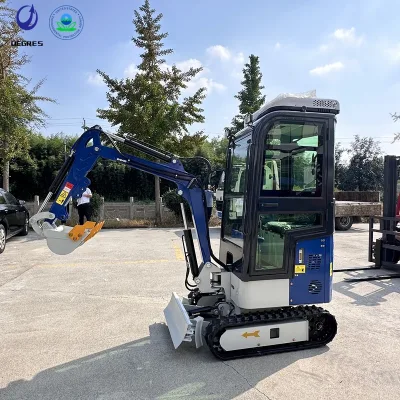


Excavator Compaction/Compactor Wheel
$500.00 - $1000.00
MOQ: 1 Pieces
Xuzhou Shenfu Construction Machinery and Equipment Co., Ltd.


$1800.00 - $2000.00
MOQ: 1 Pieces

Comprehensive Sourcing Guide
Small-Scale Excavation Compact Excavator Sourcing Guide
The procurement of small-scale excavation compact excavators requires a precise understanding of the specific operational constraints and site conditions where these machines will function. Based on observed market data, these units are frequently categorized by their compact footprint, with overall dimensions often ranging around 2430 × 720 × 1390 mm, making them suitable for confined urban environments or agricultural settings. Buyers must distinguish between models designed for general utility and those engineered for specialized tasks like mining or dragline operations, as the bucket type and drive system vary significantly across the supply base.
A critical initial step involves aligning the machine's physical attributes with the intended application, such as verifying whether the unit is a crawler excavator with a hydraulic transmission or a smaller loader variant. The observed product range includes models with varying bucket capacities, from 0.5 to 1.0 cubic meters, and distinct engine configurations ranging from single-cylinder air-cooled units to more robust diesel engines. Procurement teams should prioritize verifying the specific model designation, such as TE10, ME08, or ME17, to ensure the selected equipment matches the required digging depth and dumping height specifications for the project.
Product Scope and Observed Listing Signals
When evaluating product listings, buyers should look for clear indicators of the machine's scale and primary function, as the market presents a mix of small-scale crawlers and specialized variants like draglines or grab shovels. The observed data highlights a diverse array of bucket types, including backhoe, dragline, and grab shovel configurations, which directly influence the machine's suitability for specific soil conditions and material handling tasks. It is essential to confirm the "Usage" attribute, which may range from general mining excavator applications to specialized excavator roles, ensuring the selected unit is not misclassified for a task requiring different mechanical leverage.
The physical specifications provided in listings often serve as the primary filter for compatibility, with track widths and ground contact lengths being critical for stability on uneven terrain. Listings frequently specify track ground contact lengths of 1140 mm and track widths of 150 mm, which are vital metrics for assessing ground pressure and maneuverability in tight spaces. Buyers must also scrutinize the "Size" attribute, which can be listed as either "Large-Scale" or "Small-Scale" depending on the specific model configuration, to avoid purchasing a unit that is either too bulky for the site or underpowered for the required load.
Technical Specifications to Verify
Engine performance and power delivery are paramount when selecting a compact excavator, as the observed data indicates a reliance on specific engine brands like Kipor and Bailitongxr13.5 with varying horsepower ratings. Buyers should verify the rated power, which can range from 7.6 kW at 3000 rpm to higher outputs, and confirm the fuel type is diesel to ensure compatibility with standard fueling infrastructure. The displacement of 0.499 liters in certain models suggests a focus on fuel efficiency and compact design, but procurement teams must cross-reference these figures against the actual workload to prevent under-specification during heavy-duty cycles.
Hydraulic systems and operational capabilities, such as maximum digging depth and side swing angles, define the functional limits of the machine and must be validated against project requirements. The observed specifications include a maximum digging depth of 1300 mm and a maximum dumping height of 1600 mm, alongside a side swing angle of 45 degrees, which dictates the machine's reach and versatility. Additionally, the rated pressure of 18.5 MPa and hill-climbing capabilities of up to 46 degrees are critical technical parameters that determine the machine's ability to operate safely on slopes and maintain hydraulic efficiency under load.
Compliance and Safety Documentation
Certification status is a non-negotiable aspect of the procurement process, with CE and ISO9001: Condition:New being the most frequently observed compliance markers in the current market. Buyers must request and verify these certificates to ensure the machinery meets international safety and quality standards, particularly when importing equipment from regions like Jining, Shandong Province. The presence of these certifications indicates that the manufacturer has undergone rigorous testing for electrical safety, mechanical integrity, and environmental compliance, which is essential for mitigating liability and ensuring operator safety.
Beyond general certifications, specific documentation regarding the machine's origin and manufacturing standards must be obtained to validate the supply chain's integrity. The observed data points to origins in Jining, Shandong, with some suppliers listing specific addresses, which allows buyers to trace the production source and verify adherence to local and international manufacturing standards. It is crucial to confirm that the "prod_standard" aligns with the intended application, whether it is classified as a small loader or a specialized excavator, to ensure the equipment is legally compliant for operation in the target market.
Cost Drivers and Commercial Terms
The pricing structure for compact excavators is influenced by a combination of engine type, bucket capacity, and the level of customization available, with observed price ranges spanning from 500 to 200,000 USD. Buyers should analyze the cost drivers associated with specific features, such as the inclusion of a hydraulic transmission versus a mechanical drive, or the choice of a single-cylinder engine versus a more complex multi-cylinder setup. The wide price variance suggests that factors like the "Condition: New" status, the specific model designation, and the inclusion of specialized attachments like draglines or grab shovels significantly impact the final unit cost.
Commercial terms, including minimum order quantities (MOQ) and packaging requirements, play a significant role in the total cost of ownership and logistics planning. The observed data indicates a consistent MOQ of 1 unit, which offers flexibility for small-scale procurement, while packaging is typically specified as wooden crates or iron frames to protect the machinery during transit. Procurement teams must also consider the fuel consumption rate, observed at 275 G/Kwh, as a long-term operational cost driver, and negotiate terms that account for the specific fuel tank capacity of 5.5 liters to optimize refueling intervals.
Supplier Qualification and Quality Control
Supplier qualification should focus on verifying the manufacturer's location and their ability to provide consistent quality control measures, with Jining, Shandong Province emerging as a key production hub. Buyers must assess the supplier's track record in producing models like the TE10, ME08, and ME17, ensuring they have a history of meeting the specified dimensional and performance standards. The availability of customization options is a strong indicator of a supplier's flexibility and technical capability, allowing buyers to tailor the machine to specific site requirements without compromising on core structural integrity.
Quality control protocols must be established to verify that the delivered units match the observed specifications, particularly regarding the engine brand, hydraulic pressure ratings, and overall dimensions. Buyers should request detailed inspection reports that confirm the track ground contact length, track width, and gradeability of 30 degrees to ensure the machine performs as advertised. It is also essential to verify the "prod_packing" specifications, ensuring that wooden boxes or crates are used to prevent damage during shipping, and to confirm that the "Condition: New" status is genuine and not a refurbished unit misrepresented as new.
Long-Term Procurement Checks
Sustainable procurement requires a focus on the long-term availability of spare parts and the durability of the engine and hydraulic systems under continuous operation. Buyers should investigate the service network for the specific engine brands used, such as Kipor or Bailitongxr13.5, to ensure that maintenance and repairs can be performed efficiently without significant downtime. The fuel consumption rate and tank capacity are critical metrics for calculating the total cost of ownership over the machine's lifespan, and buyers should plan for regular maintenance schedules that align with the manufacturer's recommendations.
Future-proofing the procurement strategy involves monitoring the evolution of safety standards and environmental regulations that may impact the operation of diesel-powered compact excavators. As regulations tighten, buyers should consider the potential need for retrofitting or upgrading machines to meet new emission standards, which could affect the residual value of the equipment. Establishing a relationship with a supplier who offers ongoing technical support and can provide updates on model improvements will ensure that the fleet remains compliant and efficient throughout its operational life.
FAQs
What engine options are available for Small-Scale Excavation Compact Excavator models?
Small-Scale Excavation Compact Excavator models typically feature single-cylinder, four-stroke, air-cooled, vertical diesel engines. Specific configurations include Kipor or Bailitongxr13.5 engines with displacements around 0.499 liters. These units deliver rated power of 7.6 kW at 3000 rpm and approximately 10.3 horsepower, ensuring efficient fuel consumption for light-duty tasks.
Can Small-Scale Excavation Compact Excavator units be customized for specific tasks?
Yes, customization is available for Small-Scale Excavation Compact Excavator units to meet diverse operational needs. Buyers can select from various bucket types including dragline, grab shovel, and backhoe configurations. These attachments allow the machine to adapt to different material handling requirements while maintaining the core hydraulic transmission and internal combustion drive systems.
What are the overall dimensions and track specifications for these compact excavators?
Overall dimensions for Small-Scale Excavation Compact Excavator models generally measure 2430 by 720 by 1390 mm. The track width is 150 mm with a ground contact length of 1140 mm. These compact measurements ensure stability and maneuverability in tight spaces, making them suitable for urban construction or agricultural applications where space is limited.
What certifications do these Small-Scale Excavation Compact Excavator machines hold?
These Small-Scale Excavation Compact Excavator machines hold CE and ISO9001 certifications, indicating compliance with international quality and safety standards. The products are supplied in new condition, ensuring reliability for immediate deployment. These certifications provide assurance regarding manufacturing quality and operational safety for buyers in regulated markets.
How is the Small-Scale Excavation Compact Excavator packaged for shipping?
The Small-Scale Excavation Compact Excavator is packaged in wooden crates or iron frames to ensure safe transit. Some models may use wooden box packaging depending on the specific configuration. This robust packaging protects the hydraulic transmission, engine, and structural components from damage during international shipping and handling.
What is the maximum digging depth and height for these excavators?
The maximum digging depth for these Small-Scale Excavation Compact Excavator units is 1300 mm. The maximum digging height reaches 2350 mm, while the maximum dumping height is 1600 mm. These specifications define the operational envelope for trenching and loading tasks, suitable for light excavation work.