Source Small Scale Gummy Candy Machine for Candy, Ice Cream, Chocolate
Find and compare 30 Small Scale Gummy Candy Machine options from verified Chinese manufacturers. Buyers can evaluate specifications, certifications, and pricing for applications in candy, ice cream, and chocolate production.
Key considerations
Products List

Automatic Small Scale Chocolate Soft Gummy Candy Packaging Machine Gummy Machine
$8070.00 - $8100.00
MOQ: 1 Pieces


Gummy Bear Machine Small Gummy Candy Machine Candy Depositing Machine
$4899.00 - $4999.00
MOQ: 1 Pieces


Industrial Small Gummy Bear Candy Machine Manufacturers Candy Making Machine
$7450.00 - $8000.00
MOQ: 1 Pieces

Candy Making Equipment Small Gummy Bear Snack Machines Soft Candy Sugar
$7450.00 - $8000.00
MOQ: 1 Pieces

Gummy Candy Machine Commercial Automatic Gummy Machine Automated Gummy Making Machine
$65000.00 - $70000.00
MOQ: 1 Pieces

Automatic Small Scale Jelly Candy Making Machine Gummy Manufacturing Machine
$15000.00 - $35000.00
MOQ: 1 Pieces


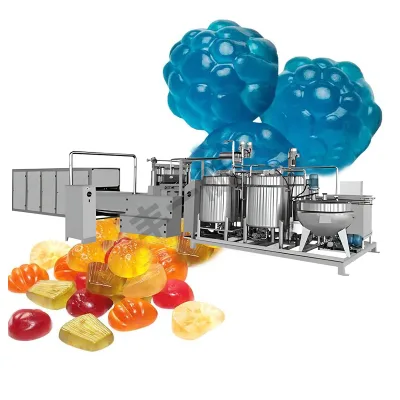


Chocolate Gummy Making Depositor Small Scale Jelly Hard Gummy Candy Make Machine
$3999.00 - $6999.00
MOQ: 1 Sets


Comprehensive Sourcing Guide
Small Scale Gummy Candy Machine Sourcing Guide
Selecting the right Small Scale Gummy Candy Machine requires a careful balance between production capacity, product versatility, and operational efficiency. Buyers in the confectionery sector often seek equipment that can handle delicate ingredients while maintaining consistent quality across batches. The market offers a variety of models, ranging from semi-automatic units suitable for artisanal production to fully automatic systems designed for higher throughput. Understanding the specific needs of your production line is the first step in narrowing down the extensive list of available options.
This guide focuses on the key decision points for procurement professionals evaluating small scale gummy candy machinery. It draws upon observed market data, including price ranges, minimum order quantities, and technical specifications, to provide actionable advice. By focusing on verified attributes such as power sources, automation grades, and certification standards, buyers can make informed decisions that align with their operational goals and budget constraints.
Product Scope and Observed Listing Signals
The current market for small scale gummy candy machines exhibits a wide variance in pricing and specifications, reflecting the diverse needs of different production scales. Observed listing prices range significantly, from approximately $3,000 to over $1,000,000 USD, indicating that the term "small scale" can encompass everything from benchtop units to compact industrial lines. Minimum order quantities (MOQ) are typically low, often ranging from 1 to 2 units, which suggests that suppliers are accustomed to serving small businesses, startups, and pilot production facilities rather than just large-scale manufacturers.
Product attributes reveal a strong emphasis on customization and versatility. Many available machines offer customized options and are designed to handle various applications, including candy, chocolate, and even pet food or fruit-based products. This flexibility is crucial for buyers who may want to diversify their product line or adapt to changing market demands. The presence of both automatic and semi-automatic grades indicates that buyers can choose between higher labor efficiency and greater manual control, depending on their workforce availability and precision requirements.
Technical Specifications to Verify
When evaluating technical specifications, the power source and voltage requirements are critical for ensuring compatibility with your facility’s infrastructure. Most observed units operate on electric power, with voltage options including 110/220V for smaller or more flexible setups, and 380V for more robust industrial applications. Buyers must verify the specific voltage and power consumption, such as the 18kw power rating observed in some models, to ensure that their electrical systems can support the equipment without requiring extensive upgrades.
Automation grade and processing methods are equally important considerations. The market offers both automatic and semi-automatic machines, each with distinct operational characteristics. Automatic units, such as the QD-JW50 model, are designed for streamlined production, while semi-automatic options may offer more hands-on control. Additionally, the processing type, whether it involves thermal processing, concentration and drying, or handling frozen and chilled materials, must align with your specific recipe and production workflow. Dimensional standards, such as 700580620mm or 12608601290mm, should also be checked to ensure the machine fits within your designated production space.
Compliance and Safety Documentation
Certification is a non-negotiable aspect of machinery procurement, particularly for food processing equipment. CE certification is a common standard observed in the market, indicating compliance with European health, safety, and environmental protection standards. Buyers should verify that the machine carries the CE mark and inquire about additional certifications such as ISO9001:2008 or ISOCE, which may be offered by specific suppliers. These certifications provide assurance that the manufacturer adheres to recognized quality management and safety protocols.
Safety documentation and operational standards must be thoroughly reviewed before purchase. Some listings mention standards like ISO 9001, ISO 14001, or ISO 45001, which relate to quality management, environmental management, and occupational health and safety, respectively. While these are often listed as background information, buyers should request actual certification documents from the supplier to confirm validity. Ensuring that the machine meets these standards helps mitigate legal risks and ensures that the equipment is safe for operators to use in a commercial environment.
Cost Drivers and Commercial Terms
The cost of a Small Scale Gummy Candy Machine is influenced by several factors, including automation level, material construction, and included features. Higher automation grades and specialized processing capabilities, such as those for frozen or chilled products, tend to command higher prices. Additionally, the gross weight of the machine, which can be as high as 4000kg for certain models, impacts shipping and installation costs. Buyers should consider the total cost of ownership, including logistics, installation, and potential maintenance, rather than just the initial purchase price.
Commercial terms and delivery details are also significant components of the procurement process. Lead times can vary, with some suppliers offering delivery within 40 days after a 30% deposit. It is essential to clarify these terms early in the negotiation process to avoid delays in production planning. Packaging methods, ranging from standard export packing to wooden cases or boxes, also affect the cost and safety of the equipment during transit. Buyers should ensure that the packaging is robust enough to protect the machine from damage during shipping.
Supplier Qualification and Quality Control
Supplier qualification is a critical step in ensuring the reliability and longevity of your investment. Buyers should verify the supplier’s origin, with many manufacturers based in China, including specific locations like Hangzhou and Shanghai. While the origin itself is not a guarantee of quality, it provides context for the supply chain and potential logistics considerations. Additionally, suppliers often provide after-sales service, such as engineers available to service machinery overseas, which is a valuable asset for maintaining equipment performance and minimizing downtime.
Quality control measures should be discussed in detail with potential suppliers. This includes inquiries about the manufacturing process, material quality, and testing procedures. Buyers should ask for references or case studies from other clients who have purchased similar small scale gummy candy machines. Verifying the supplier’s reputation and track record can help identify potential risks and ensure that you are partnering with a reliable manufacturer. It is also advisable to request a detailed list of spare parts and maintenance requirements to plan for long-term operational needs.
Long-Term Procurement Checks
Long-term procurement success depends on the availability of support and the adaptability of the equipment. Buyers should assess the supplier’s commitment to after-sales service, including the availability of technical support, training, and spare parts. Machines with a brand name, such as Tgmachine, may offer more structured support networks, but this should be verified directly with the supplier. Ensuring that you have access to timely support can significantly reduce the impact of any operational issues that may arise.
Finally, buyers should consider the scalability and future-proofing of the machine. As your business grows, you may need to increase production capacity or introduce new product types. Choosing a machine with customizable options and flexible processing capabilities can provide the agility needed to adapt to changing market conditions. Regularly reviewing the machine’s performance and maintenance needs will also help ensure that it continues to meet your production goals efficiently and effectively over its lifespan.
FAQs
What certifications are available for small scale gummy candy machines?
CE certification is available for small scale gummy candy machines. Some models also carry ISOCE or ISOSACE certifications. These standards ensure basic safety and operational compliance for food processing equipment. Buyers should verify specific documentation with suppliers before purchase to confirm regulatory alignment for their local market requirements.
Can small scale gummy candy machines be customized for specific needs?
Yes, customization is available for small scale gummy candy machines. Manufacturers offer customized options to adapt to unique production requirements. This flexibility allows buyers to tailor equipment specifications to their specific operational workflows. It is advisable to discuss detailed customization needs directly with the supplier to ensure feasibility and accurate pricing.
What is the typical lead time for ordering a Small Scale Gummy Candy Machine?
The typical lead time is approximately 40 days after receiving a 30% deposit. This duration applies to standard production cycles for small scale gummy candy machines. Buyers should account for this timeline when planning production schedules. Confirming exact delivery details with the supplier is recommended as lead times may vary based on current order volume and specific model configurations.
What voltage options are supported by small scale gummy candy machines?
Small scale gummy candy machines support various voltage options including 110/220V and 380V. The specific voltage depends on the model and power requirements. For instance, some units operate at 18kw with 380V input. Buyers must ensure their facility power supply matches the machine specifications to avoid operational issues or damage during installation.
What packaging methods are used for shipping small scale gummy candy machines?
Packaging methods include standard export packing, wooden cases, and wooden boxes. The choice depends on the machine size and shipping requirements. For example, larger units may require wooden case packaging for protection. Buyers should confirm the specific packing method with the supplier to ensure safe transit and compliance with international shipping standards.
Where are small scale gummy candy machines typically manufactured?
Small scale gummy candy machines are typically manufactured in China, with origins in cities like Shanghai and Hangzhou. These locations are hubs for food processing machinery production. Buyers can expect a wide range of suppliers from these regions. Verifying the specific origin and factory details is essential for assessing quality control and logistical considerations.