Source Smart Control System Floating Villa for Lake, Sea, and River Use
Explore 30 listings for Smart Control System Floating Villa options tailored for lake, sea, and river applications. Buyers can compare specifications such as aluminum hulls, passenger capacities, and engine recommendations to find the ideal vessel for fishing, parties, or leisure travel.
Key considerations
Products List


Party Boat Prefabricated Houseboat Floating Small Family Water Villa
$40000.00 - $45000.00
MOQ: 1 Pieces


Quality Water Villa Floating House Water Building Floating Houseboat
$59000.00 - $66000.00
MOQ: 1 Pieces

Modern Water Floating House Houseboat Prefab House Floating Boathouse
$59000.00 - $66000.00
MOQ: 1 Pieces

Yacht Design Floating Hotel Water Building Prefab House Houseboat Floating
$93800.00 - $103800.00
MOQ: 1 Pieces

Floating Boats House Water House Prefabricated Floating House Boat Houseboat for Floating Hotel
$96000.00 - $106000.00
MOQ: 1 Pieces


Luxurious Sea House Water House Floating Building Floating Houseboat
$96000.00 - $106000.00
MOQ: 1 Pieces
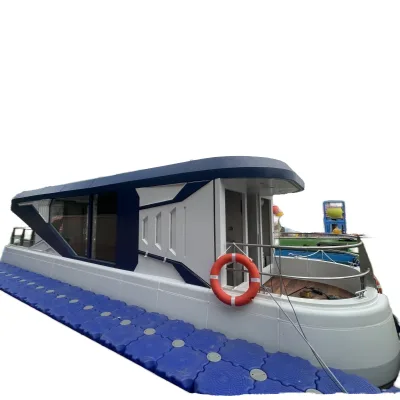
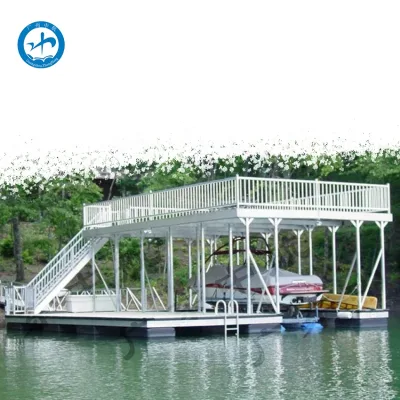
$100.00 - $180.00
MOQ: 20
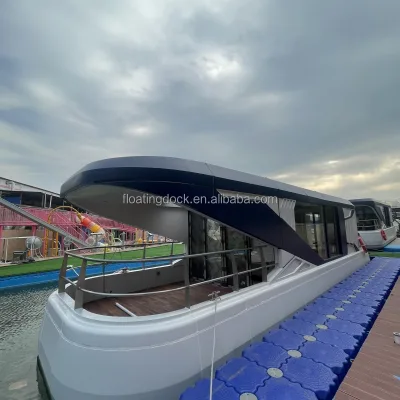
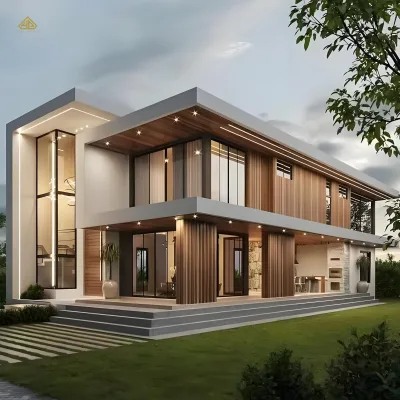
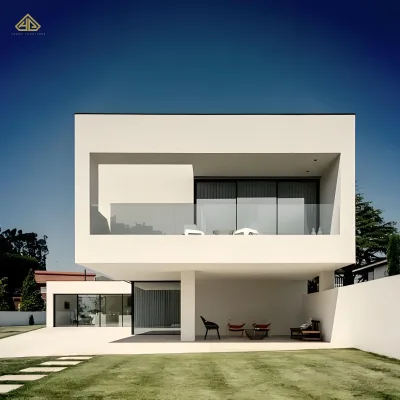
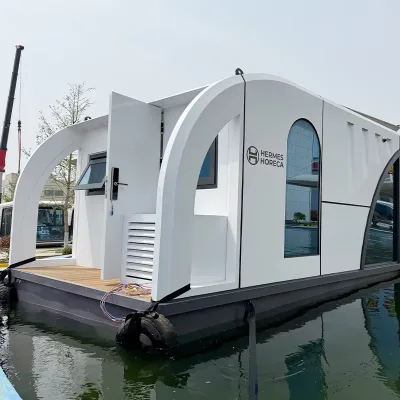


China Luxury Miniature Studio Metal Frame Prefabricated Floating Villa House
$3450.00 - $4850.00
MOQ: 1 Pieces

Luxury Miniature Studio Metal Frame Portable Prefabricated Read Floating Villa House
$3450.00 - $4850.00
MOQ: 1 Pieces

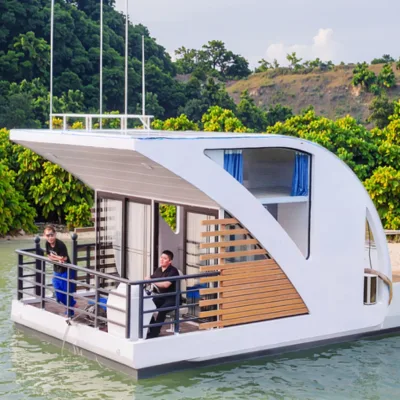
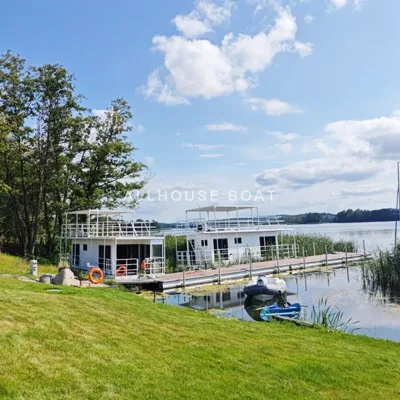
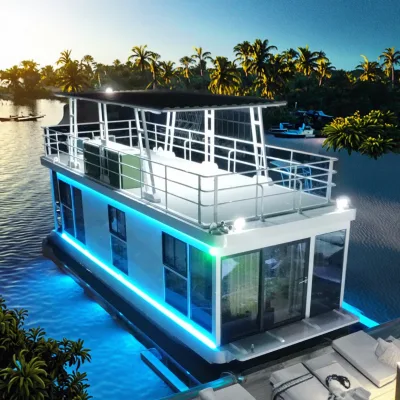
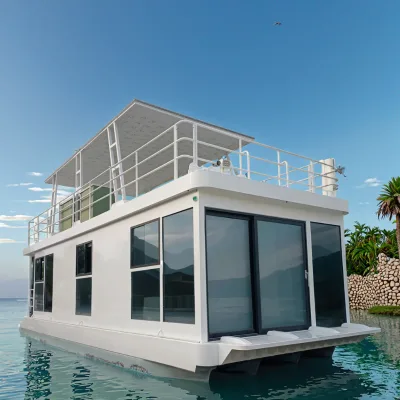
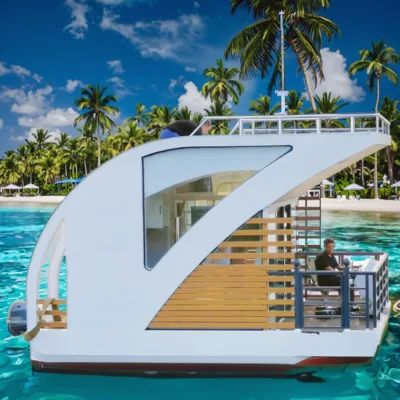

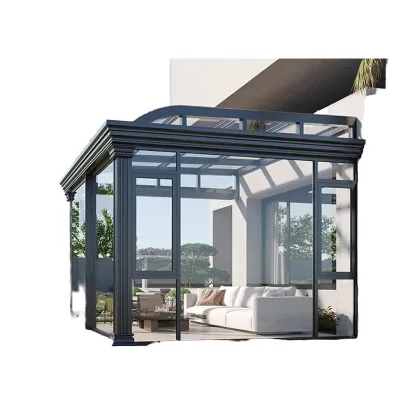
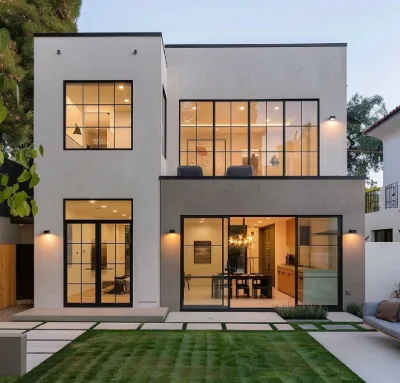
Luxury Floating House Yacht Aluminum Fishing Boat House Floating Cottage
$5078.76 - $10157.51
MOQ: 1 Minimum
Comprehensive Sourcing Guide
Strategic Sourcing Guide for Smart Control System Floating Villas
The procurement of a Smart Control System Floating Villa represents a complex intersection of marine engineering, architectural design, and advanced automation. Buyers entering this market must navigate a landscape where the core product is often a modular aluminum or alloy vessel designed for stationary or semi-stationary luxury applications. The term "floating villa" in this context typically refers to a specialized house boat or glass house boat equipped with sophisticated living amenities. Sourcing decisions require a rigorous understanding of the vessel's structural integrity, the specific capabilities of its smart control integration, and the regulatory environment governing its operation. This guide outlines the essential factors for evaluating suppliers and specifications for these unique assets.
Structural Specifications and Material Integrity
The foundation of any floating villa is its hull and structural framework. Based on observed market data, the primary material utilized for these vessels is Aluminum Alloy 5083. This specific alloy is chosen for its exceptional corrosion resistance, particularly in saltwater environments, and its high strength-to-weight ratio. The hull construction often involves a multi-tube configuration, with observed specifications indicating a tube quantity of three and a tube diameter of 0.7 meters. The structural dimensions vary significantly depending on the intended scale of the villa. Common length specifications observed in the market range from under 6 meters for compact units to 11.5 meters for larger luxury models, with specific models like the SG115P and SG110P representing distinct size categories.
Width and beam dimensions are critical for stability and interior space. A standard beam of 3.6 meters is frequently observed across various models, providing a stable platform for the smart control systems and interior furnishings. The deck construction is equally vital, often utilizing EVA flooring for anti-slip properties combined with aluminum decking. In some configurations, the deck thickness is specified at 20mm, while tube thickness is noted at 4mm, ensuring the vessel can support the weight of heavy glass structures and smart automation hardware. The house type often features toughening glass, which serves as the primary enclosure for the living space, offering both visibility and structural rigidity.
Smart Control Integration and Automation Capabilities
The defining feature of a "smart control system" floating villa is the integration of automated management for lighting, climate, security, and navigation. While specific brand names of control systems are not universally standardized, the procurement focus must be on the compatibility of these systems with the vessel's electrical architecture. The recommended engine configurations for these vessels typically range from 2x90HP to 2x150HP, indicating a need for robust power generation to support both propulsion and the high energy demands of smart home automation.
Buyers must verify that the smart control system is designed for marine environments, capable of withstanding humidity, salt spray, and vibration. The system should ideally interface with the vessel's fuel type, which is predominantly gasoline in the observed market, though electric options exist. The layout of the smart controls must be customizable, allowing for standard or tailored configurations to suit specific operational needs. Whether the villa is used for leisure, party events, or residential purposes, the control interface must provide seamless operation of the glass house enclosure, deck lighting, and safety systems. The "Sea Glass Floor" option mentioned in some specifications suggests advanced material integration that may require specialized control inputs for lighting or heating elements embedded within the flooring.
Compliance, Certification, and Regulatory Verification
Navigating the regulatory landscape for floating villas requires careful attention to international and local standards. While some background information references ISO4064 and CE certification, these should be treated as potential benchmarks rather than guaranteed attributes of every listed product. Buyers must explicitly request and verify current certification status from the supplier, as the regulatory requirements for house boats vary significantly by jurisdiction.
The vessel's origin, often cited as China or specific regions like Shandong, influences the applicable export standards. For international deployment, buyers should confirm compliance with the International Maritime Organization (IMO) guidelines for passenger vessels, especially given the passenger capacity ranges observed from 8-15 up to 20 people. The "China House Boat Manufacturer" designation in product models indicates a specific supply chain origin, but it does not automatically confer international safety compliance. Verification of the vessel's stability, fire safety systems, and emergency evacuation protocols is essential. The "Standard or Custom" fencing design and layout options must also meet local maritime safety codes regarding railings and barriers.
Cost Drivers and Economic Considerations
The price range for floating villas is exceptionally broad, spanning from $0.05 to $106,000 USD. This variance reflects differences in size, material quality, customization levels, and the sophistication of the smart control systems. The lower end of the spectrum likely corresponds to smaller, less equipped units or component costs, while the upper end represents fully customized, large-scale luxury vessels with advanced automation.
Key cost drivers include the length of the vessel, with models ranging from under 6 meters to 11.5 meters, and the complexity of the glass house structure. The choice of materials, such as the specific grade of Aluminum Alloy 5083, significantly impacts the base cost. Furthermore, the customization of the layout, flooring, and smart control interfaces adds substantial value. The Minimum Order Quantity (MOQ) varies from 1 to 10,000 units, suggesting that buyers can source single units or engage in large-scale projects. However, the MOQ for customized smart systems may differ from standard hull orders. Buyers should also consider the "40FT Flat Rack High Cube" or "40gp Frame Flat" shipping configurations, as the logistics of transporting these large, flat-pack vessels can be a significant portion of the total landed cost.
Typical Applications and Operational Environments
Floating villas with smart control systems are designed for a diverse range of applications, including lake, river, sea, and ocean environments. The versatility of these vessels allows them to serve as luxury yachts, party platforms, fishing bases, or residential retreats. The "Glass House Boat" designation highlights their suitability for sightseeing and leisure activities where panoramic views are paramount.
The passenger capacity, ranging from 8-15 to 10-20 people, makes these vessels ideal for small-scale hospitality operations, private charters, or exclusive residential use. The "Party, Leisure, Entertainment" usage categories suggest that the smart control system must support dynamic lighting, audio-visual integration, and climate control for event management. For commercial applications such as "Patrol Pilot Boat" or "Rescue Boat" conversions, the reliability of the control system becomes a safety-critical factor. The "Life Boat" and "Rigid Inflatable Boat" classifications indicate that some models may be designed for emergency response, requiring ruggedized smart systems that function under extreme conditions.
Supplier Evaluation and Quality Assurance
When evaluating suppliers for floating villas, buyers should prioritize those with a proven track record in aluminum boat manufacturing and smart system integration. The "Condition: New" status of most listed products indicates a focus on new construction, but buyers must verify the quality of the assembly process. Key evaluation criteria include the supplier's ability to provide detailed technical drawings, material certificates for the Aluminum Alloy 5083, and proof of the smart control system's durability.
Quality control should extend to the packing and shipping process. The use of "40FT Flat Rack" or "40FT Flat Rack High Cube" containers suggests that the vessels are designed for efficient transport, but the packaging must protect the delicate glass structures and electronic components. Buyers should request evidence of the "Tube Thickness" and "Deck Thickness" measurements to ensure they match the specifications provided. Additionally, the "Fencing Design" and "Layout" options should be reviewed for their adherence to safety standards. The supplier's location, such as "Shandong," may offer insights into their logistical capabilities and proximity to major shipping ports.
Long-Term Procurement and Maintenance Strategies
Procuring a floating villa is a long-term investment that requires a clear strategy for maintenance and lifecycle management. The smart control system, being the most complex component, will require regular software updates and hardware checks. Buyers should negotiate service agreements that include remote diagnostics and on-site support for the automation systems. The "Customization: Available" attribute implies that future upgrades or modifications may be necessary, so the supplier should offer a modular approach to system design.
Maintenance of the aluminum hull and glass structures is critical for longevity. Buyers must establish a schedule for inspecting the "EVA Floor" and "Anti-Slip Aluminum" surfaces, as well as the integrity of the "Toughening Glass." The "Fuel Type: Gasoline" requirement necessitates a plan for fuel storage and engine maintenance, which can be integrated into the smart control system for monitoring fuel levels and engine health. Finally, buyers should consider the "Shipped: 40gp Frame Flat" nature of the product, ensuring that the destination port has the necessary infrastructure to receive and assemble these large, flat-pack vessels. By addressing these long-term considerations, buyers can ensure the continued performance and safety of their floating villa investment.
FAQs
What materials are used for the hull of these floating villas?
The hull is constructed from Aluminum Alloy 5083 for superior corrosion resistance. This material ensures high strength in saltwater environments while maintaining a lightweight profile for the vessel.
How many passengers can the standard glass house boat accommodate?
The passenger capacity ranges from 8 to 15 people on standard models. Some larger configurations support up to 20 people depending on the specific layout and tube quantity selected.
Which engine types are recommended for these aluminum house boats?
The recommended engine configuration is 2 units ranging from 90HP to 150HP. These gasoline-powered outboard engines provide sufficient power for propulsion and supporting smart control system loads.
Can the layout and fencing design be customized for specific needs?
Yes, customization is available for both the layout and fencing design. Buyers can choose standard or tailored configurations to meet specific operational requirements and safety codes.
What is the typical length range for these smart control system villas?
Lengths vary from under 6 meters for compact units up to 11.5 meters for luxury models. Specific models like SG115P and SG110P represent distinct size categories within this range.
How are these large vessels shipped to international destinations?
They are shipped using 40FT Flat Rack or 40gp Frame Flat containers. This packing method ensures safe transport of the large, flat-pack aluminum structures and glass enclosures.