Source Soft Cute Stuffed Animal with Scarf for gifts, decor, and events
Explore 30 listings of Soft Cute Stuffed Animal with Scarf options featuring custom logos, eco-friendly materials, and various sizes. Buyers can compare specifications, MOQs, and customization details to find the ideal plush toy for gifting or promotional use.
Key considerations
Products List

Customized White Teddy Bear Plush Toys Soft Stuffed Teddy Bear with Scarf
$2.72 - $3.13
MOQ: 200 Pieces


$0.99 - $2.85
MOQ: 500 Pieces


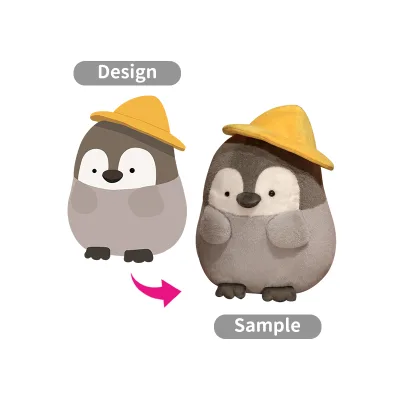


Custom Stuffed Animals Plush Cartoon Design Soft Animal Stuffed Doll Custom
$1.15 - $1.22
MOQ: 288 Pieces


Comprehensive Sourcing Guide
Strategic Sourcing Guide for Soft Cute Stuffed Animals with Scarf
Understanding Product Attributes and Customization Potential
When sourcing a Soft Cute Stuffed Animal with Scarf, buyers must first distinguish between generic inventory and fully customizable OEM/ODM solutions. The market offers a spectrum of options ranging from ready-to-go inventory to bespoke manufacturing. A critical observation in the current supply landscape is the prevalence of "Customized" as a primary attribute. This indicates that the majority of suppliers are equipped to alter the core design, including the specific animal shape, the texture of the material, and the inclusion of accessories like scarves. The product is often categorized under "Custom Plush Toys" or "Customized Plush Dolls," suggesting that the final appearance is not fixed but rather a result of the buyer's specifications.
The "Style" of these products frequently defaults to "Sitting Animal," which is a versatile configuration for display and gifting. However, the "Modelling Source" varies significantly; some units are derived from "Animals" as a general category, while others utilize a "Custom" modelling source, allowing for unique character creation. The physical dimensions are equally flexible. While some listings reference specific standards like "45cm or customized," others list the weight as "Custom," implying that the mass of the plush can be adjusted based on the desired softness and stuffing density. The "Feature" of these items often includes "Soft Comfortable" and "Eco-Friendly Material," which are essential for products intended for children or as comfort gifts.
Furthermore, the customization extends beyond the plush body itself. The "Logo" application is a key differentiator, with suppliers offering options to "Print, Embroider or Customized" the branding directly onto the toy or its scarf. This allows brands to integrate their identity seamlessly into the product. The "Label or Hang Tag" is also noted as customizable, providing an additional touchpoint for brand messaging. The "Technical" aspect of production is described as "Hand-Made" in certain contexts, suggesting a higher level of craftsmanship for specific high-end or boutique orders, though this may vary by supplier capability.
Technical Specifications and Functional Standards
Defining the technical parameters of a stuffed animal with a scarf requires a clear understanding of the materials and construction standards. The "Product Standard" is a vital metric, often cited as "1:14" in specific model contexts, though for general plush items, the standard may be "Depending on the number of products" or specific to the requested size. The "Packing" method is another technical consideration; options range from individual "Color Box" or "Boxed" packaging to bulk "Carton" shipping, with a typical density of "30-40PC/Carton" for bulk orders. This packing density directly impacts logistics costs and storage requirements.
The "State of Assembly" is consistently listed as "Ready-to-Go" for standard inventory, meaning the items are fully assembled and packaged. However, for custom orders, the "Production Time" is a critical variable, typically estimated at "About 20 Days, or According to Order Quantity." This timeline is distinct from the "Sample Time," which is generally shorter, ranging from "3-7 Working Days." Buyers must align their project timelines with these production windows to avoid delays.
Material composition is a primary technical concern. While specific fabric names are not always listed, the "Feature" of "Eco-Friendly Material" suggests a preference for sustainable textiles. The "Weight" being "Custom" allows buyers to specify the firmness of the stuffing, which affects the "Soft Comfortable" feel. The "Shape" is predominantly "Animal Shaped," but the "Modelling Source" being "Custom" or "Animals" allows for a wide variety of species, from common domestic animals to fantastical creatures. The "Usage" is frequently identified as "Gift," which influences the aesthetic requirements, demanding high-quality finishes and attractive presentation.
Compliance, Certification, and Safety Verification
Safety and compliance are non-negotiable in the plush toy sector, particularly when the product is intended for children or as a gift. The supply chain for these items must navigate a complex web of international standards. High-confidence data indicates that suppliers often hold certifications such as "CE," "En71," "ASTM," "Cpsia," and "Reach." These certifications cover mechanical safety, flammability, and chemical restrictions. Specifically, the "Test" standard is frequently cited as "ASTM/En71," which are the primary benchmarks for toy safety in North America and Europe, respectively.
Beyond product-specific testing, the manufacturing facility itself may hold broader quality management certifications. Some suppliers provide "BSCI&ISO9001" certificates, indicating adherence to social compliance and quality management systems. While "ISO 9001" and "ISO 9001:2015" are mentioned in background contexts, buyers should verify the specific validity and scope of these certificates for the production line handling their order. The "Certification" field often lists multiple standards simultaneously, suggesting a comprehensive approach to compliance.
Buyers must verify that the "Customized" nature of the product does not void these certifications. When a scarf or specific accessory is added, the materials used for these additions must also meet the same safety standards. The "After-Sales Service" is noted as "No" in some specific listings, which is a significant risk factor. This implies that once the order is delivered, there may be no formal recourse for quality issues unless explicitly negotiated in the contract. Therefore, rigorous pre-shipment inspection is essential to mitigate the risk of non-compliant goods.
Cost Drivers and Economic Considerations
The pricing structure for soft cute stuffed animals with a scarf is influenced by several dynamic factors. The observed price range in the market is broad, spanning from $0.35 to $6.99 USD. This wide variance is not arbitrary but is driven by the complexity of the design, the quality of materials, and the level of customization. A basic "Sitting Animal" with a standard scarf will likely fall at the lower end of this spectrum, while a "Hand-Made" item with "Custom" modelling, "Eco-Friendly Material," and intricate embroidery will command a premium price.
The "MOQ" (Minimum Order Quantity) is another critical cost driver. The observed range is 1 to 1000 units, with a specific note of "100PCS, or Negotiable" for custom plush toys. Orders near the lower limit of 1 unit may incur higher per-unit costs due to setup fees and the inefficiency of small-batch production. Conversely, larger orders benefit from economies of scale but require a significant upfront capital commitment. The "Production Time" of about 20 days also affects cost, as expedited production often incurs rush fees.
Logistics costs are tied to the "Packing" specifications. Bulk packing in cartons with 30-40 pieces per carton is generally more cost-effective for shipping than individual color boxes. However, if the buyer requires "Color Box" packaging for retail readiness, the cost per unit will increase due to the additional materials and labor. The "Sample Time" of 3-7 working days also has a cost implication; while samples are necessary for quality verification, the expedited nature of sample production can add to the initial budget.
Typical Applications and Market Segmentation
The primary application for these products is as a "Gift," a category that encompasses a wide range of consumer behaviors. The "Unisex" attribute of the toy department ensures that the product appeals to a broad demographic, making it suitable for various gifting occasions such as birthdays, holidays, and corporate promotions. The "Feature" of "Soft Comfortable" makes these items particularly popular for children, who are the primary end-users of plush toys.
Beyond general gifting, the "Customized" nature of the product allows for specialized applications. Brands often use these items for promotional campaigns, where the "Logo" can be printed or embroidered on the scarf or the toy itself. The "Style" of "Sitting Animal" is ideal for display in retail environments, hotels, or as decorative items in homes. The "Usage" as a gift also extends to corporate gifting, where companies may order custom plush animals with their branding to distribute to clients or employees.
The "Operator Skill Level" for using these products is listed as "Beginner, Intermediate, Expert," which, while seemingly odd for a plush toy, may refer to the customization process or the assembly of complex kits if applicable. However, for the end-user, the product is designed for immediate enjoyment without technical skill. The "Indoor/Outdoor Use" is specified as "Indoor-Outdoor," suggesting durability against light environmental exposure, though plush toys are primarily intended for indoor use.
Supplier Evaluation and Quality Control Protocols
Evaluating a supplier for a soft cute stuffed animal with a scarf requires a multi-faceted approach. Buyers should verify the "OEM/ODM" capability, which is confirmed as "Yes!" in the supply data. This ensures the supplier can handle custom designs from concept to production. The "Customization" availability is a key indicator of flexibility, but buyers must also assess the supplier's ability to maintain consistency across large batches.
Quality control should begin with the "Sample Time" phase. The 3-7 day window allows for the creation of a prototype that can be inspected for "Soft Comfortable" texture, "Eco-Friendly Material" quality, and the durability of the scarf attachment. The "Logo" application method—whether "Print, Embroider or Customized"—must be tested for colorfastness and adhesion. The "State of Assembly" being "Ready-to-Go" for standard items means that the final product should be inspected for loose threads, uneven stuffing, and proper packaging.
Buyers must also scrutinize the "After-Sales Service" status. The absence of formal after-sales service in some listings necessitates a robust contract that includes quality guarantees and replacement policies. The "Production Time" of about 20 days should be monitored closely to ensure that the supplier adheres to the schedule. Regular communication and milestone checks are essential to prevent delays.
Long-Term Procurement and Supply Chain Resilience
For long-term procurement, buyers should consider the scalability of the supplier. The "MOQ" of 100PCS or negotiable offers flexibility for initial orders, but the ability to scale up to 1000 units or more is crucial for growing businesses. The "Location" of the supplier, often "Zhejiang, China" or generally "China," provides access to a mature manufacturing ecosystem, but buyers should also consider the "Lead Time" implications of shipping from this region.
The "Standard" of "1:14" or "45cm or customized" suggests that the supplier has established sizing protocols, which aids in maintaining product consistency over time. However, for custom orders, the "Modelling Source" being "Custom" requires clear documentation to ensure that the design does not drift over multiple production runs. The "Certificate" of "BSCI&ISO9001" indicates a commitment to long-term quality and social responsibility, which is beneficial for brands with sustainability goals.
Finally, the "Packing" method of "30-40PC/Carton" is a standard that facilitates efficient logistics. Buyers should ensure that this packing standard remains consistent to avoid damage during transit. The "Feature" of "Eco-Friendly Material" is increasingly important for long-term brand positioning, and buyers should verify that the supplier can maintain this standard as production volumes increase. By focusing on these long-term considerations, buyers can build a resilient supply chain that delivers high-quality, soft cute stuffed animals with scarves consistently.
FAQs
Can I customize the logo on the Soft Cute Stuffed Animal with Scarf?
Yes, customers can customize the logo using print, embroidery, or other custom methods. The product supports OEM and ODM services, allowing brands to integrate their identity directly onto the toy or its scarf for promotional use.
What certifications do these soft cute stuffed animals with scarf have?
These products hold CE, En71, ASTM, Cpsia, and Reach certifications to ensure safety. They also meet specific test standards like ASTM and En71, and some suppliers provide BSCI and ISO9001 certificates for quality management.
How long is the production time for a custom order?
The production time is about 20 days, or it can be adjusted according to the order quantity. Sample creation takes 3 to 7 working days, which helps verify the soft comfort and eco-friendly material quality before full manufacturing.
What is the minimum order quantity for these soft cute stuffed animals with scarf?
The minimum order quantity starts at 100 pieces, though this is negotiable depending on the supplier. Some listings indicate a broader range from 1 to 1000 units, allowing flexibility for small or large batch purchases.
Where are these soft cute stuffed animals with scarf manufactured?
These items originate from Zhejiang, China, or generally from China. The location provides access to a mature manufacturing ecosystem capable of handling custom modeling sources and various packing requirements like color boxes or cartons.
Can I get a sample before placing a large order?
Yes, samples are available with a lead time of 3 to 7 working days. This allows buyers to inspect the soft comfortable texture, eco-friendly materials, and logo application methods before committing to the full production run.