Source Soft Synthetic Turf Artificial Grass for sport, recreation, landscaping
Compare 30 listings of Soft Synthetic Turf Artificial Grass designed for sport, recreation, and landscaping applications. Buyers can evaluate specifications like yarn form, row spacing, and backing materials to find suitable options for various projects.
Key considerations
Products List


Beautiful Green Soft Synthetic Turf Grass Cheap Artificial Grass
$5.10 - $5.22
MOQ: 1000 Square Meters


Natural Looking Soft Artificial Grass Good Quality Synthetic Turf
$4.80 - $5.40
MOQ: 1000 Square Meters


Soft Artificial Grass for Comfortable and Stylish Home Decoration
$1.55 - $4.28
MOQ: 1000 Square Meters


Competition Grade Turf with Breathable Synthetic Turf Durable Artificial Grass
$1.18 - $6.48
MOQ: 300 Square Meters

Realistic Synthetic Turf for Outdoor Sports Premium Artificial Grass
$1.18 - $6.48
MOQ: 300 Square Meters


Realistic Synthetic Turf for Soccer High-Durability Artificial Grass
$1.18 - $6.48
MOQ: 300 Square Meters

Premium Artificial Turf for Outdoor Sports Durable Synthetic Lawn
$1.18 - $6.48
MOQ: 300 Square Meters

Artificial Turf Artificial Synthetic Grass for Outdoor Indoor Home Decoration
$1.61 - $3.49
MOQ: 100 Pieces

High Quality Football Field Artificial Grass Durable Synthetic Turf
$4.99 - $9.99
MOQ: 100 Square Meters

Custom Indoor Artificial Grass Synthetic Turf for Indoor Soccer Pitch
$4.99 - $9.99
MOQ: 100 Square Meters
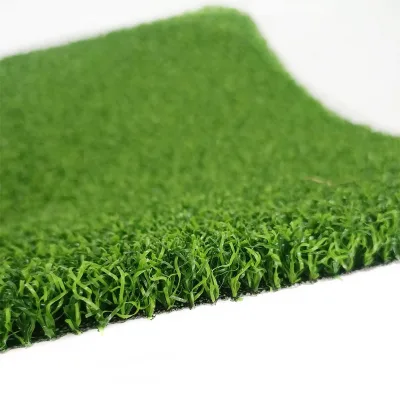


Factory Supply Customized Synthetic Grass Artifical Turf Garden Artificial Grass
$14.80 - $15.50
MOQ: 200 Square Meters
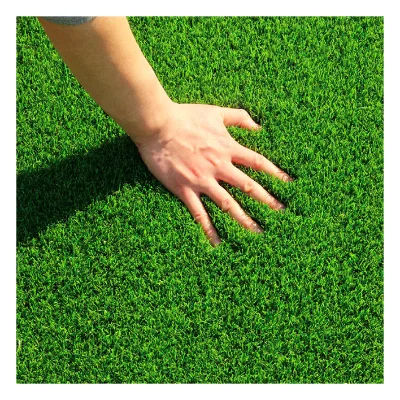

Comprehensive Sourcing Guide
Strategic Sourcing Guide for Soft Synthetic Turf Artificial Grass
Procuring Soft Synthetic Turf Artificial Grass requires a disciplined approach that balances aesthetic requirements with technical performance and supply chain reliability. The global market for artificial grass has expanded significantly, driven by demand in landscaping, sports, and recreational sectors. Buyers must navigate a complex landscape of material compositions, yarn structures, and backing systems to ensure the selected product meets specific operational needs. This guide outlines the critical factors for sourcing high-quality synthetic turf, focusing on evidence-based evaluation criteria derived from current market offerings and industry standards.
Technical Specifications and Material Composition
The foundation of any successful artificial turf procurement lies in understanding the precise technical specifications. The material composition is the primary determinant of durability, feel, and performance. In the current market, the most common materials observed are Polypropylene (PP) and Polyethylene (PE). PE is frequently preferred for its softness and resilience, making it ideal for applications requiring a "nature" feel, while PP offers cost-effectiveness and strength. A single product line may utilize a blend of PP and PE to optimize both tactile comfort and structural integrity.
The physical structure of the yarn is equally critical. Buyers should verify the yarn form, which typically includes straight cut, curving, or curling profiles. Straight cut yarns provide a uniform appearance, while curving or curling forms can enhance the natural look and improve drainage. The cross-profile of the yarn, whether arc type or flat type, influences how the grass blades stand and recover after compression. For instance, arc-type profiles often offer better resilience for high-traffic areas, whereas flat types may be selected for specific aesthetic applications.
Height is another essential specification. Market data indicates that turf heights can vary, with common observations around 30mm. This dimension directly impacts the cushioning and the visual density of the lawn. Additionally, the row spacing, often measured in fractions of an inch (such as 3/8 inch or 3/16 inch), determines the density of the pile. Higher density, measured in tufts per square meter (ranging from approximately 9,450 to 16,800 tufs/sqm), generally correlates with better durability and a more luxurious feel. The yarn length is typically categorized as medium, which balances ease of installation with the desired visual fullness.
Compliance, Certification, and Safety Standards
When sourcing artificial grass, verifying compliance with international safety and quality standards is non-negotiable. Reputable suppliers provide documentation confirming that their products meet rigorous testing protocols. Key certifications to look for include CE, SGS, and TUV, which validate that the product adheres to European and international safety requirements. Specific performance tests are also vital; buyers should request evidence of Anti-Fire, Anti-UV, and Chromium Test results. These tests ensure the turf does not release harmful substances, can withstand prolonged sun exposure without degrading, and maintains fire safety ratings suitable for public spaces.
The warranty period is a strong indicator of manufacturer confidence. In the current market, warranties for artificial grass typically range from 5 to 8 years. This period covers material defects and performance degradation under normal usage conditions. However, buyers must understand that warranty terms are often contingent on proper installation and adherence to maintenance guidelines. It is crucial to review the specific terms of the warranty rather than relying on general market averages.
Furthermore, the grade of the product should align with international class standards. This classification ensures that the materials used meet global benchmarks for quality and consistency. Buyers should explicitly request certification documents for each batch or production run to verify that the claimed standards are met. Without these documents, the risk of receiving substandard materials that fail prematurely increases significantly.
Cost Drivers and Pricing Dynamics
Understanding the cost drivers for synthetic turf is essential for budgeting and value analysis. The price of artificial grass is influenced by several factors, including material costs, yarn density, pile height, and the complexity of the backing system. The observed price range in the market spans from approximately $0.99 to $15.50 per unit, reflecting the vast differences in quality and specification. Lower-priced options often utilize simpler backing systems and lower-density yarns, while premium products feature complex backing layers, higher densities, and advanced UV stabilization.
The Minimum Order Quantity (MOQ) is another significant cost factor. Suppliers typically require orders ranging from 50 to 1,000 units. Higher MOQs often result in better unit pricing, but they also increase the initial capital outlay. Buyers must balance their budget constraints with the need for sufficient inventory to cover the project scope. Additionally, the packaging method, such as rolls of specific dimensions (e.g., 425m or 225m), affects shipping costs and handling efficiency. Complex packaging may incur higher logistics fees but can reduce on-site waste and installation time.
Typical Applications and Usage Scenarios
The versatility of soft synthetic turf allows it to be deployed in a wide array of applications. The primary occasions for use include recreation, landscaping, and sports. For landscaping, the focus is often on aesthetic appeal and low maintenance, with a preference for a "nature" touch feeling and complex ground cloth designs that mimic natural soil drainage. In recreational areas, durability and safety are paramount, requiring turf with high resilience and anti-UV properties to withstand constant foot traffic and environmental exposure.
Sports applications demand even higher performance standards. The turf must provide consistent ball roll, player traction, and shock absorption. Specifications for sports turf often include specific row spacing and density requirements to ensure safety and playability. The backing system for sports turf is typically robust, often combining SBR, net, and PP layers to provide stability and drainage. The choice of occasion dictates the selection of yarn form and cross-profile; for example, straight cut yarns might be preferred for sports fields for uniformity, while curving forms might be selected for landscaping to enhance natural aesthetics.
Supplier Evaluation and Origin Verification
Evaluating suppliers requires a thorough assessment of their capabilities, location, and track record. The origin of the product is a key indicator of manufacturing standards. Many high-quality artificial grass products originate from regions with established manufacturing hubs, such as Jiangsu, China. Buyers should verify the specific origin of the product to ensure it aligns with their quality expectations. The main markets for these products include Europe, Russia, Latin America, Africa, and Asia, indicating a broad global acceptance and compliance with diverse regional standards.
When selecting a supplier, buyers should look for those who offer customization options. The ability to tailor the product to specific project requirements, such as custom branding or unique color schemes, adds significant value. Additionally, the supplier's ability to provide detailed product models, such as SUNQ-HY00217A or SUNJ-AL00001, demonstrates a structured product line and quality control processes. Buyers should also assess the supplier's packing capabilities, ensuring that products are shipped in rolls that minimize damage during transit.
Quality Control and Inspection Protocols
Implementing a robust quality control (QC) protocol is essential to mitigate risks associated with synthetic turf procurement. Buyers should establish clear inspection criteria based on the product specifications. This includes verifying the yarn form, cross-profile, and density against the ordered specifications. Visual inspections should confirm the consistency of the pile height and the uniformity of the color. For critical applications, third-party testing may be necessary to validate the Anti-UV and Anti-Fire claims.
The backing system is another area requiring close scrutiny. The combination of SBR, net, and PP layers must be intact and properly bonded. Any signs of delamination or weak bonding can lead to premature failure of the turf. Buyers should also check the stitching density, which is often specified as 18 stitches per 10cm. Consistency in stitching ensures that the yarns remain securely anchored, preventing shedding and maintaining the structural integrity of the turf.
Long-Term Procurement Considerations
Sourcing artificial grass is not a one-time transaction but a long-term commitment. Buyers must consider the lifecycle of the product, including maintenance requirements and end-of-life disposal. The warranty period, typically 5 to 8 years, provides a framework for long-term planning, but buyers should also evaluate the maintenance needs to ensure the turf remains in optimal condition throughout its lifespan. Proper installation on a suitable base, such as asphalt, cement, or gravel, is crucial for longevity.
Future-proofing the procurement strategy involves selecting products that are adaptable to changing needs. The ability to customize the product and the availability of spare parts or replacement rolls can be valuable assets. Additionally, buyers should stay informed about evolving standards and certifications to ensure continued compliance. By focusing on high-quality materials, rigorous testing, and reliable suppliers, buyers can secure a synthetic turf solution that delivers value and performance over the long term.
| Specification Category | Common Variants Observed | Key Verification Points |
|---|---|---|
| Material | PP, PE, PP+PE Blend | Verify material composition for intended use (softness vs. durability). |
| Yarn Form | Straight Cut, Curving, Curl | Check if the form matches the desired aesthetic and performance needs. |
| Cross Profile | Arc Type, Flat Type | Confirm profile supports required resilience and drainage. |
| Density | 9,450 to 16,800 tufs/sqm | Ensure density aligns with traffic volume and usage intensity. |
| Certification | CE, SGS, TUV, Anti-Fire, Anti-UV | Request specific test reports for safety and environmental compliance. |
| Warranty | 5-8 Years | Review terms and conditions for coverage scope and exclusions. |
| Origin | Jiangsu, China | Verify manufacturing location and associated quality standards. |
| Packing | In Roll (425m, 225m) | Confirm packaging dimensions to optimize shipping and handling. |
In conclusion, sourcing Soft Synthetic Turf Artificial Grass requires a meticulous approach that integrates technical knowledge with strategic supplier evaluation. By focusing on material composition, certification, cost drivers, and application-specific requirements, buyers can make informed decisions that ensure long-term satisfaction and performance. The complexity of the product demands a partnership with suppliers who can provide transparency, customization, and reliable quality assurance.
FAQs
What materials are used for Soft Synthetic Turf Artificial Grass?
The turf is constructed from PP and PE materials, often blended to balance softness and durability. Some products use PE alone for a nature feel, while others combine PP and PE for structural integrity and resilience in high-traffic areas.
Which certifications ensure safety and quality for this artificial grass?
Products typically carry CE, SGS, and TUV certifications alongside Anti-Fire, Anti-UV, and Chromium Test results. These documents verify compliance with international safety standards and ensure the turf is safe for public spaces and sports applications.
Can buyers customize the product specifications for their projects?
Yes, customization is available to tailor the turf to specific project requirements. Buyers can request unique dimensions, yarn forms, or branding, ensuring the final product aligns with their aesthetic and functional needs for landscaping or sports fields.
What is the typical warranty period for soft synthetic turf?
The warranty period generally ranges from 5 to 8 years depending on the specific model and usage conditions. This coverage protects against material defects and performance degradation, provided the turf is installed correctly on suitable bases like asphalt or cement.
How does the yarn form affect the feel of the artificial grass?
Yarn forms include straight cut, curving, and curl options that directly influence the tactile experience. Curving or curling yarns often enhance the natural look and comfort, while straight cut yarns provide a uniform appearance suitable for sports or recreation.
What is the minimum order quantity for purchasing this turf?
The minimum order quantity typically ranges from 50 to 1000 units depending on the supplier and product model. Higher order volumes often result in better unit pricing, but buyers must balance this with their specific project inventory requirements.