Source Soft State Steel Wire Rope for Lifting, Hanging, Fixing
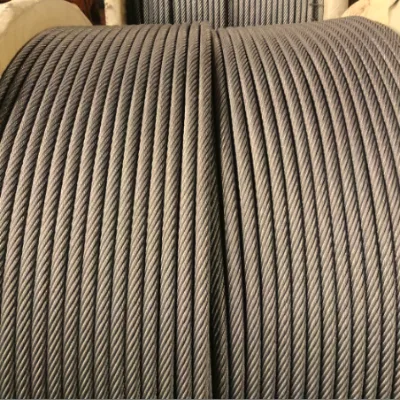
Compare 30 listings for Soft State Steel Wire Rope suitable for lifting, hanging, and fixing applications. Buyers can review specifications including diameters from 1.5mm to 60mm and surface treatments from multiple Chinese manufacturers.
Key considerations
Products List




Comprehensive Sourcing Guide
Sourcing Guide for Soft State Steel Wire Rope
Understanding Product Specifications and Material Composition
When sourcing Soft State Steel Wire Rope, buyers must first establish a clear understanding of the fundamental material properties and structural specifications that define the product. The core material for these products is consistently identified as steel, specifically categorized as non-alloy steel in many listings. This distinction is critical because non-alloy steel offers a balance of ductility and strength suitable for applications requiring flexibility without the added cost or weight of specialized alloys. The carbon content in these wires is typically observed around 0.04%, while silicon content is minimal at approximately 0.002%. These specific chemical compositions contribute to the "soft state" characteristic, ensuring the wire remains pliable and resistant to brittle fracture during bending or twisting operations.
The physical dimensions of the wire rope vary significantly depending on the specific application requirements. Available diameters span a broad range, from 1.5mm up to 60mm, with some specialized listings indicating a range of 0.15mm to 50.0mm or even up to 10.0mm for specific sub-types. The construction of the rope is equally diverse, with common configurations including 6x19S, 8x19S, 8x25(Fi), and 6x25(Fi) structures. The core of the rope is a vital component, often available in Fiber Core (FC) or Steel Core variants such as Independent Wire Rope Core (IWRC) or Independent Wire Strand Core (IWS). The choice between a fiber core and a steel core directly impacts the rope's flexibility, crush resistance, and temperature tolerance. Fiber cores generally provide greater flexibility, which aligns with the soft state designation, while steel cores offer enhanced strength and resistance to high temperatures.
The cross-sectional shape of the wire is uniformly round, a standard that facilitates smooth movement through sheaves and pulleys. The manufacturing technique often involves cold drawing, a process that enhances the tensile strength of the wire while maintaining the desired soft state through controlled processing. In some instances, the wire may also undergo cold rolling or galvanization to improve surface properties. The surface treatment is another variable; while some products are specified as having a black surface finish, others may be galvanized to prevent corrosion. Buyers must verify the specific surface treatment required for their environment, as a black finish may be suitable for indoor or protected applications, whereas galvanized coatings are essential for outdoor or marine exposure.
Technical Standards and Compliance Verification
Compliance with international and regional standards is a non-negotiable aspect of sourcing steel wire rope. The market data indicates that products often adhere to a variety of recognized standards, including AISI, ASTM, BS, DIN, GB, and JIS. These standards define the mechanical properties, dimensional tolerances, and testing procedures that the wire rope must meet. For instance, the tolerance for the product is observed at 1%, a figure that buyers should verify against their specific engineering requirements. A tolerance of 1% is generally acceptable for many general industrial applications, but high-precision machinery may require tighter tolerances.
In addition to dimensional standards, certification plays a pivotal role in ensuring product quality and safety. Listings frequently mention certifications such as ISO, SGS, and CE. Specific quality management systems like ISO9001 and environmental standards like ISO14001 are also cited, indicating that the manufacturing facilities may be committed to consistent quality control and environmental responsibility. The presence of ISO and SGS certifications suggests that the supplier has undergone third-party audits, which can provide buyers with confidence in the supplier's ability to deliver consistent product quality. However, buyers must not assume that every listed product automatically possesses these certifications; verification of the specific certificate for the batch being purchased is essential.
The standardization of the product also extends to its classification. The wire rope is often categorized under the type "Wire Rope" with applications ranging from lifting and hanging to fixing and cableway systems. The standard diameter and length specifications are crucial for procurement planning. Lengths can vary from 50m to 6500m, and diameters range from 0.2mm to 10.0mm in some contexts, or 1.5mm to 60mm in others. Buyers must ensure that the specific standard referenced by the supplier matches the requirements of their project specifications. For example, if a project requires compliance with DIN standards, the supplier must provide documentation proving that the product meets the specific DIN criteria for wire rope.
Cost Drivers and Pricing Dynamics
The pricing of Soft State Steel Wire Rope is influenced by a complex interplay of factors, including raw material costs, manufacturing complexity, and logistical considerations. The observed price range in the market is extremely broad, spanning from $0.01 to $10,000. This wide variance is not indicative of a single product type but rather reflects the diversity of the market, which includes everything from small-diameter, low-tensile wires to heavy-duty, large-diameter ropes used in major construction or mining projects. The price per unit is heavily dependent on the diameter, the type of core, the surface treatment, and the total quantity ordered.
Minimum Order Quantity (MOQ) is another significant cost driver. The observed MOQ range is from 1 to 1000 units, suggesting that suppliers cater to both small-scale buyers and large industrial contractors. For buyers with smaller requirements, an MOQ of 1 unit allows for sampling or small project needs, though the unit price may be higher due to the lack of economies of scale. Conversely, buyers ordering in bulk can negotiate lower prices, but they must be prepared to meet higher MOQ thresholds. The packaging method also influences cost; options include spools, rolls, plywood wooden reels, soft coils, cartons, and wood cases. More robust packaging, such as wooden cases, may incur additional costs but is necessary for protecting the wire rope during long-distance shipping or storage in harsh environments.
The origin of the product, primarily identified as China, with specific mentions of Jiangsu Nantong, also impacts the cost structure. Sourcing from this region often provides competitive pricing due to established manufacturing clusters and supply chain efficiencies. However, buyers must factor in logistics costs, including freight, insurance, and customs duties, which can significantly affect the landed cost. The lead time, while not explicitly quantified in the provided data, is a variable that buyers should discuss with suppliers, as it can vary based on production capacity and order volume. Understanding these cost drivers allows buyers to make informed decisions that balance budget constraints with quality and delivery requirements.
Typical Applications and Usage Scenarios
Soft State Steel Wire Rope is a versatile component utilized across a wide array of industries due to its flexibility and strength. The primary applications identified include lifting, hanging, fixing, and cableway systems. These uses require the rope to withstand dynamic loads and repetitive stress, making the soft state characteristic particularly valuable. In lifting applications, the rope must be flexible enough to wrap around drums and sheaves without kinking, while maintaining sufficient tensile strength to support the load. The soft state ensures that the rope can be easily handled and installed, reducing the risk of injury to workers and damage to the equipment.
Beyond lifting, the wire rope is extensively used in construction wire mesh, decorative mesh, filters, screens, gabion mesh, and protective mesh. In these applications, the wire is often woven or welded to create structures that provide containment, filtration, or aesthetic appeal. The flexibility of the soft state wire allows for the creation of complex mesh patterns that can conform to various shapes and sizes. Additionally, the wire is used in window curtains, barbecue wire mesh, and fence mesh, where durability and resistance to environmental factors are key. The galvanized or black surface treatments play a crucial role in these applications, providing protection against rust and corrosion, especially in outdoor environments.
The specific configuration of the wire rope, such as the 6x19S or 8x19S structure, determines its suitability for different tasks. For example, ropes with a higher number of strands may offer better flexibility and are ideal for applications requiring frequent bending, such as in crane operations or elevator systems. Ropes with a steel core may be preferred for applications requiring high strength and resistance to crushing, such as in mining or heavy lifting. Buyers must carefully evaluate the specific demands of their application to select the appropriate wire rope configuration. The versatility of the product means that it can be adapted to a wide range of needs, from small-scale decorative projects to large-scale industrial infrastructure.
Supplier Evaluation and Quality Control Protocols
Evaluating suppliers for Soft State Steel Wire Rope requires a rigorous approach to ensure that the products meet the required specifications and quality standards. Buyers should verify the supplier's production capabilities, including their ability to perform processing services such as bending, welding, decoiling, punching, and cutting. These services indicate a level of customization and value-added processing that can be crucial for specific project needs. The availability of customization is a key factor, as it allows buyers to tailor the wire rope to their exact requirements, whether in terms of diameter, length, or surface treatment.
Quality control is another critical aspect of supplier evaluation. Buyers should inquire about the supplier's quality management systems and whether they hold certifications such as ISO9001. The presence of third-party certifications like SGS provides an additional layer of assurance, indicating that the supplier's products have been independently tested and verified. Buyers should also request test reports and certificates of analysis to confirm that the chemical composition, tensile strength, and dimensional tolerances of the wire rope match the agreed-upon specifications. The observation of a 1% tolerance suggests that buyers should expect a certain level of variation, but they must ensure that this variation does not compromise the functionality of the final product.
The origin of the product, particularly from regions like Jiangsu Nantong, should be verified to ensure that the supplier is legitimate and capable of meeting delivery schedules. Buyers should also assess the supplier's packaging practices to ensure that the wire rope is protected during transit. Options such as spools, coils, and wooden cases should be evaluated based on the specific shipping requirements and the potential for damage during handling. A reputable supplier will provide clear documentation regarding the origin, material composition, and processing history of the wire rope, enabling buyers to trace the product back to its source and verify its quality.
Long-Term Procurement and Strategic Sourcing Considerations
Sourcing Soft State Steel Wire Rope is not merely a transactional activity but a strategic decision that impacts long-term operational efficiency and cost management. Buyers should consider the lifecycle of the product, including its durability, maintenance requirements, and potential for replacement. The soft state characteristic, while beneficial for flexibility, may also imply a lower resistance to wear and tear compared to hard state wires. Therefore, buyers must evaluate the operating environment and select a wire rope that can withstand the specific conditions of their application. Factors such as exposure to moisture, chemicals, or extreme temperatures should be considered when choosing the surface treatment and core type.
Strategic sourcing also involves building relationships with reliable suppliers who can provide consistent quality and support. Buyers should look for suppliers who offer technical support and are willing to collaborate on customizing products to meet specific needs. The ability to source wire rope with varying diameters, from 0.15mm to 60mm, allows buyers to consolidate their sourcing efforts and reduce the complexity of their supply chain. Additionally, buyers should consider the potential for future price fluctuations in raw materials, such as steel, and negotiate contracts that include mechanisms for price adjustment or volume discounts.
Finally, buyers should remain vigilant regarding changes in standards and regulations that may affect the procurement of steel wire rope. As international standards evolve, suppliers must adapt their products to remain compliant. Buyers should stay informed about these changes and ensure that their suppliers are up to date with the latest requirements. By taking a proactive approach to sourcing, buyers can mitigate risks, optimize costs, and ensure the reliable performance of Soft State Steel Wire Rope in their applications.
FAQs
What is the typical carbon content in Soft State Steel Wire Rope?
The typical carbon content is 0.04 percent, which contributes to the soft state characteristic. This low carbon level ensures the wire remains pliable and resistant to brittle fracture during bending operations.
Which standards do soft state steel wire ropes commonly adhere to?
Products commonly adhere to AISI, ASTM, BS, DIN, GB, and JIS standards. Buyers should verify that the specific standard matches project requirements, as tolerances are generally observed at 1 percent.
Can buyers request customization for wire rope dimensions and surface treatment?
Yes, customization is available for dimensions and surface treatments like galvanization or black finishes. Buyers can specify diameters ranging from 1.5mm to 60mm or lengths up to 6500m based on their needs.
What certifications are typically associated with high-quality steel wire rope?
High-quality products often carry ISO, SGS, and CE certifications. Specific quality management systems like ISO9001 and environmental standards like ISO14001 may also be present to ensure consistent manufacturing control.
How does the core type affect the performance of the wire rope?
The core is available in Fiber Core or Steel Core variants like IWRC. Fiber cores provide greater flexibility for soft state applications, while steel cores offer enhanced strength and resistance to high temperatures.
What is the observed price range for Soft State Steel Wire Rope?
The observed price range spans from 0.01 to 10000 USD depending on specifications. Pricing varies significantly based on diameter, core type, surface treatment, and the total quantity ordered by the buyer.
Where are these steel wire ropes typically manufactured and shipped from?
Products are primarily manufactured in China, with specific origins noted in Jiangsu Nantong. Buyers should factor in logistics costs and lead times when sourcing from this established manufacturing region.