Source Solenoid Actuated Directional Valves for Hydraulic, Industrial, and Construction
Find 30 Solenoid Actuated Directional Valves from verified suppliers in Jiangsu Province, China. Buyers can compare specifications like flow rates, pressure ratings, and connection types for hydraulic and industrial applications.
Key considerations
Products List


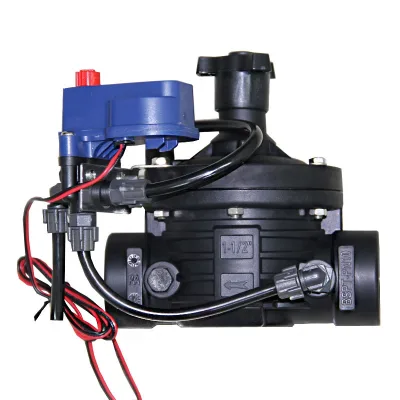


Hydraulic Directional Control Valve, Pneumatic Control Valve with Locator
$655.00 - $7770.00
MOQ: 1 Pieces


Comprehensive Sourcing Guide
Strategic Sourcing Guide for Solenoid Actuated Directional Valves
Sourcing Solenoid Actuated Directional Valves requires a disciplined approach that balances technical precision with supply chain reliability. These components are critical in hydraulic and pneumatic systems, serving as the primary mechanism for controlling the direction of fluid flow. For procurement professionals, the complexity lies not only in identifying the correct valve type but in verifying that the product specifications align with the operational environment. The market offers a diverse range of options, from self-operated units to direct-acting piston structures, each tailored to specific industrial needs. This guide outlines the essential factors for evaluating these components, ensuring that buyers make informed decisions based on verified attributes rather than unconfirmed marketing claims.
Technical Specifications and Operational Parameters
The foundation of a successful procurement strategy begins with a rigorous analysis of technical specifications. Solenoid Actuated Directional Valves are defined by their actuation method, internal structure, and the media they handle. In the current market, products are frequently categorized by their power source, with electric actuators being a dominant choice for automated systems. Buyers must distinguish between direct-acting and pilot-operated designs, as the former offers faster response times for smaller flow rates, while the latter is often preferred for high-pressure applications.
A critical observation in the current product landscape is the variation in media compatibility. While some units are explicitly designed for oil, others are engineered for gas or air. This distinction is non-negotiable; using a valve rated for oil in a pneumatic system can lead to seal failure or catastrophic malfunction. Furthermore, the working pressure range is a primary determinant of suitability. Specific models in the market operate within a pressure range of 0.15 to 0.8 MPa, which is typical for general industrial pneumatic applications. However, for hydraulic systems handling higher loads, the pressure rating must be verified against the system's maximum operating pressure.
Temperature constraints also play a vital role. Standard units are often rated for ordinary temperature ranges, with specific models indicating a working temperature between 5 and 50 degrees Celsius. Operating outside these bounds can degrade internal seals and affect the magnetic properties of the solenoid coil. Additionally, the connection mode must be scrutinized. Internal thread connections are common, but the specific thread standard and size, such as G1" or tubular forms, must match the existing piping infrastructure. The flow capacity, often cited in liters per minute (e.g., 80L/Min), dictates the valve's ability to handle the system's demand without causing excessive pressure drops.
Compliance, Certification, and Standardization
In the global supply chain, compliance with international standards is a prerequisite for risk mitigation. Buyers should prioritize suppliers who can demonstrate adherence to recognized certification frameworks. The CE mark is a frequently observed certification in the current market, indicating conformity with health, safety, and environmental protection standards for products sold within the European Economic Area. However, the presence of a CE mark alone is insufficient; it must be supported by a valid declaration of conformity.
Beyond CE, other standards such as GB (Guobiao) may apply, particularly for products originating from specific manufacturing regions. It is essential to verify that the product standard matches the regulatory requirements of the destination market. For instance, a valve manufactured in Jiangsu Province, China, might adhere to GB standards for domestic use but require CE certification for export. The standardization of dimensions is equally important. Some product listings reference specific dimensional standards, such as 100mm x 70mm x 30mm, which likely refer to housing or mounting profiles. Buyers must ensure that these physical dimensions align with the available space in their machinery.
Quality assurance also extends to the materials used in construction. Brass is a common material choice for valve bodies due to its corrosion resistance and machinability, but the suitability of the material depends on the chemical compatibility with the working medium. For applications involving aggressive fluids, alternative materials or specific plating may be required. The absence of a specific certification claim in a product listing should not be assumed to be a negative attribute, but it necessitates a direct inquiry to the supplier to confirm compliance status before proceeding with an order.
Cost Drivers and Economic Factors
Understanding the cost structure of Solenoid Actuated Directional Valves is crucial for budget planning and total cost of ownership (TCO) analysis. The price of these components can vary significantly, with observed ranges in the market spanning from $0.80 to $7,770. This wide disparity is driven by several factors, including the complexity of the valve structure, the quality of materials, the flow capacity, and the level of customization required.
High-flow valves, such as those rated at 80L/Min or higher, typically command a premium price due to the precision engineering required to maintain stability under high velocity. Similarly, valves with specialized features, such as digital display types or integrated control modes like manual gas control with electro-hydraulic backup, add to the manufacturing cost. The actuation mechanism also influences pricing; electric solenoids with advanced coil designs are generally more expensive than basic manual or direct-acting variants.
Minimum Order Quantity (MOQ) is another significant economic factor. The market shows an MOQ range from 1 to 5,000 units. For small-scale projects or prototype development, suppliers offering low MOQs are essential, though they may carry a higher unit cost. Conversely, large-scale procurement can leverage economies of scale, but buyers must be prepared to commit to larger volumes. Customization is a key cost driver; while many suppliers offer customization services, these requests often increase the unit price and extend lead times. Buyers should weigh the long-term benefits of a customized solution against the immediate cost savings of standard off-the-shelf products.
Typical Applications and Industry Use Cases
Solenoid Actuated Directional Valves are ubiquitous across various industrial sectors, each with unique operational demands. In construction machinery, these valves are integral to the hydraulic systems that control boom movement, bucket rotation, and track steering. The robustness required for these applications often necessitates valves with a "tough" work condition rating and high durability. Similarly, in sanitation machinery, the valves must handle varying media and frequent cycling without failure.
The industrial usage sector relies heavily on these valves for flow control, temperature regulation, and safety functions. Specific models are designed for applications such as draining, emptying, and pressure regulation, highlighting the versatility of directional control in process industries. For water industrial usage, the valves must be compatible with water media and resistant to corrosion. The application scope also extends to systems requiring reversing and balancing functions, where the valve's ability to manage complex flow paths is critical.
The selection of a valve for a specific application depends on the control mode. Systems requiring manual intervention may utilize direct-acting types, while fully automated lines rely on solenoid actuation. The structural design, such as integral configurations with 1 to 6 pairs of valves, allows for compact integration in multi-function systems. Understanding the specific application context ensures that the chosen valve not only meets the immediate functional requirements but also contributes to the overall efficiency and safety of the machinery.
Supplier Evaluation and Procurement Strategy
Evaluating suppliers for Solenoid Actuated Directional Valves requires a multi-faceted approach that goes beyond price comparison. Buyers should assess the supplier's ability to provide technical support, their manufacturing capabilities, and their track record for quality consistency. The origin of the product, such as Jiangsu Province, China, can be an indicator of the manufacturing ecosystem, but it does not guarantee quality without verification.
Key evaluation criteria include the availability of customization services, which indicates a supplier's flexibility and engineering capability. Suppliers offering "Available" customization options can tailor products to specific project needs, such as unique connection forms or specialized actuation modes. Additionally, the warranty terms, typically ranging from one year, provide a measure of the supplier's confidence in their product quality.
Packaging standards are also a critical indicator of a supplier's professionalism. Whether goods are packed in standard cases, bulk packaging, or specialized crates, the method must ensure that the valves arrive without damage. Buyers should verify that the packaging protects the valve's delicate components, such as the solenoid coils and internal seals, during transit. Furthermore, the supplier's ability to provide clear documentation, including technical datasheets and compliance certificates, is essential for internal approval processes and regulatory audits.
Quality Control and Long-Term Procurement Considerations
Ensuring the long-term reliability of Solenoid Actuated Directional Valves requires a robust quality control (QC) strategy. Buyers should implement incoming inspection protocols that verify critical attributes such as material composition, dimensional accuracy, and functional performance. The use of standard packing and adherence to established standards like CE or GB should be confirmed through documentation rather than assumption.
Long-term procurement considerations include the availability of spare parts and the supplier's capacity for after-sales support. A one-year warranty is a standard offering, but buyers should inquire about the terms for extended coverage and the process for handling claims. The lifecycle of the valve is also influenced by the working conditions; valves subjected to tough conditions may require more frequent maintenance or replacement.
To mitigate supply chain risks, buyers should diversify their supplier base and avoid over-reliance on a single source. Establishing clear communication channels regarding lead times and production schedules is vital, especially for customized orders. The market observation of a wide MOQ range suggests that buyers can negotiate terms based on their volume needs, but they must remain vigilant about potential lead time extensions associated with customization or high-volume orders.
Summary of Key Selection Criteria
To facilitate decision-making, the following table summarizes the critical attributes buyers should verify when sourcing Solenoid Actuated Directional Valves. This comparison highlights the variability in the market and the importance of matching specifications to application requirements.
| Attribute Category | Key Verification Points | Market Observation Examples |
|---|---|---|
| Actuation & Control | Solenoid type, Control mode (Manual/Electric) | Electric Actuator, Manual Gas Control |
| Media & Pressure | Compatible fluid, Pressure rating | Oil/Gas/Air, 0.15-0.8MPa |
| Structure & Type | Valve structure, Connection form | Direct-Acting Piston, Internal Thread |
| Compliance | Certifications, Standards | CE, GB, Standard |
| Environment | Working temperature, Conditions | 5-50°C, Tough Conditions |
| Logistics | MOQ, Packaging, Origin | 1-5000 MOQ, Standard Packing, China |
By adhering to these guidelines and focusing on verified data, procurement professionals can navigate the complexities of the solenoid valve market effectively. The goal is to secure components that ensure operational continuity, safety, and efficiency, while maintaining a resilient and cost-effective supply chain.
FAQs
What certifications do Solenoid Actuated Directional Valves have?
These valves typically carry CE certification for compliance with safety standards. Some models also adhere to GB standards, ensuring they meet specific regional regulatory requirements for industrial use.
Which materials are used for Solenoid Actuated Directional Valves?
Brass is a common material choice for the valve body due to its durability and corrosion resistance. This material selection supports reliable performance in various industrial applications involving oil or gas media.
Can these valves handle different working temperatures?
Standard units operate within an ordinary temperature range, with specific models rated between 5 and 50 degrees Celsius. Operating outside these bounds may degrade seals or affect magnetic properties.
What is the minimum order quantity for these valves?
The market shows a minimum order quantity range from 1 to 5000 units depending on the supplier. Buyers can often negotiate terms based on their specific volume needs and customization requirements.
How are these valves packed for shipment?
Goods are typically shipped in standard packing, bulk packaging, or cases depending on the supplier. This ensures the valves arrive without damage to delicate components like solenoid coils and internal seals.
What warranty is provided for Solenoid Actuated Directional Valves?
A one-year warranty is a standard offering for these components. This term reflects the supplier's confidence in product quality and provides coverage for potential defects during the initial usage period.