Source Spline Steel Screw Shaft for forging, casting, and machining
Compare 30 verified listings for Spline Steel Screw Shaft used in metal forging, casting, and processing machinery. Buyers can review specifications like material, hardness, and certifications from Chinese manufacturers offering customized options.
Key considerations
Products List


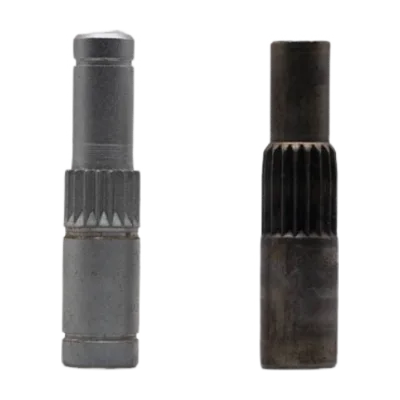
High Precision Stainless Steel Spline Shaft External Spline Gear Shaft
$1800.00 - $2000.00
MOQ: 1 Pieces


Spline Gear Shaft Straight-Sided Splines with Automotive Transmission Systems
$1800.00 - $2000.00
MOQ: 1 Pieces




Comprehensive Sourcing Guide
Strategic Sourcing Guide for Spline Steel Screw Shafts
Understanding Technical Specifications and Material Composition
When initiating a procurement strategy for spline steel screw shafts, the first critical step is defining the precise technical parameters that align with your machinery's operational requirements. The market offers a diverse array of configurations, ranging from simple drive shafts to complex components for metal forging and straightening machinery. Based on available industry data, the material composition is a primary differentiator. Buyers frequently encounter products categorized under Alloy, Metal, Stainless Steel, and Alloy Steel. The selection between these materials depends heavily on the specific environment in which the shaft will operate. For instance, applications involving metal casting, engraving, or recycling often demand the corrosion resistance and strength provided by Stainless Steel or high-grade Alloy Steel.
The geometric specifications are equally vital. The core keyword "Spline Steel Screw Shaft" implies a component designed to transmit torque while maintaining precise alignment. Observed product attributes indicate that these shafts can feature various shapes, including Straight Shafts, Real Axis configurations, and Round appearances. The toothed portion shape is often identified as a Spur Gear, which is suitable for specific power transmission needs. Furthermore, the manufacturing method plays a significant role in the final product's integrity. Data suggests that Rolling Gear and Forging are common processing techniques. Forging, in particular, is noted as a molding style that can enhance the grain structure of the metal, potentially offering superior load-bearing capabilities compared to machined-only alternatives.
Dimensional accuracy is a non-negotiable aspect of spline shaft procurement. High-precision applications require journals with dimensional accuracy ranging from IT6 to IT7, a standard that ensures the shaft fits perfectly within its housing or coupling. Surface roughness is another critical metric, with observed specifications indicating a range of 0.63 to 0.16 micrometers. This level of finish is essential for minimizing friction and wear in high-speed or high-load scenarios. Buyers must verify that the supplier can consistently meet these tolerances, as deviations can lead to premature failure in critical machinery parts. The "Forging Tolerance" is also a key parameter, with some specifications noting a standard tolerance of +/-0.5mm, though custom requirements often dictate tighter limits based on client drawings.
Compliance, Certification, and Regulatory Standards
Navigating the compliance landscape is essential for ensuring that sourced spline shafts meet international safety and quality benchmarks. The procurement of industrial components often requires adherence to specific certification frameworks to facilitate global trade and ensure operational safety. In the current market, certifications such as RoHS, CE, and SGS are frequently observed. RoHS compliance indicates that the product adheres to restrictions on hazardous substances, which is crucial for environmental regulations in many regions. CE marking signifies conformity with health, safety, and environmental protection standards for products sold within the European Economic Area. SGS certification provides third-party verification of quality and safety, adding a layer of trust for buyers sourcing from international suppliers.
Beyond general certifications, adherence to specific industry standards is paramount. The supplied data highlights a variety of recognized standards, including ASTM, DIN, AISI, ANSI, and GB. These standards govern everything from material properties to dimensional tolerances and testing procedures. For example, the AISI standard is often referenced for steel alloys, while DIN and GB standards are prevalent in European and Chinese manufacturing contexts, respectively. Buyers should verify that the specific spline shaft model they intend to purchase complies with the standard required for their application. Some products are explicitly noted as meeting the "forging steel spline roll" standard or adhering to "forging aisi4130 spline shaft" specifications, which implies a specific metallurgical composition and processing method.
It is important to note that while some products may claim compliance with standards like DIN 5463 or DIN 5480, these should be treated as background information rather than guaranteed facts for every listed item. Procurement teams must request specific test reports or certificates of conformity that explicitly link the delivered product to the claimed standard. The "Standard" attribute in product listings can vary, with some items listing multiple standards such as ANSI, GB, ASTM, and DIN simultaneously. This suggests a high degree of flexibility in the manufacturing process, but it also places the onus on the buyer to confirm which specific standard applies to their order. Ensuring that the supplier can provide documentation for these standards is a critical step in the due diligence process.
Cost Drivers and Pricing Variables
The pricing of spline steel screw shafts is influenced by a complex interplay of factors, including material costs, manufacturing complexity, customization levels, and order volume. The observed price range in the market spans from $0.01 to $2000, reflecting the vast diversity in product sizes, material grades, and production methods. A single, small-diameter shaft for a light-duty application will naturally fall at the lower end of this spectrum, while a large, high-strength alloy steel shaft designed for heavy-duty metal forging machinery will command a premium price.
Material selection is a primary cost driver. Stainless Steel and Alloy Steel generally cost more than standard carbon steel due to their enhanced properties and processing requirements. The choice of heat treatment also significantly impacts the final cost. Processes such as Quenching are employed to increase hardness and durability, with some products boasting a bearing table hardness of HRC 58-62. This level of hardness requires precise control over the thermal processing, adding to the manufacturing expense. Additionally, surface treatments like Polishing and Rust Proofing contribute to the overall cost, as they require additional labor and specialized equipment to achieve the desired finish and longevity.
Customization is another major variable affecting price. While some products are listed as "Non-Customized" or "New," many suppliers offer "Customized" options where the shaft is manufactured "As Per The Drawing" or "As Per The Clients" specifications. Customization typically involves higher tooling costs, longer lead times, and a higher minimum order quantity (MOQ). The observed MOQ range of 1 to 2000 units indicates that buyers can source small quantities for prototyping or testing, but larger volumes may be required to achieve optimal unit pricing. Buyers should be prepared to negotiate based on their projected annual volume, as the cost per unit often decreases significantly with increased order sizes. Packaging requirements, such as "Box or Wooden Package" or "Plywooden Case," can also add to the total cost, particularly for heavy or delicate components that require robust protection during shipping.
Typical Applications and Operational Environments
Spline steel screw shafts are integral components in a wide array of industrial machinery, serving as the backbone for power transmission and motion control. The observed applications for these components are extensive, covering sectors such as metal casting, metal coating, metal drawing, engraving, forging, processing, spinning, straightening, and cutting. In metal casting machinery, these shafts must withstand high temperatures and heavy loads, requiring materials with excellent thermal stability and strength. Similarly, in metal forging and straightening machinery, the shafts are subjected to immense mechanical stress, necessitating high hardness and fatigue resistance.
The specific design of the spline shaft often dictates its suitability for a particular application. For instance, "Drive Shaft" applications require components that can efficiently transfer torque from a power source to a load, while "Flexible Shaft" designs are used in scenarios where some degree of misalignment or articulation is necessary. The "Axis Shape" and "Shaft Shape" attributes, such as Straight Shaft or Real Axis, further refine the application scope. In truck axle applications, for example, the shafts must be robust enough to support heavy loads while maintaining precise alignment for the vehicle's suspension and drivetrain.
Beyond heavy machinery, these shafts are also critical in metal processing machinery parts and recycling machines. In these environments, the shafts must resist wear and corrosion, often requiring surface treatments like rust proofing and polishing. The "Manipulate Way" of Forced Manipulation suggests that some applications involve automated or high-force operations, where the reliability of the spline shaft is paramount. Whether the application involves a winch spooling shaft or a hydraulic motor spline shaft, the component must be engineered to handle the specific dynamic loads and operational cycles of the machinery. Understanding the exact operational environment is crucial for selecting the right material, heat treatment, and surface finish to ensure long-term performance and minimize downtime.
Supplier Evaluation and Quality Assurance Protocols
Evaluating suppliers for spline steel screw shafts requires a rigorous approach to ensure that the products meet the required technical and quality standards. Buyers should prioritize suppliers who demonstrate a clear understanding of the specific standards and certifications relevant to their products. The presence of certifications like ISO, CE, and SGS is a positive indicator, but it is essential to verify the validity and scope of these certifications. Suppliers should be able to provide up-to-date documentation that confirms their compliance with the claimed standards.
Quality control processes are another critical factor in supplier evaluation. Buyers should inquire about the supplier's internal quality assurance protocols, including inspection methods for dimensional accuracy, surface roughness, and material composition. The ability to produce shafts with journal dimensional accuracy of IT6-IT7 and surface roughness of 0.63-0.16μm is a strong indicator of a high-quality manufacturing process. Additionally, suppliers should have robust procedures for handling heat treatment and surface finishing to ensure consistency across batches. The "Forging Tolerance" of +/-0.5mm mentioned in some specifications highlights the importance of tight quality control to maintain the integrity of the final product.
Suppliers should also be transparent about their customization capabilities. If a buyer requires a shaft "As Per The Drawing," the supplier must demonstrate the ability to interpret and execute complex technical drawings with high precision. The "Tolerance" attribute, which can be based on "Customer Drawings Requirements," suggests that flexible and responsive suppliers are better equipped to meet unique project needs. Furthermore, buyers should assess the supplier's capacity to handle different order volumes, given the observed MOQ range of 1 to 2000 units. A supplier with a flexible production line can accommodate both small prototype runs and large-scale production orders without compromising quality.
Long-Term Procurement and Maintenance Considerations
Sourcing spline steel screw shafts is not just about the initial purchase; it involves considering the long-term performance and maintenance requirements of the components. The warranty period, often listed as 1 Year for certain products, provides a baseline for the supplier's confidence in their product's durability. However, buyers should look beyond the warranty and consider the expected service life of the shafts in their specific application. Factors such as hardness (e.g., HRC 58-62), surface treatment, and material grade will significantly influence the lifespan of the component.
Maintenance planning is essential for minimizing downtime and ensuring the continued efficiency of machinery. Buyers should select shafts that are compatible with their existing maintenance schedules and spare parts inventory. The "Parts Type" attribute, such as "Truck Axles," indicates that some shafts are designed for specific industries with established maintenance protocols. Understanding these protocols can help buyers select components that are easy to replace and maintain. Additionally, the "Condition" of the product, typically listed as "New," should be verified to ensure that the shafts are not refurbished or reconditioned items, which may have reduced longevity.
Finally, buyers should consider the supply chain stability and the supplier's ability to provide consistent quality over time. The "Manufacturing Method," such as Rolling Gear or Forging, should be consistent across all orders to ensure uniform performance. Suppliers who invest in "The Latest Technology" for heat treatment and processing are more likely to deliver products that meet evolving industry standards and performance expectations. By focusing on long-term reliability and maintenance compatibility, buyers can build a sustainable procurement strategy that supports the efficient operation of their machinery for years to come.
Comparative Analysis of Spline Shaft Attributes
To facilitate informed decision-making, the following table summarizes key attributes observed in the market for spline steel screw shafts. This comparison highlights the variability in materials, standards, and applications, helping buyers identify the most suitable options for their specific needs.
| Attribute Category | Observed Options | Key Considerations for Buyers |
|---|---|---|
| Material | Alloy, Metal, Stainless Steel, Alloy Steel | Select based on corrosion resistance and load requirements. |
| Certifications | RoHS, CE, SGS, ISO | Verify validity and scope for target markets. |
| Standards | ASTM, DIN, AISI, ANSI, GB | Ensure compliance with industry-specific regulations. |
| Manufacturing Method | Rolling Gear, Forging | Forging often offers superior grain structure and strength. |
| Surface Treatment | Polishing, Rust Proofing | Critical for longevity in harsh environments. |
| Hardness | Soft Tooth Surface, HRC 58-62 | Match hardness to the application's wear and torque needs. |
| Customization | Available, Non-Customized, Customized | Confirm ability to meet "As Per Drawing" requirements. |
| Applications | Metal Casting, Forging, Straightening, Winch | Align shaft specs with specific machinery functions. |
| Tolerance | +/-0.5mm, IT6-IT7, Customer Drawings | Verify dimensional accuracy against operational needs. |
| Packing | Box, Wooden Package, Plywooden Case | Ensure adequate protection for shipping and storage. |
This comparative overview underscores the importance of a detailed specification review before placing an order. By carefully evaluating these attributes, buyers can mitigate risks and ensure that the sourced spline steel screw shafts meet the rigorous demands of their industrial applications.
FAQs
What materials are used for spline steel screw shafts?
These shafts are commonly made from Alloy, Metal, Stainless Steel, and Alloy Steel. The specific material depends on the application environment, with Stainless Steel offering corrosion resistance for metal casting or recycling machinery.
Which certifications do these shafts typically hold?
Products often carry RoHS, CE, SGS, and ISO certifications. These marks indicate compliance with hazardous substance restrictions, European safety standards, and third-party quality verification for international trade requirements.
How is the hardness of the shaft determined?
Hardness varies by application, with some shafts featuring a Soft Tooth Surface while others achieve a Bearing Table Hardness of HRC 58-62. Quenching heat treatment is frequently used to enhance durability and strength.
Can these shafts be customized to specific drawings?
Yes, customization is available for many products, allowing manufacturing as per client drawings. While some items are non-customized, buyers can request specific dimensions and specifications tailored to their machinery needs.
What standards govern the manufacturing of these shafts?
Manufacturing follows various standards including ASTM, DIN, AISI, ANSI, and GB. Specific models may adhere to standards like forging aisi4130 spline shaft or forging steel spline roll depending on the production method.
What is the typical dimensional accuracy for journals?
Journal dimensional accuracy typically ranges from IT6 to IT7 to ensure precise fitting. Surface roughness is also controlled, often falling between 0.63 and 0.16 micrometers for optimal performance in high-load scenarios.