Source Trailer Hitch Ball for Trucks, Trailers, and RVs
Explore 30 verified listings for the Trailer Hitch Ball, featuring options with chrome plating, zinc finishes, and steel construction. Buyers can compare specifications like 2-inch and 2-5/16-inch standards, load capacities up to 5000lbs, and certifications including DOT and ISO/TS16949 to find the right fit for their hauling needs.
Key considerations
Products List
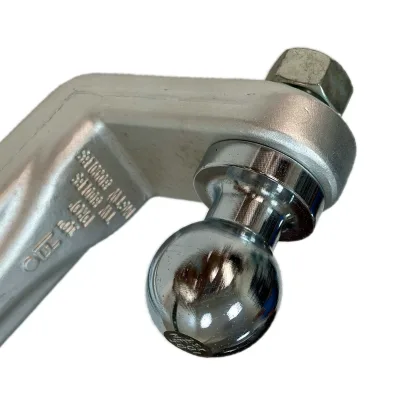


Truck Hitch Ball Various Sizes Standard Hitch Balls for Trailer Towing Part
$0.10 - $10.00
MOQ: 100 Pieces

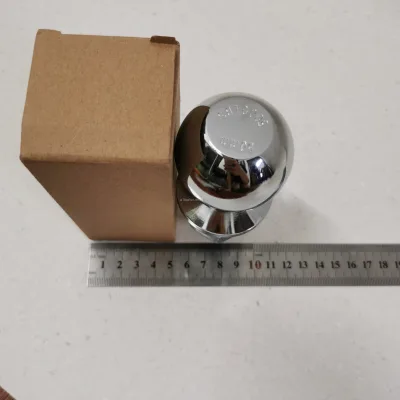
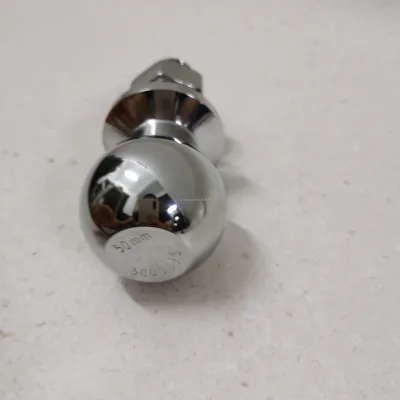
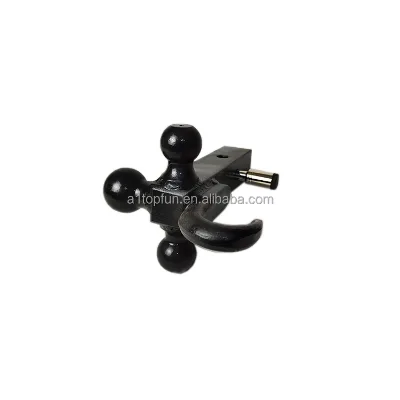


Trailer Hitch Ball Mount Trailer Hitch Ball for Boat Trailer Accessories
$8.00 - $10.00
MOQ: 100 Pieces


Travel Trailer Hitch Ball High Quality Trailer Hitch Mount with 2 Inch Ball and Pin
$8.00 - $10.00
MOQ: 200 Pieces


Comprehensive Sourcing Guide
Strategic Sourcing Guide for Trailer Hitch Balls
Procuring trailer hitch balls requires a disciplined approach that balances mechanical integrity with regulatory compliance. As a critical safety component in towing operations, the selection process must prioritize verified material properties, precise dimensional tolerances, and adherence to established industry standards. Buyers entering this market must navigate a complex landscape of manufacturing origins, surface treatments, and load capacities to ensure the selected hardware meets the rigorous demands of commercial and recreational towing. The following guide outlines the essential factors for evaluating suppliers and products, grounded in observable product attributes and industry best practices.
Technical Specifications and Material Integrity
The foundation of a reliable Trailer Hitch Ball lies in its material composition and processing methods. High-performance units are typically manufactured from alloy steels designed to withstand high shear and tensile stresses. In the current market, specific grades such as S45C and SAE4140 are frequently observed as primary materials. These steel grades offer a balance of hardness and toughness, essential for preventing deformation under heavy loads. The forging process is a critical differentiator; forged components generally exhibit superior grain structure compared to cast alternatives, providing enhanced resistance to impact and fatigue.
Dimensional accuracy is paramount. The industry recognizes specific standard sizes, including 2-inch, 2-5/16-inch, and 1-7/8-inch diameters, alongside specialized configurations like 2" x 3/4" x 3" or 7/8" x 1" x 2". Buyers must verify that the product model numbers align with these standard dimensions to ensure compatibility with existing towing receivers. Furthermore, the loading capacity is a non-negotiable specification. Observed market data indicates capacities ranging from 2,000 lbs to 5,000 lbs, with specific models rated for 3,500 lbs. It is imperative to match the hitch ball's rated capacity to the Gross Vehicle Weight Rating (GVWR) of the towing vehicle and the Gross Trailer Weight (GTW) of the load. Exceeding these limits can lead to catastrophic failure.
| Specification Category | Common Observations | Verification Requirement |
|---|---|---|
| Material Grade | S45C, SAE4140, Steel | Confirm mill certificates or material test reports. |
| Forging Tolerance | +/-0.2mm | Inspect physical samples for dimensional consistency. |
| Load Capacity | 2000lbs, 3500lbs, 5000lbs | Cross-reference with vehicle towing manuals. |
| Standard Sizes | 2", 2-5/16", 1-7/8" | Ensure compatibility with receiver tube dimensions. |
| Surface Finish | Chrome plating, Zinc Plate, Black Finish | Check for uniform coating thickness and adhesion. |
Compliance and Certification Verification
Safety compliance is the primary gatekeeper in the Trailer Hitch Ball market. Products intended for the North American market must often meet Department of Transportation (DOT) standards, which mandate specific performance thresholds for durability and load-bearing capabilities. Additionally, international trade requires adherence to quality management systems. Certifications such as ISO/TS16949 and ISO 9001 are critical indicators of a supplier's commitment to consistent manufacturing processes and quality control. The presence of CE marking further suggests compliance with European safety directives.
Buyers must be vigilant regarding the specific certification claims attached to product listings. While some suppliers list certifications like ISO/TS alongside market reach information, others may only provide general quality assurances. It is essential to request valid, up-to-date certification documents directly from the supplier rather than relying solely on marketing descriptions. The absence of a recognized certification does not automatically disqualify a product, but it necessitates a more rigorous third-party testing protocol before large-scale procurement. Furthermore, standards such as ANSI provide a framework for dimensional and mechanical consistency, ensuring that a 2-inch ball from one manufacturer fits and functions identically to one from another.
Cost Drivers and Pricing Dynamics
The pricing of trailer hitch balls is influenced by a confluence of factors, including raw material costs, manufacturing complexity, and surface treatment requirements. The observed price range in the market spans from $0.10 to $150.00, reflecting the vast difference between basic, low-capacity units and heavy-duty, custom-forged commercial grade hardware. The material grade is a primary cost driver; SAE4140 alloy steel is generally more expensive than standard carbon steel due to its superior mechanical properties.
Surface treatments also significantly impact cost. Chrome plating offers excellent corrosion resistance and aesthetic appeal but involves a more complex and costly electroplating process compared to zinc plating or black finish treatments. The choice of packaging, whether simple white boxes, color boxes, or custom wooden cases for palletized shipments, adds to the final unit cost. Additionally, the Minimum Order Quantity (MOQ) plays a crucial role in unit pricing. While some suppliers offer single-item purchasing options, others enforce MOQs of 500 pieces or more to achieve economies of scale. Buyers should calculate the total landed cost, including shipping and potential tariffs, rather than focusing solely on the unit price, as high-volume orders often yield significant per-unit savings despite higher upfront capital requirements.
Typical Applications and Market Segmentation
Trailer hitch balls serve diverse applications across various sectors, from light-duty recreational towing to heavy commercial logistics. The market segmentation is often dictated by the load capacity and the specific vehicle type. Light-duty models, typically rated for 2,000 to 3,500 lbs, are commonly used for small utility trailers, boat trailers, and horse trailers in the recreational sector. These units often feature standard sizes like 2 inches and may come in single-item packaging for retail distribution.
Heavy-duty applications, requiring capacities of 5,000 lbs or more, are essential for commercial trucking, construction equipment transport, and large cargo trailers. These units are frequently marketed toward the automotive and logistics industries in regions such as North America, South America, and Europe. The "Fit for: Trailer Truck" attribute highlights the specific suitability of certain models for commercial fleets. The global nature of the market is evident in the diverse destination regions listed by suppliers, including Eastern Europe, Southeast Asia, Africa, and Oceania. Buyers must ensure that the selected hitch ball is not only mechanically suitable but also compliant with the regulatory environment of the destination market. For instance, a unit certified for the North American market may require additional testing or certification to be legally sold in the European Union.
Supplier Evaluation and Manufacturing Capabilities
Evaluating a supplier for trailer hitch balls requires a deep dive into their manufacturing capabilities and operational history. Key indicators of a reliable supplier include their place of origin, which in many cases is identified as Taiwan, China or mainland China. These regions have established supply chains for steel forging and machining. The production capacity is another vital metric; suppliers with a stated capacity of 2,000 to 5,000 lbs per unit or high-volume output capabilities are better positioned to handle large orders without compromising quality.
The supplier's ability to offer customization is a significant advantage. Attributes such as "Customization: Available" and "Color: Customized" suggest that the manufacturer can adapt product specifications to meet unique buyer requirements. This includes custom packaging solutions, such as blister packs combined with cartons or custom wooden cases for palletized shipments. Buyers should also assess the supplier's processing object expertise, specifically their experience with metal forging and heat treatment processes like annealing. A supplier that controls the entire process chain, from raw material selection to final surface treatment, is more likely to deliver consistent quality. However, buyers must verify these claims through audits or third-party inspections, as self-reported capabilities do not guarantee actual performance.
Quality Control and Long-Term Procurement Strategy
Implementing a robust quality control (QC) strategy is essential for mitigating the risks associated with Trailer Hitch Ball procurement. The forging tolerance of +/-0.2mm indicates a high level of precision, but this must be verified through statistical process control (SPC) and regular sampling. Surface treatments like sand blasting, chrome plating, and zinc plating must be inspected for uniformity, adhesion, and corrosion resistance. Buyers should establish clear acceptance criteria for visual defects, dimensional deviations, and coating thickness.
Long-term procurement considerations extend beyond the initial purchase. The condition of the product, typically listed as "New," implies that the buyer should receive fresh inventory with no prior exposure to elements that could degrade the metal. However, storage conditions during transit and warehousing are critical. The packaging, whether white boxes, color boxes, or cartons, must provide adequate protection against moisture and physical damage. For long-term partnerships, buyers should negotiate terms that include consistent quality assurance protocols, such as pre-shipment inspections and post-delivery performance tracking. The availability of spare parts and the supplier's responsiveness to quality issues are also key factors in maintaining a reliable supply chain. By focusing on these strategic elements, buyers can ensure a steady supply of high-quality trailer hitch balls that meet the demanding requirements of modern towing applications.
FAQs
What material grades are used for trailer hitch balls?
Trailer hitch balls are commonly manufactured from S45C or SAE4140 alloy steel. These materials provide the necessary hardness and toughness to withstand heavy towing loads and prevent deformation under stress.
Which certifications should I look for in a Trailer Hitch Ball?
Reliable products often carry DOT, ISO/TS16949, or ISO 9001 certifications. These marks indicate compliance with safety standards and quality management systems required for North American and international markets.
Can I find trailer hitch balls with custom packaging options?
Yes, customization is available for packaging requirements such as white boxes, color boxes, or wooden cases. Suppliers can adapt packaging to meet specific shipping or branding needs for bulk orders.
What is the typical loading capacity range for these products?
Loading capacities observed in the market range from 2000 lbs to 5000 lbs. Buyers must select a capacity that matches their vehicle's Gross Vehicle Weight Rating and the trailer's Gross Trailer Weight.
How are trailer hitch balls typically finished to resist corrosion?
Surface treatments include chrome plating, zinc plating, or black finish to prevent rust. The choice of finish depends on the intended environment and aesthetic requirements for the specific towing application.
What standard sizes are available for trailer hitch balls?
Standard sizes include 2 inches, 2-5/16 inches, and 1-7/8 inches. Some models also feature specialized configurations like 2 inches by 3/4 inches by 3 inches for specific receiver compatibility.
Which supplier locations are common for manufacturing these parts?
Most products originate from Taiwan, China or mainland China. These regions have established supply chains for steel forging and machining processes required for high-volume production.