Source Sports Heat Transfer Vinyl for Garments, Leather, and Medical Boxes
Compare 30 listings for Sports Heat Transfer Vinyl suitable for garments, leather, and medical boxes. Buyers can evaluate customization options, transfer temperatures, and material thickness to find the right heat transfer film for clothing and textile applications.
Key considerations
Products List





Comprehensive Sourcing Guide
Strategic Sourcing Guide for Sports Heat Transfer Vinyl
The procurement of Sports Heat Transfer Vinyl represents a critical decision point for manufacturers and brands aiming to enhance apparel durability and aesthetic appeal. This category of materials is distinct from standard decorative vinyls due to the rigorous demands of athletic performance, including high-frequency stretching, exposure to sweat, and repeated washing cycles. Buyers must navigate a complex landscape of material science, certification requirements, and supply chain logistics to ensure the selected vinyl meets both functional and regulatory standards. This guide provides a structured approach to evaluating suppliers and products, focusing on the specific attributes observed in the current market, such as elasticity, transfer parameters, and material composition.
Technical Specifications and Material Composition
Understanding the physical and chemical properties of heat transfer vinyl is the first step in the sourcing process. The core material for many high-performance sports applications is Polyvinyl Chloride (PVC), which offers a balance of flexibility and durability. Market observations indicate that high-quality PVC films are available with specific thickness ranges, typically falling between 100 and 130 micrometers. This thickness is crucial for ensuring the vinyl is substantial enough to withstand abrasion without being so thick that it compromises the fabric's breathability or comfort.
A defining characteristic for sports applications is elasticity. Unlike rigid decorative films, sports vinyl must possess good elasticity to move in sync with the athlete's body. The material must stretch and recover without cracking or peeling, a requirement that is often tied to the specific formulation of the PVC and the adhesive layer. Furthermore, the transfer process itself is governed by precise thermal parameters. Successful application generally requires a temperature range of 150 to 160 degrees Celsius, with a transfer time of approximately 8 to 15 seconds. Deviating from these ranges can result in poor adhesion or damage to the underlying fabric.
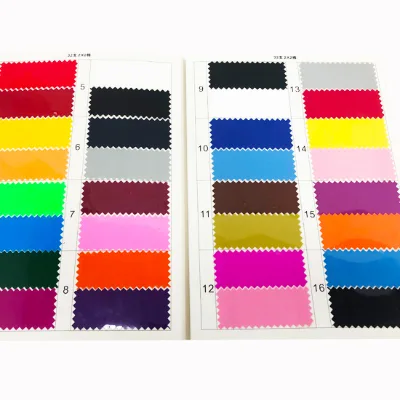
The application surface is another technical consideration. While the primary usage is on garments, fabrics, cotton, and leather, the versatility of the material extends to other substrates including plastic, glass, wood, and metal. However, for sports gear, the focus remains on textiles. The availability of more than 20 colors allows for extensive customization, enabling teams and brands to match specific color codes accurately. The product is often supplied in rolls, with standard widths varying from 5 centimeters to 50 centimeters, or can be customized to specific dimensions to minimize waste during the cutting and application process.
Compliance, Certification, and Safety Standards
In the B2B procurement of materials intended for direct skin contact, particularly in sports, compliance is non-negotiable. Buyers must verify that suppliers possess valid certifications that align with international safety and quality standards. The market data highlights the presence of ISO and CE certifications as common indicators of a supplier's commitment to quality management and product safety. These certifications suggest that the manufacturing process adheres to rigorous protocols regarding material consistency and environmental impact.
When evaluating a supplier, the procurement team should request documentation proving the validity of these certifications. It is essential to understand that certification status is not a static attribute; it requires regular renewal and audit. A supplier claiming ISO or CE status must be able to provide current certificates that cover the specific product line being purchased. Additionally, the material itself should be free from harmful substances, although specific chemical composition data should be verified through the supplier's technical data sheets rather than assumed.
The standardization of the product is also a key compliance factor. Products are often manufactured to specific standards, such as a 50cm by 25m configuration or custom widths. Buyers should ensure that the ordered standard matches the operational requirements of their printing equipment. For instance, a standard width of 5cm or a customized size must be clearly defined in the purchase order to avoid production delays. The presence of a "50cm*25m" standard in the market suggests a common industrial format, but customization is frequently available to meet unique production line needs.
Cost Drivers and Pricing Structures
The pricing of Sports Heat Transfer Vinyl is influenced by a variety of factors, including material quality, customization levels, and order volume. The observed price range in the market spans from 0.1 to 293 USD, a wide variance that reflects differences in product specifications, brand positioning, and order quantities. Lower prices often correlate with standard, non-customized products with higher Minimum Order Quantities (MOQ), while premium pricing may reflect specialized formulations, lower MOQs, or complex customization services.
MOQ is a significant cost driver in this sector. Suppliers may set MOQs ranging from 1 unit to 1000 units, with some specific product lines requiring a minimum of 500 square meters. For smaller brands or those testing new designs, the ability to source with a lower MOQ is critical, though it may come at a higher unit cost. Conversely, large-scale manufacturers can leverage bulk purchasing to reduce per-unit costs, provided they can meet the volume requirements.
Payment terms also play a role in the overall cost structure. A common requirement in the industry is a 30% deposit prior to production, with the balance due upon shipment or delivery. This structure protects the supplier against material costs while ensuring the buyer has a stake in the order. Buyers should also consider the cost of packaging, which can vary from simple carton boxes to more robust waterproof OPP bags with four layers of corrugated cases, especially for international shipping. The choice of packaging affects the final landed cost and the condition of the goods upon arrival.
Typical Applications and Performance Requirements
The primary application for Sports Heat Transfer Vinyl is in the decoration of athletic apparel, including jerseys, uniforms, and accessories. The material is designed to adhere securely to cotton, leather, and various textile blends, ensuring that logos and numbers remain intact during intense physical activity. The "Release Force" of the vinyl is a critical performance metric; products are available with either "light" or "overload" release forces, which determine how easily the carrier film can be removed after transfer. For sports applications, a specific release force is often required to ensure a clean application without damaging the print or the fabric.
Beyond clothing, the versatility of the material allows for applications in cosmetic boxes, medical boxes, and other packaging solutions. However, the core value proposition for sports buyers lies in the durability of the transfer. The product must withstand repeated washing, exposure to sweat, and mechanical stress. The "Transfer Mode" is typically direct printing, which allows for high-resolution graphics and precise color reproduction. This method is essential for team logos that require sharp details and vibrant colors.
The application process involves heating the vinyl to the specified temperature range and applying pressure for the designated time. Once cooled, the carrier film is peeled away, leaving the design adhered to the substrate. The "Reflectivity" of some products, measured at 450 CD/Lx/M2, is particularly relevant for safety gear used in low-light conditions, such as running vests or cycling jerseys. This feature ensures that athletes remain visible to drivers and other participants, adding a layer of safety to the aesthetic design.
Supplier Evaluation and Quality Control
Selecting the right supplier requires a thorough evaluation of their capabilities, reliability, and quality control processes. Buyers should look for suppliers who offer customization services, as this indicates flexibility and a willingness to collaborate on specific design needs. The ability to provide custom sizes, such as 5cm widths or tailored dimensions, is a strong indicator of a supplier's technical proficiency. Additionally, the supplier's origin, typically China for this category of goods, should be considered in the context of logistics and lead times.
Quality control is paramount. Buyers must verify that the supplier has robust testing procedures in place to ensure consistency in thickness, elasticity, and adhesion. The observation of specific models, such as v9330, M3205, M8310, M8309, and v6080, suggests a diverse product portfolio. Each model may have unique characteristics, and buyers should request samples to test these specific attributes before committing to a large order. The "Good Elasticity" attribute mentioned in the product data should be physically verified through stretch tests on the actual fabric intended for use.
Lead time is another critical factor in supplier evaluation. While some products may have a delivery time of 7 days, this can vary based on customization requirements and order volume. Buyers should establish clear expectations regarding production schedules and shipping times to avoid disruptions in their own supply chain. The "Time Od Delivery" of 7 days is a benchmark, but actual performance should be confirmed through direct communication with the supplier.
Long-Term Procurement Considerations
Sourcing Sports Heat Transfer Vinyl is not merely a transactional activity but a strategic partnership that impacts long-term brand reputation. Buyers should consider the scalability of the supplier's operations. As a brand grows, the demand for vinyl will increase, and the supplier must be capable of meeting higher volumes without compromising quality. The availability of "Carton Box" or "Waterproof OPP Bags" packaging ensures that the product remains protected during storage and transport, which is essential for maintaining quality over time.
Sustainability and environmental compliance are increasingly important in the procurement of textile materials. While the primary material is PVC, buyers should inquire about the environmental impact of the manufacturing process and the disposal of waste. The "Customized" nature of the product allows for the development of eco-friendly alternatives or specific formulations that meet emerging regulatory standards.
Finally, the relationship with the supplier should be built on transparency and clear communication. Regular audits, sample testing, and feedback loops are essential for maintaining high standards. By focusing on technical specifications, compliance, and supplier reliability, buyers can secure a steady supply of high-quality Sports Heat Transfer Vinyl that meets the demanding requirements of the athletic apparel industry. The ability to customize and the availability of diverse models ensure that buyers can find the perfect solution for their specific needs, whether for mass production or specialized, limited-edition runs.
FAQs
What certifications do Sports Heat Transfer Vinyl products typically have?
Products typically hold ISO and CE certifications to ensure safety and quality standards. These certifications indicate adherence to international protocols for material consistency and environmental impact, which is critical for items used in direct skin contact applications.
How thick is the high-quality PVC material used for these transfers?
The material thickness generally ranges from 100 to 130 micrometers. This specific range ensures the vinyl is durable enough to withstand abrasion while maintaining the flexibility required for athletic performance without compromising fabric breathability.
Which transfer temperature and time settings are required for application?
Successful application requires a temperature between 150 and 160 degrees Celsius for 8 to 15 seconds. Deviating from these precise thermal parameters can result in poor adhesion or potential damage to the underlying fabric or garment material.
Can buyers customize the width and size of the heat transfer film?
Yes, customization is available for widths such as 5cm or standard sizes like 50cm by 25m. Buyers can request tailored dimensions to minimize waste during the cutting process, ensuring the product fits specific production line needs.
What is the typical minimum order quantity for these vinyl products?
Minimum order quantities vary from 1 unit up to 1000 units, with some lines requiring 500 square meters. Lower MOQs are often available for testing new designs, though they may come at a higher unit cost compared to bulk orders.
How is the product packaged for safe international shipping?
Packaging options include carton boxes or waterproof OPP bags with four layers of corrugated cases. This robust packaging ensures the product remains protected during storage and transport, maintaining quality upon arrival at the destination.
What materials and surfaces can this heat transfer vinyl be applied to?
The vinyl is suitable for clothing, textiles, leather, cotton, plastic, glass, wood, and metal. While primarily used for athletic apparel, the material's versatility allows for applications on various substrates including cosmetic and medical boxes.